Best overall: a wash-rated aluminum full-view sectional door. Best for frequent opening: a wash-rated high-speed door. Best for heat retention: an insulated sectional door approved for the wash environment. This guide from Derby Strong compares overhead doors for Kentucky car wash facilities by moisture exposure, operating demands and service needs—not appearance alone.
TL;DR
- For overhead doors for car wash Kentucky facilities, wash-environment approval comes before appearance or insulation.
- Wash-rated aluminum full-view sectional doors are the default shortlist for visibility and wet-bay suitability.
- High-speed doors suit frequent opening; insulated sectional doors suit enclosed bays where heat retention matters.
- Derby Strong provides commercial overhead door services; confirm the complete assembly fits your wash process.
Why this matters at a Kentucky car wash
A car wash door faces more than rain. Detergent mist, rinse water and repeated operation expose the door, hardware and controls to conditions that a dry storage opening does not face.
For a Louisville operator replacing a wash-bay door, the first question is whether the proposed assembly suits that exposure. That includes the operator and safety devices—not just the visible panels. A corrosion-resistant frame does not establish that every attached component belongs in a wet bay.
Derby Strong is best for Kentucky car wash owners seeking commercial overhead door service rather than a residential-door specification. Start with the actual opening and wash process, then compare suitable door configurations.
What makes the best car wash overhead door?
Use these criteria before comparing door styles:
- Wash-environment suitability: Require current manufacturer documentation addressing moisture exposure and the cleaning chemicals you use.
- Complete-system compatibility: Check the panels, glazing, tracks, fasteners, operator, controls and safety devices together.
- Operating demand: Describe actual opening frequency and operating hours. A door that stays open throughout washing has different demands from one that closes between vehicles.
- Thermal performance: Compare the complete door assembly and perimeter sealing, not an isolated insulation claim.
- Clearance and vehicle movement: Account for the opening, overhead equipment, approach path and door travel.
- Serviceability: Ask how damaged sections, seals, glazing and operating components are inspected and replaced.
A strong proposal answers each criterion in writing. A product description that says only “commercial” or “aluminum” does not establish suitability for a wash bay.
Best car wash overhead doors at a glance
| Ranked option | Best for | Standout characteristic | Key limitation |
|---|---|---|---|
| Wash-rated aluminum full-view sectional door | Visibility at an enclosed wash bay | Glazed sections provide a view through the closed opening | Glazing, seals and hardware still need exposure-specific approval |
| Wash-rated high-speed door | Frequent opening between vehicles | Designed around rapid opening and closing | Speed does not establish chemical compatibility or suitable safety controls |
| Wash-rated insulated sectional door | Heat retention in an enclosed bay | Insulated sections form part of a thermal enclosure | Panel insulation alone does not describe whole-door performance |
These are door categories, not interchangeable specifications. Each category includes different materials, operating arrangements and limitations; evaluate the exact proposed assembly.
1. Aluminum full-view: best for wash-bay visibility
A full-view sectional door uses glazed sections within a supporting frame. It travels along tracks into its overhead position, allowing visibility through the opening when closed.
For a car wash, shortlist an aluminum full-view assembly specifically approved for the operating environment. Do not assume that a storefront-style glazed door and a wash-bay door share the same exposure limits.
Best for: An enclosed wash bay where operators need to see vehicle position or activity through the closed door.
Aluminum full-view door pros
- Glazing provides visibility without opening the door.
- Sectional construction divides the door into individual panels.
- Frame, glazing and seal configurations can be evaluated separately during specification.
- Aluminum framing avoids the red-rust mechanism associated with unprotected steel framing.
Aluminum full-view door cons
- Aluminum is not immune to corrosion or chemical damage.
- Glazing performance varies with the specified material and construction.
- Water spots and chemical residue require an approved cleaning method.
Ask which glazing material is proposed and what cleaning restrictions apply. Also ask whether replacement glazing or sections require changes to the door’s balance or hardware. Leave those adjustments to a professional.
Visibility does not replace vehicle-detection or entrapment-protection devices. A driver who can see through the door still needs a properly designed operating sequence and a clear stopping position.
Verdict: Buy a wash-rated aluminum full-view door when visibility is the main decision; skip an assembly whose wet-environment suitability is undocumented.
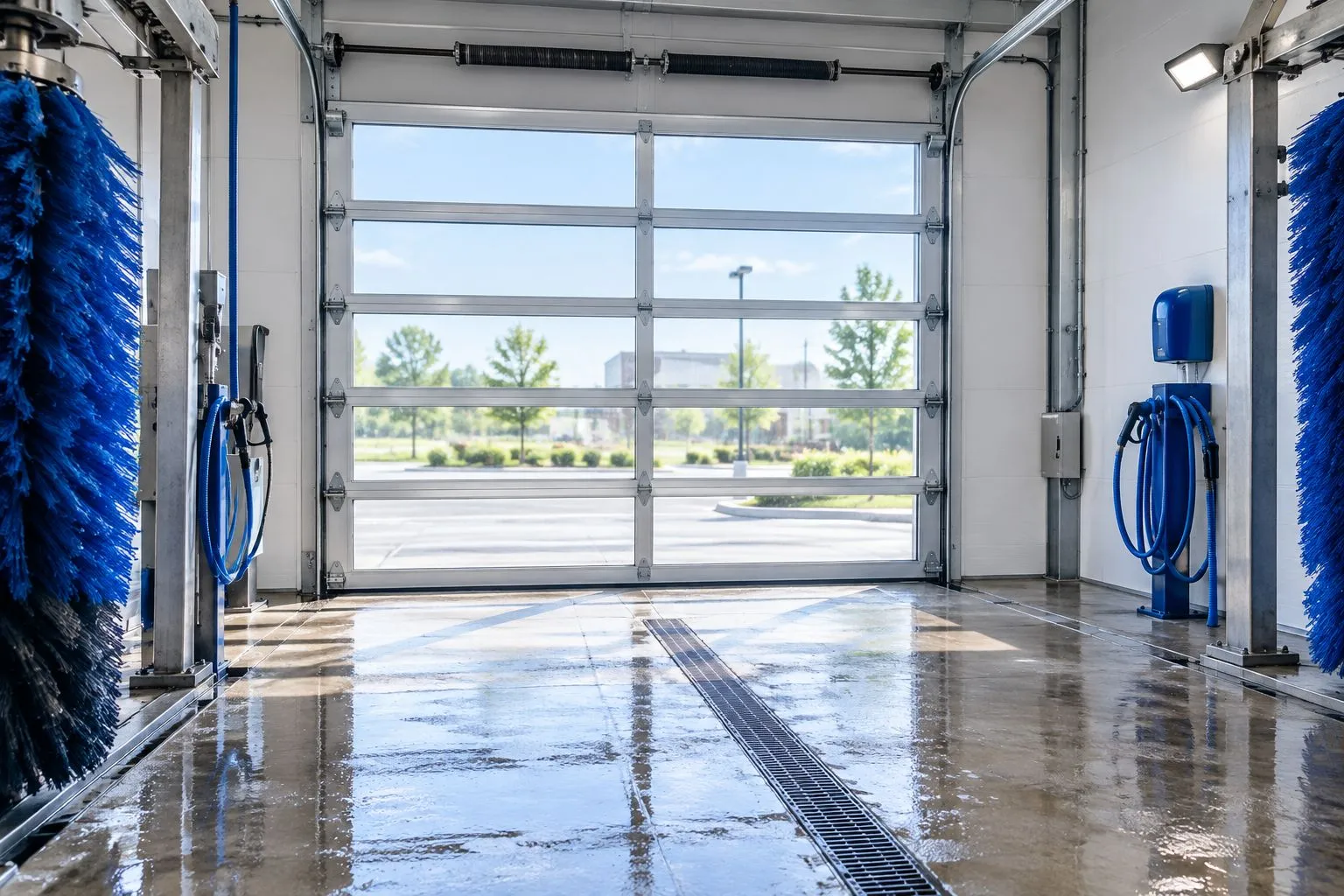
Illustrative photo: glazing provides visibility through a closed wash-bay door.
2. High-speed doors: best for frequent opening between vehicles
A high-speed door prioritizes opening and closing speed. Construction varies, so the term does not identify a single curtain material, insulation level or exposure rating.
This category belongs on the shortlist when the door opens and closes repeatedly during operation. If the door stays open for most of the working day, establish what faster movement would actually change before choosing it.
Best for: A wash process that requires frequent door movement between vehicles.
High-speed door pros
- Faster travel reduces the time spent moving between open and closed positions.
- The operating sequence can be evaluated alongside the wash equipment.
- Different construction formats allow comparison against clearance and traffic requirements.
High-speed door cons
- “High-speed” does not mean wash-rated or chemical-resistant.
- Specialized controls require an appropriate inspection and service plan.
- A faster door does not correct a poor vehicle-detection layout.
Have the supplier describe what triggers opening, what permits closing and what happens when a vehicle stops unexpectedly. Include pedestrians and maintenance personnel in that discussion, not just cars following the intended route.
Require documentation for the proposed operator and protective devices in their actual mounting locations. Moving a control outside direct spray does not automatically resolve mist, condensation or cleaning exposure elsewhere in the system.
Verdict: Buy a wash-rated high-speed door when frequent movement is a documented operating need; hold when speed has no clear role in the wash sequence.
3. Insulated sectional doors: best for enclosed-bay heat retention
An insulated sectional door incorporates insulation into its panels. Its usefulness at a car wash also depends on perimeter seals, joints, glazing, installation and how long the opening remains open.
Shortlist this category when the bay is enclosed and retaining heat matters during operation or shutdown. Specify a wash-compatible assembly rather than adapting a dry-use door solely because it has insulated panels.
Best for: An enclosed wash bay where thermal separation takes priority over extensive glazing.
Insulated sectional door pros
- Insulated panels address heat transfer through the door sections.
- Solid sections provide an alternative where full visibility is unnecessary.
- Perimeter seals and panel joints can be included in a complete enclosure review.
Insulated sectional door cons
- Panel insulation does not establish whole-door thermal performance.
- Damaged coatings, joints or seals still need attention in a wet environment.
- Frequent or prolonged opening limits what a closed door can accomplish.
Ask whether any quoted thermal figure describes the panel or the complete assembly. Compare like with like, including the proposed glazing and seal arrangement. A stronger panel-only figure does not settle the decision if the assemblies differ elsewhere.
Also identify how water drains away from the threshold. Insulation does not correct standing water, a damaged bottom seal or an unsuitable floor interface.
Verdict: Buy a wash-rated insulated sectional door for an enclosed bay with a defined thermal need; skip insulation-only comparisons that ignore exposure and sealing.
How these options are ranked
The ranking prioritizes wash-environment suitability, visibility, operating demand, thermal performance, clearance and serviceability. Full-view construction leads as the default shortlist because it addresses visibility; high-speed and insulated doors take the lead when cycling or thermal separation is the controlling requirement.
This is a specification-based comparison, not a manufacturer ranking. No door category earns approval for a particular bay without checking the exact product documentation and site conditions.
What should your car wash door specification include?
Give each bidder the same description of the opening and wash operation. Otherwise, you are comparing different assumptions rather than competing solutions.
Exposure and cleaning
List the detergents and other cleaning products used near the door. Provide their technical information to the door supplier and identify where spray reaches the assembly.
Distinguish direct spray from airborne mist and routine cleaning. Ask for written compatibility guidance covering the proposed materials, coatings, glazing and seals. Do not substitute a general corrosion-resistance claim for chemical compatibility.
Door movement
Record when the door opens and closes during the wash process. Include opening before the first vehicle, movement between vehicles and closing at shutdown.
Specify whether automatic wash equipment initiates movement. The installer needs that sequence to assess controls and protective devices; a separate push button does not describe the full operating requirement.
Thermal enclosure
Explain when the bay is heated and when the door remains closed. Include the condition of the side seals, header seal and threshold in the assessment.
Comparisons of insulated garage door options address thermal selection, but a car wash specification also needs written compatibility with water and cleaning chemicals. Thermal suitability and wash-environment suitability are separate requirements.
Installation clearance
Have a professional check the opening, side room, headroom and space behind the opening. Include pipes, lighting, wash equipment and any equipment that moves near the door path.
Do not select a track arrangement from the opening dimensions alone. The door and wash equipment must operate without interfering with each other throughout their travel.
Service access
Identify how technicians will reach the operator, tracks and protective devices safely. Explain which equipment must be shut down before inspection or repair.
Ask for the manufacturer’s maintenance instructions and a site-specific service plan. Derby Strong provides commercial overhead door services; the proposal still needs to identify the exact assembly and its maintenance requirements.
Repair or replace the existing wash-bay door?
Keep a suitable, sound door when a defined repair addresses the fault. A worn seal or isolated operating problem does not establish that the entire assembly needs replacement.
Replacement deserves closer consideration when the existing door is unsuitable for the wash environment, has extensive deterioration or cannot meet the required operating arrangement. A professional inspection should distinguish a damaged component from a broader specification problem.
Before requesting a decision, gather:
- Photos taken from a safe position, with the door stationary.
- The door and operator identification information, if safely accessible.
- A description of when the fault occurs and what changed beforehand.
- The cleaning products used near the affected components.
- Any existing inspection or repair records.
Do not remove covers, loosen brackets or touch springs and cables to collect information. If the door hangs unevenly, leaves its tracks or has visibly damaged lifting components, stop operation and keep people clear.
Never increase opener force to push through binding or repeatedly cycle a faulty door. If a bay door already refuses to move, the Louisville commercial overhead door troubleshooting guide addresses that immediate problem separately from choosing a replacement.
Which car wash overhead door should you choose?
Start with a wash-rated aluminum full-view sectional door unless frequent cycling or thermal separation gives another category a clearer purpose. Then require written confirmation that the entire proposed system suits your wash operation.
Choose the high-speed category for a defined opening-and-closing requirement. Choose an insulated sectional assembly for an enclosed bay where heat retention matters. Keep an existing suitable door when repair solves the actual problem.
For a site-specific discussion, contact Derby Strong with the opening information, operating sequence and existing door details. Ask for the reasons behind the proposed construction—not just a door style.
Frequently Asked Questions
What’s the best overhead door for a Kentucky car wash?
A wash-rated aluminum full-view sectional door is the default shortlist when visibility is the main requirement. A wash-rated high-speed or insulated sectional door is a better fit when frequent movement or thermal separation controls the decision.
Are aluminum overhead doors rustproof in a car wash?
Aluminum does not develop red rust like unprotected steel, but it can still corrode or suffer chemical damage. Check the frame, fasteners, hardware and cleaning restrictions rather than treating aluminum as protection for the entire assembly.
Is a high-speed door better than a sectional door for a car wash?
A high-speed door is the stronger candidate when frequent opening and closing creates a specific operating requirement. Compare the exact construction, wash-environment approval and safety controls rather than choosing by speed alone.
Does a Kentucky car wash need an insulated overhead door?
An enclosed wash bay with a defined heat-retention requirement should include insulated assemblies in its comparison. Evaluate complete-door performance, sealing and opening patterns rather than panel insulation alone.
Can I use a residential garage door on a commercial wash bay?
Do not choose a residential door without written manufacturer confirmation that the complete assembly suits the commercial wash application. Moisture, chemicals, operating demand and controls all affect suitability.
Should I repair or replace a corroded car wash door?
Base the decision on the extent of deterioration and the assembly’s suitability for the wash environment. A professional should distinguish an isolated repairable fault from widespread damage or an unsuitable specification.
What should I do if the wash-bay door starts binding?
Stop operating a binding door and keep vehicles and people clear. Do not increase opener force, adjust springs or cables, or force the door through the obstruction; arrange professional inspection.
One Last Thing Before You Decide
The most visible material is not the whole door system. Before approving a replacement, ask the supplier to identify every component exposed to wash water and confirm its suitability. That question is more useful than choosing between “aluminum” and “insulated” in isolation.
Related Garage Door Guides
- How long does commercial overhead door installation take?
- How much does commercial garage door repair cost in Kentucky?
Local service: Garage door repair in Louisville · Garage door repair in Lexington · Garage door repair in Northern Kentucky