Best overall: steel. Best for moisture resistance without repainting: vinyl. Best for a wood-look exterior without solid wood: fiberglass. Steel is the most durable garage door material for a practical, all-around shortlist, but construction, finish and exposure matter more than the material name alone.
TL;DR
- Steel is the most durable garage door material for an all-around shortlist; compare panel construction and corrosion protection.
- Vinyl resists rust and rot, but impact damage and replacement-panel matching remain buying considerations.
- Fiberglass offers wood-look garage doors without wood rot; inspect the frame and panel construction before choosing.
- Derby Strong provides garage door repair and installation for homeowners in Louisville, Lexington and Northern Kentucky.
Why This Matters for Your Door
A garage door can survive years of normal opening and closing yet suffer from a damaged finish, cracked panel or failing connection. Durability means keeping the complete door serviceable, not simply choosing a material that will not rust.
Derby Strong provides garage door repair and installation across Louisville, Lexington and Northern Kentucky. Start your material decision with the existing door’s condition: a repairable panel, worn seal or opener fault does not automatically justify replacing the whole door.
Choose steel by default, then change materials only when another option solves a specific property problem. That problem might be moisture exposure, a required wood appearance, daylight or a finish you do not want to repaint.
What makes the best durable garage door material?
Judge the door against these criteria before comparing appearances:
- Impact resistance: Look at panel thickness, backing and reinforcement—not just the outer skin. A material that resists corrosion can still crack or dent.
- Moisture resistance: Separate rust, rot and water entry. Different materials resist different problems, and none replaces effective drainage or weather seals.
- Finish maintenance: Check the manufacturer’s cleaning, coating and refinishing requirements. A durable surface still needs care after scratches or damage.
- Repairability: Ask whether damaged sections can be replaced and whether a replacement finish will match. Structural damage needs professional assessment.
- Complete-door construction: Evaluate the frame, glazing, hinges and specified reinforcement. The weakest connection can limit an otherwise durable panel.
- Property fit: Confirm opening dimensions, headroom, appearance restrictions and operating requirements. A strong door installed in an unsuitable setup is not a good purchase.
These criteria distinguish material durability from installation quality. They also prevent you from buying a heavier door without checking whether the spring system, tracks and opener suit the complete assembly.
Garage door materials at a glance
This ranking prioritizes everyday durability, manageable upkeep and repair decisions. It is a buying order, not a claim that every steel door outlasts every door made from another material.
| Rank and material | Best for | Standout characteristic | Key limitation |
|---|---|---|---|
| 1. Steel | Everyday durability with manageable upkeep | Broad range of reinforced and insulated constructions | Scratches and exposed edges need corrosion attention |
| 2. Vinyl | Moisture resistance without routine repainting | Does not rust or suffer wood rot | Cracks, fading and section matching complicate repairs |
| 3. Fiberglass | Wood-look appearance without solid wood | Molded exterior surfaces resist rot | Surface cracking and internal construction need scrutiny |
| 4. Aluminum | Full-view designs and rust avoidance | Frames support glazed door designs | Aluminum can dent; glazing adds separate failure points |
| 5. Solid wood | Repairable traditional appearance | Can be refinished and repaired by skilled specialists | Moisture control and finish upkeep are ongoing obligations |
1. Steel: best durable garage door material for everyday use
Steel earns the default recommendation because you can compare several constructions without changing the basic material. A single-skin panel and a backed, insulated assembly are different buying propositions, even when both are described as steel garage doors.
Steel thickness also matters. In conventional steel gauge numbering, 24-gauge steel is thicker than 28-gauge steel; a lower gauge number means a thicker sheet. Do not treat gauge as a complete strength rating, because panel shape, backing and reinforcement also affect performance.
Steel pros:
- Offers multiple panel and reinforcement configurations.
- Supports insulated assemblies with interior backing.
- Allows section replacement when compatible parts and the door’s condition permit.
- Provides a practical alternative to wood when regular refinishing is unwanted.
Steel cons:
- Exposed steel can corrode after coating damage.
- Thin panels remain vulnerable to dents.
- A replacement section can differ from an aged finish.
Before choosing steel, inspect scratches, bottom edges and previous repairs. Lexington homeowners evaluating corrosion can use the garage door rust repair guide to distinguish a finish problem from damage that needs assessment.
Best for: Homeowners who want an all-around durability choice rather than a specialized appearance.
Verdict: Buy steel when the panel construction, finish and installation requirements fit your garage.
2. Vinyl: best durable garage door material for low-paint upkeep
Vinyl does not rust and does not suffer wood rot. That makes it a useful shortlist option when your priority is avoiding those specific surface problems—not a guarantee against all damage.
Inspect the complete assembly rather than assuming the vinyl exterior carries every load. Frames, reinforcement and hardware still affect how the door performs. Ask for the current manufacturer’s guidance on temperature exposure, cleaning and acceptable finishing methods.
Vinyl pros:
- Resists the rust associated with exposed steel.
- Avoids the rot associated with solid wood.
- Does not depend on routine repainting to protect a wood surface.
- Fits buyers who prefer a factory-finished exterior.
Vinyl cons:
- Impact damage can crack the surface rather than leave a repairable dent.
- Sun exposure can change the appearance over time.
- Matching a replacement section to an aged door needs confirmation.
Ask how a damaged section would be handled before selecting the door. A material’s resistance to moisture does not help if its repair requirements conflict with how you use the garage.
Best for: Buyers prioritizing rust and rot resistance with minimal painting obligations.
Verdict: Buy vinyl for that maintenance goal; skip it if your plan depends on straightforward refinishing after damage.
3. Fiberglass: best durable garage door material for a wood look
Fiberglass offers molded textures that imitate wood without using solid wood for the exterior surface. The fiberglass skin does not rot, but that statement does not describe every component inside the door.
Check what supports the exterior: frame material, insulation, backing and panel connections. A wood-look surface tells you about appearance, not the assembly’s impact resistance or repair options.
Fiberglass pros:
- Provides textured exterior designs without solid-wood surface upkeep.
- Resists rot in the fiberglass skin.
- Avoids rust in the fiberglass surface itself.
- Offers an alternative when appearance rules favor a wood-like finish.
Fiberglass cons:
- Hard impacts can crack or damage the skin.
- Surface appearance can change with exposure.
- Repair methods and repainting permissions depend on the specific door.
Request current care instructions before assuming you can sand, patch or paint fiberglass as you would wood. Also check the door’s exposed edges and internal materials; a moisture-resistant skin does not make an entire assembly immune to water damage.
Best for: Homeowners seeking a wood-look exterior without maintaining solid wood.
Verdict: Buy fiberglass for its appearance-and-upkeep fit, not as an automatic strength upgrade over steel.
4. Aluminum: best durable garage door material for full-view designs
Aluminum is a useful choice when the design centers on a frame and glazed panels. It does not develop the iron rust associated with steel, although aluminum can still corrode under damaging conditions.
A full-view door must be assessed as a frame-and-glazing assembly. Glass type, panel retention, seals and frame construction all matter; choosing aluminum alone does not settle durability, privacy or thermal performance.
Aluminum pros:
- Avoids the red rust associated with exposed steel.
- Supports designs that bring daylight into a garage.
- Offers an alternative to solid panels when visibility is intentional.
- Separates frame selection from glazing selection.
Aluminum cons:
- Aluminum surfaces can dent or bend under impact.
- Glass and its retaining components introduce additional damage risks.
- Privacy and heat-transfer requirements need separate evaluation.
If your garage stores visible equipment or faces occupied rooms, decide on glazing before approving the door. Do not assume a darker or textured pane meets your privacy needs under every lighting condition.
Best for: Buyers who specifically want a full-view or extensively glazed garage door.
Verdict: Buy aluminum for the design requirement; skip it as the default answer to maximum impact durability.
5. Solid wood: best durable garage door material for refinishing
Solid wood belongs on the shortlist when traditional appearance and the ability to refinish the surface are central requirements. It belongs lower in this durability ranking because moisture management and finish maintenance remain part of ownership.
Wood can swell, split or decay when moisture problems go unresolved. The species, construction and protective finish affect performance, so the word wood alone is not a useful quality specification.
Solid wood pros:
- Provides a natural surface rather than an imitation texture.
- Supports refinishing when the underlying material remains sound.
- Allows some localized repairs by skilled specialists.
- Fits properties where authentic wood appearance is a priority.
Solid wood cons:
- Requires attention to coatings, exposed edges and moisture.
- Movement or decay can affect more than appearance.
- Door weight requires a correctly specified operating system.
Look closely at the bottom edge, joints and any previous patches. A fresh coat of paint is not evidence that damaged wood underneath is sound. Have structural concerns assessed before committing to cosmetic work.
Best for: Owners who value authentic wood and accept the care needed to preserve it.
Verdict: Buy wood for that deliberate preference; skip it if your main requirement is low-maintenance durability.
How the materials are ranked
Steel takes the first position for its all-around construction choices and practical upkeep. Vinyl and fiberglass follow because their exterior surfaces avoid rust and wood rot, but impact damage and repair methods still need consideration.
Aluminum ranks below them for the general-purpose buyer because its strongest use case here is a glazed design. Solid wood ranks last for low-maintenance durability, not for appearance or craftsmanship. No material receives a promised lifespan, and this ranking does not substitute for current manufacturer specifications.
Compare the construction behind the surface
A garage door’s visible face hides important differences. A common 3-layer steel construction uses an exterior steel skin, an insulation layer and an interior steel skin. That description explains the assembly; it does not establish a universal strength or insulation rating.
Ask to see the actual panel cross-section and written specifications. Compare like with like: exterior material, interior backing, insulation, section connections and reinforcement. Decorative embossing is not evidence of structural performance.
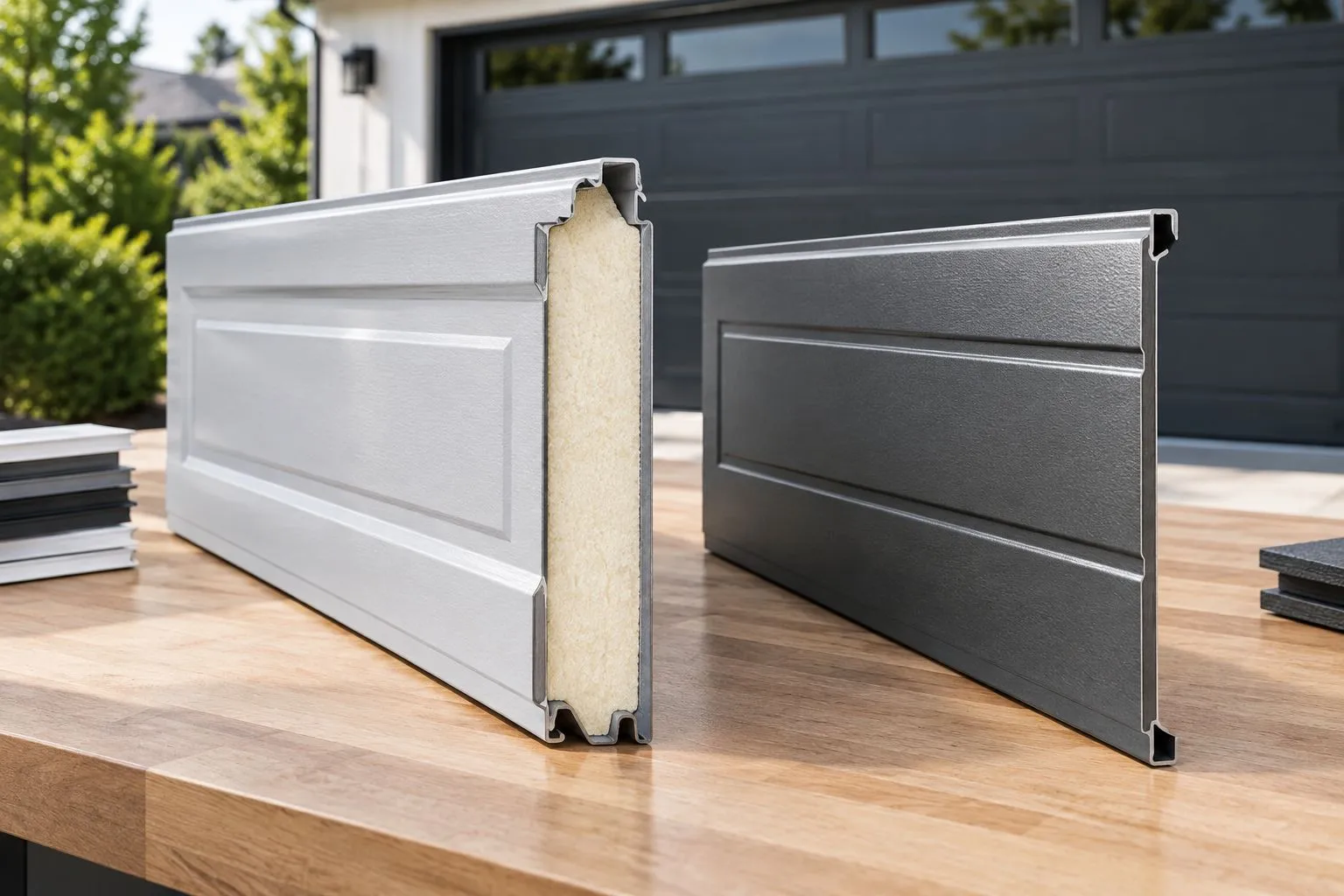
Illustrative photo: compare the complete panel construction, not only the exterior surface.
Use the same discipline for non-steel doors. Ask which parts are vinyl or fiberglass and which parts use other materials. For an aluminum-and-glass door, compare the glazing and retention system as carefully as the frame.
Inspect safely before requesting a recommendation
Keep observations visual and ground-level. Look at the closed door from a safe position and note dents, cracks, peeling finishes, corrosion, gaps or uneven alignment. Do not remove covers or hardware to investigate hidden construction.
Prepare a short description of the problem: where damage appears, whether it followed an impact, and whether the door has begun moving differently. Photographs help show the affected area without repeatedly operating a damaged door.
Stop using a door that is crooked, off its tracks or visibly affected by cable or spring damage. Spring, cable, track and high-tension bracket repairs belong to a professional. Never force the door or increase opener force to overcome a fault.
Derby Strong provides repair as well as new-door installation. Ask for a diagnosis before selecting a replacement material, especially when the existing door’s surface is sound but its movement has changed.
Which garage door material should you choose?
Start with steel if you are undecided. Compare the complete construction and corrosion protection, then ask how the door will be serviced after panel damage. Move to vinyl for a specific low-paint upkeep goal, fiberglass for a wood-look surface, aluminum for a glazed design, or wood for authentic appearance and refinishing.
Do not use material selection to bypass site questions. Check headroom, opening condition, clearances and any applicable appearance restrictions before approving a new door. For a commercial opening, specify the operating duty and access requirements separately rather than treating this homeowner-focused ranking as a commercial performance specification.
Bring those questions to Derby Strong when discussing repair or installation. The useful recommendation identifies what failed, what can be repaired and what the proposed replacement changes—not just which material appears first in a list.
Frequently Asked Questions
What is the most durable garage door material?
Steel is the best all-around starting point for a durable residential garage door. Compare panel thickness, backing, reinforcement and corrosion protection rather than choosing by the material name alone.
Is a steel garage door more durable than a wood garage door?
Steel is the stronger default for buyers prioritizing durability with less refinishing work. Wood remains a deliberate choice for authentic appearance, but moisture control and finish maintenance are ongoing requirements.
Are vinyl garage doors better than steel for moisture resistance?
Vinyl avoids rust and wood rot, while exposed steel can corrode after coating damage. Vinyl still needs sound hardware, effective seals and a construction suited to the opening.
Does fiberglass make a garage door stronger than steel?
Fiberglass does not automatically make a garage door stronger than steel. Compare the complete frame, panel construction and documented performance; a wood-look surface is an appearance feature, not a strength rating.
Is a lower steel gauge number better for garage door durability?
A lower steel gauge number indicates a thicker sheet in conventional steel gauge numbering. Thickness is one comparison point, but backing, panel shape and reinforcement also affect performance.
Should I replace my garage door just because it has a dent?
A dent does not automatically require whole-door replacement. Have the panel, connections and operation assessed before deciding between a section repair and a new door.
Can I keep my opener when changing garage door materials?
Keeping the opener requires a compatibility and condition assessment. A professional should check the replacement door’s requirements, balance and safety functions; never increase opener force to compensate for a problem.
One Last Thing Before You Decide
A rust-resistant door can still leak, and a thick panel can still operate poorly when the system is damaged. Write down the failure you want to prevent before choosing the material. That single decision keeps you from paying for a different surface while leaving the real problem unresolved.