Rental-property garage door replacement is the removal and installation of a garage door with the aim of restoring safe, dependable access for tenants. For Northern Kentucky landlords, the decision also needs to account for occupied units, access permissions, maintenance responsibilities, and whether a repair would solve the actual fault.
TL;DR
- For garage door replacement rental property Northern Kentucky decisions, establish repairability before choosing a new door.
- Derby Strong serves Northern Kentucky owners needing garage door repair, installation, or opener service.
- Separate door damage from opener faults; replacing the door does not automatically resolve access problems.
- Agree on tenant access, installation scope, and operating instructions before work begins.
Why garage door replacement matters for rental owners
A rental garage door is both a moving system and an access point. When it fails, you need to resolve the mechanical problem without leaving tenants uncertain about vehicle access, entry permissions, or whom to contact.
Derby Strong garage door service is best for Northern Kentucky rental owners seeking repair, installation, or opener service. Start with Derby Strong when the job requires professional assessment rather than another remote-control troubleshooting attempt.
The ownership decision differs from a personal-home purchase. You need a door that suits the opening and intended use, but you also need a clear maintenance record and a workable tenant handover. Decorative changes alone do not resolve damaged hardware or an incompatible opener.
Replace the door when professional assessment supports replacement; repair it when a defined repair restores safe operation. A loud door, a failed remote, or a visible gap does not establish that the entire door needs replacing.
How to plan replacement at a Northern Kentucky rental property
1. Establish the fault before requesting replacement
Start with safe observations, not a repair attempt. Ask the tenant what happened, whether the door was opening or closing, and whether the problem affects the door itself or only a particular access device. Record what you can see without touching damaged components.
A crooked door, loose cable, separated panel, or damaged track calls for professional assessment. Keep people away from the opening and stop operating the door. Do not pull the emergency release on an unstable door, force it through a damaged track, or increase opener force to overcome resistance.
For a straightforward access complaint, distinguish a remote that does not respond from a door that physically cannot move. That distinction helps the service provider assess the correct system; it is not permission to keep cycling a faulty door.
- Write down the tenant’s description of the failure.
- Photograph the door from a safe distance without moving it.
- Record visible damage and any opener warning indicators.
- Note which remotes, keypads, or wall controls are affected.
- Stop use when the door or its supporting hardware appears damaged.
2. Compare repair, replacement, and opener service
Ask for a diagnosis that explains which component failed and why the proposed work addresses it. The repair decision should follow that diagnosis, not the age of the door alone or the appearance of the front panel.
A door replacement and an opener replacement are different jobs. A serviceable door can have a faulty opener; a working opener can be attached to a damaged door. Ask Derby Strong garage door service to distinguish those issues when discussing the scope.
Request separate written scopes for the reasonable alternatives. Each should state what stays, what changes, and what additional work depends on inspection. Do not compare a full installation proposal with a repair proposal as if they include the same components.
- Ask which parts are damaged and which remain serviceable.
- Request 2 written scopes when repair and replacement are both reasonable.
- Identify whether the opener is retained, serviced, or replaced.
- Ask whether damage affects individual sections or the wider door system.
- Record the reason for rejecting an otherwise plausible repair.
Compare the available approaches
Use this table to frame the service discussion, not to diagnose the door yourself. Each option has a useful role and a limitation that matters at an occupied rental.
| Option | Best for | Main advantage | Key limitation |
|---|---|---|---|
| Targeted door repair | A professionally assessed fault with a serviceable remaining door system | Addresses the identified failure without replacing unrelated parts | Does not renew every component or correct unrelated deterioration |
| Section replacement | Damage confined to sections for which compatible replacements are available | Retains serviceable portions of the door | Depends on section compatibility and the condition of the remaining system |
| Complete door replacement | A door system that professional assessment identifies as unsuitable for repair | Allows the installation scope to address the door as a complete system | Requires a defined plan for components, opener compatibility, and tenant access |
| Opener service or replacement | A serviceable door with a diagnosed opener or control fault | Targets powered operation and access controls | Does not repair damaged panels, springs, cables, or tracks |
Choose the narrowest scope that resolves the diagnosed problem safely. If proposals disagree, ask each provider to explain the physical finding behind its recommendation rather than choosing by the heading on the proposal.
3. Define the door specification around rental use
Begin manually: list the property’s actual requirements before reviewing door styles. Note whether the garage is attached, whether tenants use it for parking, and whether doors in the building need a consistent appearance. Verify any applicable property or association requirements rather than assuming a matching color is sufficient.
Have the installer verify the opening, clearances, and installation requirements. A landlord’s rough measurement is useful for an initial conversation, but it is not an installation specification. Do not order from the apparent width of the existing panels alone.
For insulated doors, glazing, finishes, and opener features, compare current manufacturer documentation. Evaluate the specific assembly rather than assuming that a material name establishes durability or that an insulation claim predicts a particular utility saving.
- Record parking, storage, and pedestrian-access requirements.
- Identify appearance requirements that need approval.
- Ask the installer to verify opening dimensions and clearances.
- Review documented care requirements for the proposed finish.
- Confirm how the specified door works with the retained or proposed opener.
- Separate necessary replacement work from optional appearance changes.
A useful site photo shows access constraints, not just the door’s exterior. Vehicles, shelving, ceiling storage, and the route to the opening all belong in the planning conversation because they affect how the work area will be cleared.
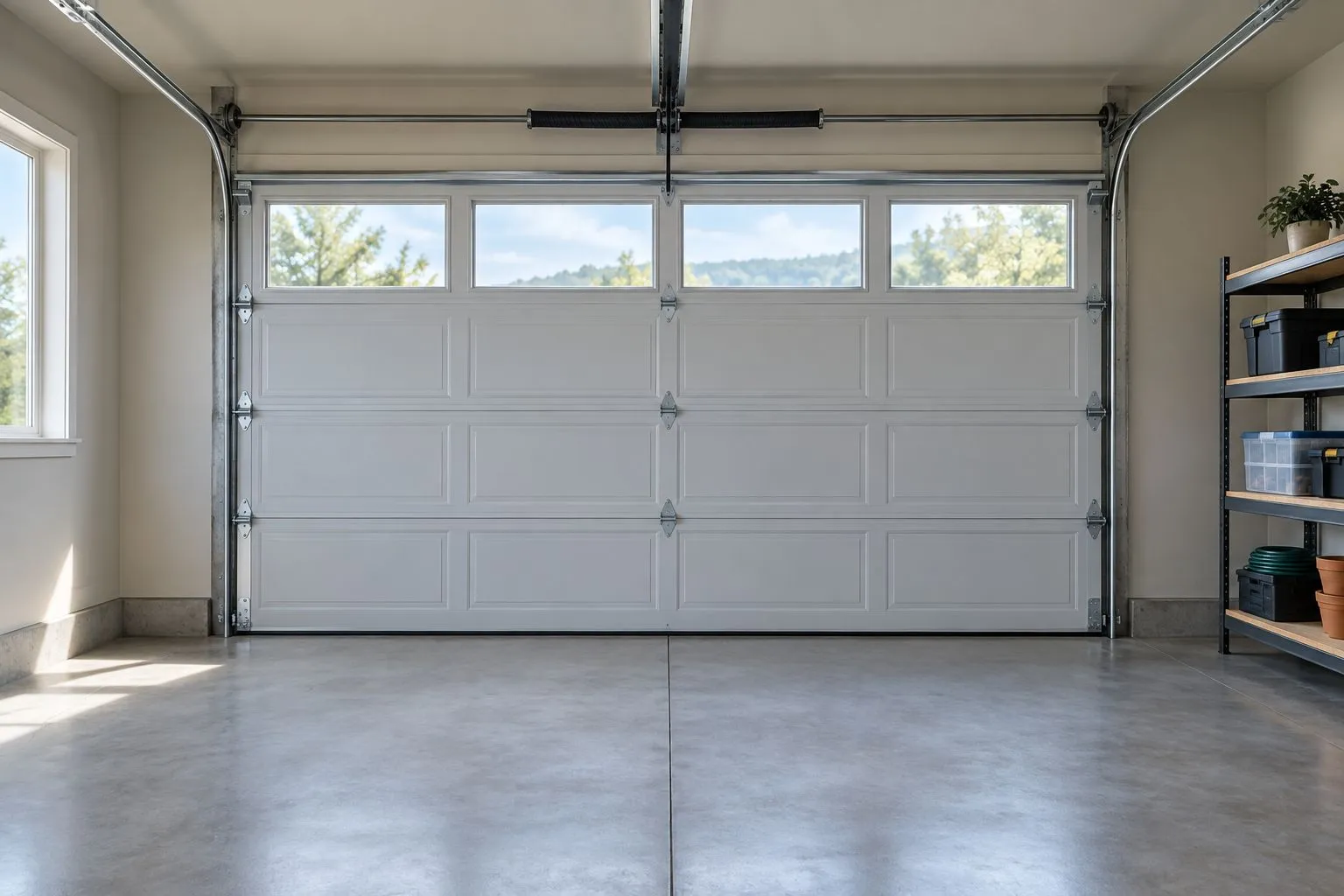
Illustrative photo: clear the work area without disturbing door hardware.
4. Coordinate tenant access before scheduling work
Write the access plan yourself first, then confirm it with the tenant and installer. Do not leave the installer to discover who has authority to approve work or whether a tenant’s vehicle is still inside.
For an occupied Northern Kentucky rental, separate the landlord’s authorization from the tenant’s practical instructions. Confirm who will be present, how the installer enters the work area, and how vehicles will be moved if the door cannot safely open. A trapped vehicle requires a service discussion, not a tenant-directed lifting attempt.
Agree on a communication sequence: notification, access confirmation, work completion, and operating handover. Keep any tenancy notice requirements separate from the installation arrangement; follow the lease and applicable requirements rather than relying on an informal message alone.
- Identify the owner or manager authorized to approve the work.
- Confirm tenant notification and access arrangements.
- Explain where vehicles and stored belongings must be moved.
- Arrange a safe plan for vehicles trapped behind a damaged door.
- Name the contact for scope changes during installation.
- Tell the tenant when the door is ready for normal use.
Use one shared access checklist rather than separate verbal instructions. The tenant needs practical directions, while the installer needs confirmed access and an authorized decision-maker.
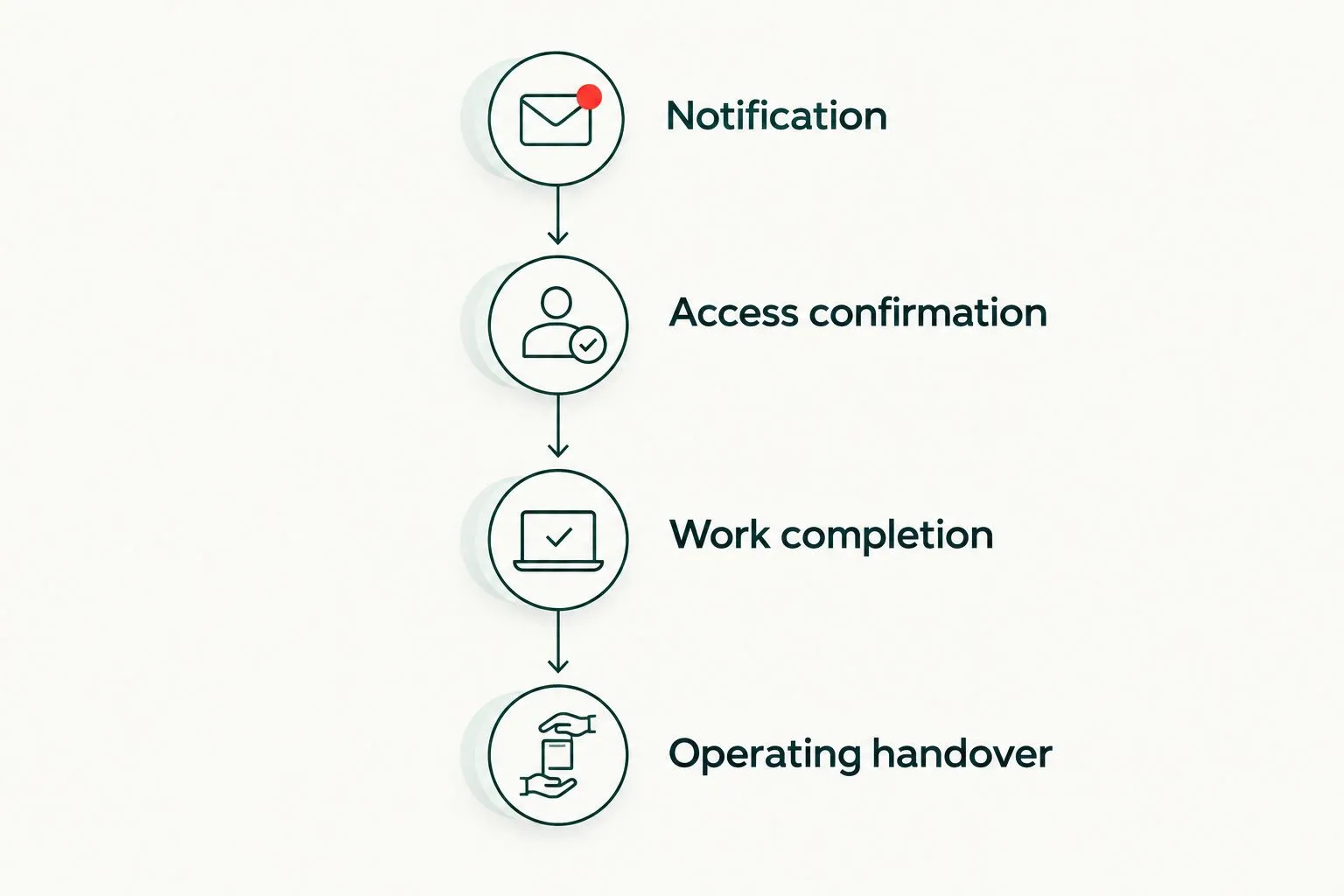
Confirm access before work and operating instructions before returning the door to use.
5. Confirm the full installation scope in writing
A replacement proposal needs to explain the assembly, not merely name a door style. Ask which tracks, springs, cables, rollers, seals, and attachment components are included or retained. Those decisions belong to the professional installation plan.
Also ask who handles removal of the old door, preparation of the work area, and any separate building repairs. If the opening or supporting structure needs attention, identify that responsibility before installation. A new door does not itself repair a damaged building opening.
Collect 4 photos for your property record: the exterior, the interior, the opener identification label when safely accessible, and the visible problem area. These are documentation targets, not instructions to climb, remove covers, or approach damaged hardware.
- Record the specified door assembly and finish.
- Identify included and retained mechanical components.
- Confirm opener compatibility and any control changes.
- Define removal and disposal responsibilities.
- Clarify weather-seal work at the sides, top, and bottom.
- Identify building repairs outside the door installation scope.
6. Verify the handover and reset the maintenance record
Attend the handover or arrange for an authorized representative. Have the installer demonstrate normal operation, explain the controls, and provide the relevant operating and maintenance instructions. Professional installation should end with a clear account of what was checked, not just a door that moved once.
Ask how tenants should respond to a failed control, interrupted movement, or visible damage. Keep spring, cable, track, and bracket adjustments professional-only. A tenant’s job is to report a fault and stop unsafe use, not to rebalance the door.
Update the property record with the installed specification and service paperwork. Where access permissions change, confirm which remotes and keypad credentials remain authorized. Do not assume door replacement automatically removes previous users’ access.
- Obtain operating and maintenance documentation.
- Record the installation date and completed work.
- Confirm the installer completed applicable safety checks.
- Document authorized remotes and keypad access.
- Give tenants a clear fault-reporting contact.
- Schedule upkeep according to the installed equipment’s instructions.
Common mistakes Northern Kentucky rental owners make
Treating a remote failure as proof the door needs replacing
A failed remote concerns the access-control system, but the cause still needs diagnosis. Describe which controls work and which do not. Do not authorize a new door solely because a tenant cannot operate one remote.
Comparing proposals with different component scopes
One proposal can retain the opener and tracks while another changes them. Compare the included work component by component. The useful comparison is the complete job, not the word replacement.
Choosing appearance before confirming suitability
A matching exterior does not establish correct fit, clearances, or opener compatibility. Confirm the installation requirements first, then choose the appearance within those requirements. This is especially important when a property has approval rules or multiple doors to coordinate.
Leaving the tenant to manage a damaged door
Do not ask a tenant to straighten a track, reconnect a cable, or lift a crooked door for the installer. Tell the tenant to keep clear and stop use. Arrange professional access planning when vehicles or essential belongings are trapped inside.
Closing the job without an access handover
A new door does not settle who holds a remote or knows the keypad code. Confirm authorized access and give the tenant operating instructions. Keep that record with the installation paperwork so the next turnover starts with known permissions.
Frequently Asked Questions
Should I repair or replace a garage door at my Northern Kentucky rental property?
Repair it when professional assessment identifies a defined repair that restores safe operation; replace it when that assessment supports replacing the door system. Ask for the diagnosis and included components in writing before approving work.
Does a failed garage door opener mean I need a new door?
No, an opener fault does not establish that the garage door needs replacing. Have the door and opener assessed separately so the work addresses the actual failure.
Can my tenant keep using a garage door with a loose cable?
Stop using a garage door with a loose cable and arrange professional assessment. Keep people clear, do not force the door, and do not ask the tenant to reconnect or adjust the cable.
What should a rental-property garage door replacement proposal include?
It should identify the door specification, included and retained components, opener arrangements, removal responsibilities, and installation boundaries. Confirm weather-seal work and any separate building repairs as well.
Should I replace the opener when I replace the garage door?
Replace the opener when its condition or compatibility warrants replacement, not automatically because the door is changing. Have the installer verify the proposed door and opener combination against current manufacturer requirements.
How should I prepare an occupied rental garage for installation?
Confirm tenant access, clear the agreed work area, and identify who can authorize changes before installation. If a damaged door traps a vehicle, arrange professional guidance rather than asking the tenant to lift it.
Can Derby Strong help with rental garage doors in Northern Kentucky?
Derby Strong provides garage door repair, installation, and opener service in Northern Kentucky. Describe the fault and occupancy constraints so the service discussion addresses both the equipment and tenant access.
What should I give the tenant after a garage door replacement?
Give the tenant operating instructions, confirmed access arrangements, and a fault-reporting contact. Explain that damaged springs, cables, tracks, and brackets require professional service rather than tenant adjustment.
One Last Thing Before You Decide
Keep the installation record and the access record separate. One explains what equipment was installed; the other explains who can operate it. At the next tenant turnover, review authorized remotes and keypad credentials even if the door still works normally. Replacing hardware and managing access are different responsibilities.