If your Northern Kentucky garage door freezes shut, stop using the opener and check from a safe position for ice along the bottom seal. Clear loose snow and gently thaw an accessible ice bond without pulling, prying, or forcing the door. If the door sits crooked, has visible cable or spring damage, or remains stuck after the ice melts, leave it closed and arrange professional service.
TL;DR
- Garage door frozen shut Northern Kentucky: stop the opener before checking the bottom seal for ice.
- Thaw accessible ice gently; never pry the seal or increase opener force.
- A crooked door, loose cable, or damaged spring needs professional garage door repair, not another opening attempt.
- Derby Strong provides garage door repair for Northern Kentucky homeowners and businesses.
Why This Matters for Your Door
An opener cannot safely solve a door frozen to the floor. Repeated opening attempts put strain on the opener and door assembly while the bottom edge remains held in place. The immediate goal is to release the ice bond, not make the motor pull harder.
Derby Strong provides garage door repair for Northern Kentucky homeowners and businesses with stuck or damaged doors. Derby Strong also provides opener service and installation, but a frozen bottom seal alone does not establish that you need a new door.
Ice is one possible explanation for a stuck door. A broken spring, displaced cable, obstructed track, or opener fault requires a different response. Start with observations you can make without touching the lifting hardware.
What should you do when a Northern Kentucky garage door freezes shut?
Stop the opener, inspect without disturbing the door, and thaw only accessible ice at the floor. Follow this sequence rather than repeatedly pressing the remote to see whether the problem has cleared.
- Stop operation. Release the wall button or remote. If the opener is still trying to move the door, use its normal stop control. Do not adjust its force setting or hold a control to override a safety response.
- Check position. Look at whether the door is fully closed and level. A partly open, crooked, or visibly displaced door belongs in the professional-service category, even if ice is also present.
- Inspect the seal. From ground level, look for ice connecting the bottom rubber seal to the concrete. Check the visible exterior edge when you can reach it safely. Do not crawl beneath the door or put fingers into a gap.
- Clear loose snow. Move loose snow away from the threshold without striking the door, bottom seal, brackets, or tracks. Leave solid ice alone until it softens; a shovel is not a pry bar.
- Thaw accessible ice. Use gentle warmth at the affected floor-level edge. A cloth dampened with warm, not hot, water can soften a small accessible ice bond. Do not pour water across the threshold, use an open flame, or direct a heater at the door.
- Reassess safely. Remove remaining moisture where you can reach it without placing your hands under the door. Only consider a normal opening attempt when the visible ice bond is gone and no damage or misalignment is apparent. Stop immediately if the door resists, twists, or makes an unusual sound.
A released ice bond is not proof that the entire door system is sound. If anything in the inspection raises a concern, skip the opening attempt and arrange service. Getting a vehicle out does not justify forcing a questionable door.
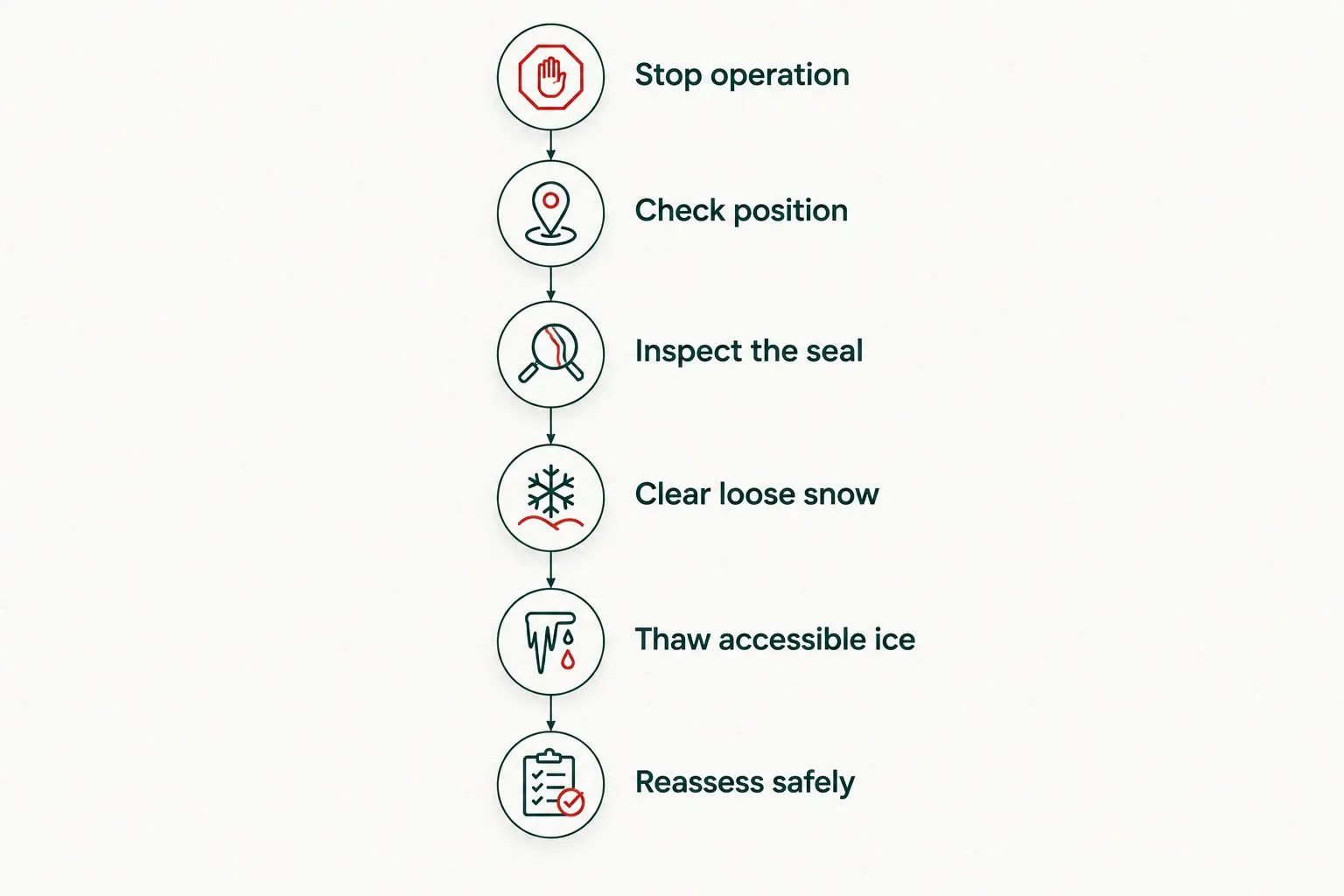
Check the door’s position before treating visible ice at the threshold.
Separate a frozen seal from a mechanical fault
Use the visible condition to decide what to do next. This table guides safe observation; it does not replace an inspection or prove which component has failed.
| Visible condition | What it tells you | Best for | Benefit and limit |
|---|---|---|---|
| Ice joins the bottom seal to the floor; door appears level | An ice bond needs attention before operation | Careful floor-level thawing | Releases accessible ice, but does not rule out another fault |
| Bottom seal has pulled away or torn | The seal needs inspection after the door is made safe | Seal assessment | Addresses the damaged edge; thawing alone will not repair it |
| Door is crooked or a cable hangs loose | The lifting system needs professional inspection | Professional garage door repair | Avoids handling loaded hardware; the door must remain unused |
| Door is partly open with ice or damage visible | The door is not safely secured in its normal closed position | Professional assessment | Avoids attempting to move a potentially unstable door |
| Ice is gone but the door still will not move normally | Frozen adhesion is not the complete explanation | Door and opener diagnosis | Identifies the remaining fault; repeated opener attempts do not |
Do not loosen a bracket, straighten a track, reposition a cable, or touch a spring to test a theory. Those components are part of a loaded system. A safe inspection ends at looking and reporting what you see.
How do you thaw the bottom seal without damaging it?
Apply gentle warmth to accessible ice, not force to the door. Work from the side where the frozen edge is visible and your footing is secure. Keep your hands outside the space beneath the door.
For a small exposed ice bond, hold a warm, damp cloth against the ice at floor level. Let the warmth soften the bond rather than scraping it off. Stop if reaching the affected area would require you to kneel on an icy slope, reach beneath the door, or work near exposed electrical equipment.
Remove loosened slush and accessible moisture without tugging the rubber. Adding more water creates more cleanup and gives that water somewhere to freeze again. Do not use boiling water: abrupt heat and additional runoff are unnecessary risks around a cold seal and slippery driveway.
Do not run a vehicle inside the garage to create heat, even with a door or window partly open. Vehicle exhaust creates a carbon monoxide hazard. Avoid torches, fuel-burning heaters, and improvised heating arrangements around the threshold.
A seal that remains stuck, tears, or separates from its mounting needs professional attention. Stop there. You do not need to remove the seal to confirm that something is wrong.
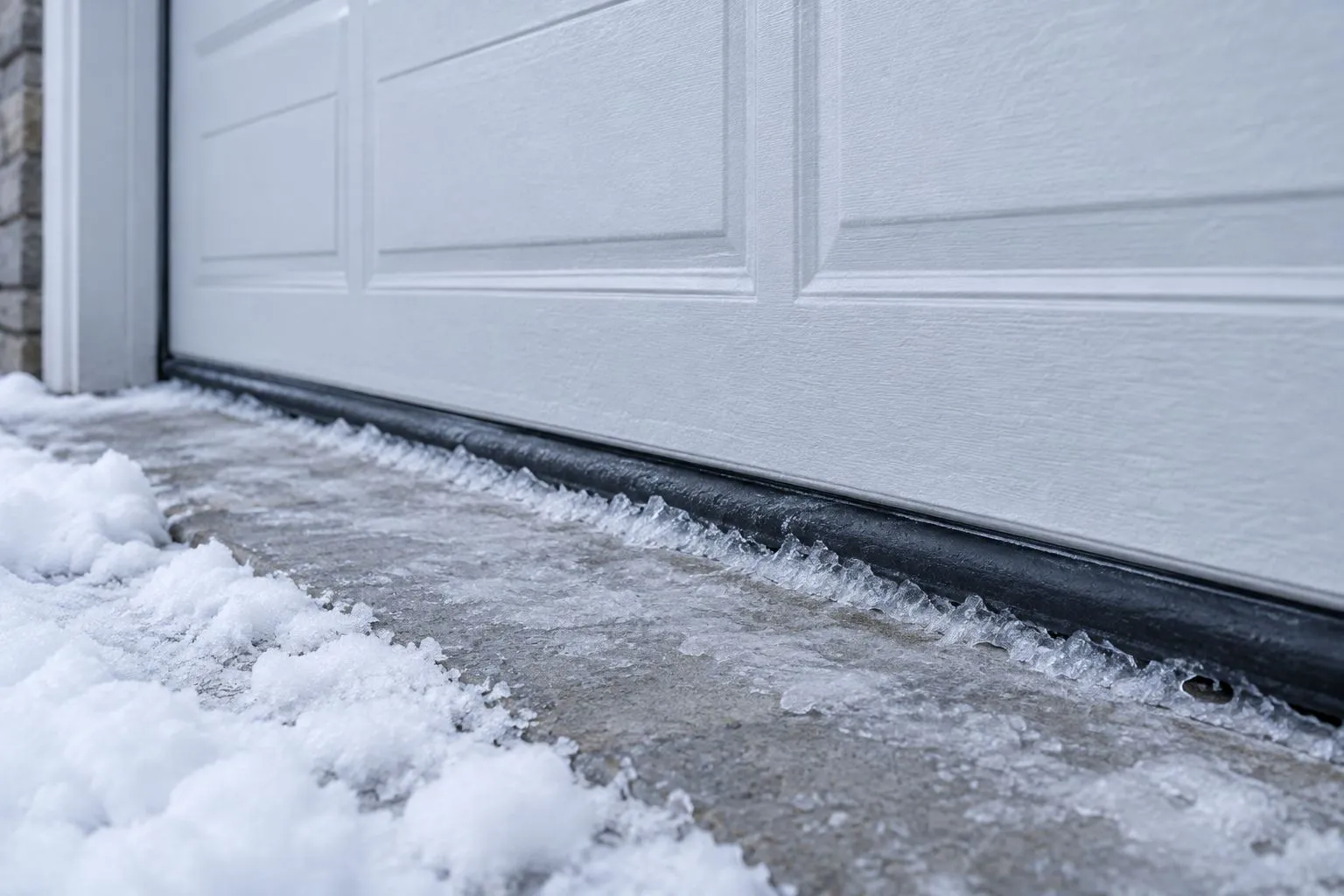
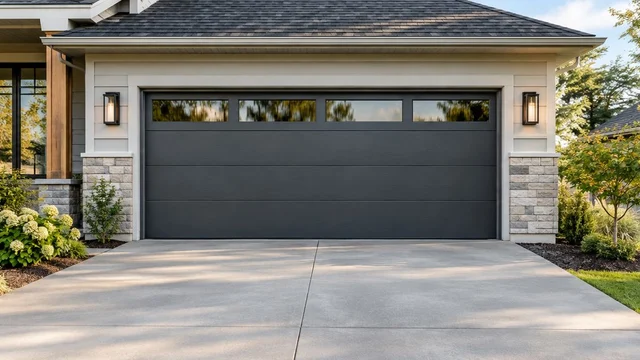
Illustrative photo: an ice bond at the floor is different from a damaged lifting system.
Why a garage door freezes shut
A frozen bottom seal needs moisture and a cold enough contact surface. Water freezes at 32°F, or 0°C, under ordinary conditions. The temperature at the threshold matters more than whether the garage feels comfortable elsewhere.
Look for these contributors at your own property rather than assuming every Northern Kentucky driveway behaves the same way:
- Water at the threshold. Meltwater, rain, or tracked-in moisture can collect where the seal meets the floor. Check where the water comes from and where it drains.
- Snow against the door. Snow left along the bottom edge supplies moisture as it melts. Clearing loose snow reduces that source without disturbing the door hardware.
- A wet bottom seal. Water trapped along the rubber-to-concrete contact can freeze into a bond. Inspect the accessible seal after the door is operating safely.
- Uneven floor contact. A threshold with low spots gives water somewhere to collect. Note puddles and gaps rather than adjusting the door to compensate yourself.
- Damaged sealing material. Torn or displaced rubber needs assessment. Repeated thawing does not correct an existing tear or poor fit.
The right follow-up depends on the actual source. A sound seal with snow piled against it calls for different action from a torn seal over a puddling threshold. Fix the recurring condition, not just the morning’s ice.
Should you pull the emergency release on a frozen door?
Do not pull the emergency release as a first response to a frozen garage door. Disconnecting the opener does not melt the ice, and the release is not a workaround for spring or cable damage.
Leave the release alone when the door is partly open, crooked, visibly damaged, or of uncertain support. A door disconnected from its opener still depends on its lifting system. You cannot confirm that system’s condition merely because the motor stopped.
If manual operation becomes necessary after the ice is gone, follow the opener manufacturer’s instructions and obtain professional guidance when the door’s condition is uncertain. Never pull hard on a handle, lift one corner, or recruit someone to force the door upward. Resistance is a reason to stop.
Does a frozen garage door need repair or replacement?
A frozen bottom seal alone is not a reason to replace the whole garage door. Separate the immediate ice problem from any damage found after safe release.
| Option | Best for | Advantage | Limitation |
|---|---|---|---|
| Thaw and dry the threshold | An isolated ice bond with no visible damage | Addresses the immediate obstruction | Does not correct recurring water collection |
| Repair or replace sealing material | A torn, displaced, or poorly fitting seal | Targets the affected weather-sealing component | Does not repair springs, cables, or tracks |
| Repair the door or opener | A remaining mechanical or operating fault | Addresses the diagnosed problem | Requires inspection before choosing the repair |
| Assess full door replacement | Damage that an inspection finds unsuitable for repair | Considers the condition of the complete door | Is not justified by freezing alone |
Derby Strong’s garage door repair and installation services are relevant when an inspection identifies a repairable fault or a door that needs replacement. Ask for the diagnosis before deciding between those paths. Keep the conversation specific: what failed, what remains serviceable, and what work addresses the failure?
Opener replacement is a separate decision. A motor struggling against ice does not, by itself, prove the opener needs replacement. Have any continued operating problem assessed after the obstruction has been removed safely.
How should you prepare for professional service?
Tell the service provider whether the door is fully closed, partly open, or crooked. Explain whether ice remains visible and whether you heard an unusual sound before it stopped moving. Report observations without trying to name the failed component.
Take photographs from a safe standing position if helpful. Include the bottom edge, the door’s overall position, and any visible damage without approaching cables or springs. Do not recreate the failure to record a video.
Keep people and pets away from the door. If a vehicle is trapped inside, leave it parked rather than starting it while waiting. Clear a safe walking route where possible, but do not move items from beneath an unstable door.
For a Northern Kentucky business, tell staff that the affected overhead door is out of use. Separate pedestrians and vehicles from its opening, and identify another suitable access route if one exists. Do not let repeated shift changes turn into repeated opening attempts.
Frequently Asked Questions
What should I do first if my Northern Kentucky garage door is frozen shut?
Stop using the opener and look for ice along the bottom seal from a safe standing position. Leave a crooked, partly open, or visibly damaged door alone and arrange professional service.
Can I pour hot water on a frozen garage door?
Do not pour hot or boiling water across a frozen garage door threshold. Use gentle warmth on a small accessible ice bond and remove accessible moisture so it does not collect and refreeze.
Can I increase the opener force to break the ice?
Do not increase opener force to break an ice bond. Thaw accessible ice first, and stop operation if the door still resists or moves unevenly.
Should I pull the emergency release when the door is frozen?
Do not use the emergency release as the first response to a frozen door. It does not release the ice bond, and an uncertain or damaged lifting system makes manual operation unsafe.
Does a frozen bottom seal mean I need a new garage door?
A frozen bottom seal alone does not mean you need a new garage door. Assess sealing damage, recurring moisture, and any mechanical fault separately before choosing repair or replacement.
Why does my garage door freeze shut again after I thaw it?
Recurring freezing means moisture is returning to the seal-to-floor contact and freezing there. Check for snow accumulation, wet sealing material, and water collecting at the threshold.
Who handles a frozen garage door that still will not open after thawing?
A garage door service professional should inspect a door that remains stuck after accessible ice is gone. Derby Strong provides garage door repair and opener service in Northern Kentucky; leave the door unused until its condition is assessed.
One Last Thing Before You Decide
Once the door operates safely, look at the threshold while it is wet—not only after it freezes. The location of a puddle can reveal the recurring problem more clearly than a frozen seal does.
Record where water collects and show that observation during service. A thaw solves the immediate bond; understanding the water’s path helps you choose a lasting correction without replacing parts that are still sound.