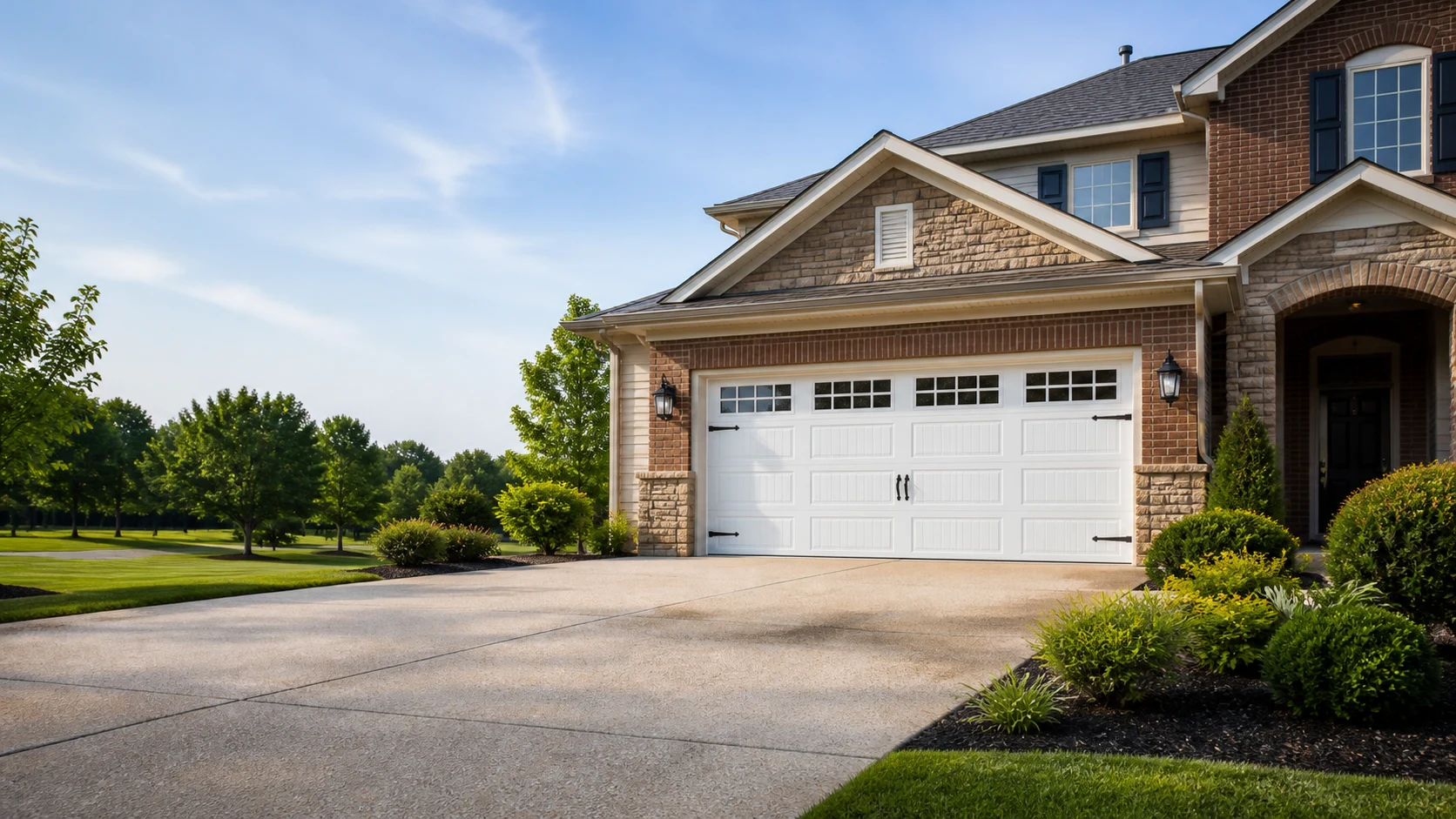
White sectional garage door closed tight against a Kentucky driveway

Garage Door Bottom Seal and Weatherstrip Replacement in Petersburg, KY

Older Petersburg houses from Market Street to Second Street were built without garages, so the garage door bottom seal belongs to a door added later. We fit a seal to that door's retainer and replace side strips that let damp air slip past.

Doors added later to old Market Street houses still need a fitted seal.

Get Your Free Weather Seal Quote

Bottom seal, perimeter, and threshold • No-obligation quote

Step 1 of 2
Required field
Required field
Required field

Seal check

6 Signs Your Garage Door Seals Have Failed

  • 01
    Daylight under or around the closed doorStand inside with the door closed and the lights off. Light at the floor means the bottom seal has flattened, split, or no longer reaches an uneven slab; light at the sides or top means the perimeter stop molding has pulled away or hardened.Light at the floor or edges means a seal has failed.
  • 02
    A cracked, brittle, flattened, or torn bottom sealVinyl and rubber harden with sun, salt, and freeze-thaw cycles. A seal that no longer springs back, shows splits at the ends, or has worn through to the retainer is no longer sealing.A hardened, split or worn-through seal no longer seals.
  • 03
    Water, leaves, or grit coming in at the floorA seal that lifts on one side or a slab that has settled lets wind-driven rain and debris under the door. Puddles near the edge, damp cardboard, or a tide line on the concrete are the usual tells.A lifted seal or settled slab lets rain and debris in.
  • 04
    Drafts, cold floors, or a garage that swings with the weatherThe bottom and perimeter seals are the largest gap in the garage envelope. When they fail, an attached garage loses conditioned air, and the rooms above and beside it feel it.Failed seals let conditioned air out of the garage.
  • 05
    Mice, insects, or spiders finding their way inA quarter-inch gap is enough for a mouse. Chewed seal ends and droppings along the door line point to an entry at the bottom corners or where the seal meets the jamb.A quarter-inch gap is enough for a mouse.
  • 06
    The retainer or stop molding is bent, loose, or rottedA bottom seal is only as good as the aluminum or PVC retainer that holds it, and perimeter weatherstrip depends on sound jambs. Damaged retainers and rotted wood stops need correcting, not just a new strip.Bent retainers or rotted stops need repair, not just a strip.

What to do now

Do the light test tonight. Then tell us what you saw.

Close the door, turn off the garage lights, and look along the floor and up both sides. Note where the light shows: bottom, one corner, the sides, or the top, and whether the floor looks uneven. That tells us whether you need a bottom seal, perimeter stop molding, a threshold, or all three, and we can usually bring the right profile on the first visit.

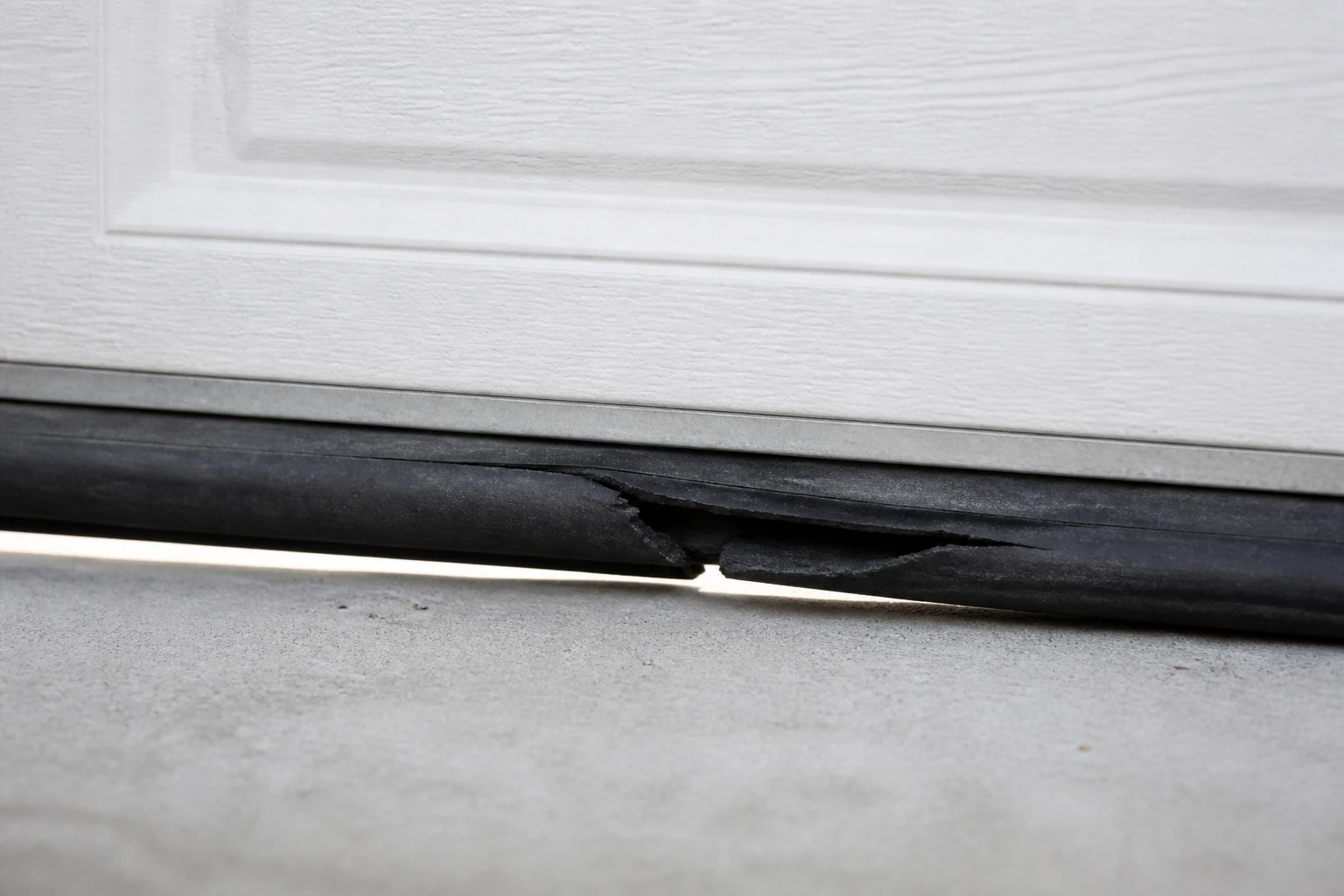
Split, brittle garage door bottom seal with daylight showing through
A split, hardened bottom seal lets light, water, and pests in at the floor. It is the most common seal failure we see.

Customer reviews

Kentucky homeowners recommend Derby Strong.

Understand your options

Choose the right seal for your garage

Know the seals

Bottom Seal vs. Perimeter Weatherstrip: Which One Is Leaking?

Along the floorBottom seal
Up the sides and across the topPerimeter weatherstrip
What it is A rubber or vinyl strip seated in the aluminum or PVC retainer on the door’s lower edge Vinyl stop molding with a flexible fin nailed or screwed to the jambs and header
What it stops Water, wind, grit, insects, and mice at the floor, the largest gap on the door Side and top drafts, driving rain, dust, and the rattle of the door against the stops
Sign it failed Daylight at the floor, a flattened or split strip, puddles or tide lines inside Light at the edges, a hardened or curled fin, a gap between molding and door face
Styles and profiles T-end, bead, U-shape, bulb; standard or oversized; rodent-resistant with mesh core Vinyl stop molding with fin; solid or hollow; white, brown, or color-matched
Along the floor

Bottom seal

Rubber or vinyl fitted into the retainer on the door’s lower edge.

Stops
Water, wind, grit, insects, and mice at the floor.
Replace when
You see daylight, splits, flattening, or water lines inside.
Common profiles
T-end, bead, U-shape, bulb, and rodent-resistant.
Sides and top

Perimeter weatherstrip

Vinyl stop molding with a flexible fin fitted to the jambs and header.

Stops
Side and top drafts, rain, dust, and door rattle.
Replace when
You see edge light, a curled fin, or a gap beside the door.
Common profiles
Solid or hollow vinyl in white, brown, or matched colors.

Uneven floor? That is what a threshold seal is for.Uneven floor? Add a threshold.

A raised rubber threshold bonded to the concrete gives the bottom seal something level to land on, turns water away from a slab that slopes toward the garage, and closes a low corner no bottom seal can reach. It is added to a bottom seal, not substituted for it.A bonded rubber threshold gives the bottom seal a level surface and helps turn water away. It works with—not instead of—the bottom seal.

Not sure what you have? Send a photo of the bottom corner of the closed door from inside, and a close-up of the retainer edge if you can reach it safely. We can usually identify the profile before the visit.

The complete seal

Three Seals That Close the Garage Door Envelope

01

Bottom seal with retainer

The single most important seal on the door. A compressible rubber or vinyl strip seated in the bottom retainer closes the gap to the floor against water, air, and pests. Oversized profiles handle uneven slabs; rodent-resistant versions add a metal mesh core.Closes the floor gap against water, air and pests.

02

Perimeter weatherstrip (stop molding)

Vinyl stop molding with a flexible fin runs up both jambs and across the header. It seals the side and top gaps, blocks drafts and driving rain, and keeps the door from rattling against the stops.Seals the side and top gaps and stops door rattle.

03

Threshold seal

A raised rubber barrier bonded to the concrete where the door closes. It is the answer when the slab slopes toward the garage, water tracks in under the seal, or the floor is too uneven for a bottom seal alone.A floor barrier for sloped or uneven slabs.

Seal selection

The Four Things We Match Before Fitting a Seal

  1. 01

    Retainer profile and seal style

    Bottom seals come in T-end, bead, U-shape, and bulb styles, each made for a specific retainer channel. We match the profile to your door’s retainer rather than forcing a near-fit that leaks at the ends or pulls out of the track.We match the seal profile to your retainer.

  2. 02

    Floor condition

    Many Kentucky garage slabs have settled, cracked, or sloped toward one corner. An oversized or U-shape seal fills a low spot; a badly uneven floor may also call for a threshold seal bonded to the concrete.We check the slab for slopes and low spots.

  3. 03

    Perimeter stop molding and jambs

    Vinyl stop molding with an integral flexible fin seals the sides and top. We check the fin for hardening and the jambs for rot, and set the molding so it touches the door face without dragging.We check the side and top fins and the jambs.

  4. 04

    Material for the climate

    EPDM rubber stays flexible through Kentucky winters where thin vinyl turns brittle; silicone lasts longest. Solid versus hollow trim, black versus gray, and rodent-resistant seals with a mesh core are chosen for the exposure the door sees.Flexible material, rodent-resistant where needed.

Why the ends matter: most do-it-yourself bottom seals fail at the corners, where the strip was cut flush and shrank back, leaving the exact gap a mouse or a stream of water needs. We leave extra length and fold it into the retainer at each end, then re-check the opener’s travel limit so it does not crush the thicker new seal.Corner fit matters. We fold extra seal into both ends, then check the opener so the new seal is not crushed.

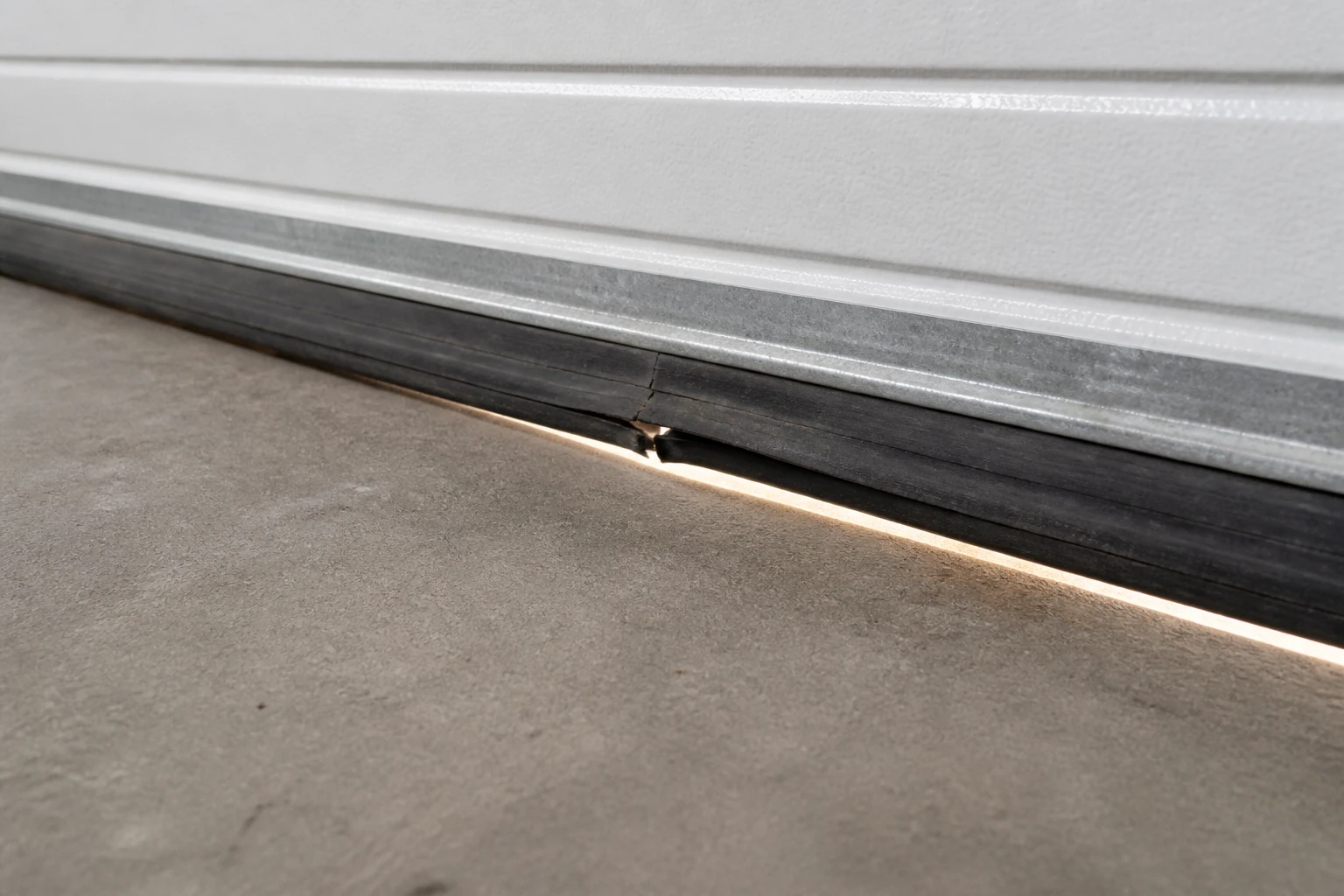
Worn garage door bottom seal with a visible gap and daylight below Worn · Gap and daylight at the floor
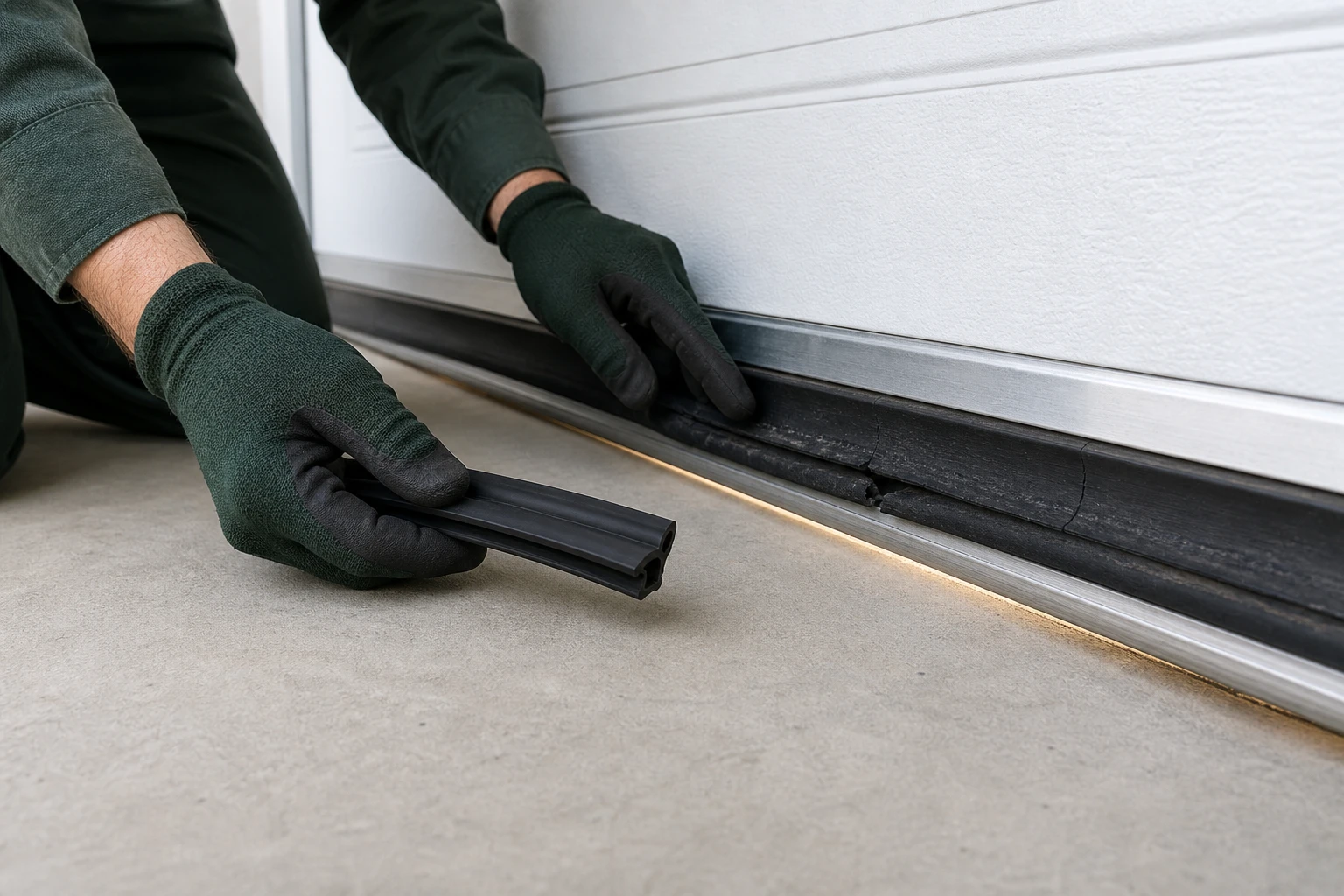
Technician fitting a new rubber bottom seal on a white garage door New · Seal fitted to the retainer
A flattened seal that has pulled away from the floor, and a new seal being fitted into the retainer where it can compress against the slab.

Service and pricing

What Seal Replacement Includes—and What It May Cost

Four clear stepsHow installation works

  1. 01

    Inspect the whole door edge

    The technician checks the bottom seal and retainer, the perimeter stop molding and jambs, the header seal, and the floor line for gaps, wear, rot, and water tracks.We check the bottom, sides, top, retainer, and floor for gaps or damage.

  2. 02

    Match the seal to the door

    Profile, size, and material are selected for your retainer, door width, and floor condition, so the new seal seats correctly and seals at the ends.We match the profile and material to your door, retainer, and floor.

  3. 03

    Replace, reseat, and set

    Old material is removed, the retainer or stop molding is repaired or replaced where needed, and the new seal is fitted with extra length folded at the ends rather than cut short.We remove the old material, make needed repairs, and fit the new seal.

  4. 04

    Close, test, and check the light

    The door is closed and checked from inside for daylight, the seal contact is verified across the full width, and the travel limits are confirmed so the opener does not crush the new seal.We close the door, check for light, and confirm even contact and travel.

Garage door weatherstripping across Petersburg

On a Petersburg garage, the bottom seal closes the gap between the door and the floor. The town lies on flat ground against the Ohio River. Older houses from Market Street out to Second Street were built without a garage, so the seal belongs to a door added later. Summers here are humid, so a tight bottom seal helps keep damp air out of the garage.

When the bottom seal cracks or flattens, drafts and damp air slip under the door. We fit a new seal to the door's retainer, cut to the door's width. The side and top stops are renewed where they have shrunk away from the door. An uneven slab may need a threshold strip to close the gap. With the door down, the new seal meets the floor along its full length. A tight perimeter also helps any insulation in the door do its work.

Service area coverage

Local ZIP: 41080

Open in Google Maps

Before you schedule

Answers to Common Garage Door Seal and Weatherstrip Questions

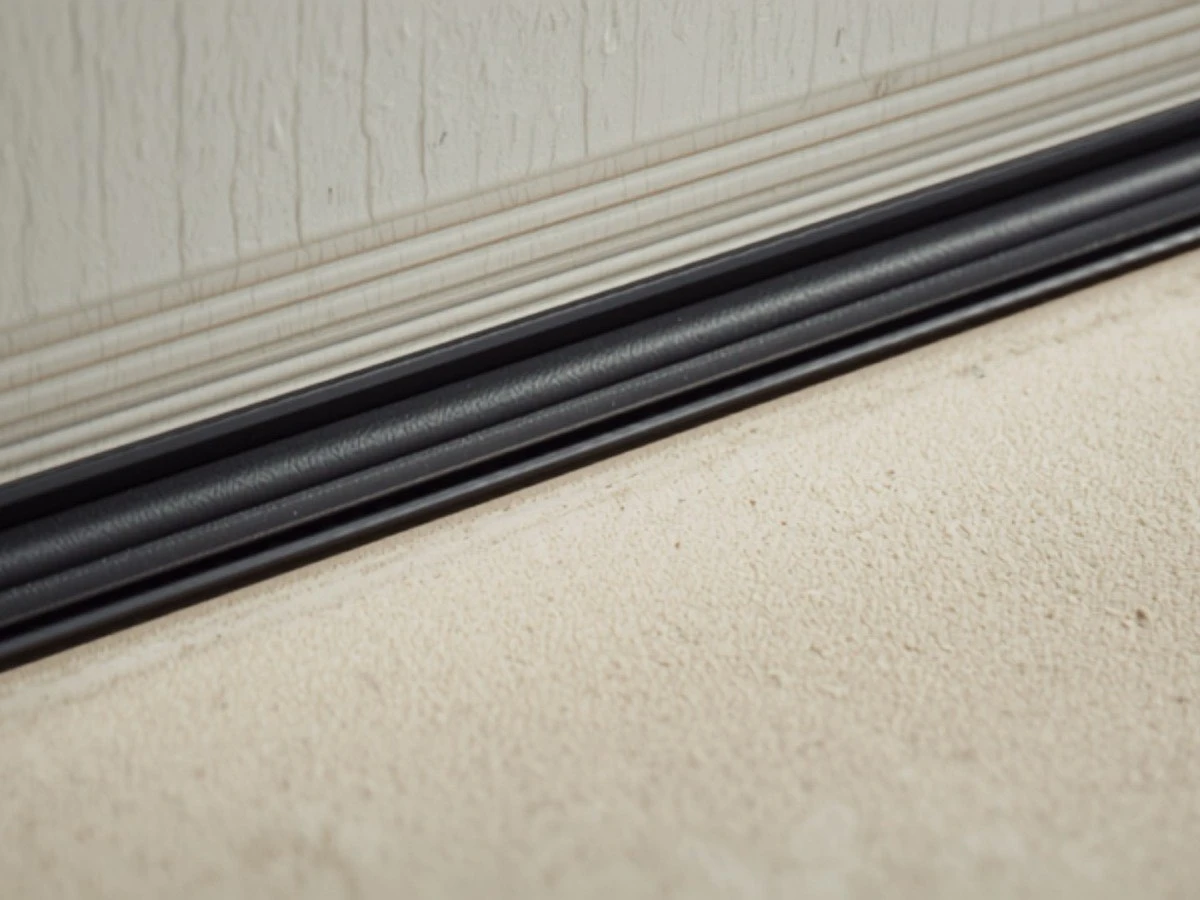
Bottom seal seated in its retainer and meeting the concrete floor
Bottom seal
T-end, bead, U-shape, or bulb; must match the retainer channel
Retainer
Aluminum or PVC channel on the door’s lower edge that holds the seal
Stop molding
Vinyl perimeter weatherstrip with a flexible fin on both jambs and the header
Threshold
Rubber barrier bonded to the floor for sloped or uneven slabs
Seals at a glanceThe four parts that close the gap around a sectional door.
01What's the price range for garage door weatherstripping in Petersburg?

It depends on which seals your door needs. At the bottom, a new seal runs $95–$165 installed on a single door, or $125–$195 on a double. Vinyl stop molding around the sides and header usually costs $150–$275, and a floor-mounted threshold seal is $110–$195. A rotted jamb or damaged bottom retainer adds to the job, and you'll see that quote before we begin. Usually the best value is to get the bottom seal and perimeter done on one trip.

02Which type of bottom seal does my garage door take: T-end, bead, U-shape, or bulb?

It's set by the retainer your door already has. T-end seals are made for the most common aluminum retainer channel and slide right in. Many steel doors use a round-channel retainer, and that takes a bead seal. U-shape and bulb seals suit an uneven floor or a spot that needs a thicker profile. Show us a photo of the retainer edge, or bring a leftover bit of the old one, and we'll have it matched before the visit.

03Why do my garage door seals keep wearing out?

Sun, salt off the road and a door that opens and closes all day all wear seals out faster. Freeze-thaw cycles do too. Most bottom seals and weatherstrips give you three to eight years. Material counts: thin vinyl goes brittle quickest in cold weather, EPDM rubber keeps its flex longer, and silicone lasts longest. A yearly check before winter spots one that's close to failing.

04Why is there a gap under my garage door with a brand-new bottom seal?

Look at the floor first. Slabs can settle, crack or slope, and where a corner sits low, a standard seal won't reach it. One fix is an oversized or U-shape seal that fills the low spot. Another is a threshold seal bonded to the concrete, and you can use both together. A gap on only one side has a different possible cause: a door sitting crooked. That's a cable or track matter, not a seal matter.

05Is it possible to swap out the bottom seal myself?

With a level floor, a sound retainer and a standard steel door, this is one of the more approachable DIY garage door jobs. The common slip-ups are buying the wrong profile for the retainer and trimming the seal flush instead of leaving extra at each end to fold. Another is skipping the travel-limit re-check on the opener, and then it crushes the thicker new seal. It's time for a professional once water is coming in regularly, the retainer is bent, rodents are getting into the garage, or the jambs are rotted.

06Which part is the bottom seal, and which is the weatherstripping?

Weatherstripping is another name for stop molding. It's the vinyl trim that lines both sides and the top of the opening, with a flexible fin that seals against the door face. The bottom seal is a separate strip on the door's lower edge, where it meets the floor. If you have a draft or a water problem, the bottom seal is usually involved. Rattles and drafts at the sides usually come from the perimeter molding.

07Mice keep getting in. Will new seals help?

They'll help. The bottom corners are where mice mostly squeeze in, along with the spot where the seal and jamb meet, and new seals shut those gaps. If rodents have been a problem, pick a rodent-resistant seal for the bottom. Its metal mesh core resists chewing. Have the stop molding around the door set tight to the jambs too. Seals cover just one part of pest control, though. They're not the whole answer.

08Are garage door seals worth it for energy use?

On an attached garage, yes. It's joined to your living space by shared walls, and often a ceiling too. Meanwhile, the door perimeter is the largest gap in the garage that's left uncontrolled. Sound seals stop conditioned air from escaping and keep wind from coming in. That steadies the garage temperature and helps an insulated door do its job. Seals are also the lowest-cost part of the door to get right.

09Which seal color and profile do you use on a garage door?

We pick by the door's exposure. On most Kentucky doors, we fit a flexible EPDM bottom seal, either black or gray, and pair it with standard vinyl stop molding. Black takes in more heat, so it's the pick for cold climates. Gray runs cooler in strong sun. For trim, we'd use a solid profile in colder regions and a hollow one in warmer regions.

10Do I need to adjust my garage door opener after a new seal?

It may need it. Your old seal has been squashed flat, so the new one is thicker. If the opener's travel limit still matches the old seal, it can stop the door short or reverse it. Once we install the seal, we check and adjust the limit. That way the door shuts completely and the safety reversal still works.

11What does a bad garage door seal look like?

A worn seal usually looks cracked, flattened or brittle. You may also see daylight around the edges or under the door when it's shut, water or leaves blowing in, or drafts at the floor. Mice in the garage are another giveaway, since a gap has often opened between the bottom seal and the floor.

Local help for a drafty, leaking, or pest-prone door

Tell us where the light shows. We’ll bring the right seal.

Let us know whether it is a single or double door, where you see light or water at the bottom, sides, or top, whether the floor looks uneven, and whether you have had pests. We will confirm the materials and price before work begins.

  • Single or double door
  • Light or water at the bottom, sides, or top
  • Uneven floor, pests, or rotted trim
Call (859) 306-0782

Request Weather Seal Service

Serving Petersburg and nearby Northern Kentucky communities. Share the essentials and we’ll call to confirm the right service timing.

Step 1 of 2
Required field
Required field
Required field

Derby Strong Garage Doors

Garage door trouble?

Talk to our local team now about a broken spring, a stuck door, an opener or a new door.

Call (859) 306-0782 Schedule online

5.0 from 307 reviews

Before you go

Pick your coupon

Choose an offer and we’ll save it with your request. Every visit includes a free safety inspection.

Choose one coupon

One coupon per household. Not combinable with other offers. Good for 30 days.