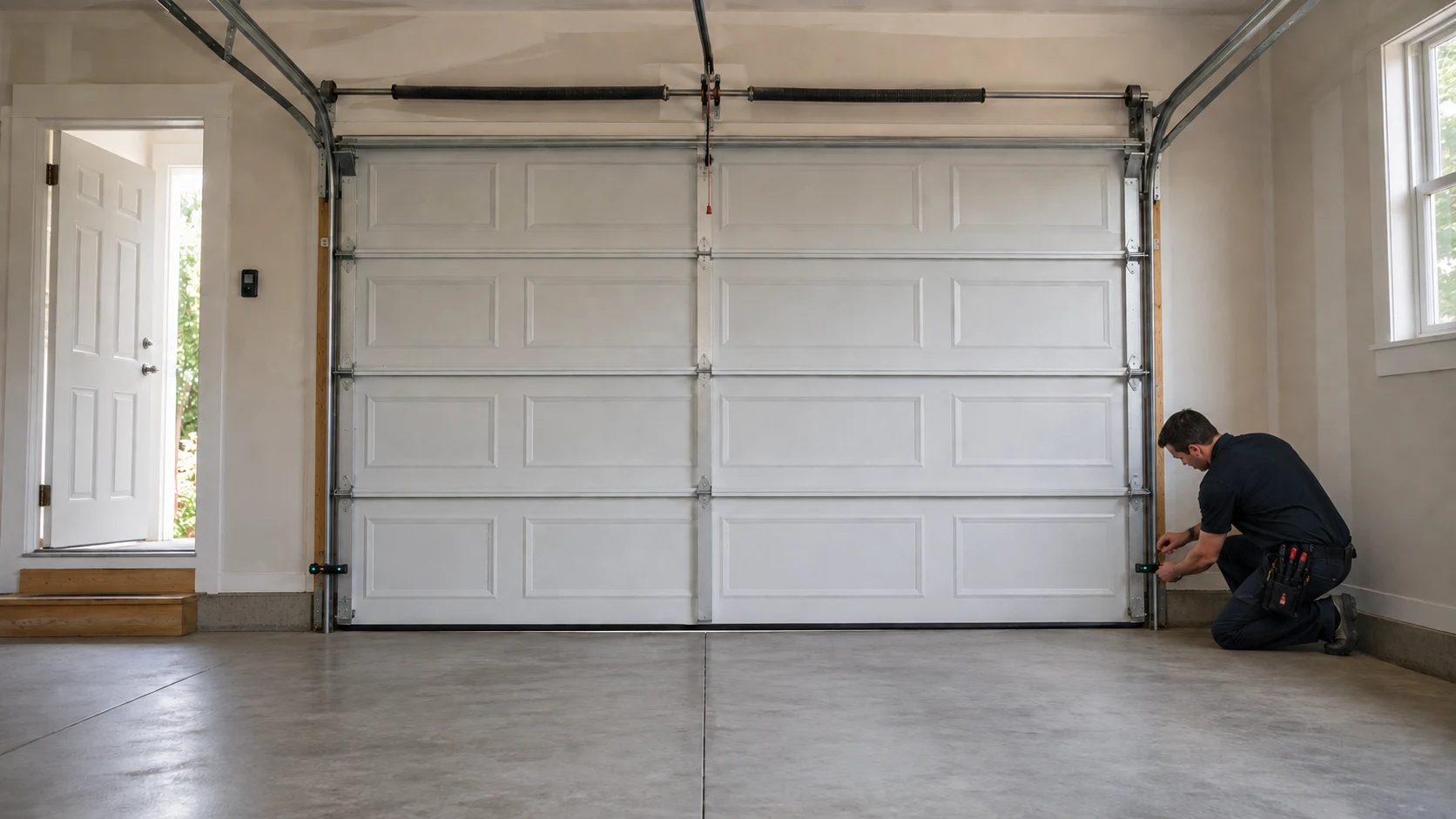




Garage door safety sensor service near the floor of a garage

Garage Door Sensor Repair in MainStrasse Village, KY

The Italianate row homes near Philadelphia Street are old, but their photo-eyes are modern safety parts, and garage door sensor repair in MainStrasse Village treats them that way. We fasten the brackets firmly to the frame, align the beam and test the reverse.

Row homes near Philadelphia Street need photo-eye brackets fastened firmly.

Get Your Free Sensor Repair Quote

Clear diagnosis • No obligation quote

Step 1 of 2
Required field
Required field
Required field

Safety check

6 Signs Your Garage Door Sensors Need Attention

  • 01
    The door starts down, then reversesWhen the photo-eye beam is blocked, interrupted, or not being received, the opener may stop and return the door to the open position.The beam is blocked or lost.
  • 02
    The door opens normally but will not closeSafety sensors affect closing travel. A clear opening with a door that still refuses to close points to alignment, wiring, sensor, or opener diagnostics.Alignment, wiring or a sensor fault.
  • 03
    One or both sensor lights are off or flickeringIndicator colors and flash patterns vary by brand and model, but a light that is not steady commonly signals an obstruction, alignment issue, lost power, or wiring fault.Obstruction, alignment or power.
  • 04
    The door only closes while the wall control is heldSome opener models allow constant-pressure closing when the safety circuit is not satisfied. Treat this as a warning, not a permanent workaround.A warning, not a workaround.
  • 05
    The problem appears at certain times of dayDirect sunlight can interfere with some receiving sensors. Moisture, vibration, or a marginal wire connection can also make the problem intermittent.Sunlight can disrupt the beam.
  • 06
    A bracket, lens, or low-voltage wire is damagedA bumped bracket, cracked housing, dirty lens, loose connection, corroded splice, or pinched wire can interrupt the beam or power supply.This can cut the beam or power.

What to do now

Keep the opening clear and do not bypass the sensors.

Remove only obvious objects from the beam path and gently wipe the lenses with a soft cloth. If the lights still blink or the door will not close normally, leave the automatic system unused until it is diagnosed.

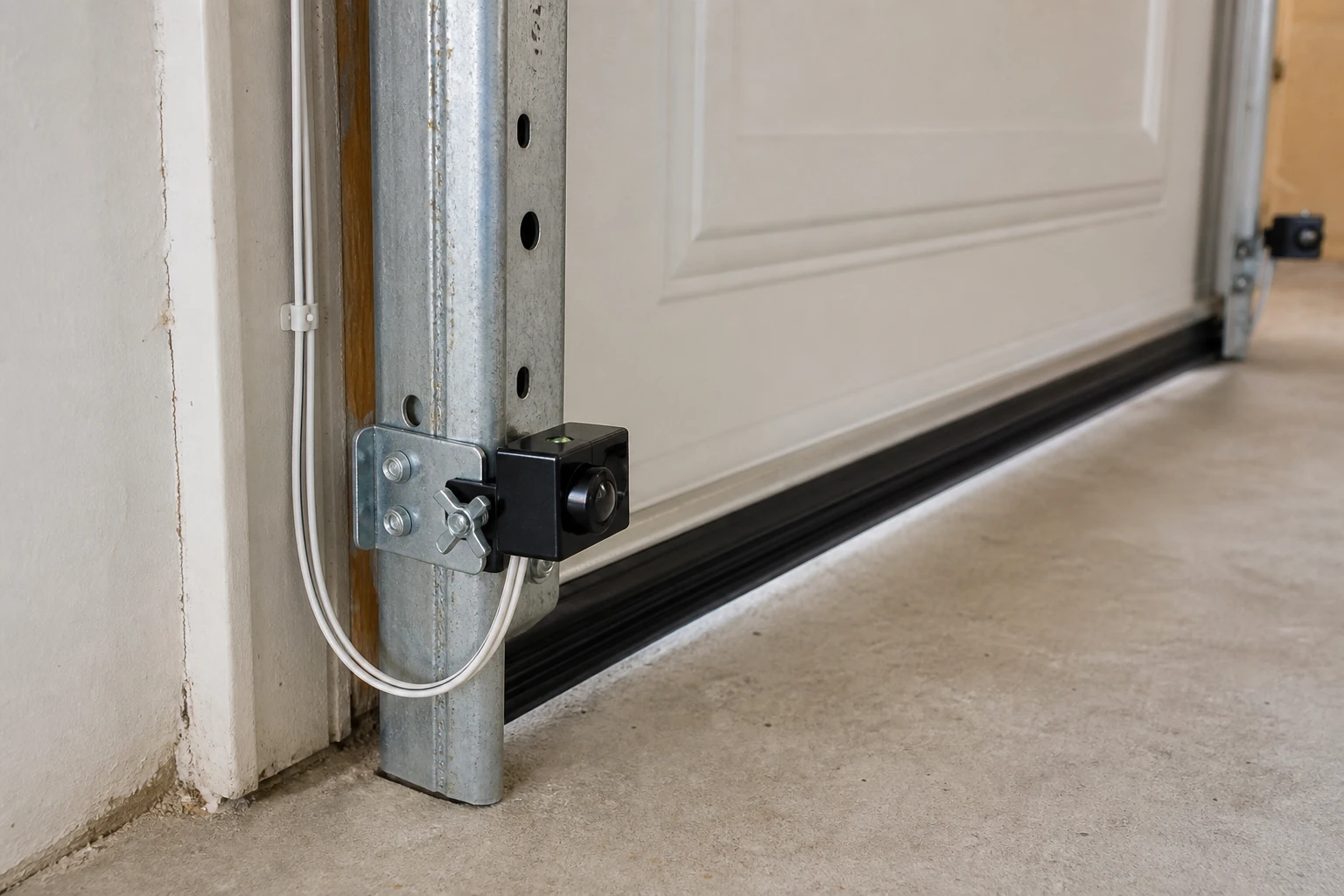
Photo-eye safety sensor near the floor with low-voltage wiring
A correctly mounted photo eye needs a clear, stable line of sight across the opening.

Customer reviews

Kentucky homeowners recommend Derby Strong.

Know the safety system

How the Two Garage Door Photo Eyes Work Together

One side of the openingSending photo eye
Opposite side of the openingReceiving photo eye
Primary job Projects the invisible beam across the doorway Confirms that the beam reaches the opposite side
Normal indication A steady LED usually confirms power A steady LED usually confirms power and alignment
Common issue Lost power, damaged wire, loose terminal, or failed unit Obstruction, misalignment, sunlight, wiring fault, or failed unit
Important detail LED color and flash codes vary by opener model The opener manual—not color alone—identifies the code
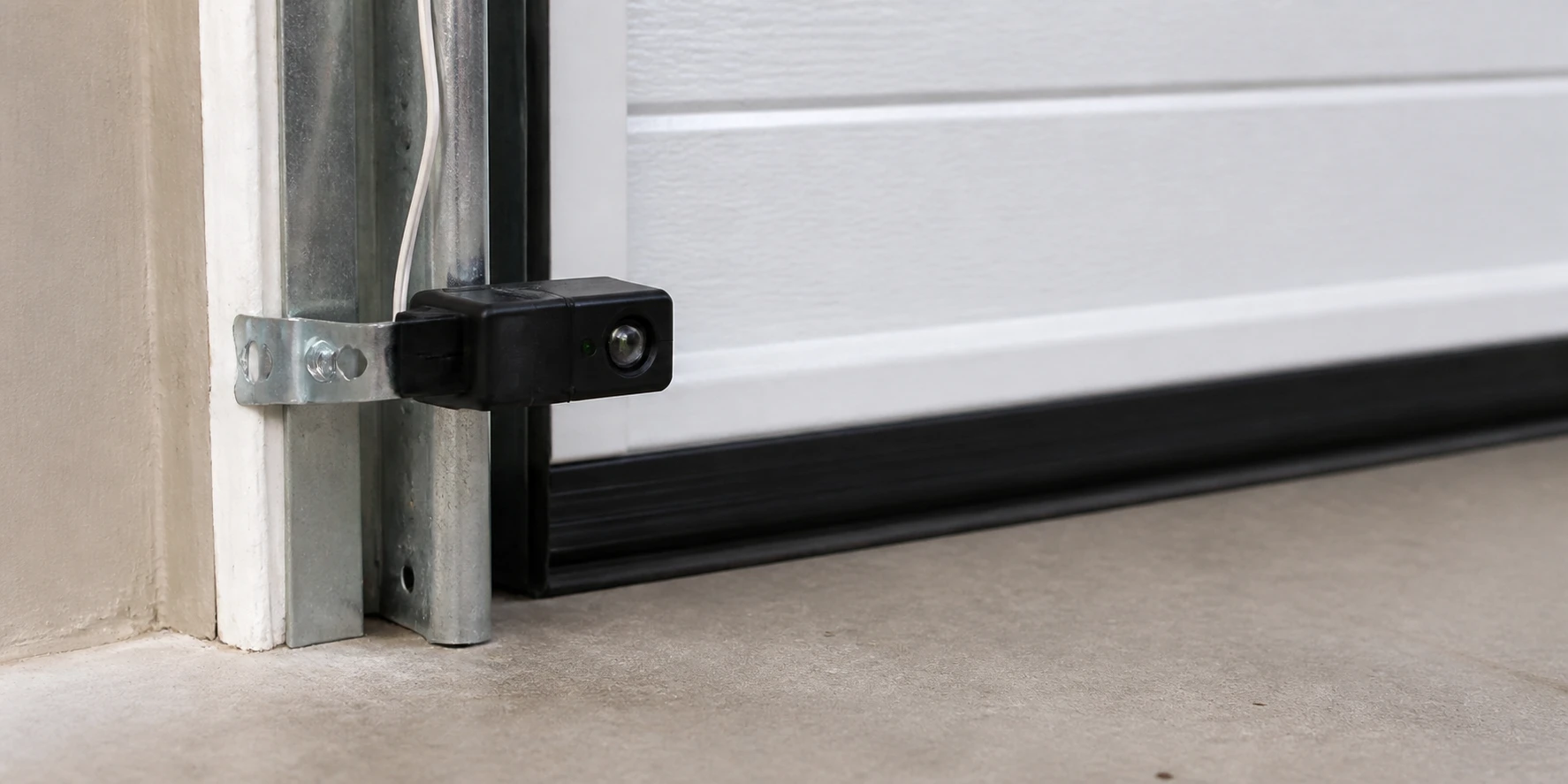
One side of the opening

Sending photo eye

Primary job
Projects the invisible beam across the doorway
Normal indication
A steady LED usually confirms power
Common issue
Lost power, damaged wire, loose terminal, or failed unit
Important detail
LED color and flash codes vary by opener model
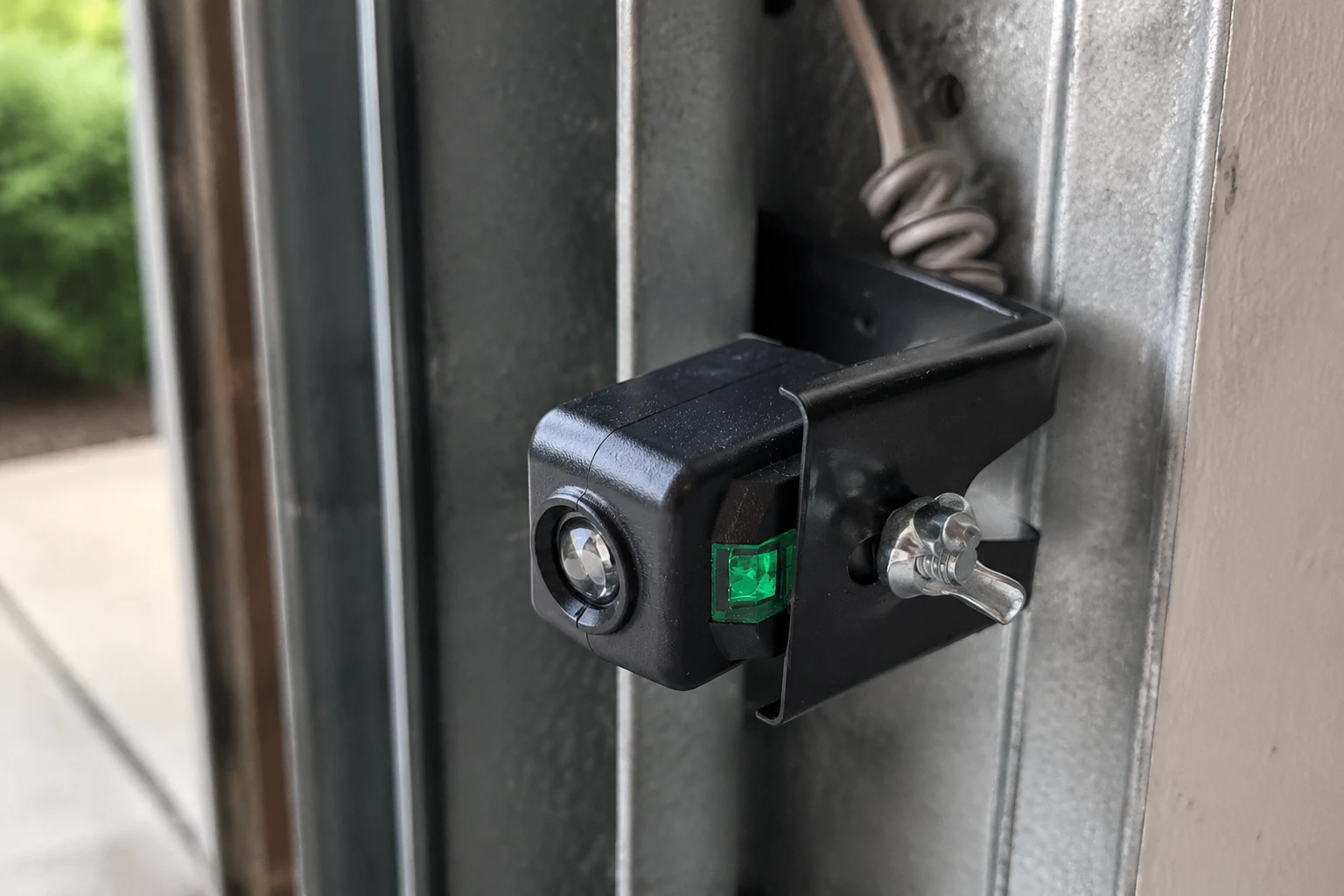
Opposite side of the opening

Receiving photo eye

Primary job
Confirms that the beam reaches the opposite side
Normal indication
A steady LED usually confirms power and alignment
Common issue
Obstruction, misalignment, sunlight, wiring fault, or failed unit
Important detail
The opener manual—not color alone—identifies the code

Photo eyes are one part of the reversal system.

The non-contact beam and the opener’s contact-reversal behavior are related safety functions, but they test different conditions. A complete service visit verifies the sensor response and the door’s closing behavior instead of assuming one successful light means the entire system is correct.

Not sure what you have? Send a clear photo of both sensors and the opener model label if it is safe to do so. We can often identify the general system before the appointment, then confirm compatibility on site.

Reliable sensor repair

What Makes a Safety-Sensor Repair Last?

Stable alignment and mounting

Both photo eyes need an unobstructed line of sight and brackets that remain secure when the track vibrates or the garage is used.Clear sight line and secure brackets.

Sound wiring and clean connections

The complete low-voltage path is checked for loose terminals, damaged insulation, shorts, corrosion, and vulnerable routing near the floor.Wiring and terminals checked end to end.

Model-compatible paired sensors

LED colors, diagnostic codes, wiring, and sensor generations differ. Replacement parts must be compatible with the exact opener and installed as a matched system.Replacement pairs matched to the opener.

Diagnose before replacing

The Four Checks That Separate a Quick Alignment From a Failed Part

  1. 01

    Beam path and lens condition

    We first rule out stored items, dirt, cobwebs, condensation, and direct light that can interrupt or overwhelm the photo-eye beam.Rule out dirt, objects and sunlight.

  2. 02

    Bracket position and stability

    Sensors must face each other at the height and location specified by the opener manufacturer. Bent or loose mounts can drift after a quick adjustment.Facing each other at the right height.

  3. 03

    Wiring from each sensor to the opener

    Loose terminals, reversed conductors, staples, cuts, corrosion, and hidden breaks can imitate a failed sensor or cause intermittent closing.Wiring can mimic a failed sensor.

  4. 04

    Opener model, diagnostics, and compatibility

    The opener manual and diagnostic code help distinguish alignment, wiring, failed photo eyes, and a control-board problem before parts are replaced.Diagnostic codes guide the repair.

Why sensors are commonly replaced as a pair: the sending and receiving photo eyes are designed to communicate as one monitored system. When replacement is needed, a compatible matched pair avoids mixing generations or protocols that the opener may not recognize.

Garage door safety sensor and wiring inspected before service Inspect · Sensor and wiring
Garage door photo-eye sensor secured beside the track after service Verify · Aligned and secure
The correct repair starts with the whole signal path, then ends with secure mounting and operational testing.

Service and pricing

What Sensor Repair Includes—and What It May Cost

Four clear steps

  1. 01

    Inspect the complete safety path

    The technician checks both photo eyes, the beam path, lenses, brackets, low-voltage wiring, terminals, opener diagnostics, and door behavior.The full safety path checked.

  2. 02

    Clean, align, and secure

    Serviceable sensors are cleaned, aimed precisely at each other, and secured so their indicator lights and signal remain stable.Aligned for a steady signal.

  3. 03

    Repair wiring or replace compatible parts

    Damaged connections and wiring are corrected, or a failed sensor pair is replaced with components matched to the opener model.Wiring fixed or pair replaced.

  4. 04

    Cycle and safety-test the door

    The door is operated through repeated closing cycles and the photo-eye response and required reversal behavior are verified before handoff.Reversal verified before handoff.

Safety sensor repair across MainStrasse Village

Near Philadelphia Street and West 6th Street, the Italianate row homes of MainStrasse Village are older houses inside an urban historic district. The photo-eyes on their garage doors are still modern safety parts. A pair of sensors must see each other across the opening before the door will close. Their brackets fasten to the framing beside the opening, so a knock can throw them out of line.

A safety sensor sends an invisible beam to its partner near the floor. If anything breaks that beam, the opener stops the door and reverses it. A dirty lens, a bumped bracket or a strand of cobweb can keep the door from closing. Damaged low-voltage wire along the wall does the same. We clean and realign each sensor, then repair or replace the wiring back to the motor. The door should close fully and reverse when the beam is broken.

Service area coverage

Local ZIP: 41011

Open in Google Maps

Before you schedule

Answers to Common Garage Door Sensor Repair Questions

Garage door safety sensor inspected before repair
Drag to compareSensor inspection compared with a clean, powered, and securely aligned photo eye.
01How much do garage door safety sensors cost to fix or replace in MainStrasse Village?

Expect $150 to $270 for typical safety-sensor service on a home garage door. A simple cleaning or alignment usually sits at the lower end. The price may climb if the job calls for bracket work, a compatible sensor pair or a repair to accessible wiring. Long wiring reruns, unusual parts, opener control-board work, after-hours service and commercial systems may land outside that range.

02Why won't my garage door go down after it opens?

The opener won't close until its safety sensors report a clear doorway. Dirt on a lens, a loose bracket, sensors out of line, something blocking the beam, a damaged wire, an opener diagnostic fault or a dead sensor can stop that. Clear anything obvious and wipe the lenses gently. Don't bypass the sensors, and don't keep forcing the door.

03What should I make of a flashing or unlit sensor light?

The answer changes with your opener's brand and model. A flashing receiving light often means the beam is obstructed or misaligned. An unlit sensor suggests lost power, incorrect wiring, a broken or loose wire, or a component failure. Only replace parts after you've checked the opener manual and the diagnostic code.

04Do I need a technician for dirty or misaligned garage door sensors?

Not always. Some of it is safe to do yourself. Open the door fully and wait until it stops moving. Clear any obvious obstruction. Then gently clean each lens using a soft, clean cloth. If a sensor was lightly bumped, check its alignment from the floor. Follow your opener manual exactly. Call for service if you find damaged housings, terminals, wires or brackets. Do the same if the lights flicker or the door still won't close normally.

05Can garage door photo eyes be jumped or disabled?

No. They're a working part of the opener's entrapment-protection system, so they shouldn't be disabled, taped over, relocated or bypassed for good. Some openers allow temporary closing with constant pressure on the wall control, but that varies by model and doesn't count as a repair. Keep the whole opening in sight, follow the manufacturer's steps and set up service promptly.

06Can bright sun block garage door sensors?

Yes, and weather can too. Direct sun can overwhelm some receiving sensors. Damp low connections, dirt, condensation, corrosion and temperature shifts cause on-and-off faults. A technician should confirm the pattern. The alignment, mounting, wiring or hardware then gets corrected with compatible parts. Taping over the lens isn't a fix.

07When do garage door sensors need replacing instead of repair?

Replacement is usually the answer for a cracked housing, water damage or failed internal electronics. The same goes for obsolete, incompatible components and LEDs still unstable after verified wiring. A clean, undamaged, powered, compatible pair may need nothing more than alignment or a secure bracket. Rule out the wiring and opener board before anything else.

08Will any garage door sensor work with my opener?

No. Sensors differ by the opener's brand, model and age, the wiring method, the monitoring protocol and generation. Two that look the same can still fail to talk to the opener. That's why we identify your opener model and install a matched, compatible pair, never unchecked mixed parts.

09What does sensor service by a technician involve?

The technician should inspect the wiring, terminals, brackets, lenses, beam path, indicator lights and opener diagnostic codes, then explain the quote. Sensors worth servicing get a cleaning and alignment, the rest are swapped for compatible replacements, and the mounting is secured. Before handoff, the technician runs the door and verifies photo-eye and reversal response.

Local help for a door that will not close

Tell us what the lights and door are doing.

Share whether the door starts down and reverses, whether either sensor light is blinking or off, and whether the issue changes with sunlight. Keep the opening clear and do not bypass the safety system.

  • Door reverses or will not close
  • Sensor lights steady, blinking, or off
  • Issue is constant or time-of-day related
Call (859) 306-0782

Request Sensor Repair

Serving MainStrasse Village and nearby Northern Kentucky communities. Share the symptoms and we’ll call to confirm the right service timing.

Step 1 of 2
Required field
Required field
Required field

Derby Strong Garage Doors

Garage door trouble?

Talk to our local team now about a broken spring, a stuck door, an opener or a new door.

Call (859) 306-0782 Schedule online

5.0 from 306 reviews

Before you go

Pick your coupon

Choose an offer and we’ll save it with your request. Every visit includes a free safety inspection.

Choose one coupon

One coupon per household. Not combinable with other offers. Good for 30 days.