Smooth flush steel
A clean face with minimal embossing for contemporary and transitional homes.
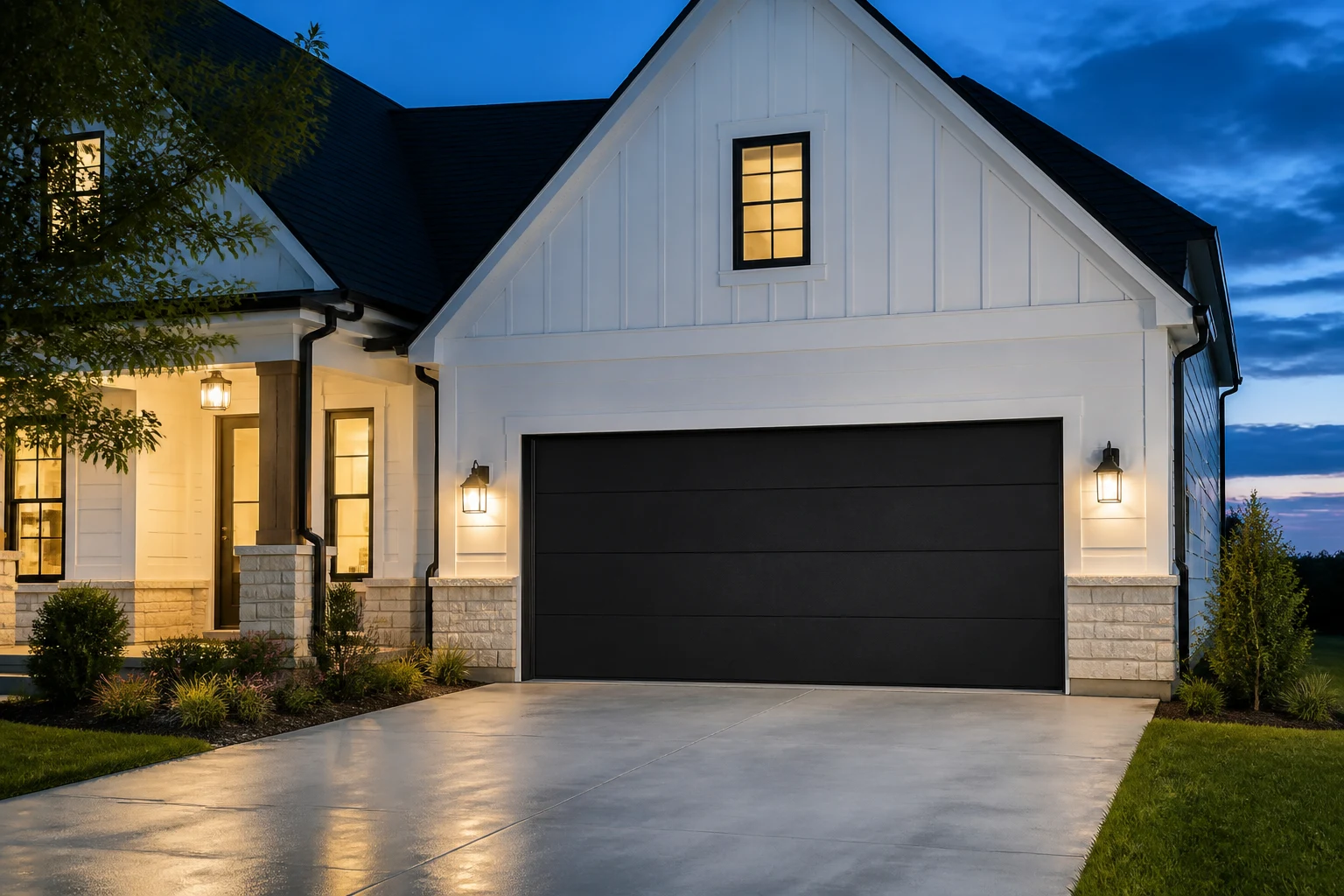
Where a rebuilt street left a Latonia Lakes driveway sloping toward the garage, modern flush and plank garage door installation starts with a tight bottom seal. On a steep lot such as Walnut Road, we shape the seal to the uneven floor.
Sloped Latonia Lakes drives need a flush door with a tight bottom seal.




Modern Doors Explained
Modern garage doors trade raised panels for clean, flat faces. A flush door has a smooth or lightly textured surface. A plank or grooved door adds horizontal lines that echo lap siding and contemporary trim.
Most are insulated steel, often finished in black, charcoal or a wood-look print. Many add a long row of glass or stacked windows set off to one side. Composite and faux-wood faces are available when you want real texture.
Smooth faces show more than raised panels do. Section joints, window placement and sun on a dark color are worth reviewing up front, and we check each of them against your home before the order is placed.
Surface and Construction
A clean face with minimal embossing for contemporary and transitional homes.
Subtle horizontal lines add rhythm without a traditional raised-panel pattern.
Printed and embossed steel creates a plank appearance with simpler upkeep than real wood.
A deeper engineered face provides stronger grain and dimensional detail.
Popular Styles
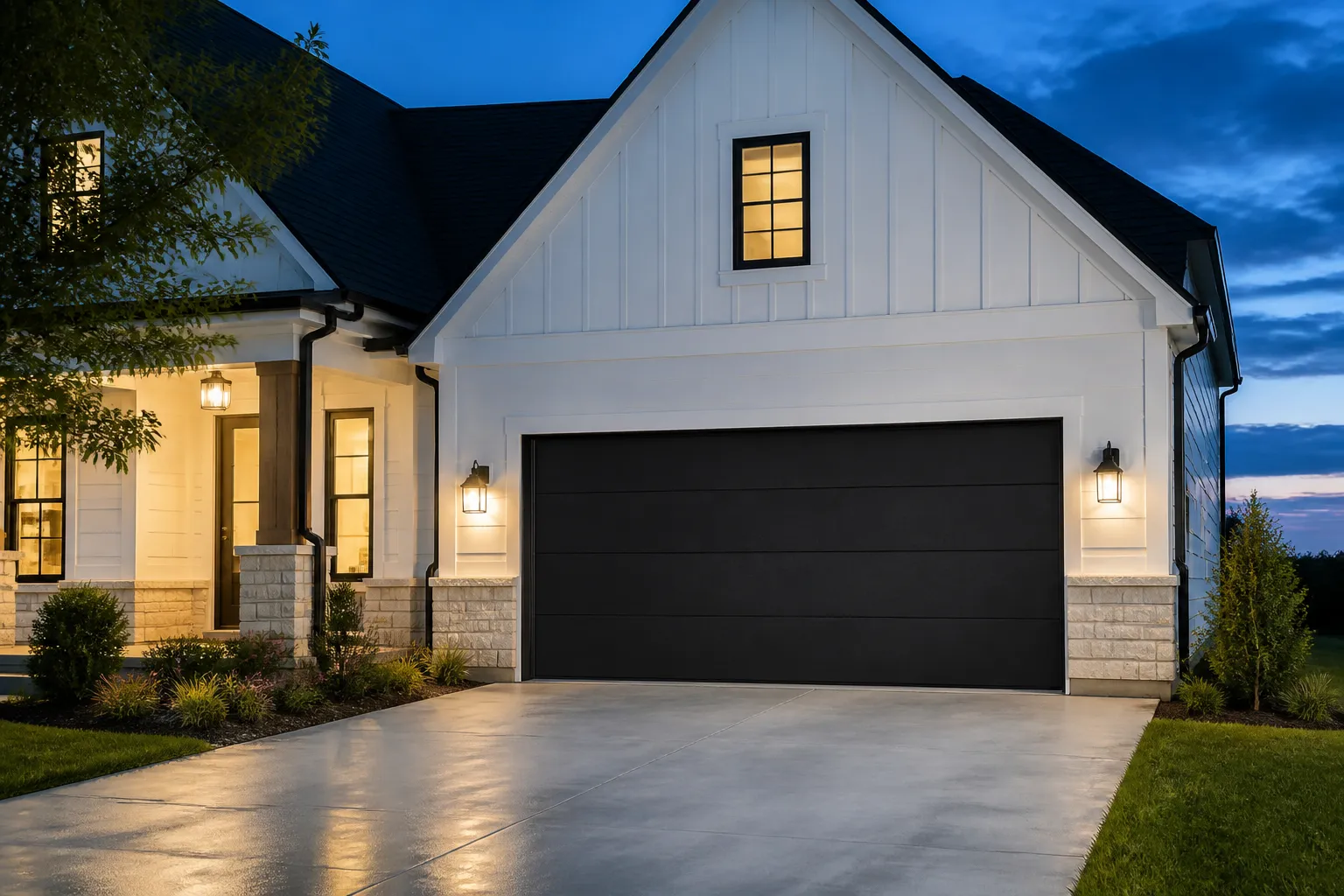
A nearly flat face that keeps the garage elevation quiet and minimal.
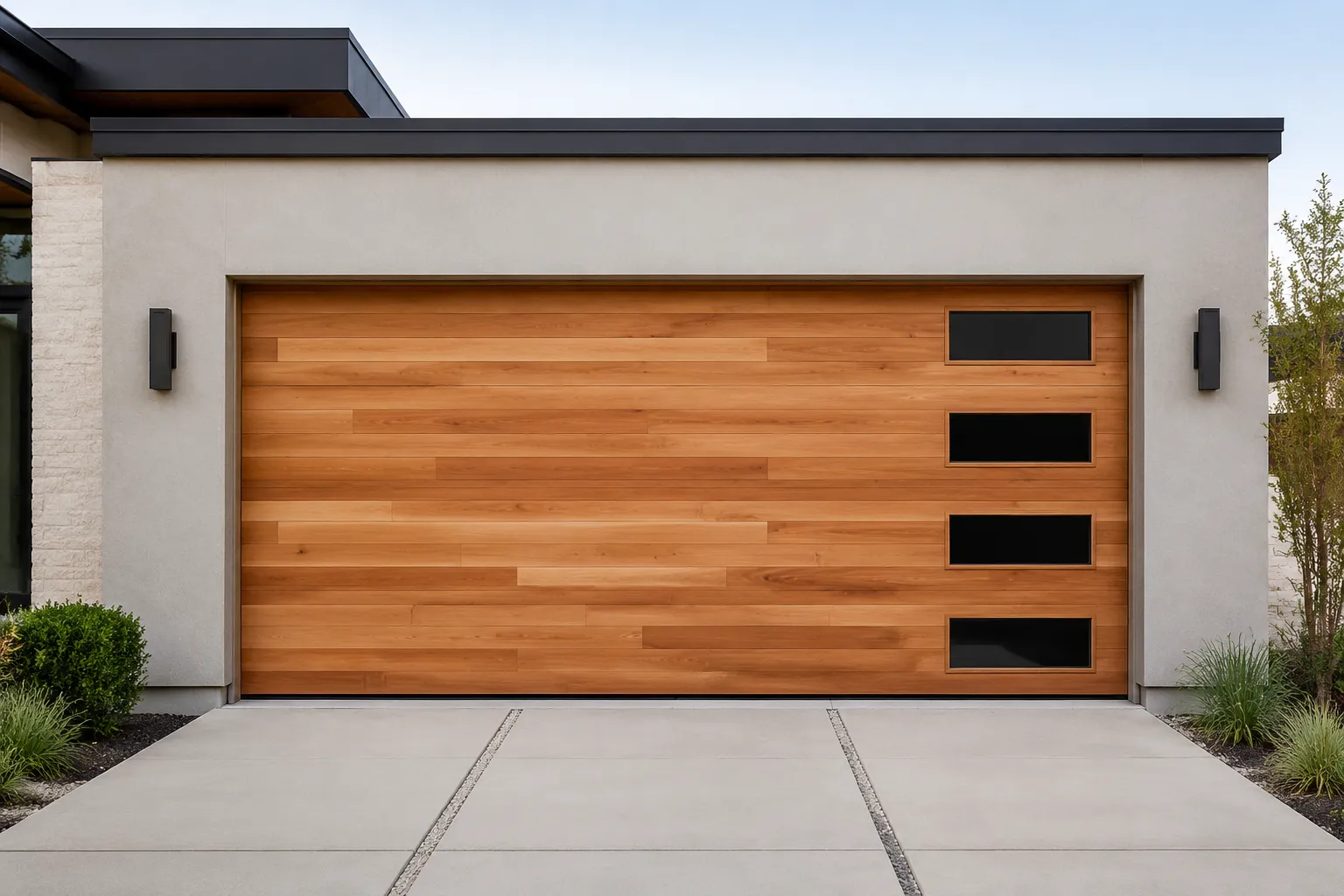
Linear grooves or wood-look planks reinforce horizontal architecture.
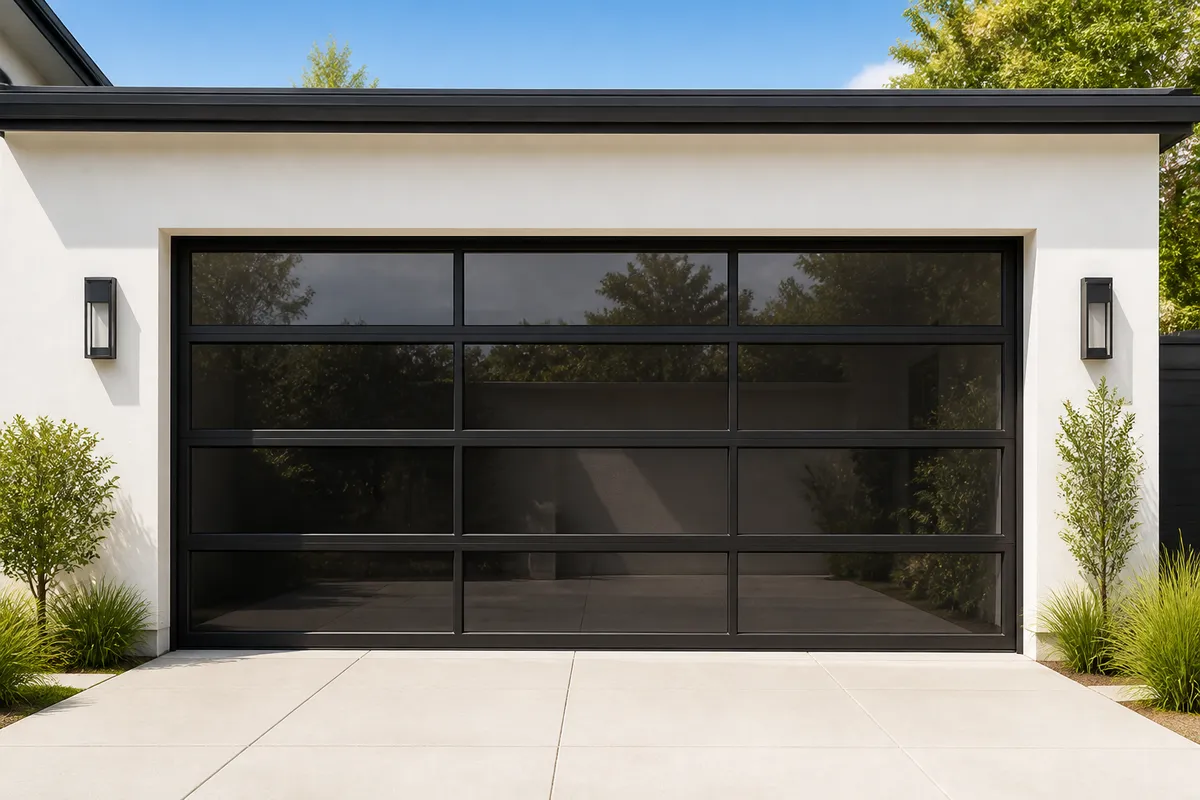
A vertical glass column creates an asymmetric modern detail.
Colors and Finishes
Strong contemporary contrast.
Softer than black with modern depth.
Minimal and bright on modern elevations.
Pairs well with dark windows and metal accents.
Warm contrast against stucco or light siding.
A cooler, weathered wood appearance.
Trusted Brands
Amarr
Smooth flush insulated steel
A smooth flush insulated-steel collection with minimalist surfaces and slim-window options in selected markets.
View collectionProDoor Systems
Flush steel with customized windows
Modern options for clean elevations, including flush panels with customized window placement and aluminum full-view doors.
View collectionBefore You Buy
A sectional door has horizontal joints and may have size-dependent seams, stiles, or reinforcement.
Flat faces show joints and seams.
Dark and wood-look finishes change with light, texture, sheen, screens, and surroundings.
View real samples in daylight.
Stacked lites must be ordered from a defined exterior viewpoint and checked for interior obstacles.
Window placement is set when ordered.
Dark faces absorb more heat; model approval, construction, exposure, and instructions matter.
Dark faces absorb more heat.
Plan Your Modern Door
From selection to installation
Document the opening, elevation, sight lines, sun orientation, clearances, and desired window handing.
Document the opening and sun direction.
Compare actual-size drawings and samples, then approve construction, glass, reinforcement, and hardware.
Approve drawings, samples and glass.
Install and align sections, track, counterbalance, seals, reinforcement, and operator system.
Sections, track, springs and seals aligned.
Inspect reveals and travel, complete safety testing, and review finish care and documentation.
Travel and safety tested, care reviewed.
When the Latonia Lakes streets were rebuilt, from Maple Road to Oak Ridge Baptist Church, the new grades changed how existing driveways meet the road. Where a drive now slopes toward the garage, a flush or plank door needs a clean seal along its bottom edge. On a street that drops down a slope, such as Walnut Road, the floor at the opening may not sit level either. A flat, modern face suits a house that has been updated.
A flush door has a plain, smooth face. A plank door runs long grooves across each section, reading as horizontal boards. Dark solid colors and narrow window lites keep either style crisp. On a sloping drive, the bottom astragal has to press evenly along the whole width. We measure the opening and the headroom first. The opener's rating is then checked against the new door's weight.
Service area coverage
Local ZIP: 41015
Modern Door FAQ
Set aside about $1,700–$2,900 if you have a common 8- to 9-foot single-car configuration. A common 16-foot double-car one comes in around $2,000–$4,600. Those are planning figures. Wood-look finishes, asymmetric glass, smooth faces, premium insulation, plank treatments or wider sections can put a modern door above those ranges.
Plan on one scheduled visit for most residential replacements, once the door arrives complete from the manufacturer. Framing corrections, new track and opener work, special finishes, overlays or custom glass can add time. We'll set your install day and confirm the lead time before you commit to the order.
Yes. Taking out your old garage door and hauling it away can be part of the installation. Before work starts, the written quote shows what comes out, what stays (a working opener, for example) and any related cost.
You get two layers. Our installation work carries a one-year labor warranty from us. Then the door, its finish, the glass, the hardware and the opener each carry the applicable manufacturer warranty. We review those terms with you before ordering.
Yes, on a contemporary, mid-century or transitional home. Clean lines, horizontal siding or simple masonry all suit it. A flush or plank door works when it matches the rest of the house's front. If your house is traditional, a carriage house or raised panel style usually fits more naturally.
If you like a flat face, flush is the one, with little or no panel relief and a smooth or lightly textured finish. If you'd rather see horizontal lines that read like boards or modern lap siding, go plank. Those lines are made with embossing, grooves, a composite face or printing.
No. You'll always see the joints between the sections, because a sectional garage door is never one continuous surface. Wider doors may also show vertical seams or reinforcement. We check how the sections lay out on your opening size, so the lines fall where you expect them.
They can. Reflections, dust, small dents and slight waviness all show more on a broad, smooth face than on a raised-panel door. Lighter colors, heavier steel, matte finishes and insulation each help, and we explain these trade-offs as you compare models.
No-obligation quote
Keep exploring
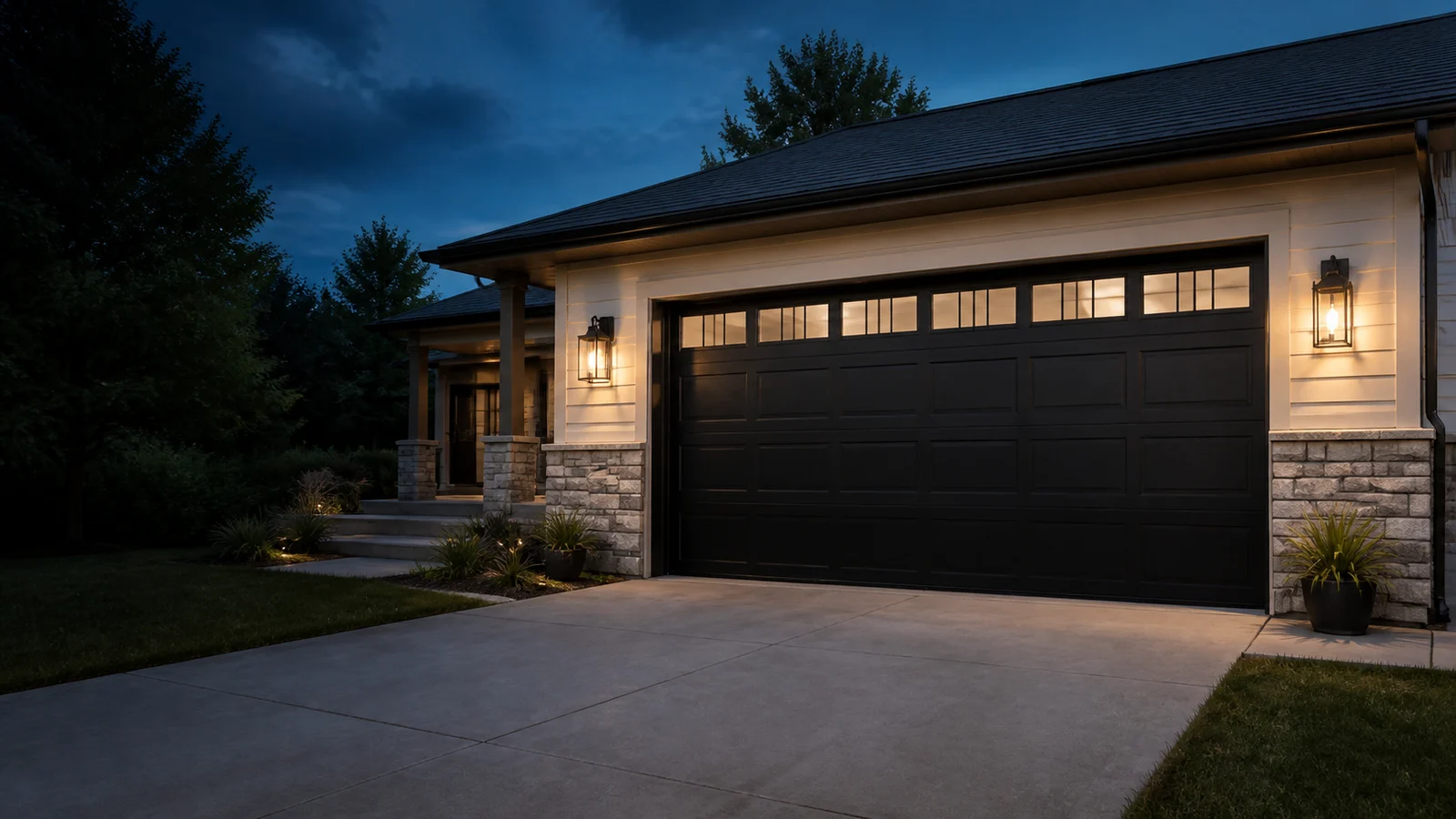
Durable, low-maintenance garage doors with flexible options for style, insulation, and budget.
Explore this door style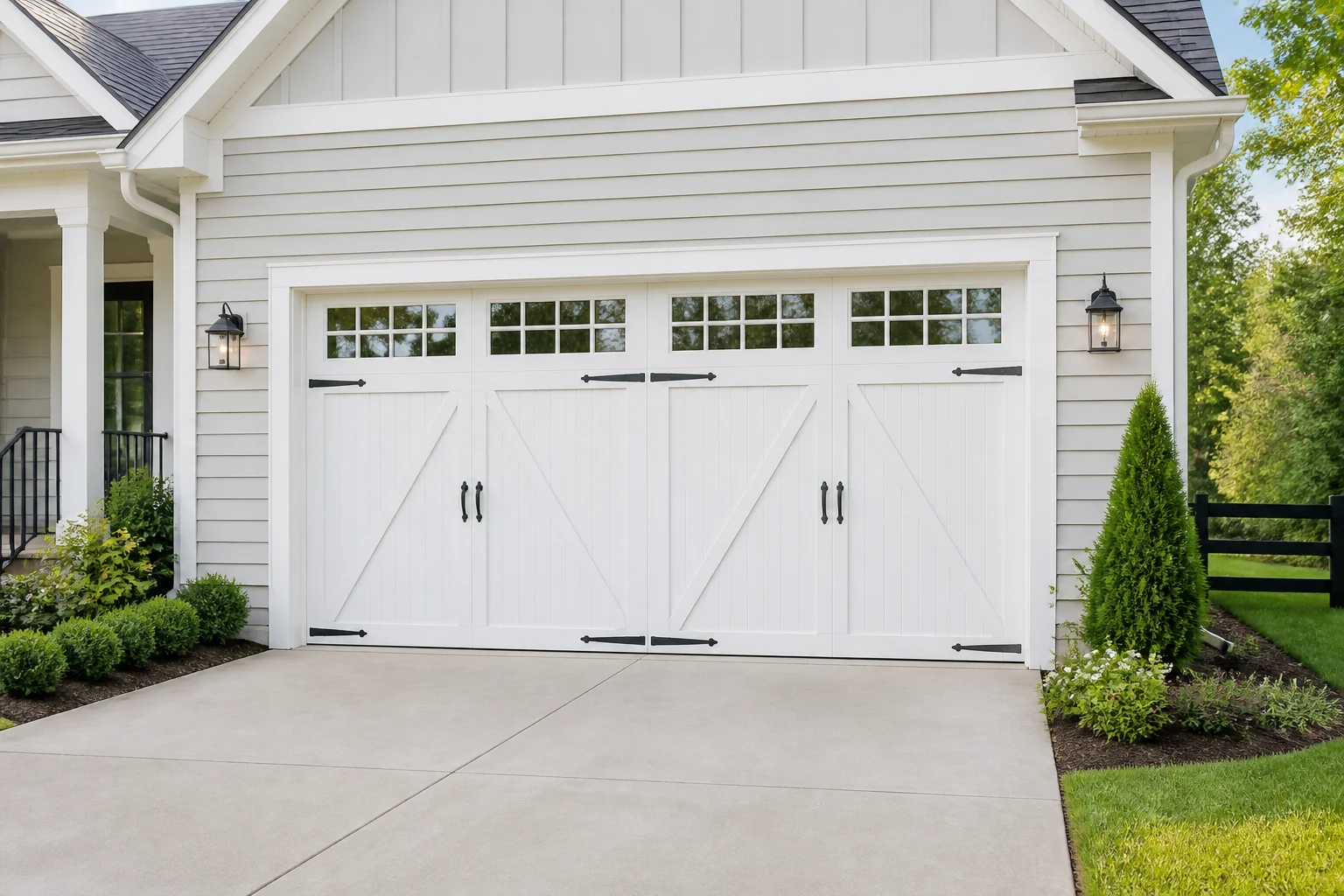
Stamped or overlay designs create a swing-door look while operating as a sectional overhead door.
Explore this door style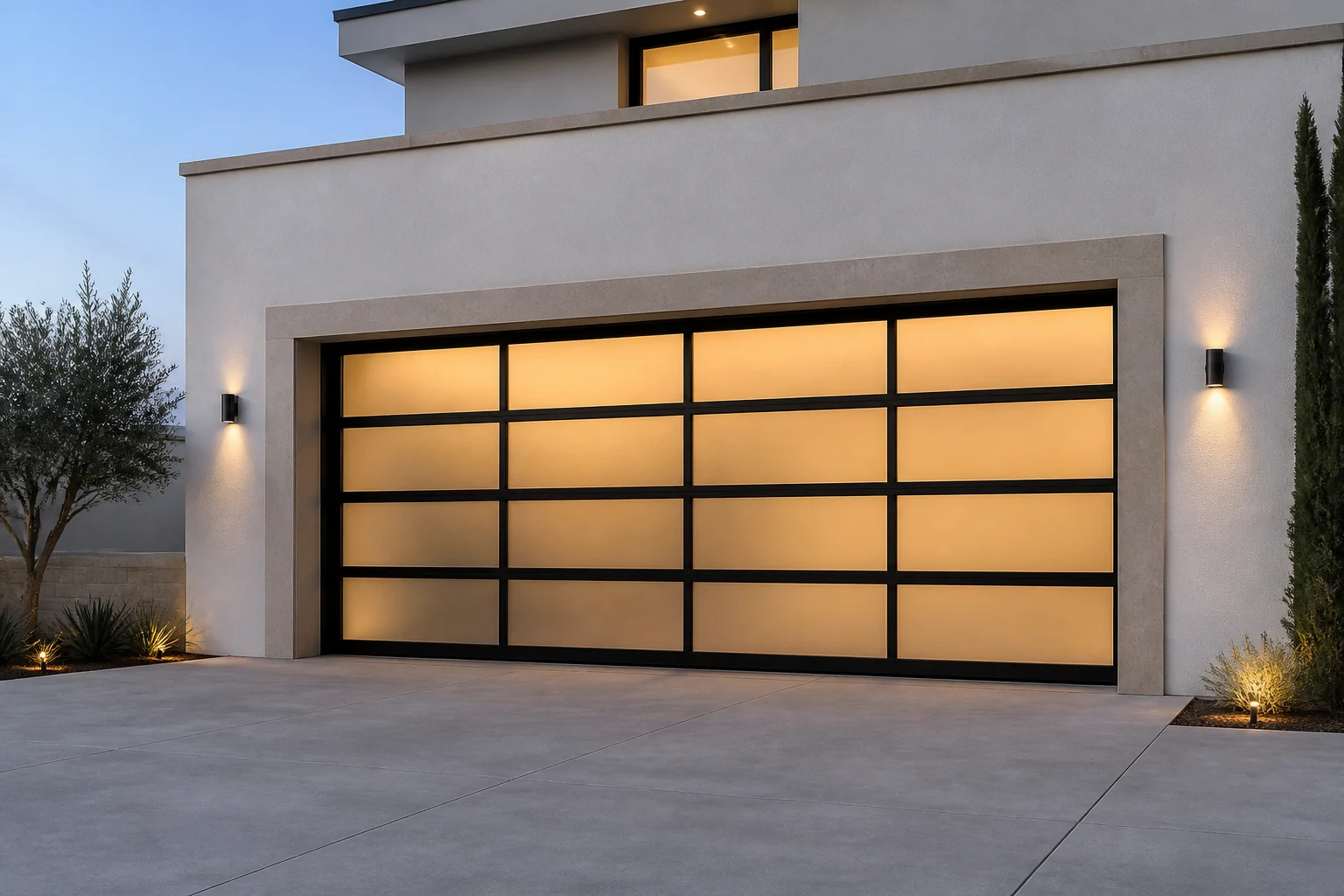
Aluminum frames and broad glass sections maximize light and create a distinctive architectural feature.
Explore this door style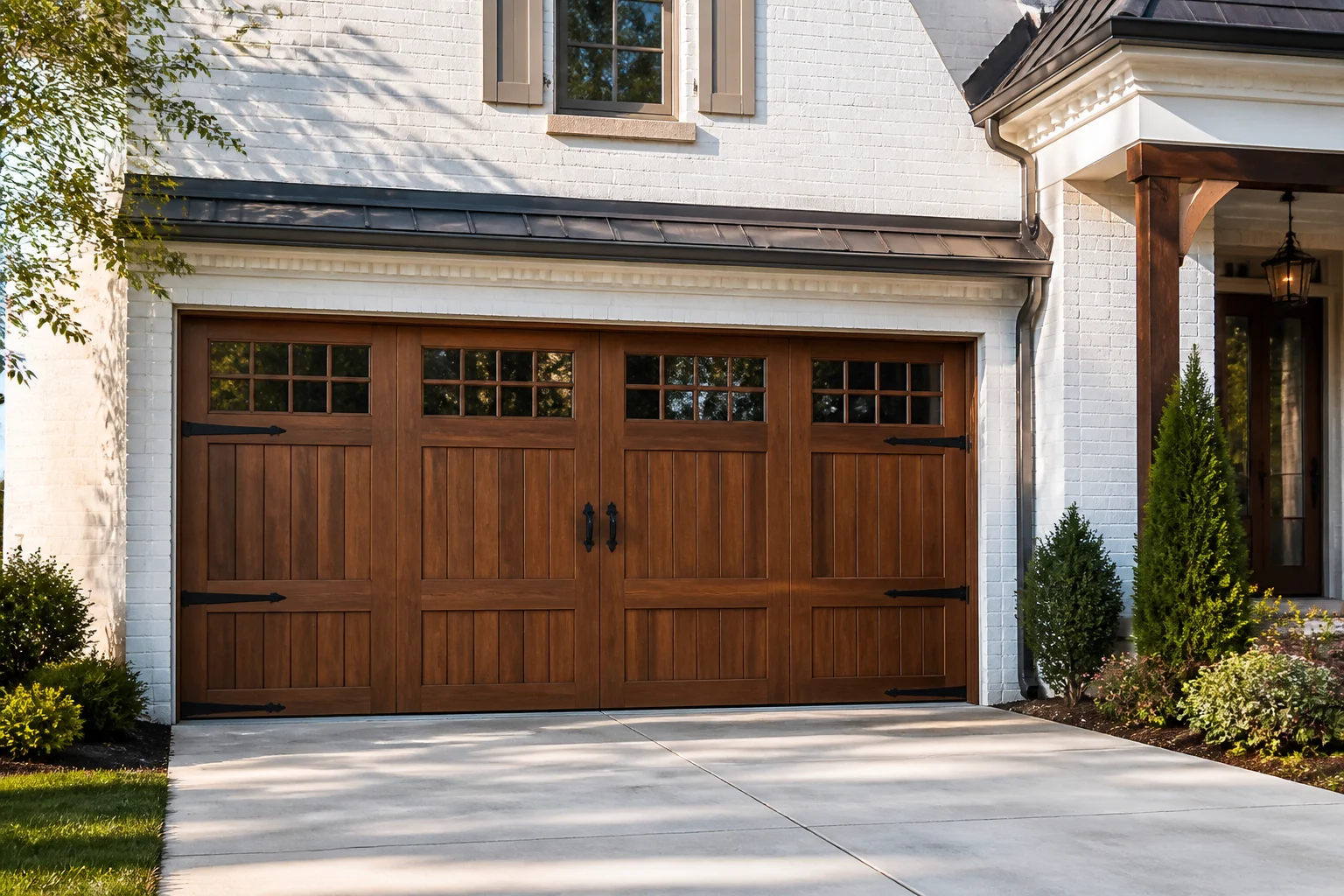
Printed, embossed, composite, and fiberglass faces offer wood character with different care and weight.
Explore this door style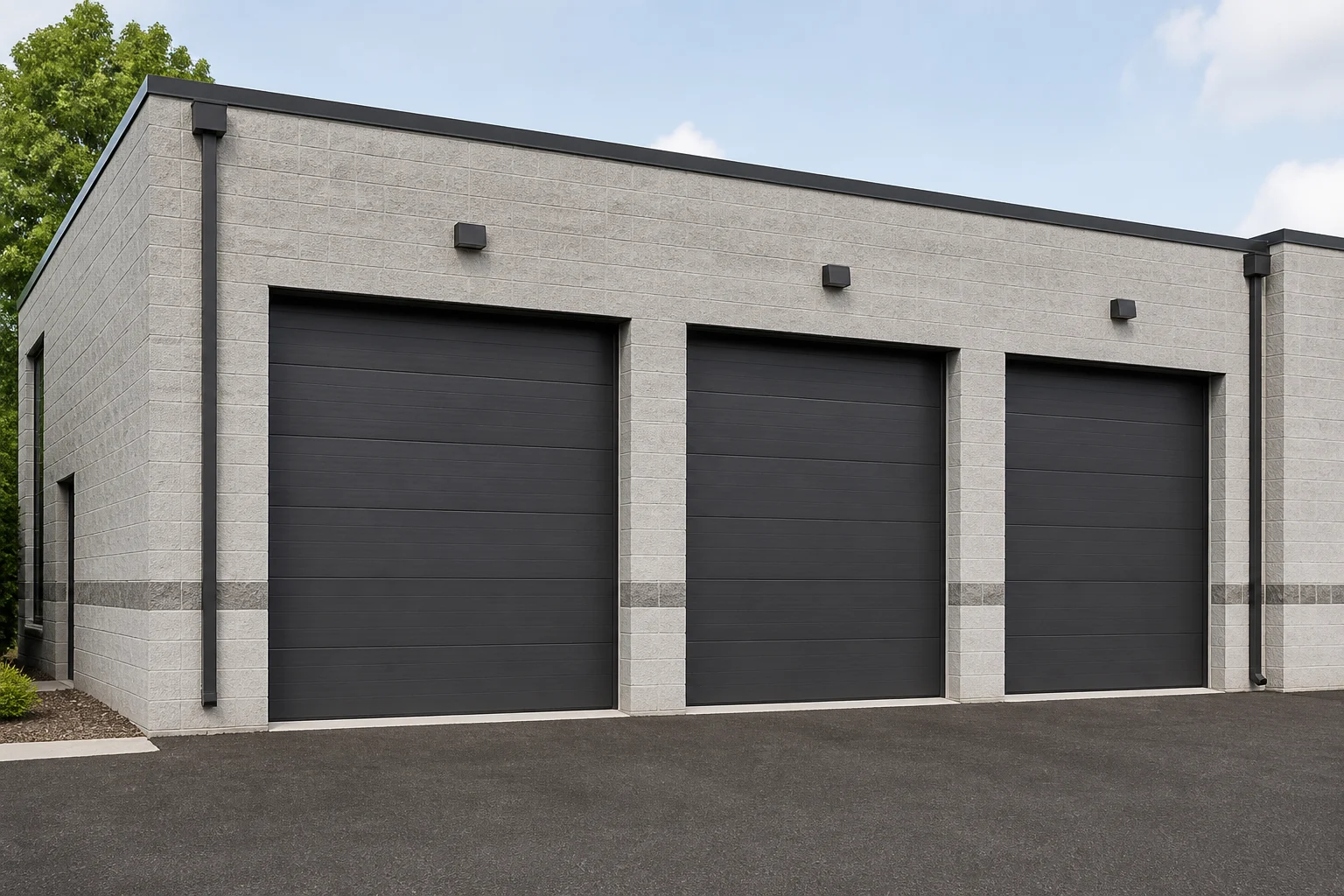
Larger openings, high-cycle use, loading areas, wind, safety, and specialty hardware need project assessment.
Explore this door style