Out of balance
The door drifts, feels heavy, or slams even though it sits level.
- Likely cause
- Springs have lost tension or do not match the door’s weight.
- Repair
- Set spring tension, or replace springs that can no longer hold.
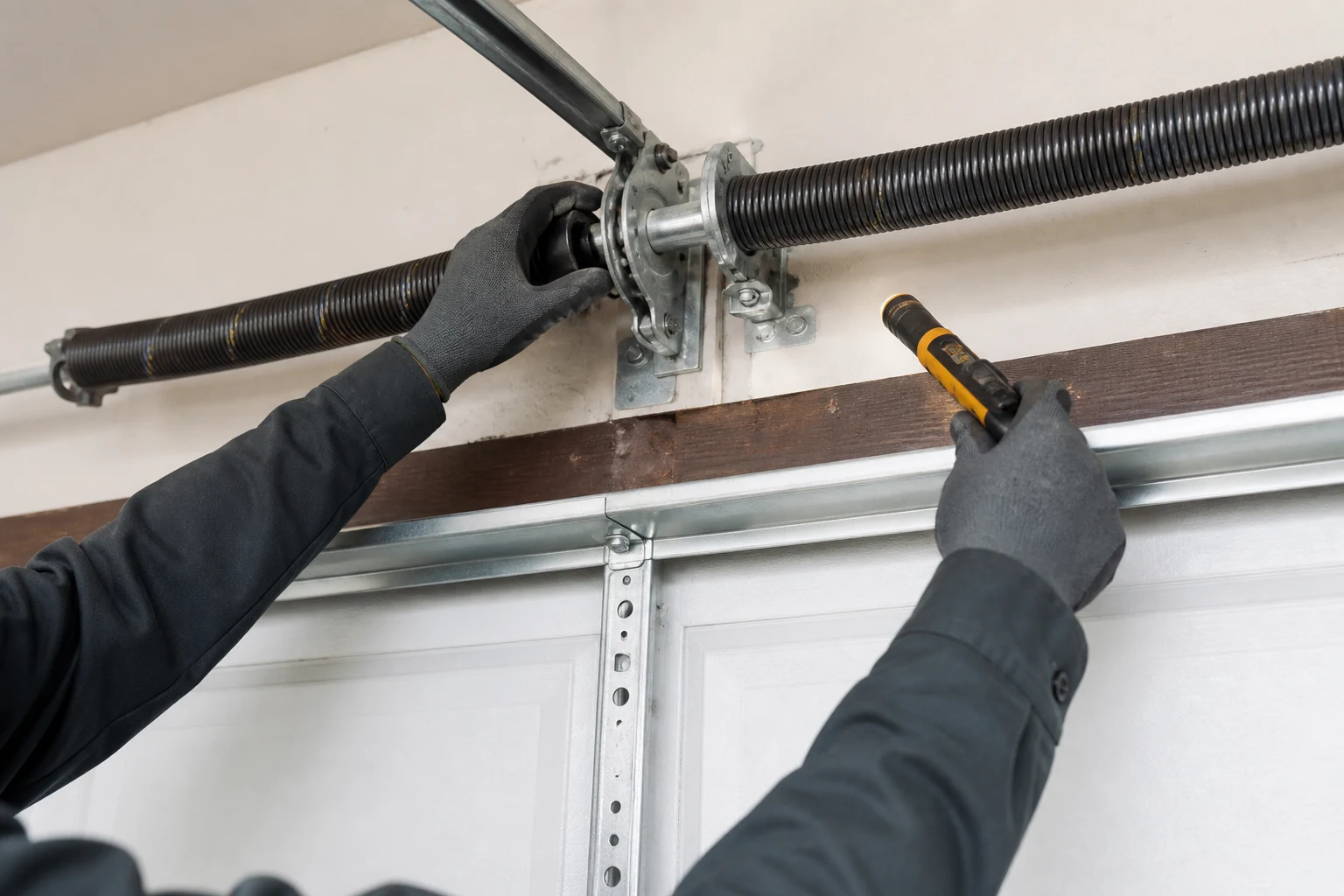
In Erlanger Lakes, garage door balance adjustment reaches condo garages near Sunset Avenue as well as basement garages set in stone foundations on Center Street. Either way, we lift the door halfway and set the springs until it holds still.
We adjust garage door balance in Erlanger Lakes for condo and basement garages.




Safety check
What to do now
Run the halfway balance test with the opener disconnected. If the door drifts, sinks, or feels heavy, reconnect the opener and keep cycles to a minimum until it is adjusted. Do not raise the opener’s force setting to compensate, do not touch the springs or cables, and do not use a door that is crooked or will not hold.
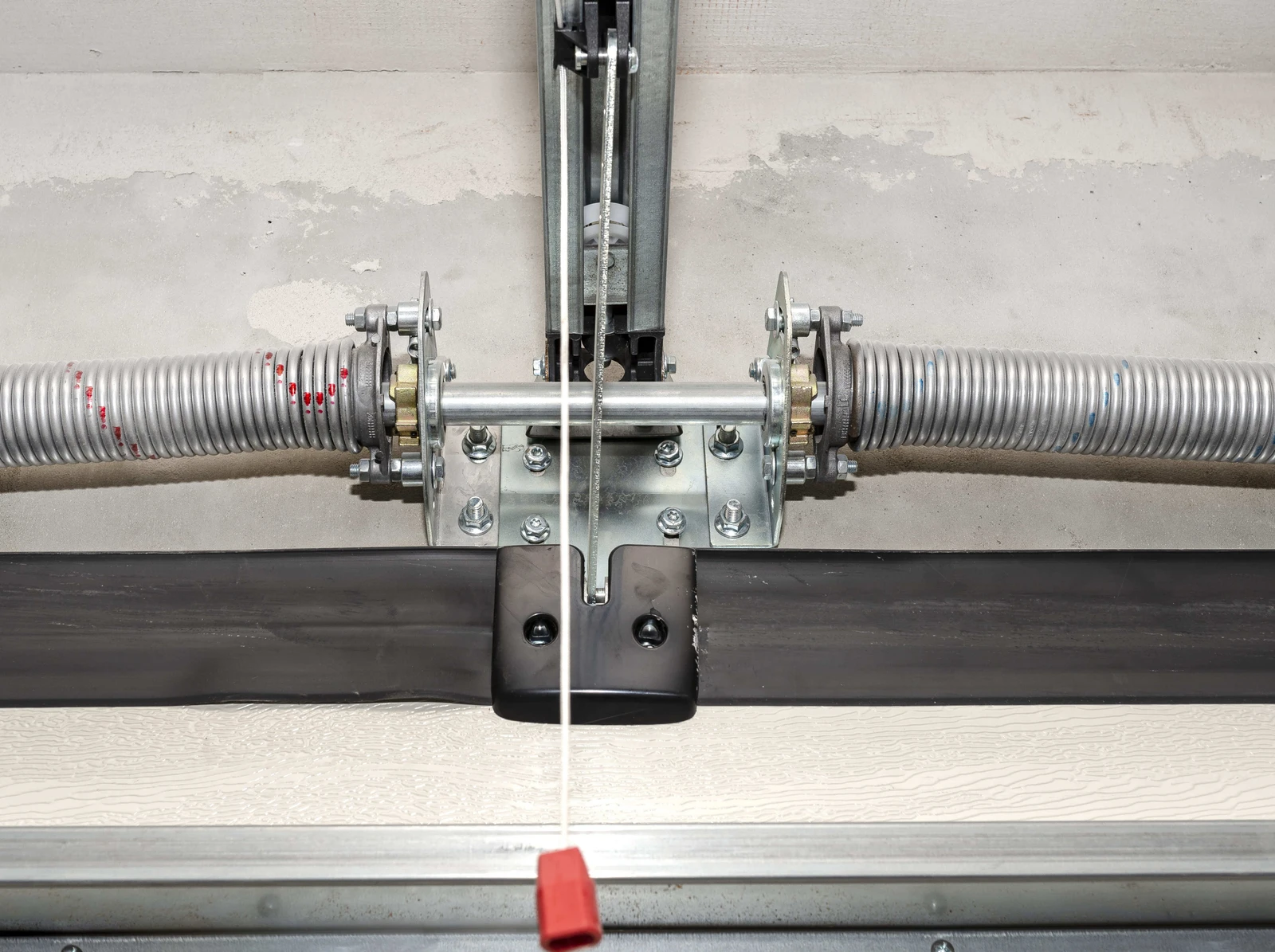
Customer reviews
Know the difference
The door drifts, feels heavy, or slams even though it sits level.
The door looks crooked or shifts sideways while moving.
Force and travel settings are meant to be calibrated to a balanced door. Turning the force up so a heavy door will close hides the problem, wears the opener out early, and can stop the door from reversing on a person, a pet, or a car. We set force last, after the balance is right.Force is calibrated only after the door is balanced. Turning it up can damage the opener and weaken safety reversal.
Not sure which you have? Send a wide photo of the door from the floor, open and closed if it is safe to operate. Crooked usually means alignment; square-but-heavy usually means balance. We confirm on site.
Before any tension is set
We weigh the door at the floor and test it at three positions. Worn, undersized, mismatched, or over-wound springs are the usual cause of drift and heaviness. Sometimes the honest answer is replacement, not adjustment.Can the springs still hold the door?
Uneven cable tension, a cable off its drum groove, a slipped set screw, or a worn end bearing makes a door crooked or heavy on one side. These are corrected before tension is set so the door rises level.Fixed before any tension is set.
A seized roller, stiff hinge, or rubbing track can make a correctly balanced door behave as if it is heavy. We remove the drag first so the springs are tuned to the actual door, not to friction.Drag removed so springs fit the door.
Once the door is balanced, the opener’s force and travel limits are set so it closes fully and reverses on contact, the photo-eyes are aligned, and the auto-reverse is tested with a 1½-inch board.Opener and photo-eyes set last.
When adjustment is not the honest answer: springs near the end of their cycle life can be re-tensioned and will drift again within months. If the weight test and spring condition say replacement, we quote it plainly and let you choose, rather than selling an adjustment that will not hold.
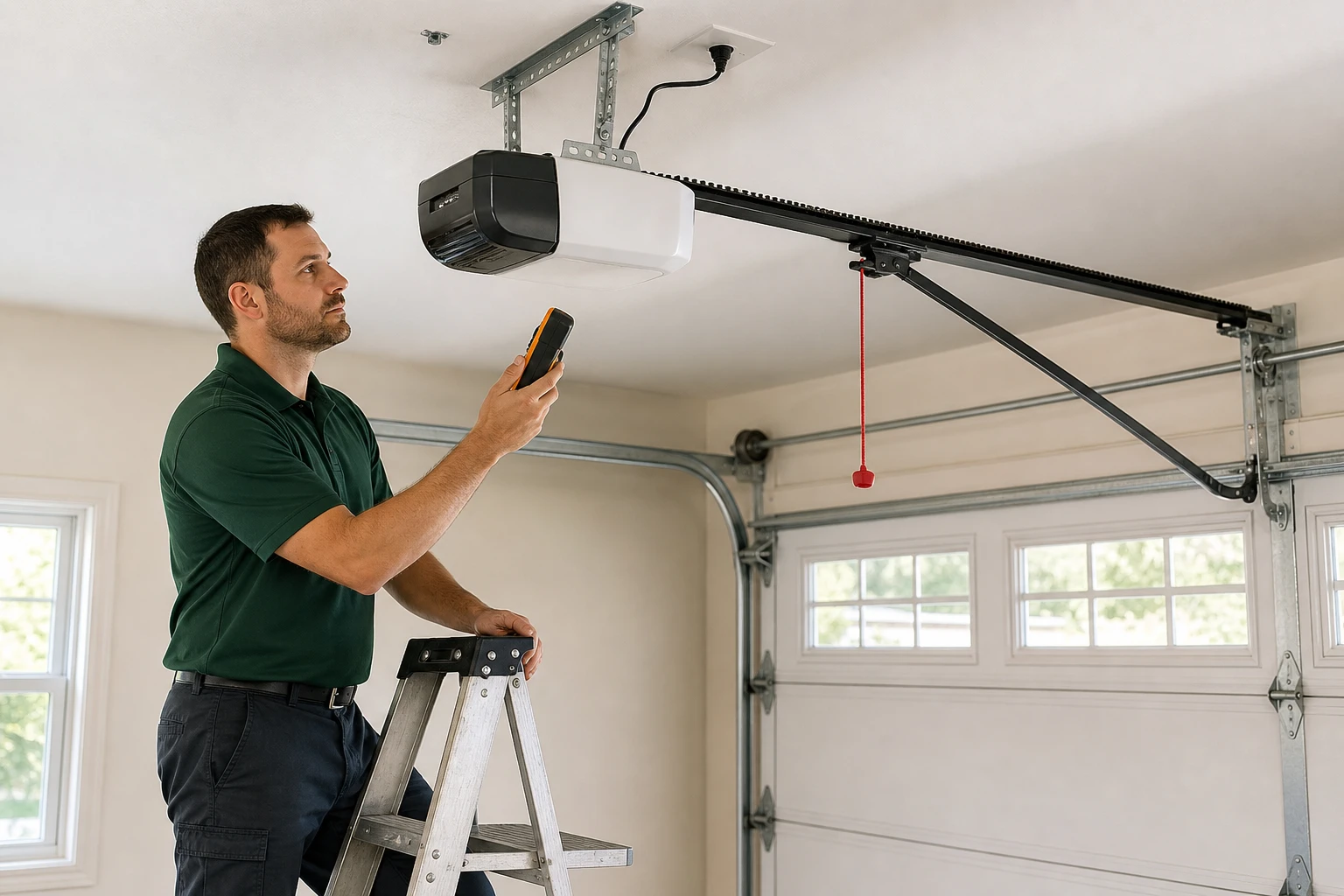 Calibrate · Opener force and travel
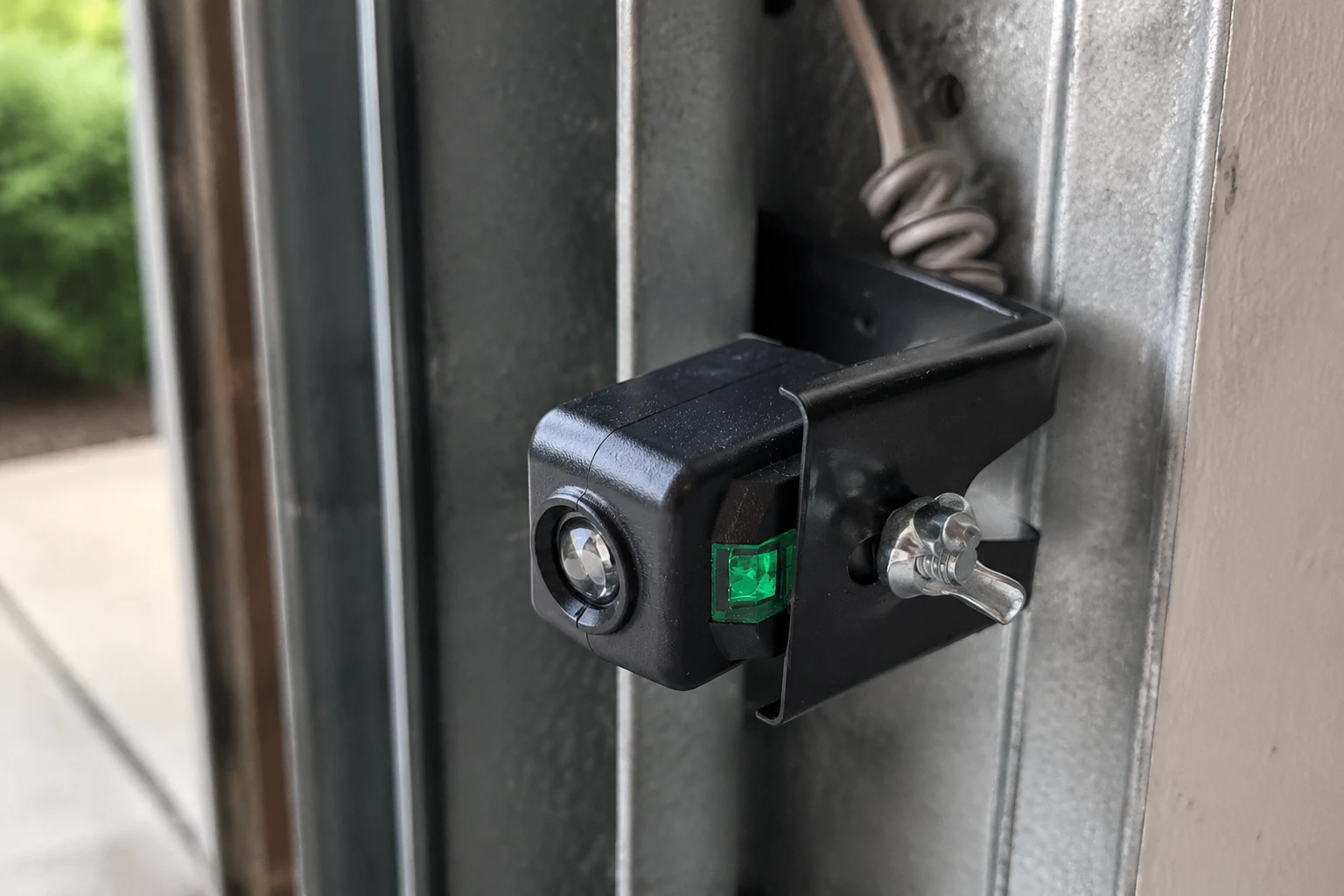 Verify · Photo-eyes and auto-reverse
Service and pricing
The technician disconnects the opener, secures the door, and runs the balance test at three positions and the weight test at the floor before touching a spring.Door secured, balance tested.
Cables, drums, bearings, rollers, hinges, and track are checked so tension is not set against a slipped cable or a dragging roller.Cables, drums and drag checked.
Torsion or extension springs are adjusted with the correct bars and the door secured. If the springs cannot hold a door their size, you get a clear replacement quote instead.Tension set, or a spring quote.
Opener force and travel are set to the balanced door, photo-eyes are aligned, the auto-reverse is tested against a 1½-inch board, and the door is cycled before handoff.Opener set, auto-reverse verified.
In the Erlanger Lakes Subdivision near Sunset Avenue, many homes are condos with one-level living. Erlanger's older homes differ. Plenty carry a single-car garage built into the basement. On Center Street, those basement garages sit in rough stone foundations. In either setting, a garage door stays balanced only while its springs match its weight.
A balanced door holds still when it is lifted halfway by hand. If it slides down or drifts upward, the spring tension has fallen out of step. We reset that tension until the door stays where it is left. Both lift cables are checked to be sure they wind evenly on their drums. A tight roller or a stiff hinge can hide the true balance, so we free those first. A door set this way asks far less of the opener.
Service area coverage
Local ZIP: 41018
Before you schedule
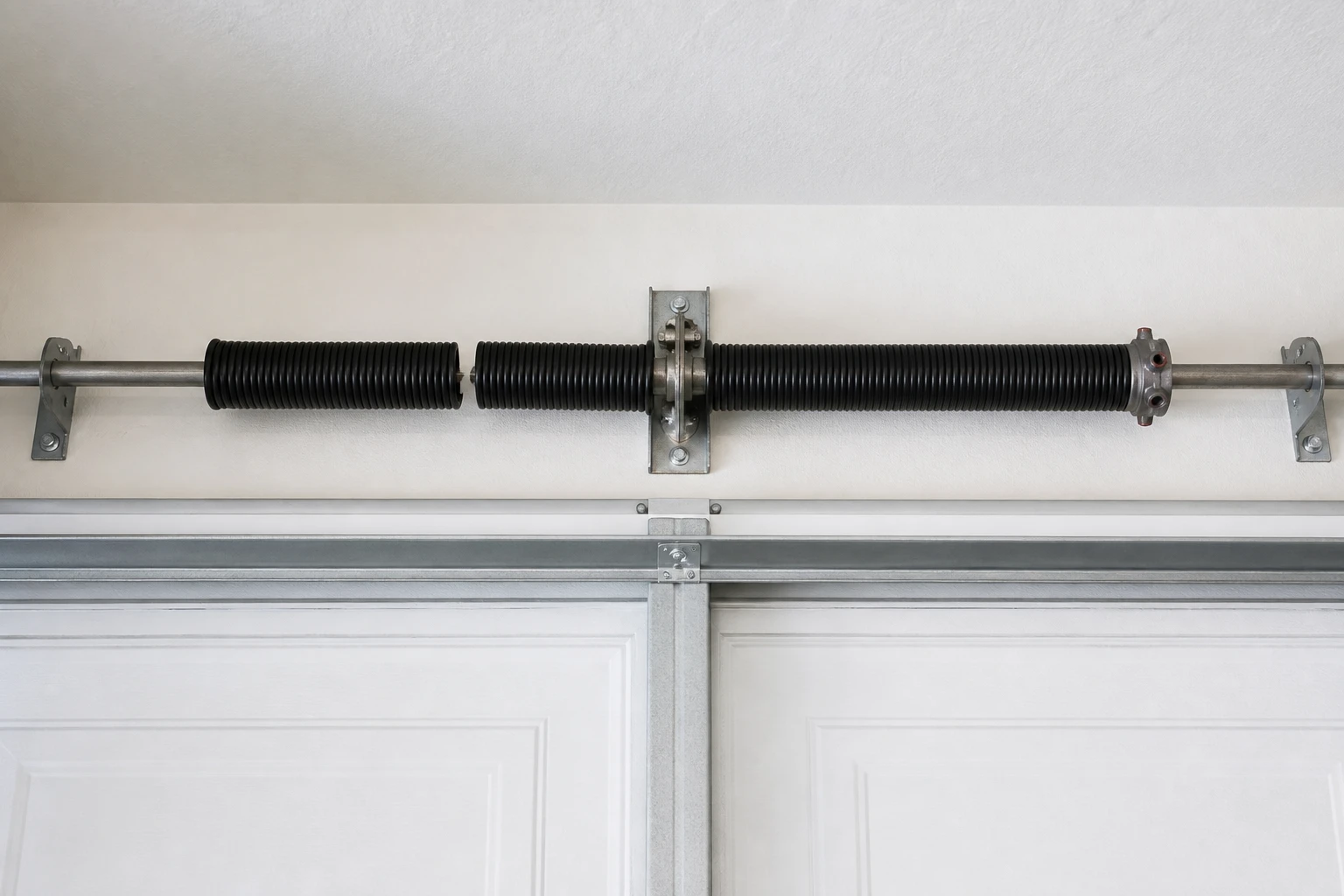
Typical pricing is $125–$225 for a balance test with spring re-tensioning and $85–$150 for opener calibration. That calibration sets force and travel limits and tests the photo-eye and auto-reverse, and it often happens in the same visit. If a crooked door needs its cable or drum reseated or replaced, put aside $125 to $250. When the springs no longer have the tension to hold the door at all, adjusting them won't honestly fix it. Replacing them typically runs $275 to $750, quoted on site.
You can do it yourself, and it's worth doing every month. Start by closing the door. Next, pull the red emergency release to take the opener out of the loop. Grab the door, lift it to about the halfway point by hand, then let go carefully. A balanced door just stays there. If yours drifts up, sinks or feels heavy, hook the opener back up, only use the door when you need to, and call for an adjustment. Never adjust the spring tension yourself.
The springs are supposed to carry the door's weight, and the opener's design assumes your door weighs only a few pounds in your hand. As the springs weaken, real weight lands on the opener every cycle. That wears the gears and motor early, the door can drop or slam, and the safety reversal isn't as reliable. Balance problems give little warning, and the bill tends to arrive later for a broken spring or opener repair.
Because the force is huge. A torsion spring stores enough to lift a 150–300 pound door, and an extension spring stretches under that load. Work on either without proper bars, the door secured and training, and you risk serious hand, arm and head injuries. Your job is the balance test. Setting tension is a technician's.
A crooked door, or one that's higher on one side, is an alignment problem. Alignment means the door runs level in its tracks, and when it doesn't, a cable, drum or bearing is usually to blame. Balance is different. It's about the springs taking the door's weight evenly, so it holds its position at any height. A door that feels heavy yet still sits square has a balance problem. Please don't force a crooked door; that can pull it even farther out.
They're the two settings that decide how the opener closes your door. Travel limits tell it where fully open and fully closed sit, so the door seals against the floor without straining. Force is how hard it shoves before sensing a problem and backing up. If your door feels heavy, you might want to turn the force up so it'll close. That's dangerous. Both are meant for a balanced door, and extra force can stop it reversing on a person, a pet or a bumper.
Run two tests each month. For the first, start the door closing, then put an object in the photo-eye beam by the floor. It should reverse right away. For the second, place a 1½-inch board flat in the door's way. Close the door. It has to reverse the moment it touches the board. Should the door fail either test, stop using the opener. Then get its balance and force checked.
In some cases, and only for a short while. Springs on a two-spring door share the same age and cycle count. After one has lost tension, the second usually isn't far off. We'll make whatever adjustments are possible, and we'll be honest with you when replacing both as a matched pair is better value than re-tensioning springs late in their life.
We start with the springs, because normal cycles slowly wear down their tension. Next we check if they're undersized or mismatched, and if insulation, glass or a new section added weight without re-springing. We also look for uneven cable tension and worn bearings, and for earlier work that set tension by feel, never by the door's weight.
Homeowners should test balance monthly, and it takes a minute. A professional should also check it at every annual tune-up, weight test and opener calibration included. Don't wait that long if it begins to feel heavy, slams or hesitates.
A door you release at the halfway point that drifts down or creeps up is out of balance. So is one that closes hard, sits crooked or is heavy to lift by hand. Opener symptoms count too: it strains, runs slowly or stops partway. Most of these trace back to springs that have lost tension, and those springs need resetting or replacing.
Local help for a heavy, dropping, or slamming door
Let us know whether the door drifts, drops, feels heavy, slams, sits crooked, or fails to reverse, whether it still opens and closes, and whether a vehicle is trapped. Keep clear of the opening if the door will not hold.