Stamped steel
The carriage pattern is formed into the steel section for a clean, lower-maintenance option.
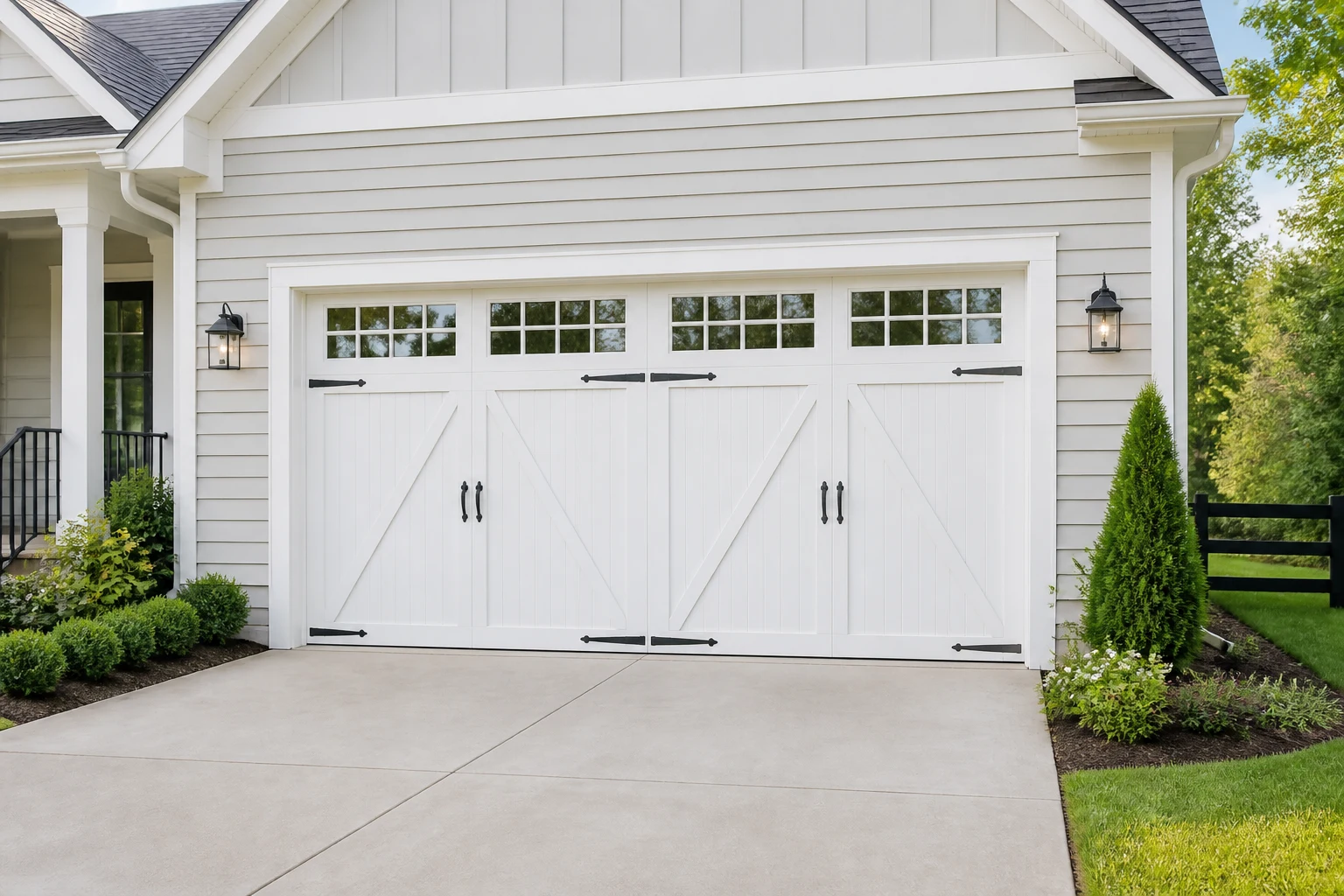
Carriage house garage door installation in the Dayton Pike Corridor suits the historic homes on the hills above the Ohio River. In the Grant Park subdivision, the same overlay pattern can carry across a double opening.
Historic homes above the Ohio River suit a carriage house garage door.




Carriage Doors Explained
A carriage house garage door looks like a pair of old swing-out barn doors, but it opens overhead like any sectional door. Vertical boards, a center line, top windows and decorative handles create the look.
Carriage house describes the appearance, not the construction. Many doors stamp the board pattern into steel. Overlay doors add composite trim over an insulated steel base for deeper shadow lines, and a few collections use real wood.
Overlays, glass and hardware all add weight, so the springs and opener are matched to the finished door. We confirm the layout at your exact opening size before ordering, so the boards and windows line up the way you expect.
Construction and Character
The carriage pattern is formed into the steel section for a clean, lower-maintenance option.
Applied trim gives the door more depth while the insulated steel base provides structure.
An engineered face can provide deeper texture and wood-grain character.
Authentic wood offers natural variation but requires more finish care and weight planning.
Popular Styles
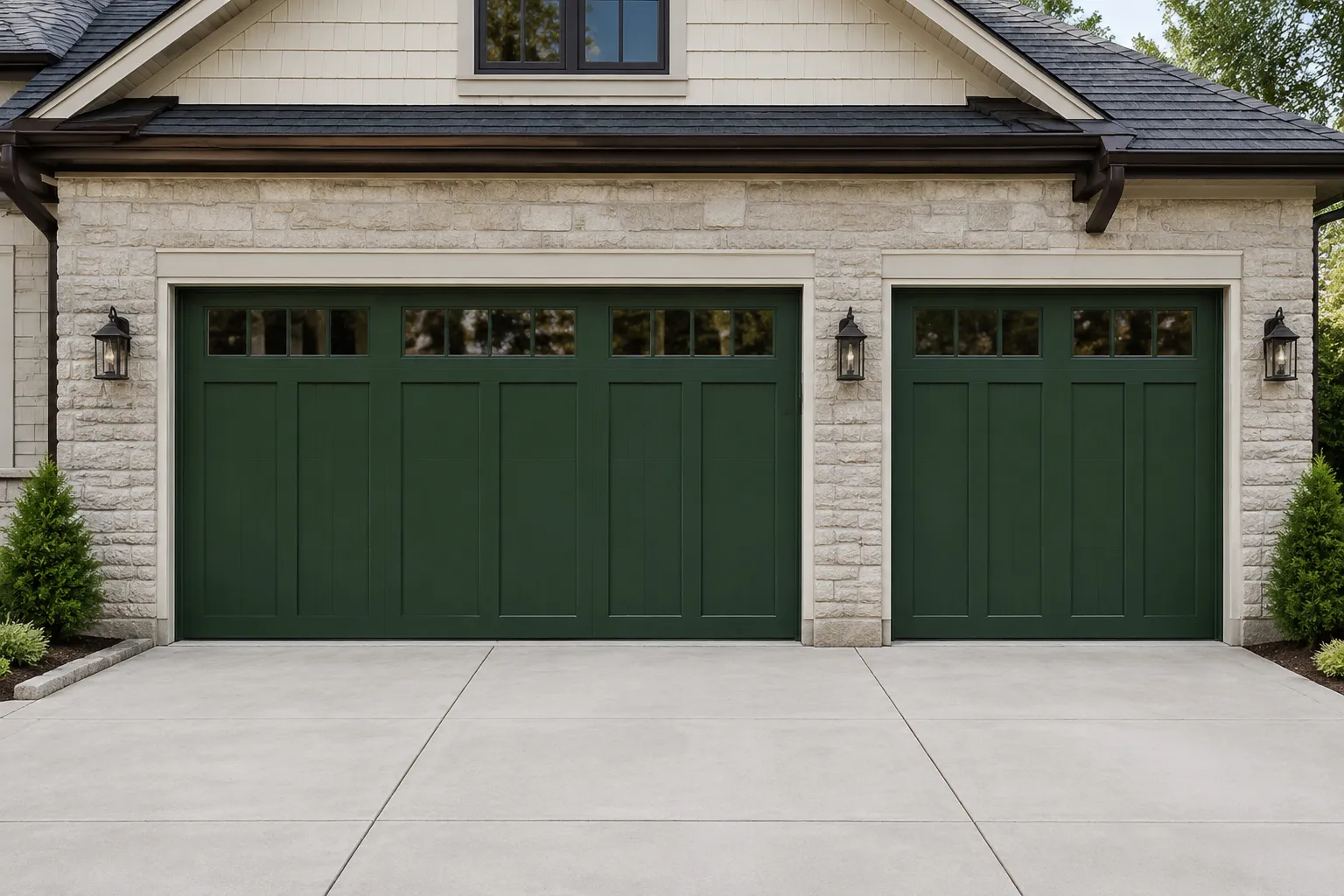
A steel door with pressed panel shapes and decorative hardware.
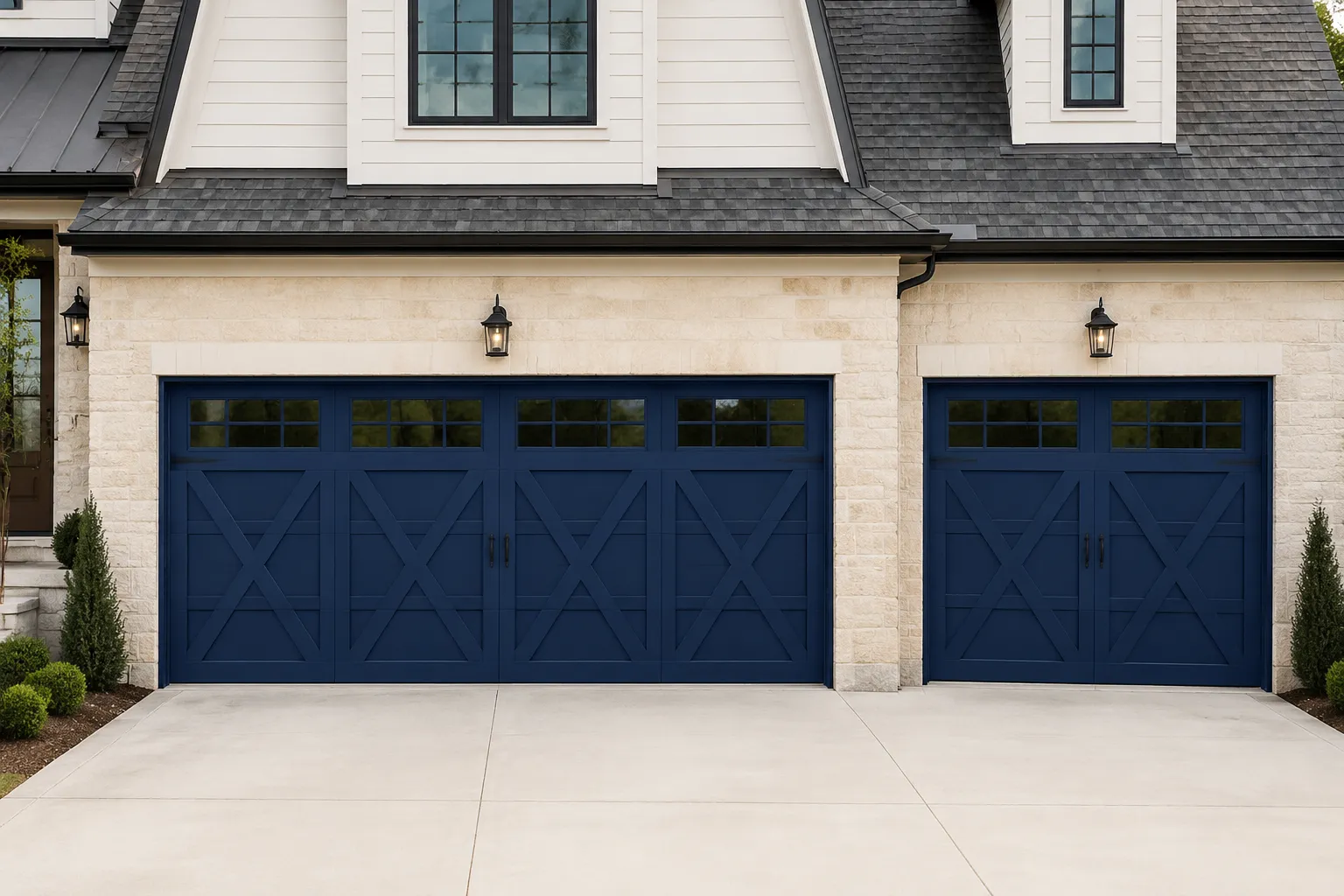
Applied trim creates deeper shadow lines and a more dimensional appearance.
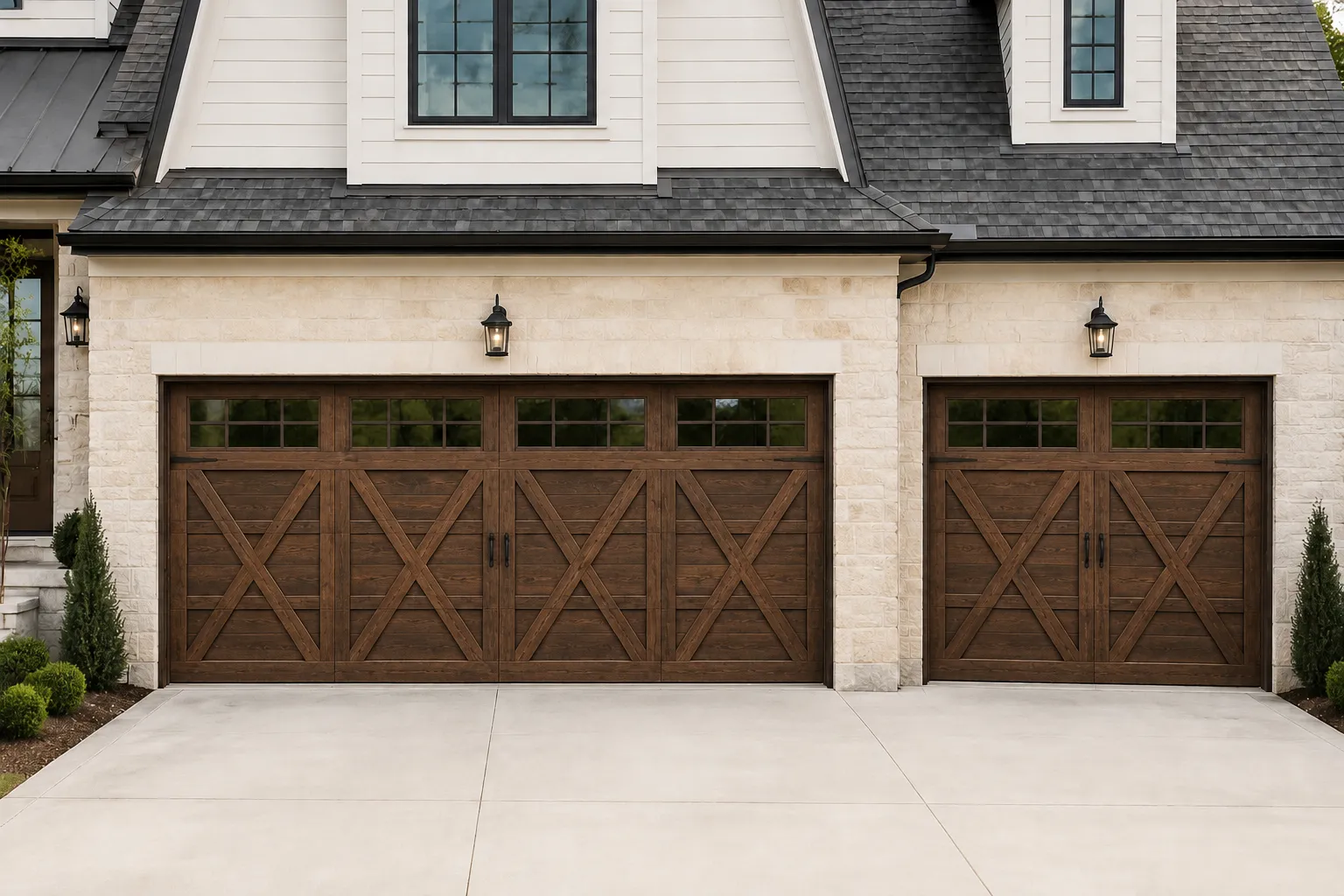
A warm grain finish creates a carriage look with engineered materials.
Colors and Finishes
Classic against brick, stone, and painted siding.
Soft traditional contrast.
Bold hardware and panel definition.
Medium-dark wood appearance.
Warm red-brown wood appearance.
Availability depends on the exact overlay and collection.
Trusted Brands
Amarr
Distinctive stamped-steel carriage design
A three-section carriage look with single-, double-, and triple-layer configurations and polystyrene or polyurethane insulation.
R-value: 6.64–13.35 depending on construction
View collectionProDoor Systems
Overlay carriage-house craftsmanship
Carriage-house overlay designs offered across multiple layer and insulation levels so appearance and performance can be compared together.
View collectionProDoor Systems
Value stamped carriage and shaker steel
Stamped Carriage and Shaker model families alongside Classic Raised designs for budget-conscious carriage looks.
View collectionBefore You Buy
Stamped and overlay systems differ in depth, weight, finish rules, thermal data, and repair options.
Stamped and overlay builds differ in weight.
Section count, breaks, windows, and centerlines change on wider, taller, or odd-size doors.
Layouts shift on wider or odd-size doors.
Heat absorption can conflict with approved colors, exposure limits, and warranty instructions.
Sun exposure can limit color choices.
Windows, overlays, struts, and hardware change weight, reinforcement, shipping, and lead time.
Windows and overlays add weight and time.
Plan Your Carriage Door
From selection to installation
Measure the opening and photograph the full elevation, interior clearances, floor, and operating system.
Measure and photograph the opening.
Compare constructions, actual-size layouts, samples, glass, hardware, and finish restrictions.
Compare layouts, samples and glass.
Install the approved sections, track, counterbalance, reinforcement, seals, and operator interface.
Sections, track, springs and seals installed.
Balance and safety-test the door, then review finish care, documents, and inspection points.
Balanced, safety-tested, care reviewed.
In the Dayton Pike Corridor, the historic homes on the hills overlooking the Ohio River are a natural match for a carriage-house door. Their older fronts give the overlay a pattern to follow. Large suburban homes built in the Grant Park subdivision can carry the same look across a double opening. Newer houses at Pottebaum Point suit a plainer carriage face that keeps the door in step with the house.
A carriage-house door looks like a pair of swing doors but rolls up in sections like any overhead door. Decorative straps and handles supply the detail. Square or arched glass along the top section can echo the windows on the house. Steel and composite versions hold their shape better than solid wood. Insulation is optional but adds stiffness to each section. The springs are matched to the finished weight, which each overlay adds to.
Service area coverage
Local ZIP: 41074
Carriage Door FAQ
For planning, a common single-car configuration at 8 to 9 feet runs about $1,700–$2,900, and a common 16-foot double-car configuration runs about $2,000–$4,600. You may stay nearer typical residential ranges with stamped steel. Real wood, overlays, specialty finishes and custom windows can push the final price up.
Before you order, we confirm two things: the lead time and your installation day. Most residential replacements need just one scheduled visit, once the complete door is in from the manufacturer. New track and opener work, framing corrections, custom glass, special finishes or overlays can make the job longer.
Leave it to us. We can take the old door out and haul it off with the install. Your written quote spells out what leaves, what stays behind, say a working opener, and any cost that goes with it, before we start.
Yes. Our installation labor carries a one-year warranty, and the door itself carries the applicable manufacturer warranties, as do the finish, glass, operator and hardware you select. We review those terms with you before you order.
When the garage is on the street side of the house and the home has historic, cottage, Craftsman or farmhouse character. A carriage door with the right proportions has the look of swing doors and still opens overhead for everyday use. Pick stamped steel and you'll stay nearer the cost of a standard door. An overlay design costs more, and it brings deeper detail.
It rolls up. Today, almost every carriage house door you can buy is a sectional overhead door. Its sections travel up on tracks inside the garage. The vertical boards, windows, decorative handles and center line are there to give it the look of paired swing doors.
Yes. On a stamped door, the steel skin itself carries the pressed board pattern, so cost and weight stay low. On an overlay door, composite trim or cladding goes on top of an insulated steel base. That layer is what gives you the deeper shadow lines. It usually raises the cost and weight, and the finish needs specific care.
Maybe, but probably not. Many are made of steel, fiberglass or composite overlays, or carry a printed wood-grain finish. Some are real wood. We confirm what yours is made of before you order, since weight, care, repairs and warranty terms all depend on it.
No-obligation quote
Keep exploring
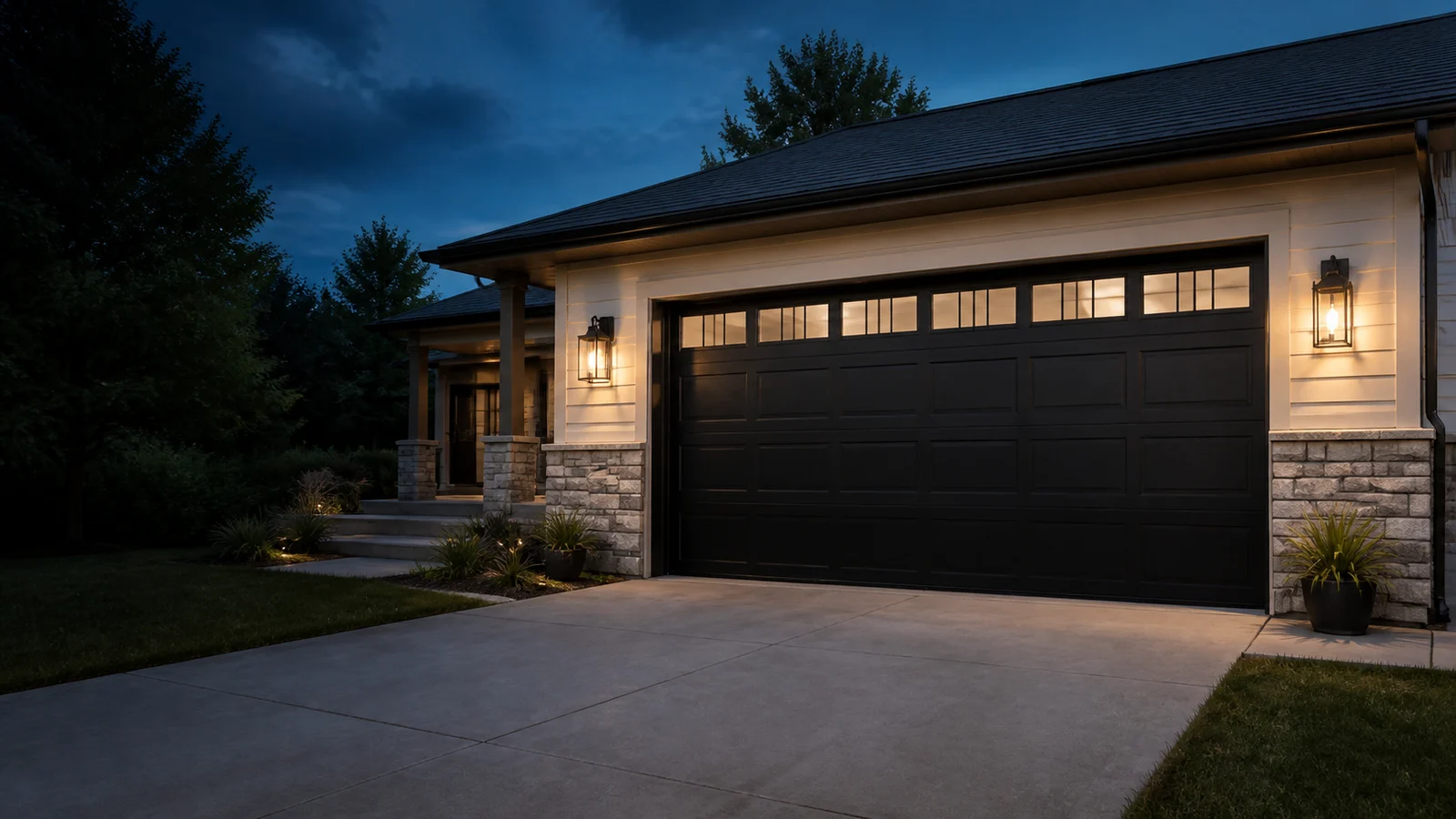
Durable, low-maintenance garage doors with flexible options for style, insulation, and budget.
Explore this door style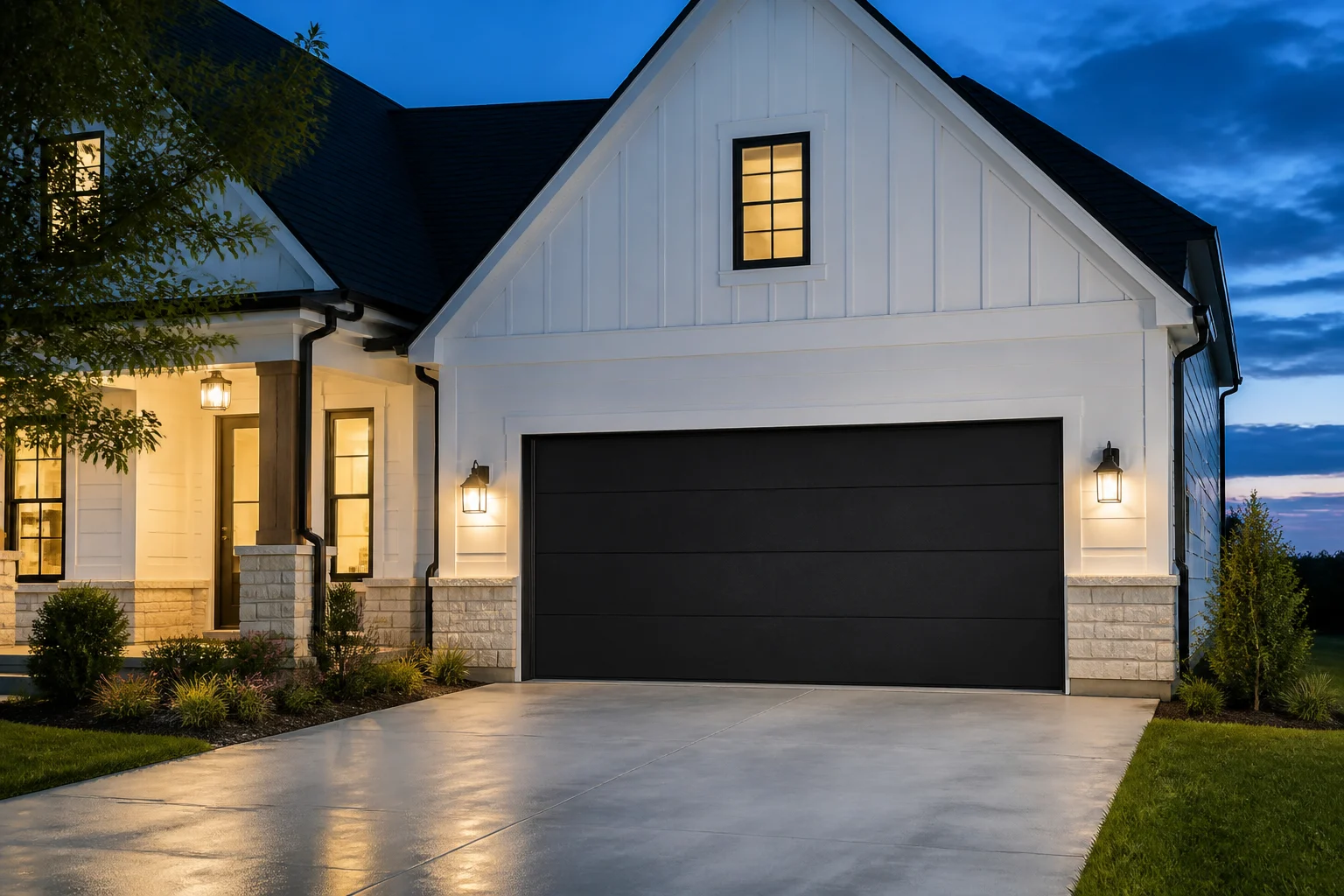
Flush faces, subtle grooves, plank lines, dark finishes, and asymmetric glass suit modern elevations.
Explore this door style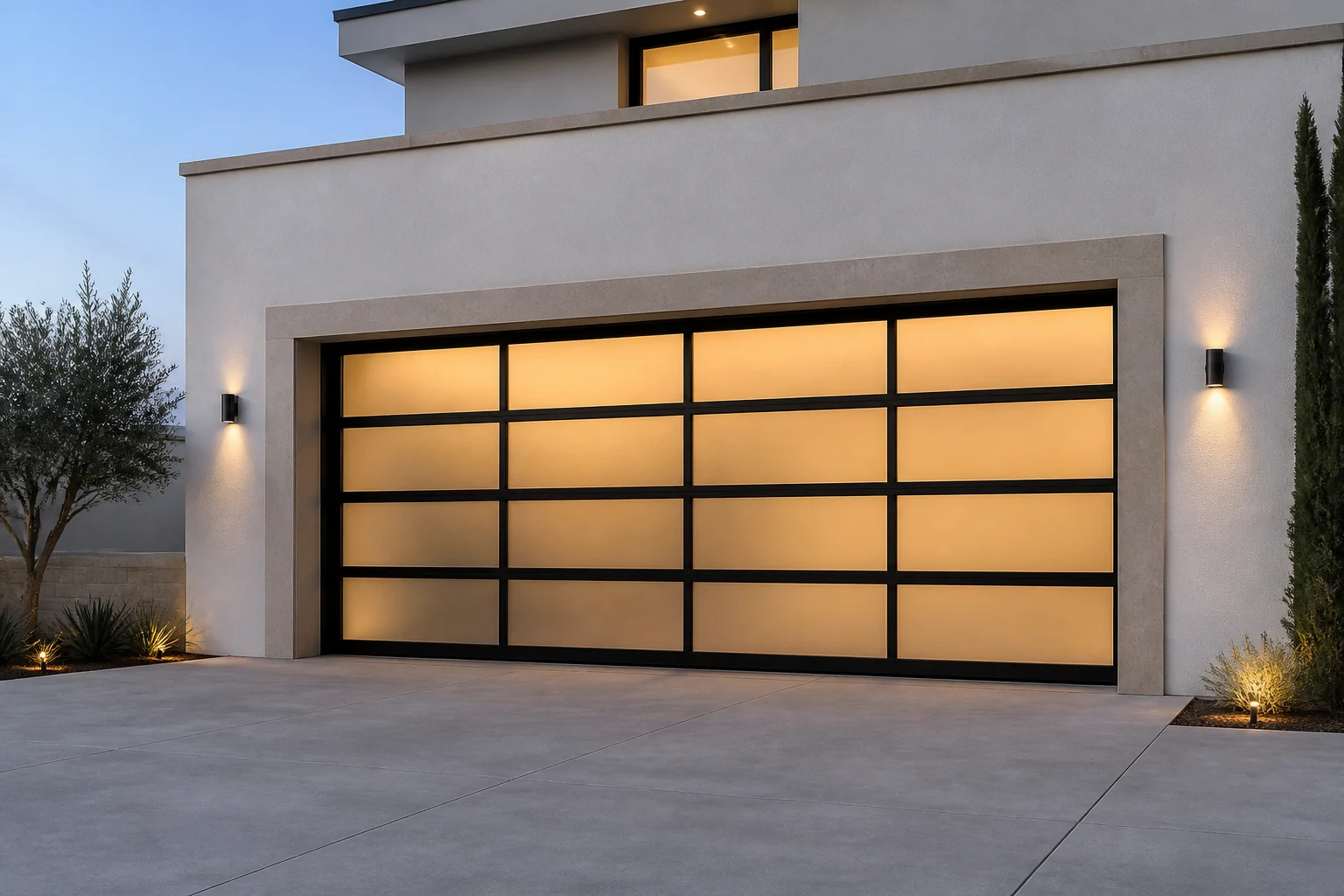
Aluminum frames and broad glass sections maximize light and create a distinctive architectural feature.
Explore this door style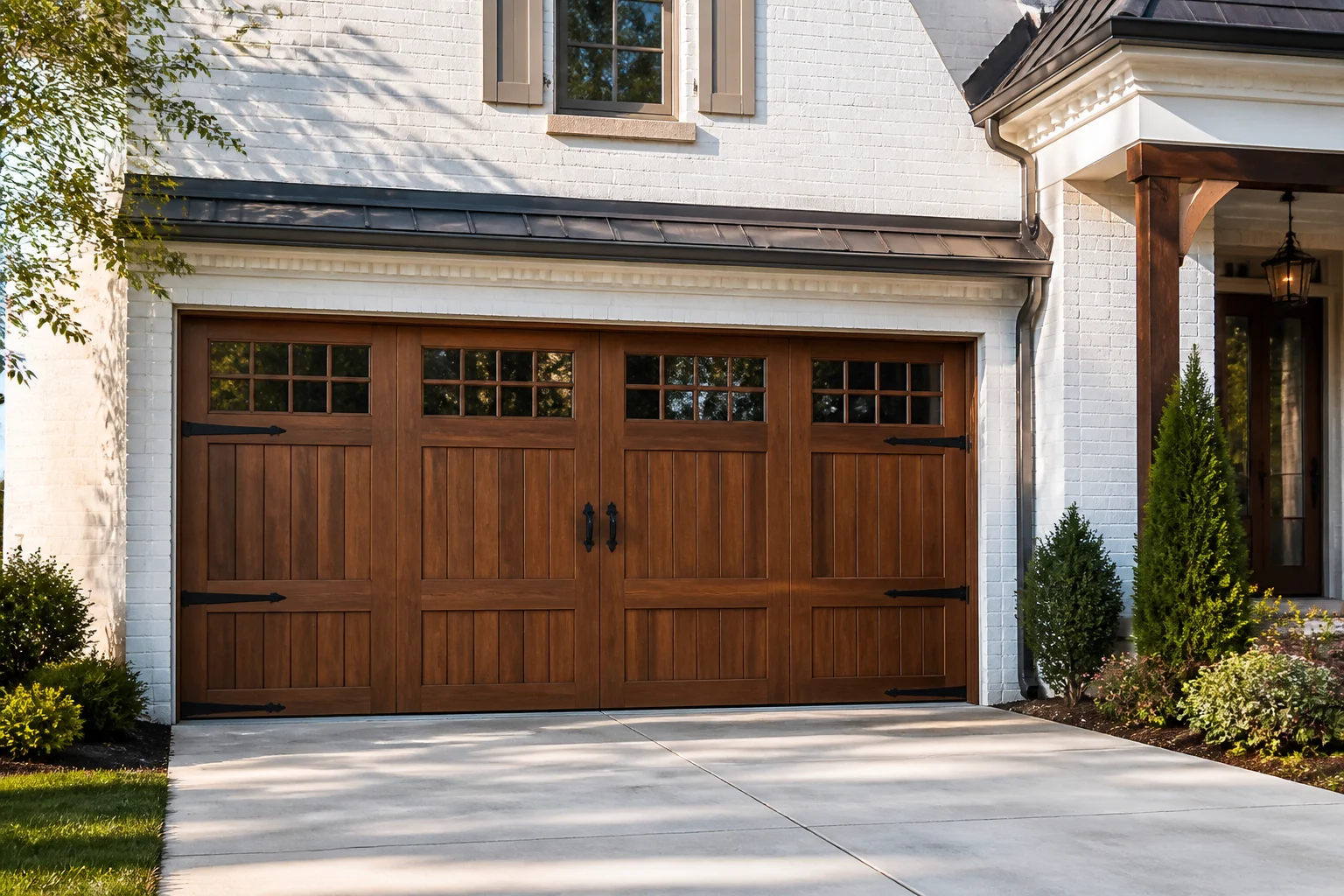
Printed, embossed, composite, and fiberglass faces offer wood character with different care and weight.
Explore this door style
Larger openings, high-cycle use, loading areas, wind, safety, and specialty hardware need project assessment.
Explore this door style