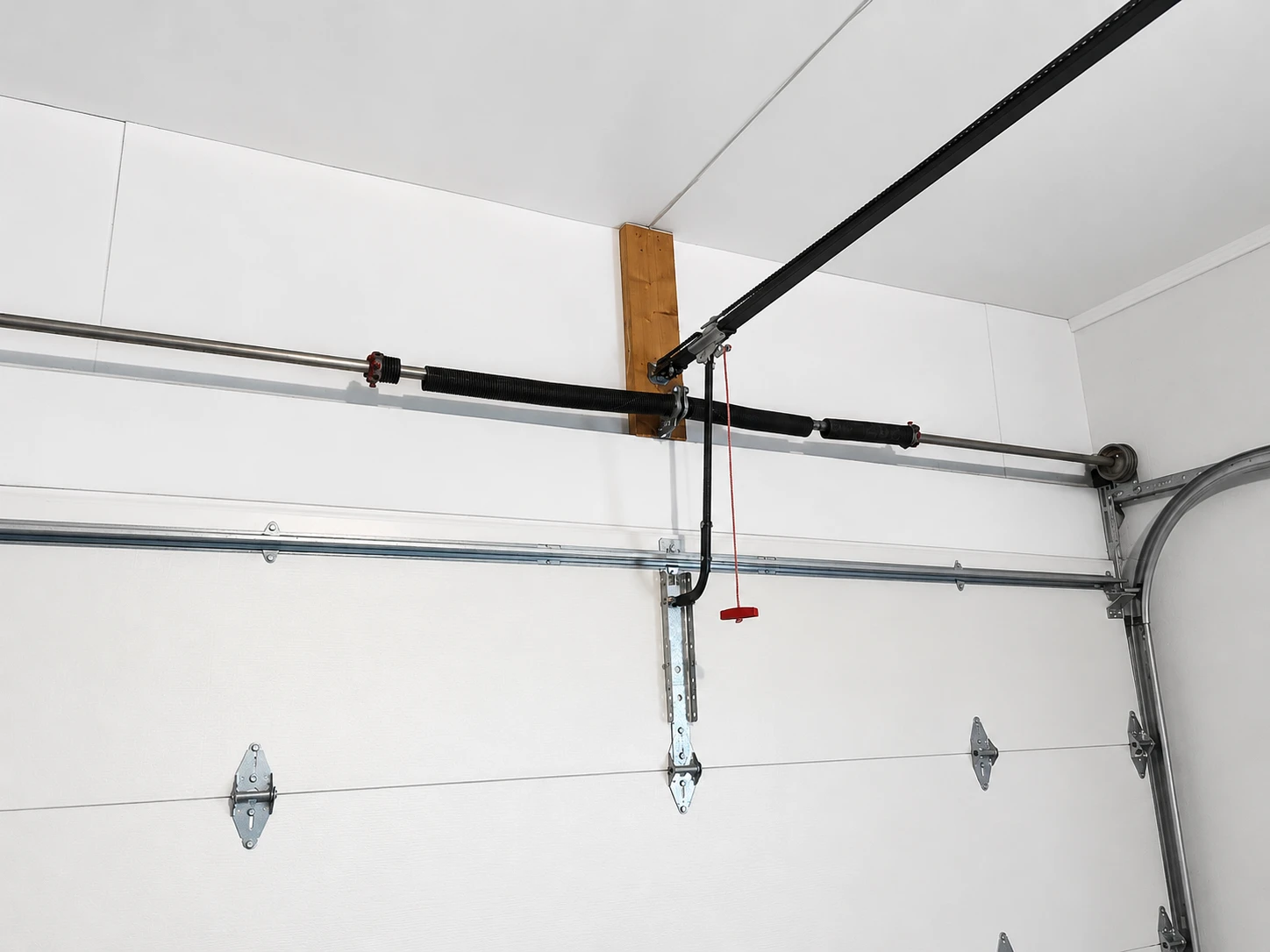
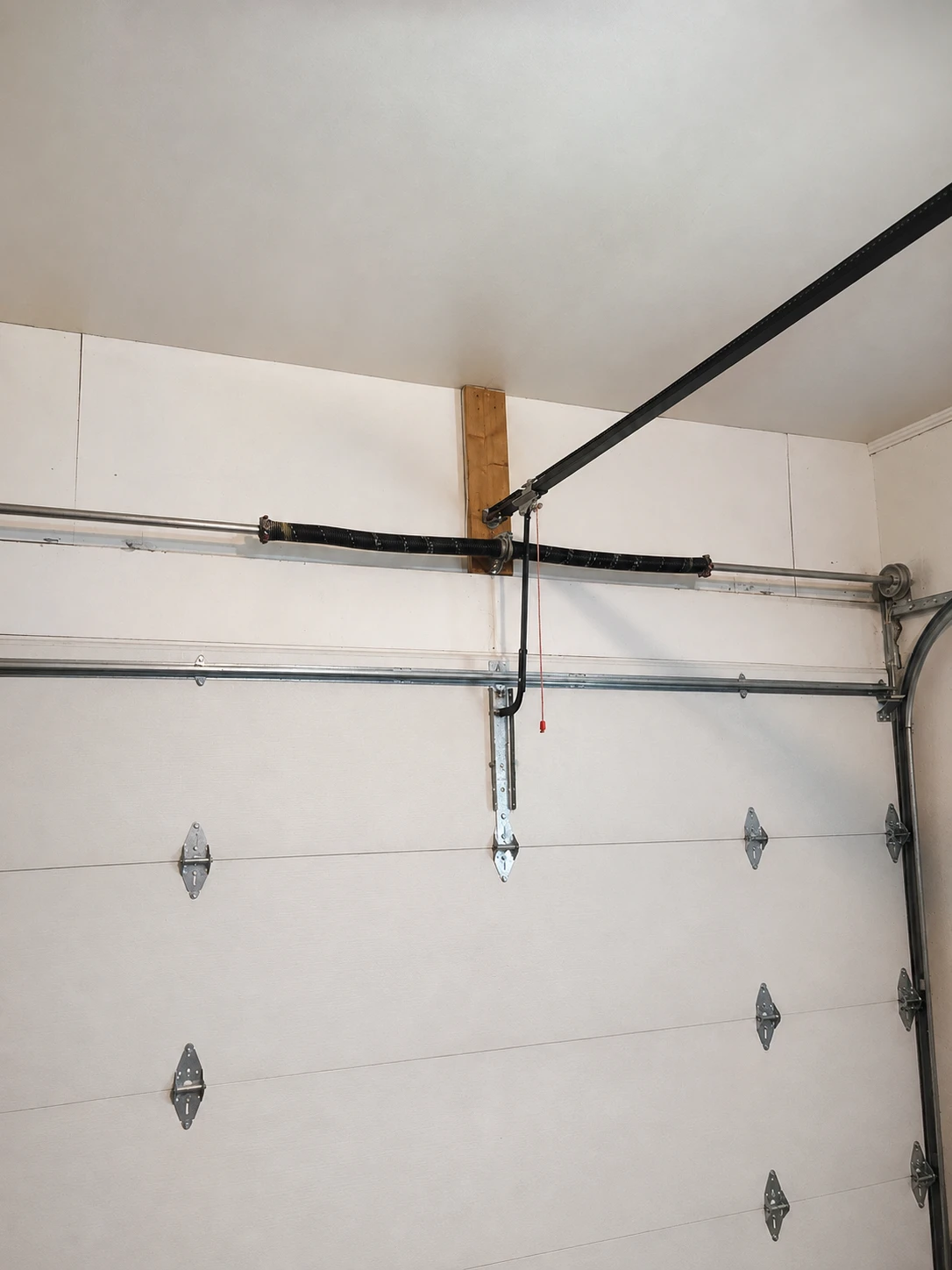
Torsion springs
- Location
- On a steel shaft above the door
- Movement
- Twists on the shaft to create torque
- Failure sign
- A visible gap opens in the coil
- Safety
- The shaft and hardware remain under high tension
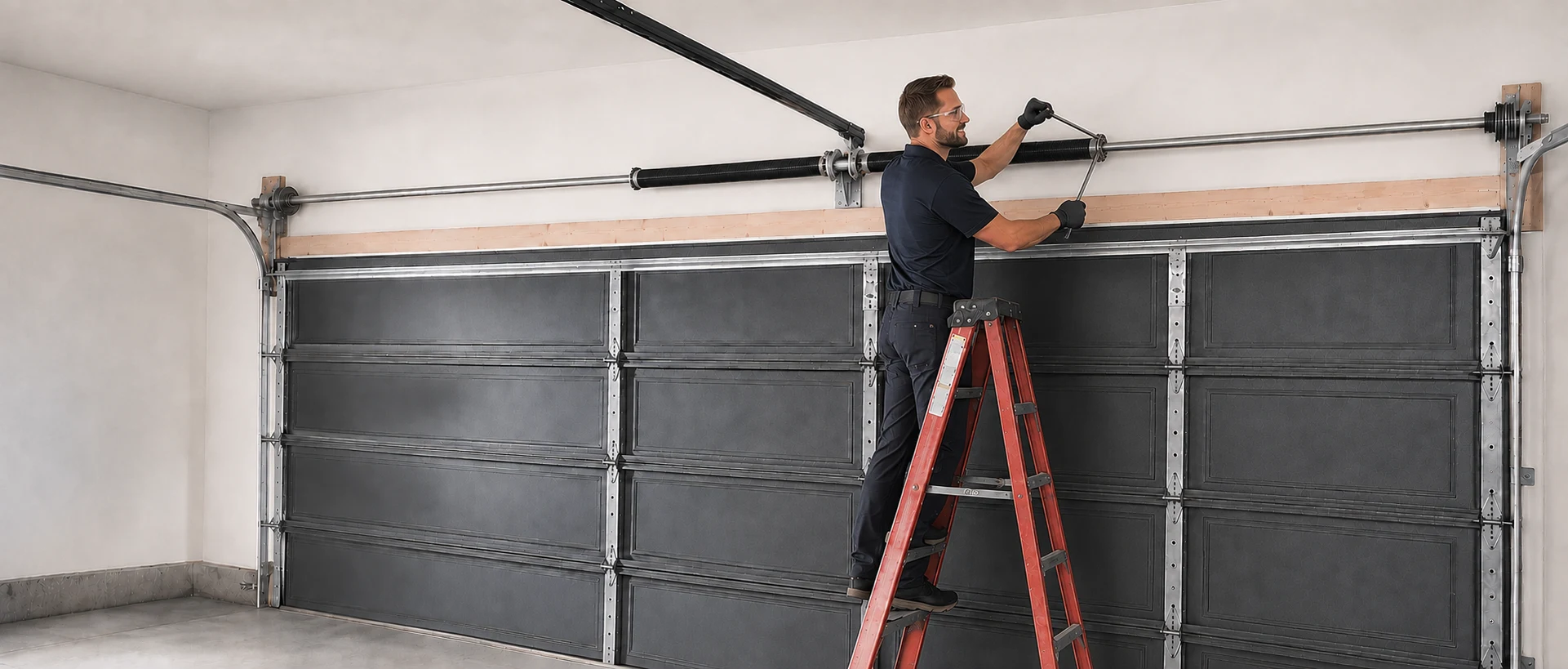
Across Crescent Springs, from Lou Hartfiel Memorial Park to the new homes at the Reserve at Meadowood, garage door spring replacement usually involves torsion springs above the opening. We wind the new pair to the door's weight and confirm it holds halfway open.
Garage door spring replacement in Crescent Springs is balanced to hold halfway open.




Safety check
What to do now
Do not touch the spring, cables, brackets, or emergency release. If the spring area is visible from the floor, a wide photo can help us prepare the right parts.
Customer reviews
Know the system
Some doors use enclosed spring assemblies, low-headroom hardware, conversion kits, or custom commercial configurations. These systems require model-specific parts and measurements before a quote can be finalized.
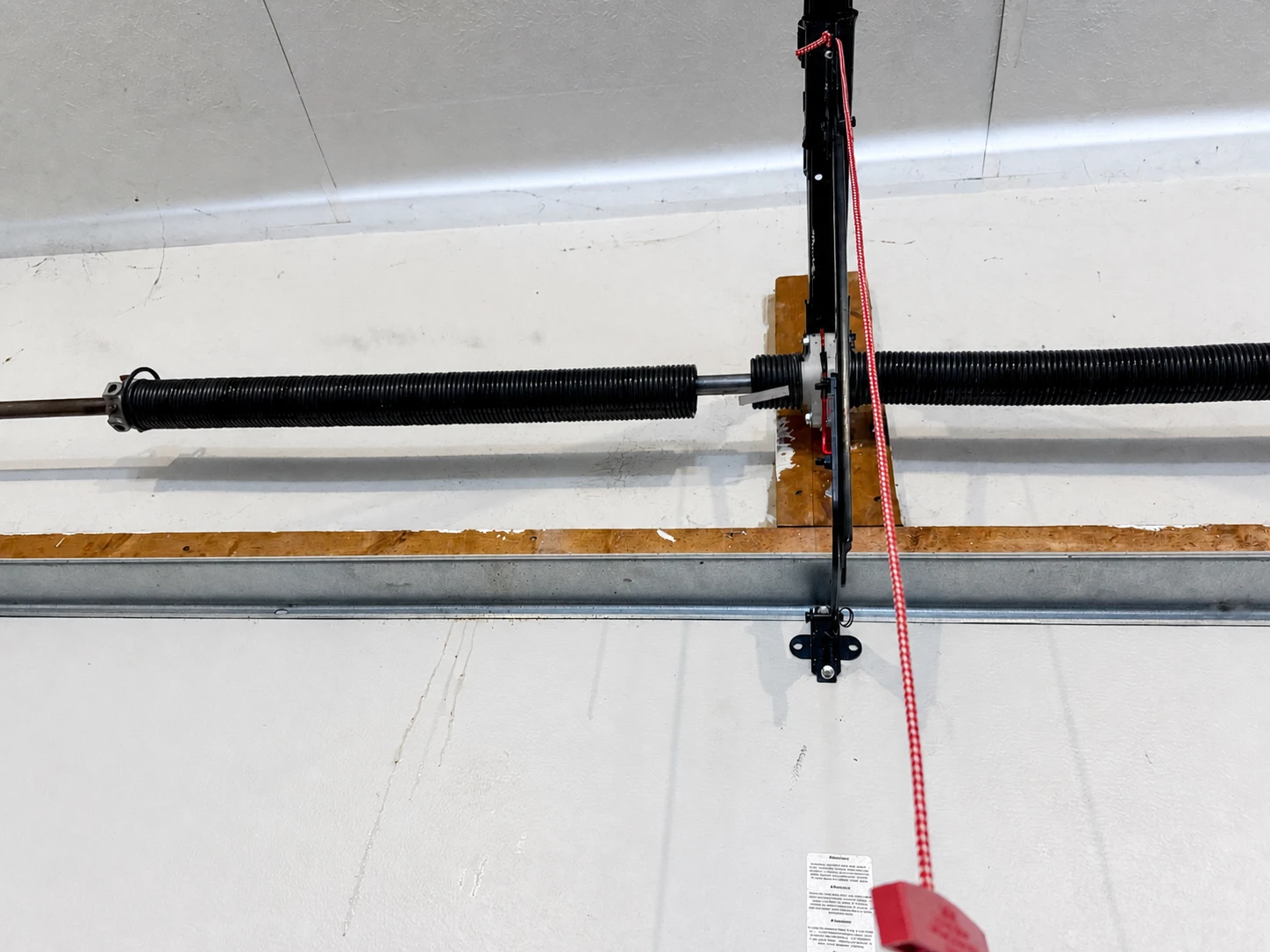
Not sure what you have? Send a wide photo from the floor. We can often identify the general system before the appointment, then confirm measurements on site.
Spring selection
A spring must counterbalance the actual weight of the door. We account for its width, height, panel material, insulation, glass, and any replacement sections.Sized to the actual weight of your door.
Cables, drums, bearings, center brackets, the torsion shaft, and fasteners share the load. Worn or mismatched parts can cause poor balance or repeat failure.Cables, drums and bearings share the load.
Wire size, inside diameter, coil length, winding direction, spring count, and cycle rating have to work together—not simply resemble the old part.Wire, diameter and length must all match.
Frequent operation, low-headroom tracks, custom doors, earlier conversions, and unusual access can all change the recommended setup.Use and headroom can change the setup.
On a two-spring garage door: both springs usually share the same age and cycle history. If one breaks, the other may be close behind. A paired replacement is often recommended, and the technician should explain the reason for your specific door before work begins.
Before · Broken spring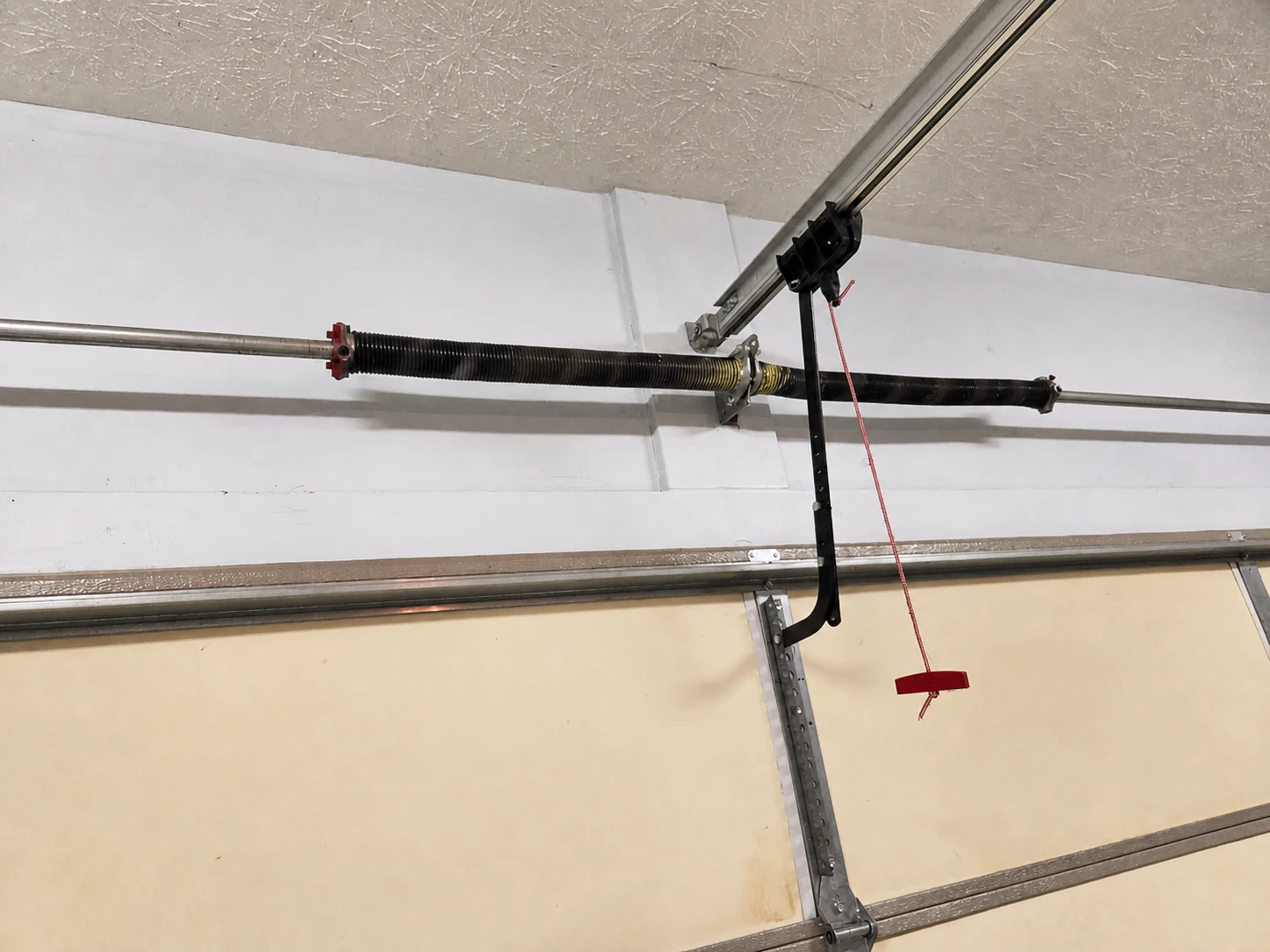 After · Replaced
Service and pricing
The technician documents the spring system, cables, drums, bearings, tracks, opener, and position of the door.Springs, cables, drums and tracks checked.
Door weight and spring dimensions are used to identify a replacement that balances the complete door.A spring sized to balance the whole door.
Required work and optional upgrades should be explained before installation begins.Required work explained before we start.
After professional replacement, the door is balanced, cycled, and safety-checked with the opener.Balanced, cycled and safety-checked.
Most spring replacements in Crescent Springs, from Lou Hartfiel Memorial Park to Interstate 75, are on homes that are already built. New construction continues at the Reserve at Meadowood. On newer homes like those, torsion springs above the opening are the usual setup. Older doors may still carry extension springs beside the tracks.
A broken spring leaves the door too heavy for the opener to lift safely. We identify the spring type and size before anything is replaced. Wire gauge, length and inside diameter are matched to the door's weight. On a two-spring door, we explain whether replacing both is the better repair. A spring's coils should never be wound past their rated turns. Cables and bottom brackets are looked over while the tension is off. The door is balanced by hand, then run on the opener to confirm a smooth lift.
Service area coverage
Local ZIP: 41017
Before you schedule
Most home spring replacements cost between $275 and $750. Where yours lands depends on the door's size and weight, the spring system, how many springs it uses and their cycle rating, the hardware needed and the access. A conversion or custom part changes the price too. Very heavy doors, custom setups and commercial systems may fall outside that range.
With torsion, we work on springs mounted on a shaft above the door. They wind up and use torque to counterbalance it. With extension, the springs ride along the horizontal tracks, beside or above them, and stretch as the door shuts. Torsion setups usually give more controlled movement. Extension setups turn up on some lighter or older doors, and they should include containment cables.
On a matched system, both springs have typically worked the same number of years and cycles. Swapping out the pair may leave the door better balanced, and it may lower the odds of needing service again soon after. Before you say yes to the work, the technician should walk you through what they recommend for your specific door.
Probably not. Normal cycle fatigue causes most breaks. A spring can also fail sooner from poor balance, corrosion, worn bearings or cables, extra door weight, wrong sizing or an earlier installation problem.
A spring's life is tracked in cycles, and no number of years is guaranteed. About 10,000 cycles is a common rating on many standard residential springs. Higher-cycle options are designed for more frequent use. The real figure depends on daily operation, balance, the environment, correct sizing and the state of related hardware.
No. Stop running it. Never pull the emergency release, and never try lifting the door. Without a working counterbalance system, a door can turn extremely heavy and unstable. Keeping it running can damage other parts.
The spring is there to counterbalance the actual door. The door's weight and the track setup affect the right choice, and so do spring type, spring count, cycle rating, wire size, inside diameter, length and winding direction. A spring selected on looks alone may leave the door badly balanced or overload other parts.
First, the technician inspects the whole door. You'll see the spring system and door load measured, and the quote explained before work starts. Once the correct parts are in, the door is balanced, cycled and tested with your opener. You'll also hear which parts-and-labor warranty applies.
It can be dangerous. When a spring breaks, the cables and opener take the door's full weight, and so does anyone trying to lift it. Keep the door closed where you can, and unplug the opener too. People and cars should stay clear until a new spring is in and the drums and cables have been checked.
Local help for a heavy or stuck door
Let us know whether the door is open or closed, whether a vehicle is trapped, and what you heard or saw. Keep clear of the opening until it can be inspected.