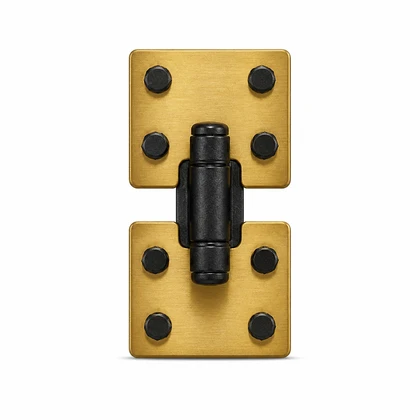
Standard option
Steel rollers
- Sound
- Louder metal-on-metal movement
- Maintenance
- Needs periodic lubrication
- Best for
- Detached garages and budget repairs
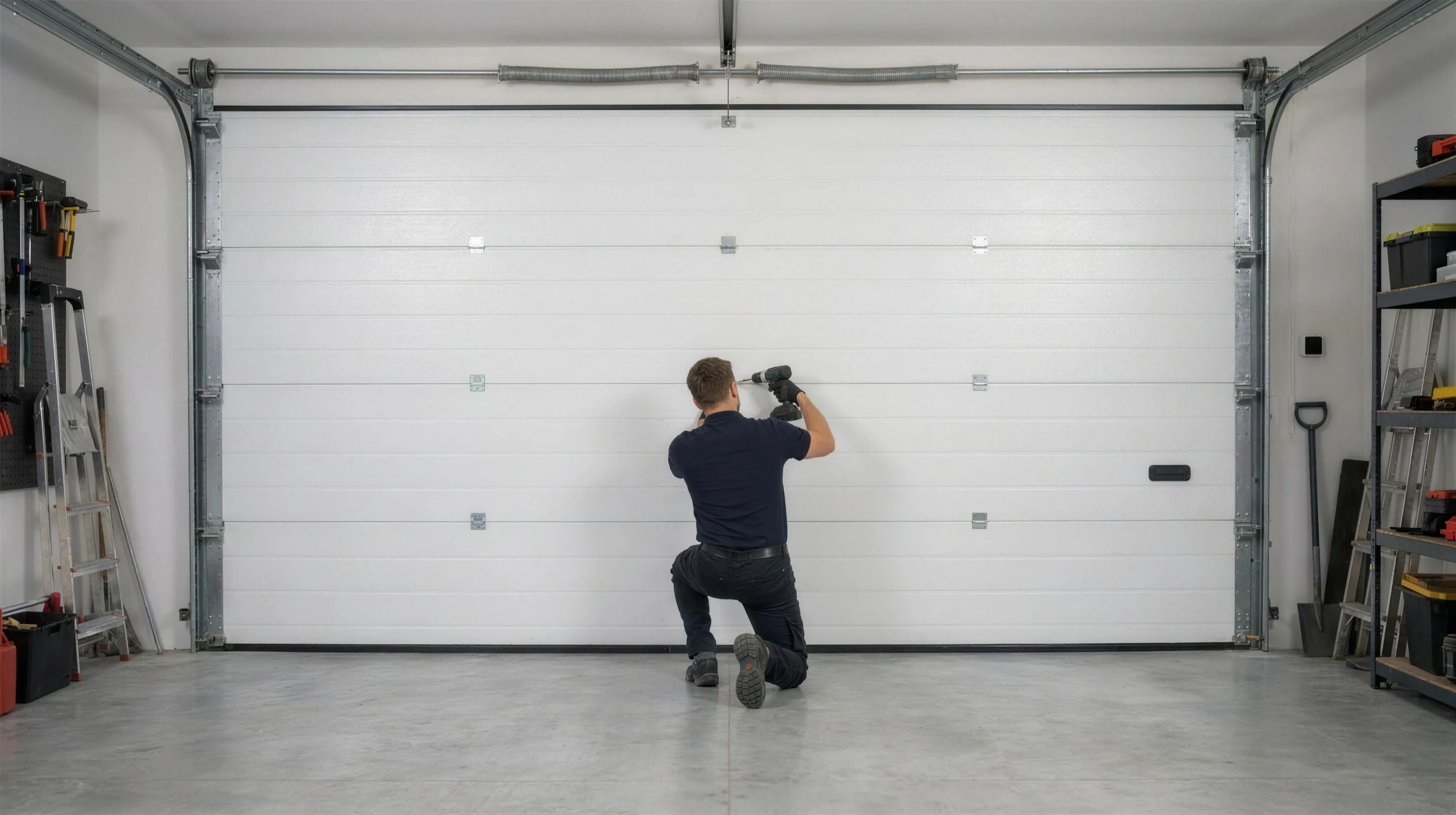
Garage door roller replacement in Nicholasville reaches newer homes toward Wilmore Road and older doors around Court Row alike. We fit sealed-bearing nylon rollers sized to the track and treat the bottom brackets with extra care.
Nicholasville roller replacement reaches newer homes and older doors alike.




Safety check
What to do now
A squeaky or shaky door can usually wait for a scheduled visit—just skip the extra cycles. If a roller has left the track or a hinge has cracked, stop using the door and keep the opening clear. Never loosen a bottom bracket: it anchors the lift cable and stays under spring tension.
Customer reviews
Know the hardware
Standard option
Quieter upgrade
Have an unusual roller? Send us a photo taken safely from the floor and we’ll help identify it.
Plastic rollers without bearings are common on new construction and often wear out within 5,000–10,000 cycles. Heavier and commercial doors use 3-inch rollers, and low-headroom or high-lift systems use specific top-roller and long-stem hardware that must be matched exactly.
Not sure what you have? Send a photo of one hinge and roller from the floor. We can usually identify wheel size, stem type, and hinge style before the appointment, then confirm on site.
Hardware selection
We check each roller for cracks, flat spots, rust, missing balls, and play on the stem. One bad roller is a symptom—the rest of the set has the same age and cycle count.We check every roller for cracks, rust, flat spots, and looseness.
Short- and long-stem rollers, 2-inch and 3-inch wheels, and #1–#5 hinges are not interchangeable. The replacement must match the track profile, hinge position, and door weight so the door tracks true.The wheel, stem, and hinge must match your exact door and track.
Cracked hinge leaves, elongated bolt holes, stripped fasteners, and worn section joints are corrected at the same time. A new roller in a fatigued hinge still shakes.We check for cracked hinges and loose or damaged mounting points.
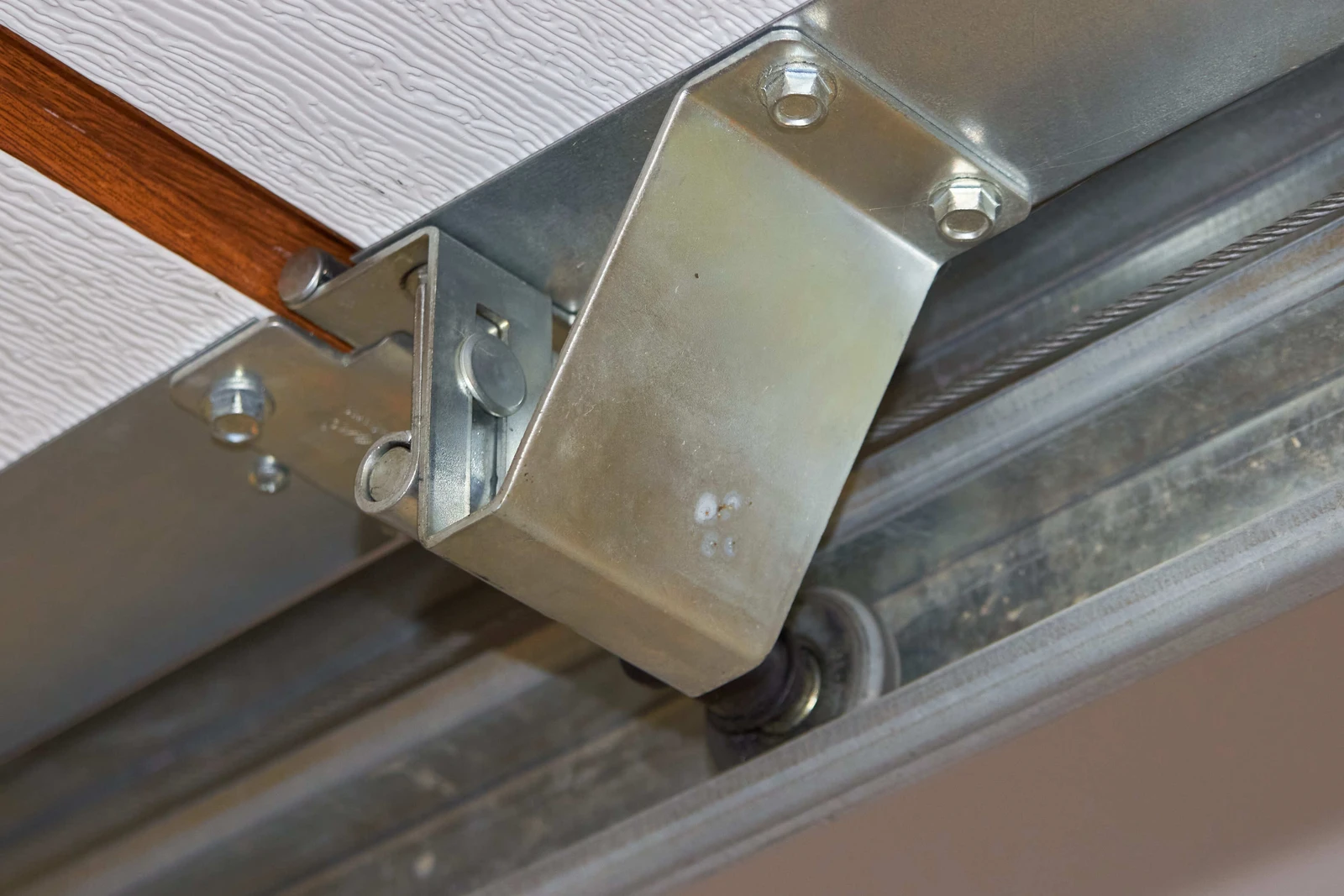
The bottom rollers sit in the bottom brackets, which anchor the lift cables and stay under spring tension. We check the cables, drums, and balance and replace the bottom fixtures only with the door secured.We inspect the cables and balance without disturbing tensioned parts.
Rollers are replaced as a set: a four-section door carries ten rollers and a five-section door carries twelve, all with the same age and cycle count. Swapping only the one that failed usually means another visit soon, and mixing old and new rollers creates uneven wear. The technician should explain what the set includes for your door before work begins.Best practice: Replace worn rollers as a matched set for smoother, more reliable movement.
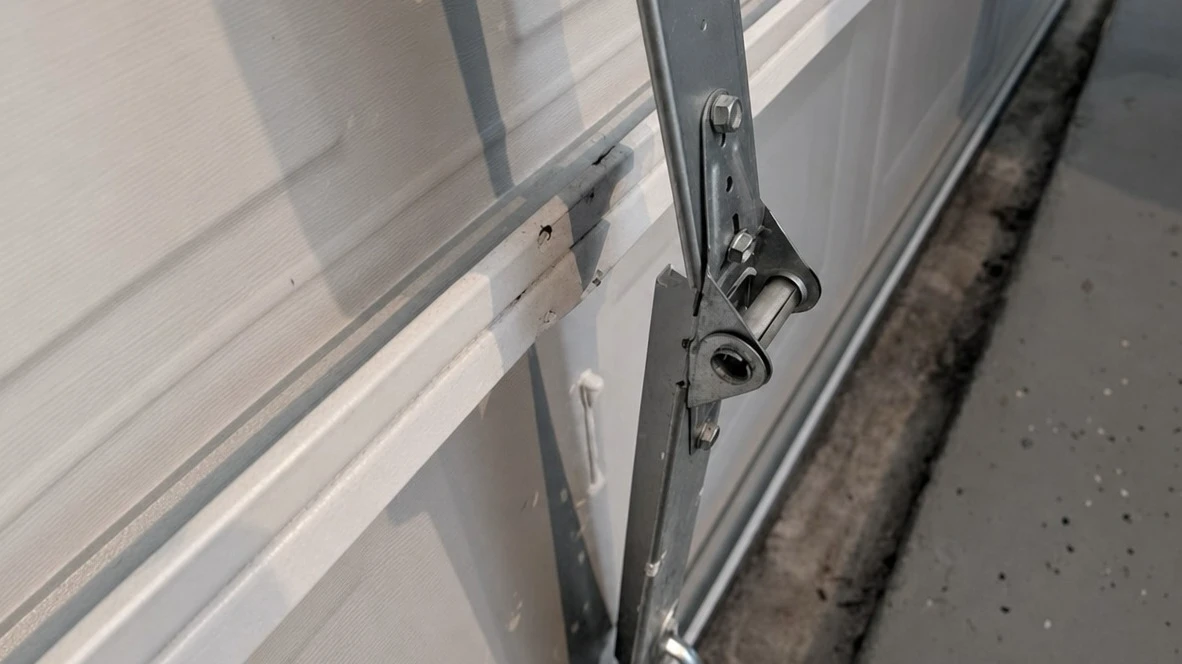 Before · Worn hinge and roller
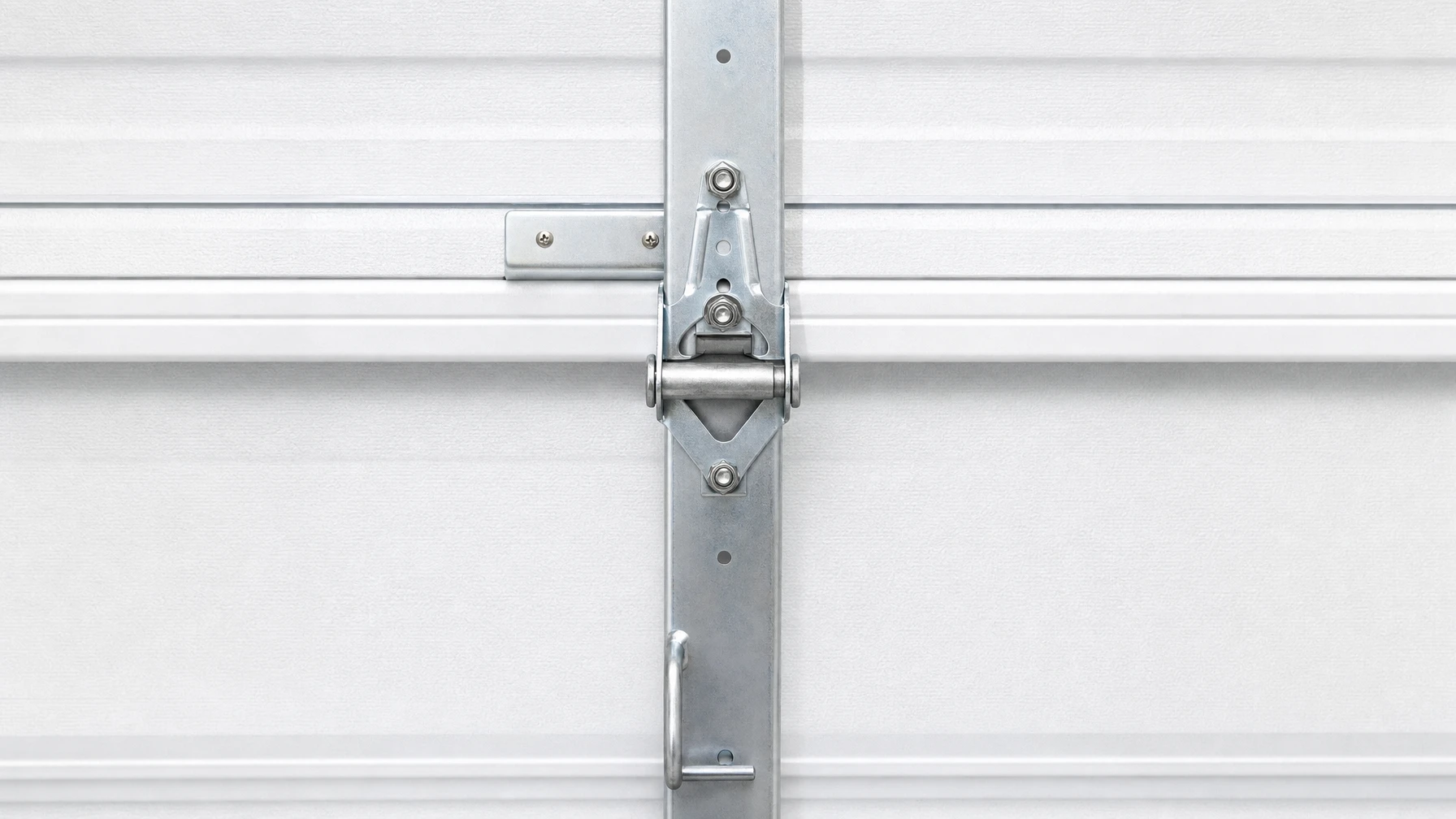 After · Replaced hardware
Service and pricing
The technician documents rollers, hinges, tracks, bottom brackets, cables, springs, balance, and opener force before quoting.Full door checked, then quoted.
Roller type, wheel size, stem length, hinge numbers, and gauge are selected for the actual door and track—not by appearance alone.Matched to your door and track.
Rollers and hinges are swapped one position at a time with the door clamped and supported. Bottom fixtures are handled under controlled tension.One at a time, door secured.
Fasteners are torqued, hinges lubricated, the door balanced and cycled, and opener force and reversal tested before we leave.Lubricated, cycled and tested.
Rollers guide a Nicholasville garage door along its track, and they are often the first parts to wear. Subdivisions have kept coming as the town grew, with homes built from the streets near Lake Mingo Park to those near Wilmore Road. Plain rollers without sealed bearings can start to grind early, even on those newer doors. Closer to downtown, around Court Row, an older door may already have had its rollers changed.
A worn roller wobbles instead of rolling straight. The door rattles or catches at the same spot each trip. We fit sealed-bearing nylon rollers sized to the track. The bottom rollers are changed carefully, since they share a bracket with the lift cable. Each hinge is checked for cracks while its roller is out. Worn track or loose hinges found along the way are pointed out. The door runs quieter afterward, with less strain on the opener.
Service area coverage
Local ZIP: 40356
Before you schedule
A full sealed nylon roller set on a standard residential door typically costs $275–$450 installed. A full steel set usually runs $225–$375. You'll usually pay $35–$65 for a single hinge, though several hinges get one set price. A bottom bracket with its roller typically costs $95–$175 per side. Your final price depends on the roller type and wheel size, how many sections you have and the door's weight. It also depends on how many hinges are involved and what shape the bottom brackets, cables, tracks and balance are in. Commercial, 3-inch or specialty low-headroom hardware may land outside these ranges.
Twelve on a five-section door, and ten on a standard four-section residential door. Those ten break down as two per section and two top rollers. They've all spent the same time in service and run the same cycles, so they almost always get swapped as one set, not one by one.
Nylon is usually the recommendation for an attached garage, specifically a sealed nylon roller with a 13-ball bearing. It runs quieter and holds up against rust, and its seal shuts grit out of the bearing. A steel 10-ball roller is durable and costs less. The trade-off is more noise and regular lubrication. Builder-grade plastic rollers without bearings should go once they look worn.
A roller's life comes in cycles, with no guaranteed number of years. Plastic builder-grade wheels often rate for only 5,000–10,000 cycles, and on a door you use daily they can give out in a few years. Unsealed steel rollers commonly carry a 10,000–15,000 cycle rating if you lubricate them regularly. Good-quality sealed nylon rollers commonly reach the tens of thousands of cycles and can stay in service well past a decade. Real life depends on the door's weight and balance, the state of the track and how often you use it.
Not necessarily. Inspect both together, and replace a hinge only when it needs it: cracked, bent, rusted through, or with bolt holes that have gone elongated. A section joint that won't stay tight is another reason. Any replacement has to match the hinge number (#1–#5) and gauge, which sets the roller at the right offset for the track it runs in.
Each residential hinge has a number stamped on it, typically between #1 and #5. #1 hinges sit where the sections meet at the door's center, and at the lower joints too. Higher numbers go farther up each side, where the roller stem needs to stand farther out. That lets the roller track the curve as the door goes overhead. Put in the wrong number and you'll get rubbing, binding or a roller popping out.
We recommend having a professional do the full set. Each bottom roller sits in a bottom bracket that anchors a lift cable, and that bracket carries spring tension in any position, open or closed. If you remove it before the door's secured and the tension's properly released, it can cause serious injury. Even the middle and top rollers, which are less dangerous, still need the door clamped. Hardware that doesn't match can leave the door binding or off its track.
Not always. Squeaking, grinding and rattling most often come from the rollers and hinges. Noise can also come from an unbalanced spring system, loose fasteners, loose track brackets, or a chain or gear in the opener that's worn. Confirming the source is part of the visit, and it comes before any parts get replaced.
For hinge pivots and the bearings of unsealed steel rollers, use a silicone or white lithium spray made just for garage doors, about every six months. The track surface shouldn't get any, since grease there gathers grit. WD-40 and similar penetrating sprays are general-purpose products that displace water and degrease. They won't lubricate for the long haul, and they can leave a gritty paste. Sealed nylon rollers need nothing on the bearings; lightly coat the stem instead.
That depends on the cause. With loose hinges, dry bearings or worn wheels to blame, sealed nylon rollers all the way round, with sound hinges, make a clear difference in most cases. Balance matters as well, and so does wear on the opener chain and rail. If either one's a problem, it needs putting right for a quiet door.
For a busy or attached garage, usually yes. Sealed-bearing nylon rollers tend to outlast basic steel ones, and they also run quieter and need less lubrication. A lightly used detached garage is different, and standard rollers can be enough there. The rollers we fit are matched to three things: the track, how often the door runs and the stem length.
Local help for a noisy or shaky doorNeed service?
Let us know whether the door is a single or double, whether it still opens and closes, what the noise sounds like, and whether a roller has left the track. Keep clear of the opening if a section is out of line.