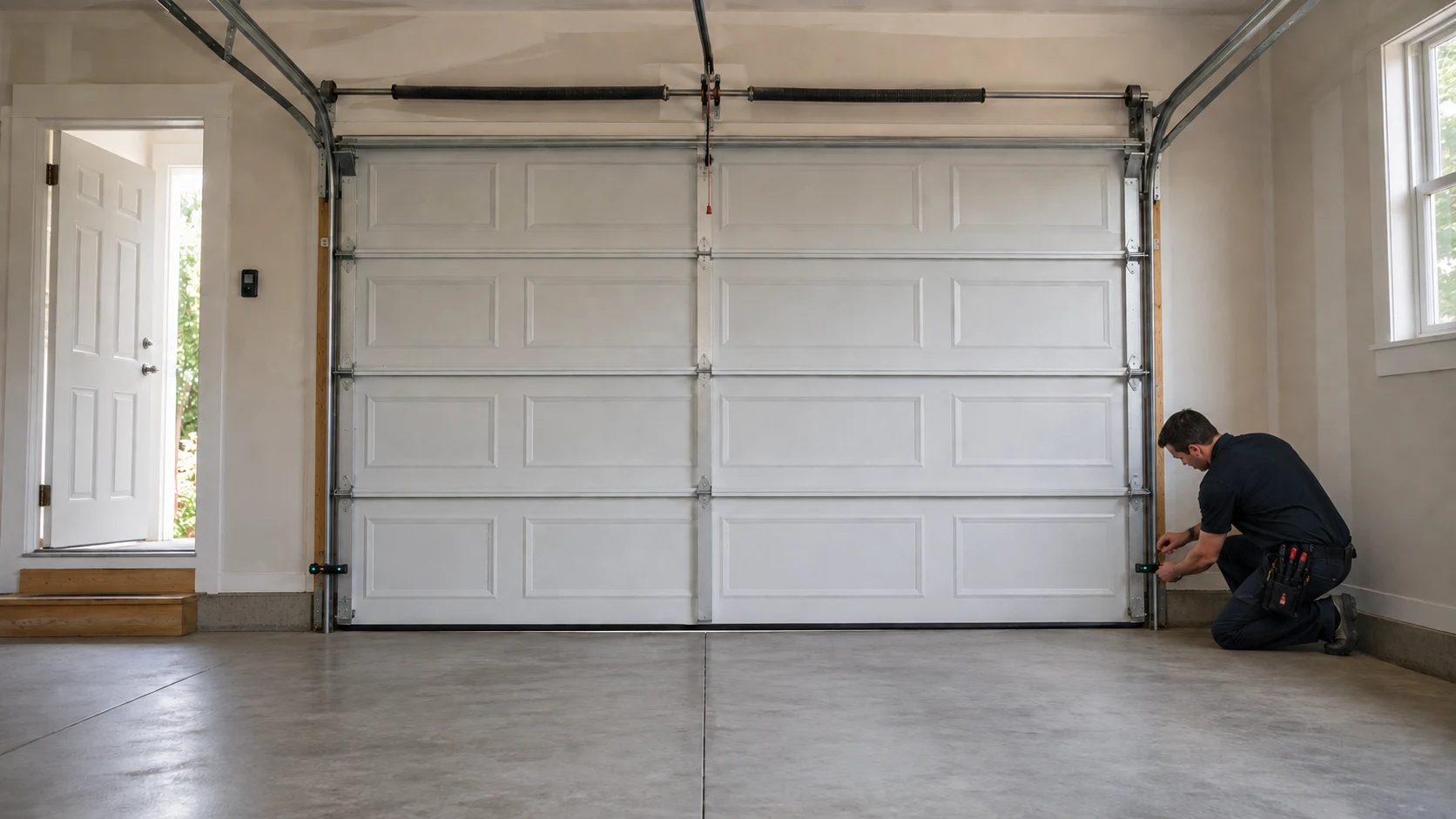




Garage door safety sensor service near the floor of a garage

Garage Door Sensor Repair in Smoketown, KY

Off Lampton Street, garages sit close to narrow streets, so garage door sensor repair in Smoketown often starts with a photo-eye bumped out of line. We realign the pair, check the low-voltage wire and test the reverse.

Off Lampton Street, garage door sensor repair in Smoketown often starts with a photo-eye bumped out of line.

Get Your Free Sensor Repair Quote

Clear diagnosis • No obligation quote

Step 1 of 2
Required field
Required field
Required field

Safety check

6 Signs Your Garage Door Sensors Need Attention

  • 01
    The door starts down, then reversesWhen the photo-eye beam is blocked, interrupted, or not being received, the opener may stop and return the door to the open position.The beam is blocked or lost.
  • 02
    The door opens normally but will not closeSafety sensors affect closing travel. A clear opening with a door that still refuses to close points to alignment, wiring, sensor, or opener diagnostics.Alignment, wiring or a sensor fault.
  • 03
    One or both sensor lights are off or flickeringIndicator colors and flash patterns vary by brand and model, but a light that is not steady commonly signals an obstruction, alignment issue, lost power, or wiring fault.Obstruction, alignment or power.
  • 04
    The door only closes while the wall control is heldSome opener models allow constant-pressure closing when the safety circuit is not satisfied. Treat this as a warning, not a permanent workaround.A warning, not a workaround.
  • 05
    The problem appears at certain times of dayDirect sunlight can interfere with some receiving sensors. Moisture, vibration, or a marginal wire connection can also make the problem intermittent.Sunlight can disrupt the beam.
  • 06
    A bracket, lens, or low-voltage wire is damagedA bumped bracket, cracked housing, dirty lens, loose connection, corroded splice, or pinched wire can interrupt the beam or power supply.This can cut the beam or power.

What to do now

Keep the opening clear and do not bypass the sensors.

Remove only obvious objects from the beam path and gently wipe the lenses with a soft cloth. If the lights still blink or the door will not close normally, leave the automatic system unused until it is diagnosed.

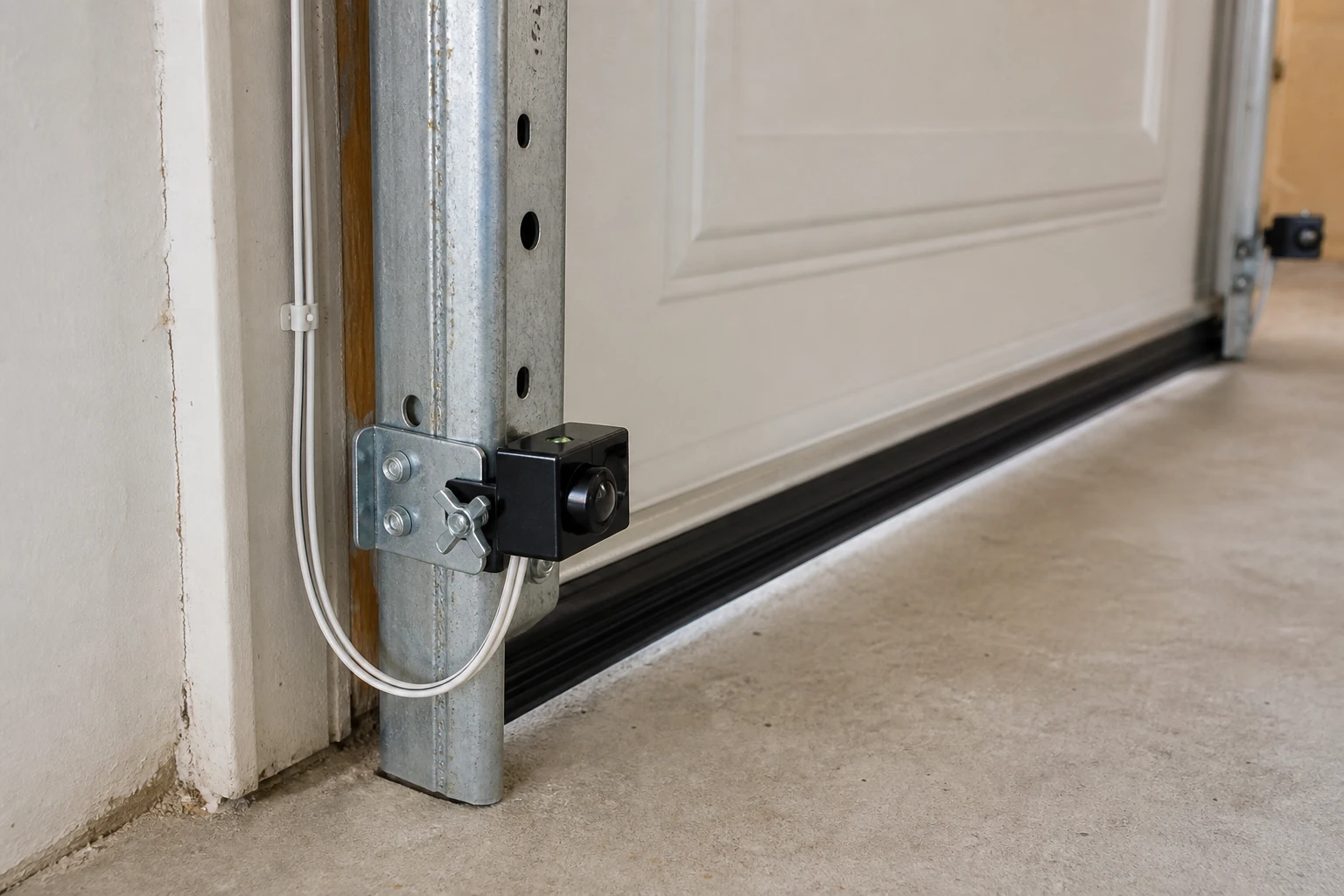
Photo-eye safety sensor near the floor with low-voltage wiring
A correctly mounted photo eye needs a clear, stable line of sight across the opening.

Customer reviews

Kentucky homeowners recommend Derby Strong.

Know the safety system

How the Two Garage Door Photo Eyes Work Together

One side of the openingSending photo eye
Opposite side of the openingReceiving photo eye
Primary job Projects the invisible beam across the doorway Confirms that the beam reaches the opposite side
Normal indication A steady LED usually confirms power A steady LED usually confirms power and alignment
Common issue Lost power, damaged wire, loose terminal, or failed unit Obstruction, misalignment, sunlight, wiring fault, or failed unit
Important detail LED color and flash codes vary by opener model The opener manual—not color alone—identifies the code
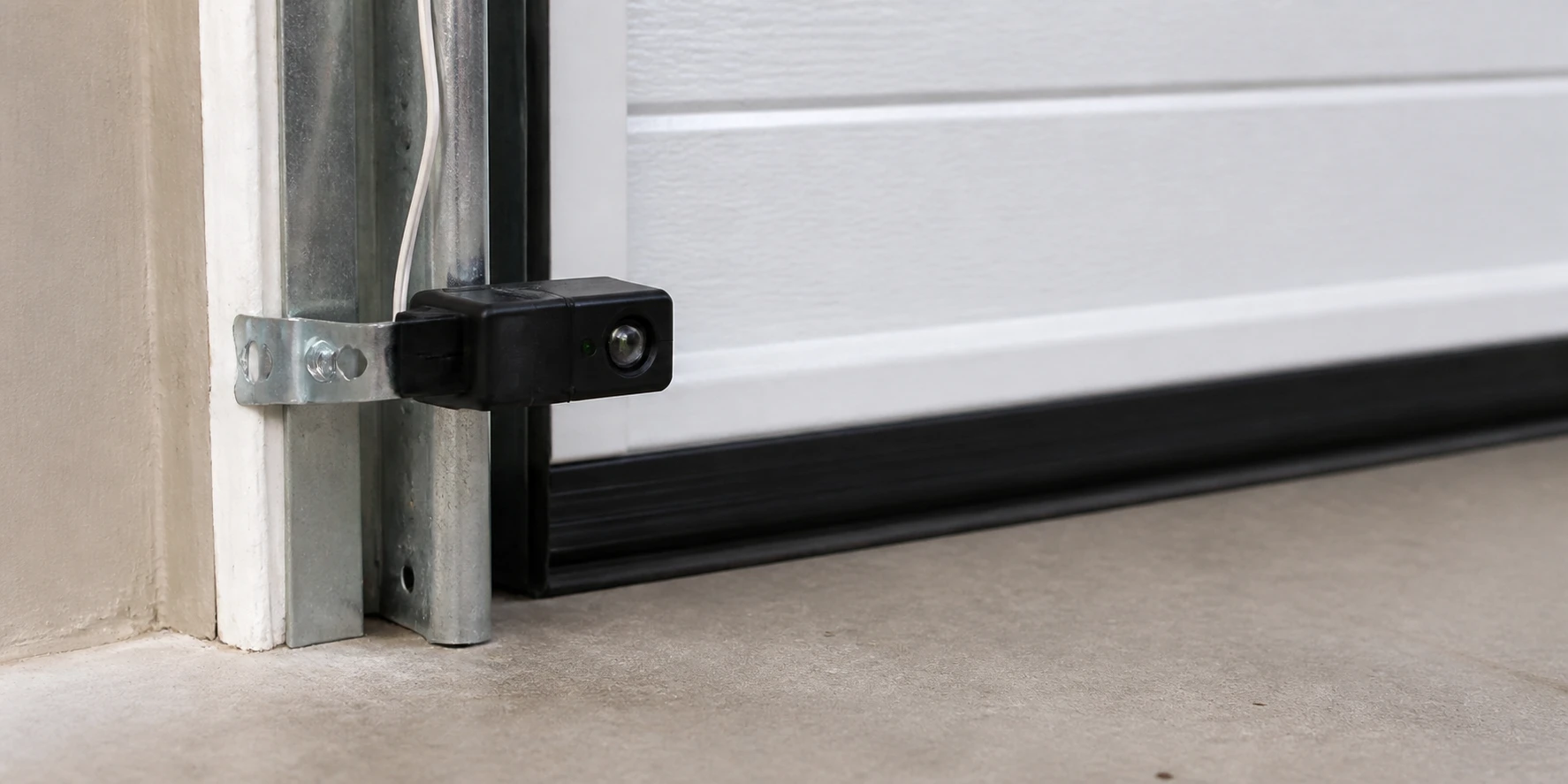
One side of the opening

Sending photo eye

Primary job
Projects the invisible beam across the doorway
Normal indication
A steady LED usually confirms power
Common issue
Lost power, damaged wire, loose terminal, or failed unit
Important detail
LED color and flash codes vary by opener model
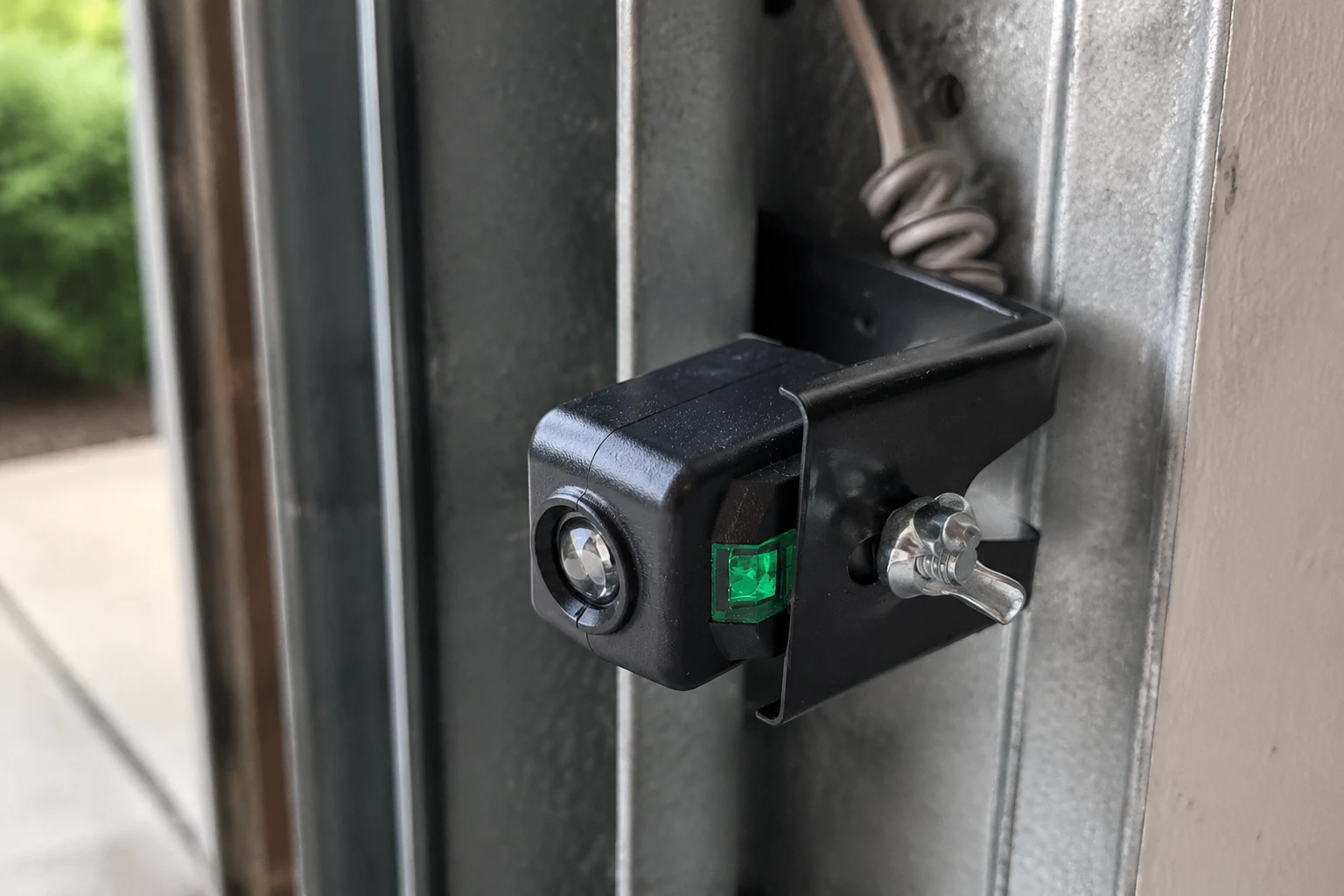
Opposite side of the opening

Receiving photo eye

Primary job
Confirms that the beam reaches the opposite side
Normal indication
A steady LED usually confirms power and alignment
Common issue
Obstruction, misalignment, sunlight, wiring fault, or failed unit
Important detail
The opener manual—not color alone—identifies the code

Photo eyes are one part of the reversal system.

The non-contact beam and the opener’s contact-reversal behavior are related safety functions, but they test different conditions. A complete service visit verifies the sensor response and the door’s closing behavior instead of assuming one successful light means the entire system is correct.

Not sure what you have? Send a clear photo of both sensors and the opener model label if it is safe to do so. We can often identify the general system before the appointment, then confirm compatibility on site.

Reliable sensor repair

What Makes a Safety-Sensor Repair Last?

Stable alignment and mounting

Both photo eyes need an unobstructed line of sight and brackets that remain secure when the track vibrates or the garage is used.Clear sight line and secure brackets.

Sound wiring and clean connections

The complete low-voltage path is checked for loose terminals, damaged insulation, shorts, corrosion, and vulnerable routing near the floor.Wiring and terminals checked end to end.

Model-compatible paired sensors

LED colors, diagnostic codes, wiring, and sensor generations differ. Replacement parts must be compatible with the exact opener and installed as a matched system.Replacement pairs matched to the opener.

Diagnose before replacing

The Four Checks That Separate a Quick Alignment From a Failed Part

  1. 01

    Beam path and lens condition

    We first rule out stored items, dirt, cobwebs, condensation, and direct light that can interrupt or overwhelm the photo-eye beam.Rule out dirt, objects and sunlight.

  2. 02

    Bracket position and stability

    Sensors must face each other at the height and location specified by the opener manufacturer. Bent or loose mounts can drift after a quick adjustment.Facing each other at the right height.

  3. 03

    Wiring from each sensor to the opener

    Loose terminals, reversed conductors, staples, cuts, corrosion, and hidden breaks can imitate a failed sensor or cause intermittent closing.Wiring can mimic a failed sensor.

  4. 04

    Opener model, diagnostics, and compatibility

    The opener manual and diagnostic code help distinguish alignment, wiring, failed photo eyes, and a control-board problem before parts are replaced.Diagnostic codes guide the repair.

Why sensors are commonly replaced as a pair: the sending and receiving photo eyes are designed to communicate as one monitored system. When replacement is needed, a compatible matched pair avoids mixing generations or protocols that the opener may not recognize.

Garage door safety sensor and wiring inspected before service Inspect · Sensor and wiring
Garage door photo-eye sensor secured beside the track after service Verify · Aligned and secure
The correct repair starts with the whole signal path, then ends with secure mounting and operational testing.

Service and pricing

What Sensor Repair Includes—and What It May Cost

Four clear steps

  1. 01

    Inspect the complete safety path

    The technician checks both photo eyes, the beam path, lenses, brackets, low-voltage wiring, terminals, opener diagnostics, and door behavior.The full safety path checked.

  2. 02

    Clean, align, and secure

    Serviceable sensors are cleaned, aimed precisely at each other, and secured so their indicator lights and signal remain stable.Aligned for a steady signal.

  3. 03

    Repair wiring or replace compatible parts

    Damaged connections and wiring are corrected, or a failed sensor pair is replaced with components matched to the opener model.Wiring fixed or pair replaced.

  4. 04

    Cycle and safety-test the door

    The door is operated through repeated closing cycles and the photo-eye response and required reversal behavior are verified before handoff.Reversal verified before handoff.

Safety sensor repair across Smoketown

The safety sensors on a Smoketown door sit just above the floor on each side of the opening. Off Lampton Street, shotgun houses were built close together on narrow streets. Much of the housing between Logan Street Market and Jackson Street is older. Where a garage sits close to a narrow street, the photo-eyes are easy to bump out of line.

Each safety sensor faces its partner across the doorway, sharing an invisible beam. If anything breaks that beam, the opener sends the door back up. A bumped bracket, a dirty lens or a pinched wire can stop the door from closing. We realign the pair and clean the lenses. Damaged low-voltage wire is replaced back to the opener. A final close from the wall control, with an object in the doorway, confirms the door reverses.

Service area coverage

Local ZIP: 40203

Open in Google Maps

Before you schedule

Answers to Common Garage Door Sensor Repair Questions

Garage door safety sensor inspected before repair
Drag to compareSensor inspection compared with a clean, powered, and securely aligned photo eye.
01What should I expect to pay for garage door sensor repair or replacement in Smoketown?

Residential safety-sensor service typically runs $150 to $270. When all the sensors need is a simple cleaning or alignment, you're usually toward the lower end. Bracket work, a compatible pair of sensors or a wiring repair that's easy to reach may raise it. The range may not cover after-hours service or commercial systems, and it may also leave out long wiring reruns, unusual parts and opener control-board work.

02Why is my garage door stuck open?

Your sensors aren't giving the all-clear. They check the doorway on the way down. An object in the way, a dirty lens or a bumped sensor can cause it. So can a loose bracket, a cut wire, a dead sensor or an opener diagnostic fault. Clear away obvious objects. Wipe the lenses gently. Never bypass the sensors. Stop forcing the door.

03What does a blinking or dark garage door sensor light mean?

It depends on your opener's brand and model. On many openers, a blinking light on the receiving sensor means the beam is blocked or out of line. When a sensor shows no light at all, look for lost power, a loose or broken wire, wiring done wrong, or a failed part. Check the opener manual and diagnostic code before anyone replaces parts.

04Is sensor cleaning or realignment something I can do myself?

Cleaning is safe to do yourself, as long as the door is fully open and not moving. Clear any obvious obstruction and give each lens a gentle wipe with a clean, soft cloth. If a sensor was only lightly bumped, check its alignment from the floor with your exact opener manual. Stop and request service for damaged brackets, wires, housings or terminals. Lights that won't stay steady, or a door that still doesn't close normally, need service too.

05Can you bypass the photo-eyes?

No. The photo-eyes are part of the opener's entrapment-protection system. Don't disable them, cover them with tape, relocate them or bypass them for good. On some models, you can close the door temporarily with constant pressure on the wall control. That feature varies by model, and it's no substitute for a repair. Keep the full opening in sight, follow the manufacturer's manual and schedule service promptly.

06Does cold or damp weather affect garage door sensors?

It can, and so can the sun. Direct sunlight can overwhelm some receiving sensors, while dirt, condensation, moisture at low-mounted connections, corrosion and temperature movement cause on-and-off trouble. We confirm the pattern first, then correct the alignment, mounting or wiring, or fit compatible hardware. Masking the lens isn't enough.

07Do faulty sensors usually get repaired or replaced?

Alignment or a secure bracket may be enough for a pair that's clean, undamaged, powered and compatible. Cracked housings, water damage and failed internal electronics generally point to replacement, and so do obsolete, incompatible components. Unstable LEDs point there too, once the wiring has been verified. Rule out the wiring and the opener board before you replace anything.

08Can I use any brand of garage door sensor?

No. Opener brand and model matter, and so do age, generation, wiring method and monitoring protocol. Even sensors that look identical may not communicate correctly. So we start by identifying the opener model, then put in a matched, compatible pair rather than mixing unverified parts.

09What happens during a professional sensor service visit?

The technician should look over the lenses, wiring, beam path, brackets, terminals, indicator lights and opener diagnostic codes. Then you get the quote explained. Serviceable sensors get cleaned and aligned, or compatible replacements go in. The technician secures the mounting and cycles the door to verify photo-eye and reversal response before handoff.

Local help for a door that will not close

Tell us what the lights and door are doing.

Share whether the door starts down and reverses, whether either sensor light is blinking or off, and whether the issue changes with sunlight. Keep the opening clear and do not bypass the safety system.

  • Door reverses or will not close
  • Sensor lights steady, blinking, or off
  • Issue is constant or time-of-day related
Call (502) 619-5198

Request Sensor Repair

Serving Smoketown and nearby Louisville Metro communities. Share the symptoms and we’ll call to confirm the right service timing.

Step 1 of 2
Required field
Required field
Required field

Derby Strong Garage Doors

Garage door trouble?

Talk to our local team now about a broken spring, a stuck door, an opener or a new door.

Call (502) 619-5198 Schedule online

5.0 from 306 reviews

Before you go

Pick your coupon

Choose an offer and we’ll save it with your request. Every visit includes a free safety inspection.

Choose one coupon

One coupon per household. Not combinable with other offers. Good for 30 days.