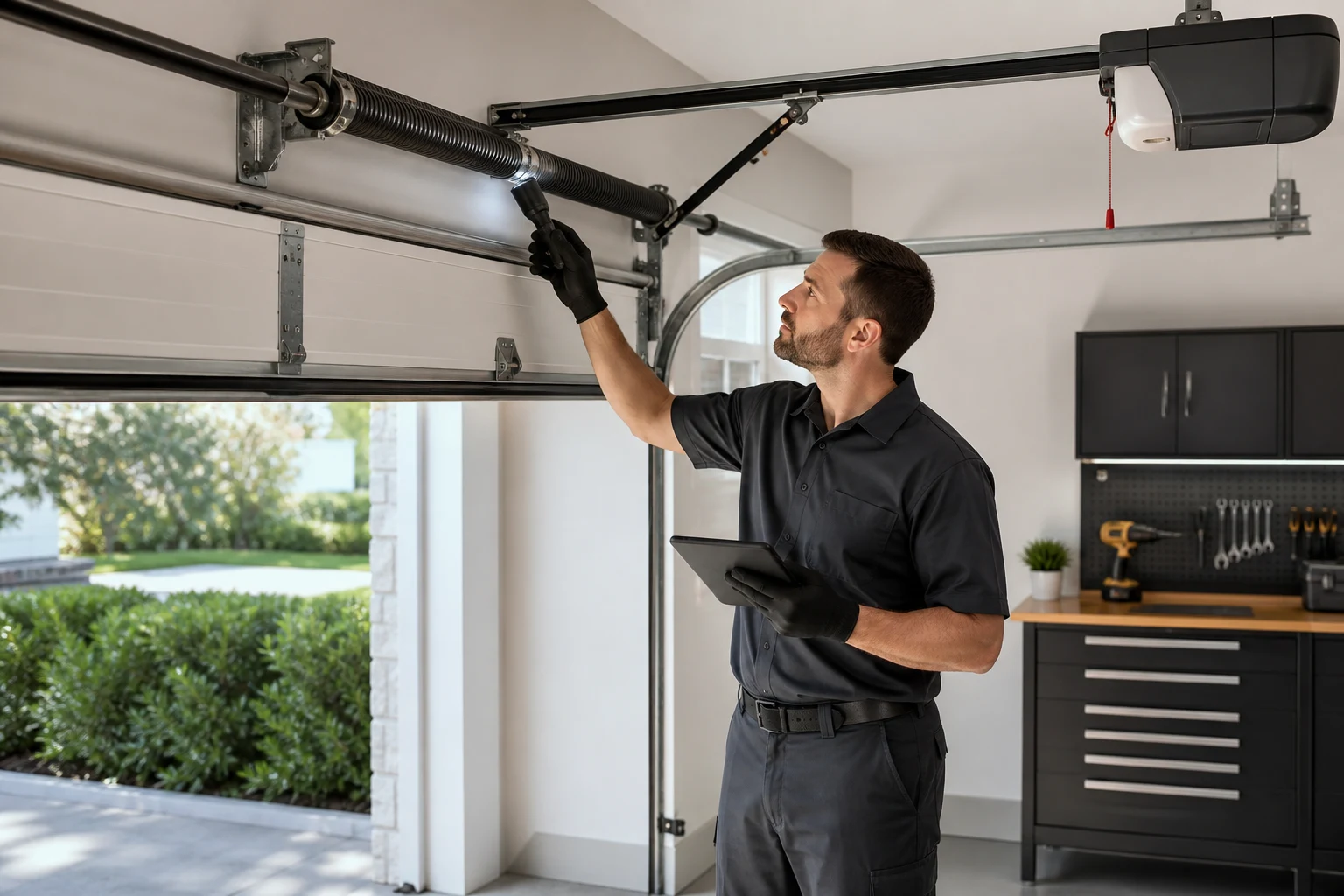
Technician recording torsion spring inspection findings on a tablet

Garage Door Tune-Up and Maintenance in Seneca Gardens, KY

Garage door maintenance in Seneca Gardens keeps a newer door on an older bungalow or Colonial-style home running in step. We check the springs, tighten each hinge, then lubricate the rollers.

Seneca Gardens garage door tune-ups keep bungalow doors running in step.

Book Your Garage Door Tune-Up

25-point inspection • Clear, written summary

Step 1 of 2
Required field
Required field
Required field

Maintenance check

6 Signs Your Garage Door Is Due for a Tune-Up

  • 01
    The door is louder than it used to beSqueaks, grinding, rattles, and popping usually trace back to dry rollers, loose hardware, or a door slipping out of balance. Those are the exact things a tune-up corrects before they cost parts.Noise usually means dry rollers, loose hardware or imbalance.
  • 02
    Slower, jerky, or hesitant travelA door that stutters through its cycle or pauses partway is binding somewhere. Lubrication, track cleaning, and balance work often restore smooth travel without a repair.Stuttering travel means the door is binding somewhere.
  • 03
    The door will not hold at halfwayWith the opener disconnected, a balanced door stays put when lifted halfway. If it drifts up or sinks, the springs have lost tension and the opener is carrying weight it was never meant to lift.A door that drifts up or sinks has lost spring tension.
  • 04
    The opener hums, strains, or reversesAn opener fighting a heavy door or a misaligned photo-eye works harder every cycle. A tune-up tests the force and travel settings, cleans and aligns the sensors, and checks the safety reversal.The opener may be fighting a heavy door or a misaligned eye.
  • 05
    Rust, fraying, or loose hardware you can seeFrayed cable strands, rusted springs, elongated hinge holes, and backed-out lag bolts are all visible from the floor, and all far cheaper to address at a scheduled visit than after they fail.Frayed cables, rust and loose bolts cost less to fix early.
  • 06
    It has been more than a yearA typical Kentucky door cycles 1,200–1,500 times a year through freeze-thaw winters and humid summers. Manufacturers and the International Door Association recommend professional service at least annually.Professional service is recommended at least once a year.

What to do now

Schedule a tune-up for a noisy or slow door.

A noisy or slow door can wait for a scheduled visit; just skip unnecessary cycles until then. If the door is crooked, hanging, will not stay up, or you can see a broken spring or frayed cable, stop using it and keep the opening clear. That is a repair call, not a tune-up.

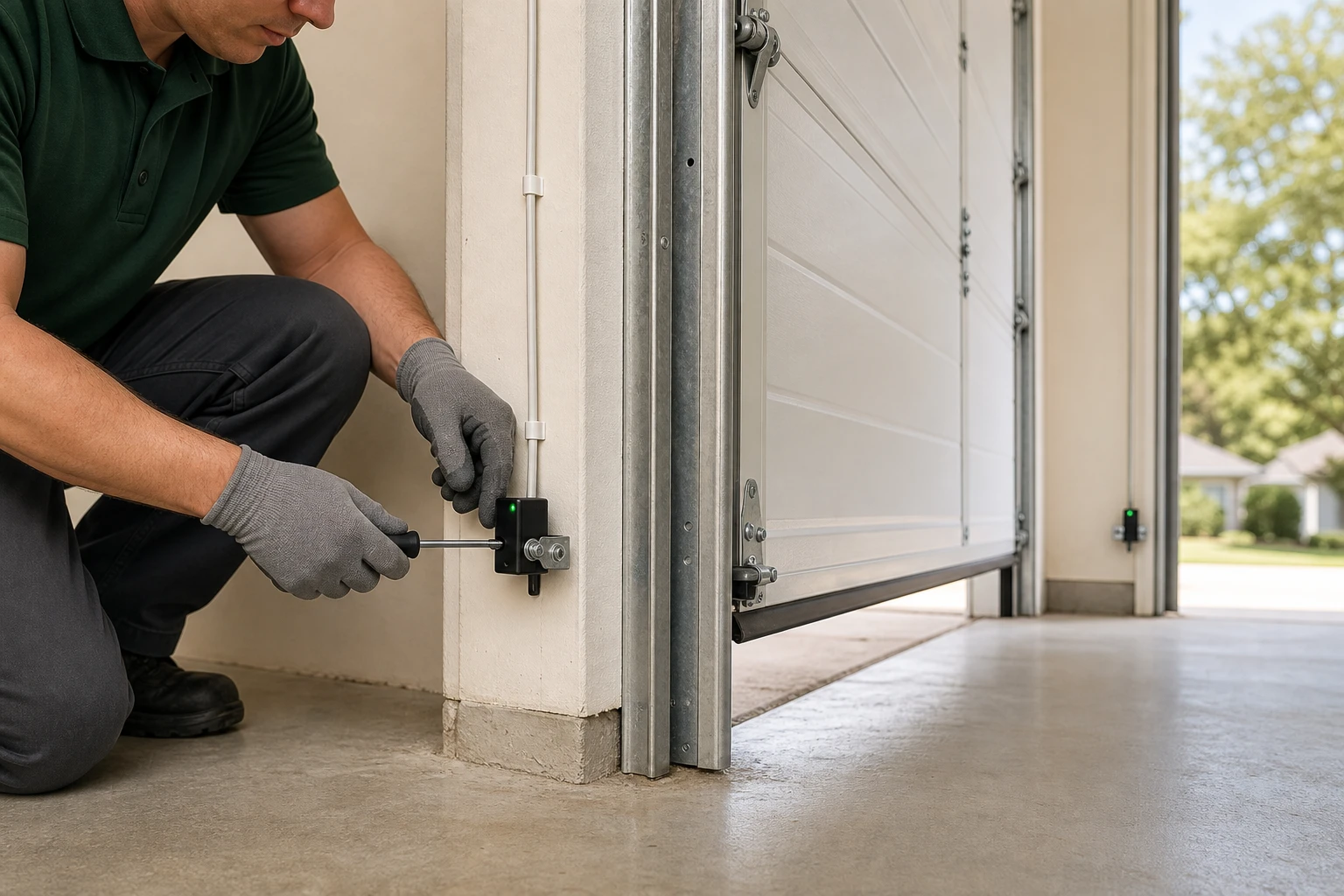
Technician checking a photo-eye safety sensor near the floor
Photo-eyes are cleaned, aligned, and beam-tested on every tune-up. It is the safety system most often found out of adjustment.

Customer reviews

Kentucky homeowners recommend Derby Strong.

Understand the service

What your garage door tune-up covers

Know the difference

Monthly Homeowner Check vs. Professional Annual Tune-Up

Five minutes, once a monthHomeowner check
About an hour, once or twice a yearProfessional tune-up
What gets looked at Watch and listen from the floor; look for rust, fraying, loose parts, daylight at the sealsListen for new noise and look for rust, frayed cables, loose hardware, or light around the seals. 25-point inspection of springs, cables, drums, bearings, hardware, tracks, opener, sensors, and sealsWe inspect 25 points across the springs, cables, tracks, opener, sensors, hardware, and seals.
Safety tests Balance test at halfway; break the photo-eye beam; 1½-inch board auto-reverse testConfirm the disconnected door holds halfway. Test the photo-eyes and auto-reverse. Three-position balance test and door weight; force, travel, photo-eye, auto-reverse, and emergency releaseWe test door weight and three-position balance, then verify force, travel, photo-eyes, auto-reverse, and emergency release.
What gets adjusted Nothing under tension: clean the tracks, lubricate hinges and steel roller bearings, change remote batteriesClean the tracks, lubricate safe moving parts, and replace remote batteries. Leave anything under tension alone. Spring tension, opener force and limits, photo-eye alignment, fastener torque, track alignment, set screwsWe adjust spring tension, opener limits, sensor and track alignment, and tighten fasteners and set screws.
What you walk away with An early warning that something changedAn early warning when something changes. A written summary of what was done, what is fine, and what to plan forA written summary of what was completed, what is working properly, and what to plan for.

Timing it to Kentucky seasons.

Early spring, after freeze-thaw winters have loosened hardware and dried out lubrication, and early fall, before the first hard freeze tests tired springs and seals. If the garage is your main entrance or the door cycles more than six times a day, plan on both.Schedule in early spring or fall. If the garage is your main entrance or the door runs more than six cycles daily, schedule twice a year.

Not sure when it was last serviced? That is reason enough. Most doors we see have never had a professional tune-up, and the first one tends to find the most.

The three things that matter most

Lubrication, Balance, and the Safety Tests, Done Right

01

Lubrication done correctly

Garage-door-specific silicone or white lithium on hinge pivots, roller bearings, springs, bearing plates, and the opener chain or screw. Never on the track, which should be cleaned, and never general-purpose penetrating spray, which displaces water and attracts grit rather than lubricating.Door-specific lubricant on moving parts, never on the track.

02

Balance and tension

The door should hold at one panel up, at halfway, and fully open, and should weigh under roughly 5 pounds on a scale at the floor. If it fails, spring tension is adjusted by the technician, never by the homeowner, so the opener is no longer carrying the door.A balanced door holds in place; a technician sets the tension.

03

Force, travel, and safety reversal

Opener force and travel limits are set so the door closes fully and reverses on contact. The photo-eyes are tested by breaking the beam, and the auto-reverse is tested with a 1½-inch board on the floor. These are the tests that keep people and vehicles safe.Force and travel set, photo-eyes and auto-reverse tested.

The 25-point inspection

The Four Systems Every Tune-Up Works Through

  1. 01

    Counterbalance system

    Springs are checked for rust, gaps, and cycle wear; the door is weighed and balance-tested at three positions; cables, drums, end and center bearings, and the torsion shaft are inspected and set screws verified.Springs, cables, drums and bearings, plus a balance test.

  2. 02

    Door, hardware, and tracks

    Hinges, rollers, bottom and top brackets, struts, and every fastener are inspected and torqued; tracks are checked plumb and parallel, cleaned, and their mounting brackets tightened; panels are checked for stress cracks.Hinges, rollers, brackets, fasteners and track alignment.

  3. 03

    Opener and controls

    Chain, belt, or screw tension and trolley wear; gear and sprocket condition; force and travel-limit settings; remotes, keypad, wall console, and battery backup; light bulbs that can interfere with the remote signal.Drive tension, gears, force and travel limits, and remotes.

  4. 04

    Safety systems and seals

    Photo-eyes are cleaned, aligned, and beam-tested; the auto-reverse is tested against a 1½-inch board; the emergency release is checked; bottom seal and perimeter weatherstrip are inspected for gaps and daylight.Photo-eyes, auto-reverse, emergency release and seals.

Nothing is replaced without a quote: the tune-up price covers inspection, lubrication, tightening, balance work, and the safety tests. If we find a worn roller, a frayed cable, a split seal, or a tired spring, we show you, price it, and let you decide, today or later.

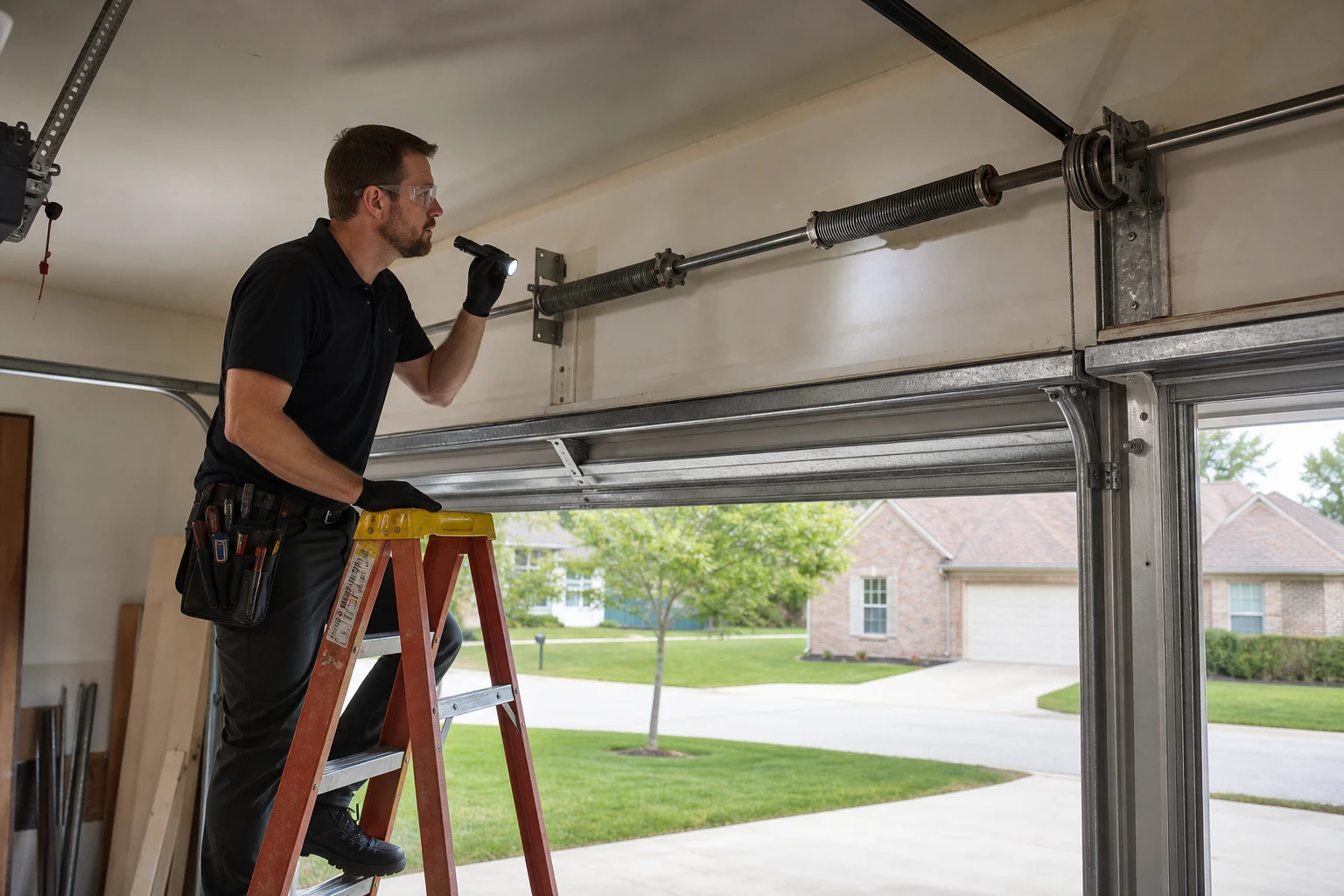
Technician on a ladder inspecting the torsion spring and track Inspect · Springs, shaft, and track
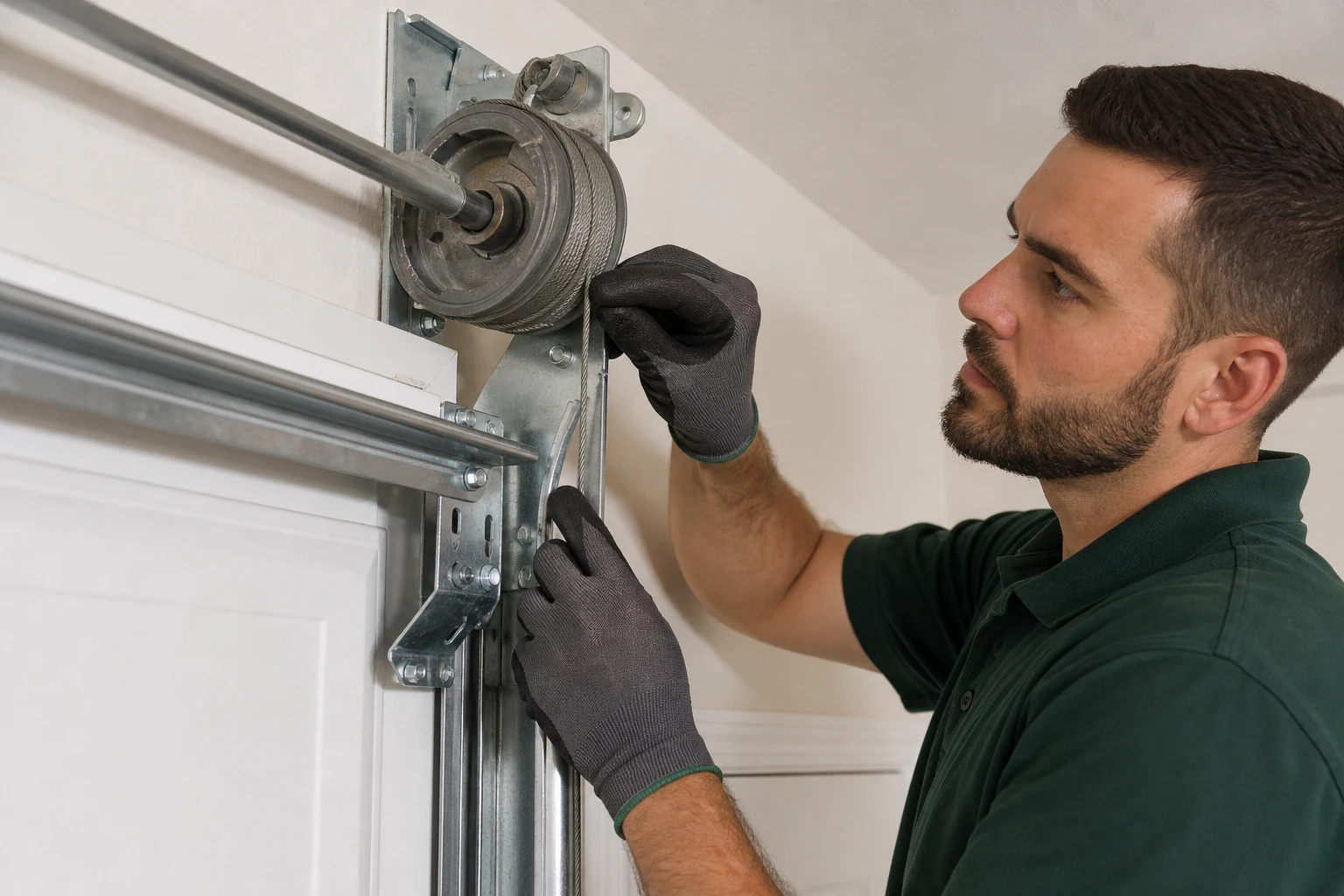
Technician checking the lift cable and drum at the top door corner Check · Cables, drums, and set screws
Every tune-up works from the counterbalance down: springs and shaft, then cables and drums, then hardware, opener, and safety systems.

Service and pricing

What a Tune-Up Includes—and What It Costs

Four clear steps

  1. 01

    Inspect and document

    The technician works through the 25-point checklist from the springs to the sensors and notes every condition before touching a tool.We work through the 25-point checklist first.

  2. 02

    Lubricate, clean, and tighten

    Moving hardware is lubricated with the right product, tracks are cleaned, and every fastener, bracket, and lag is checked and torqued.We lubricate moving parts, clean tracks and torque fasteners.

  3. 03

    Balance, calibrate, and test

    Balance is tested and corrected where needed; opener force, travel, photo-eyes, and auto-reverse are tested and set; the seals are checked.We correct the balance and test the opener and safety systems.

  4. 04

    Walk through the report

    You get a plain-language summary of what was done, what looks good, and anything worth planning for, with no pressure to fix it today.You get a plain-language summary, with no pressure.

Garage door tune-up across Seneca Gardens

Nearly every Seneca Gardens house, from Trevilian Way to the Taylorsville Road side, was built decades ago. A bungalow or Colonial-style home may have a much newer door. Its hinges, rollers and springs still wear a little with every cycle. A yearly tune-up keeps those moving parts working in step.

We start by checking the balance with the opener released. Hinges, rollers and bearings get a lubricant made for garage doors. Loose track bolts and hinge fasteners are tightened. Cables are checked at the bottom brackets for fraying. The safety sensors are aligned, and the door is tested for reverse. Weather seals are looked over at the floor and jambs. Squeaks and shudders usually fade once the parts are adjusted. Anything near the end of its life is pointed out, so you can plan for it. You leave with a clear picture of what the door needs next.

Service area coverage

Local ZIP: 40205

Open in Google Maps

Before you schedule

Answers to Common Garage Door Maintenance Questions

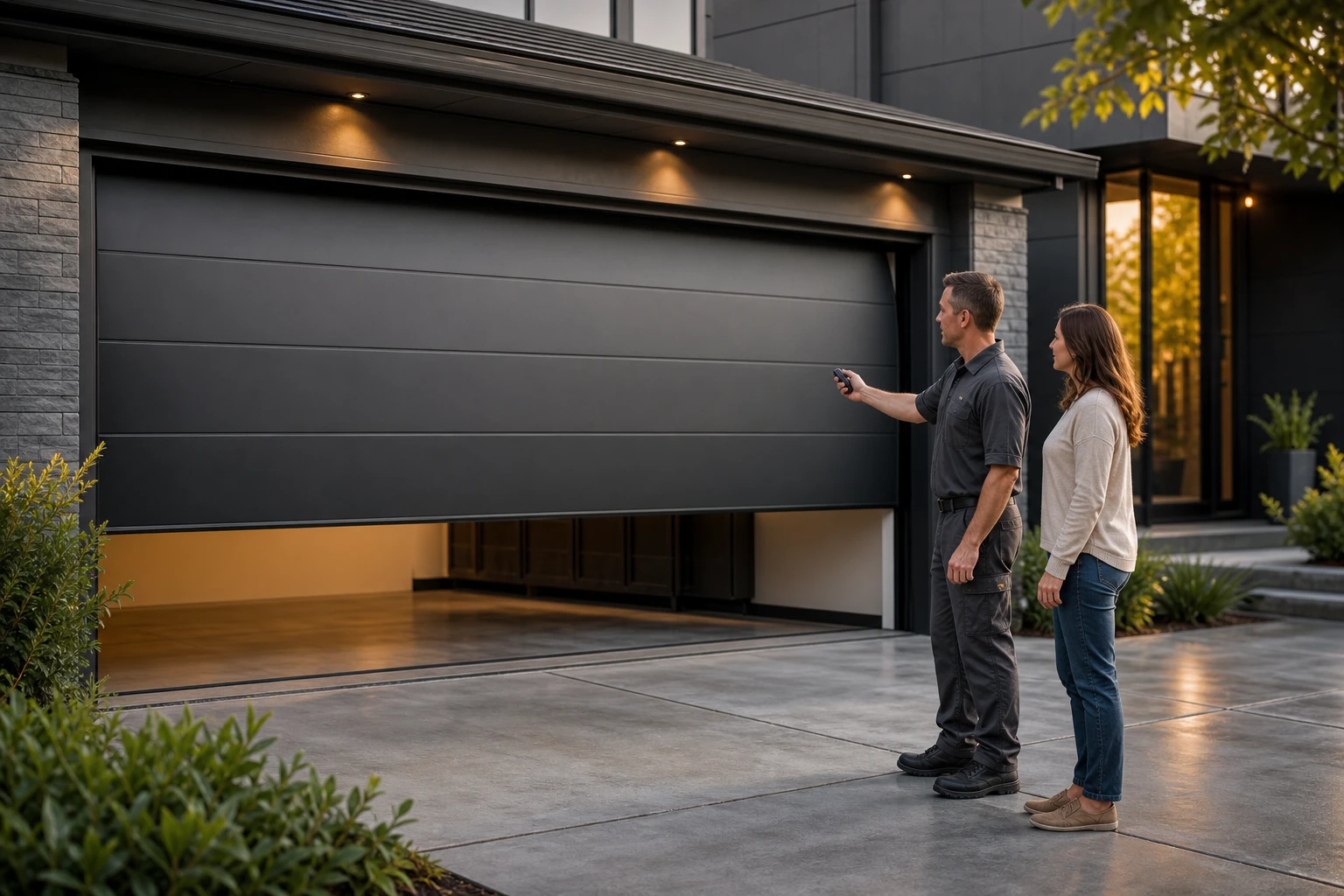
Technician and homeowner testing a garage door after maintenance
How often
Professional tune-up yearly; twice for heavy use. Homeowner safety check monthly.
How long
About 45–60 minutes per door, longer if balance needs correction
Balance test
Opener disconnected, door holds at one panel up, halfway, and fully open
Safety tests
Photo-eye beam break; auto-reverse on a 1½-inch board; emergency release
Tune-up at a glanceThe rhythm, duration, and the two tests that matter most.
01How much is a tune-up for my garage door in Seneca Gardens?

Most single-door tune-ups cost $75–$150. The price includes the 25-point inspection, safety and balance testing, lubrication, hardware tightening and a written summary. If you have two doors serviced together, the usual price is $120–$225. When a door fails the balance test and needs its spring tension reset, budget $125–$250. If the inspection turns up worn hinges, rollers, cables or seals, you'll get a quote on each before work begins, so you can choose.

02What happens during a garage door tune-up?

First comes a full inspection: tracks, rollers, hinges, brackets, springs, cables, drums, bearings, opener, sensors, panels and seals. The moving hardware gets a lubricant meant for garage doors, and all the fasteners and brackets get tightened. We check balance in three positions, adjusting if needed. Then we test the opener's force and travel limits, the photo-eyes and auto-reverse. A plain-language report wraps up the visit.

03Should I get my garage door serviced every year?

Yes, at least once a year. That's the industry baseline, and manufacturers often make it a condition of warranty coverage. If you use the garage as your main entrance, or you open and close the door more than six times a day, book twice a year. The same goes for the humid months and Kentucky's freeze-thaw swings. Between visits you can spend five minutes a month checking the balance, photo-eyes and auto-reverse.

04When during the year should a Kentucky homeowner get a tune-up?

Early spring and early fall work best. In spring you catch hardware that winter's moisture and temperature swings may have loosened, along with lubrication that's dried out. In fall the springs, seals and balance get checked, so a tired part doesn't turn into a failure in a cold snap. If you only book one, choose the visit before the first freeze.

05What garage door care is safe to do myself between visits?

From the floor, watch the door run and listen to it. Disconnect the opener, then test the balance. Break the photo-eye beam as the door comes down, and use a 1½-inch board to test the auto-reverse. Keep the tracks clean, and put a garage-door lubricant on the steel roller bearings and hinge pivots. Leave the springs, cables, opener force settings and bottom brackets to a technician.

06Which lube does a garage door need, and what's a bad choice?

Use a garage-door lubricant that's silicone-based or white lithium. It goes on steel roller bearings, hinges, springs and bearing plates, never on the track surface or nylon rollers. Don't use a WD-40-style penetrating spray as a lubricant, because it displaces water and picks up grit. Ordinary grease is out too, since cold hardens it.

07Is a tune-up likely to reduce garage door noise?

Yes, in most cases. Three things cause most garage door noise: dry rollers and hinges, loose hardware, and an opener straining under an unbalanced door. A tune-up handles all three. Worn rollers and a slapping opener chain fall outside it, so we point those out and price the fix separately.

08Can maintenance stop every breakdown?

No, but it stops the ones you can prevent. Springs still wear out at the end of their cycle life. A tune-up won't change that. It does catch dry bearings, frayed cables, photo-eyes out of line, loose bottom brackets and balance drift. It finds them before they strand the door. The opener also lasts longer when it isn't lugging a heavy door.

09Why is a garage door balance test important, and what does it involve?

First the opener gets disconnected. Next, the door goes up in three steps, stopping one panel up, at the halfway point and fully open. A balanced door holds still at each stop, and a scale at the floor shows it weighing just a few pounds. Drift or extra weight means the springs aren't carrying the load, so the opener is. The result is a shorter life for the opener and a door that can drop.

10Should I bother with a tune-up on an older garage door?

For many older doors, it's the best value you can put into them. The inspection tells you honestly what's wearing out and what's fine. If it shows the door has little life left, we'll say so. Then we help you compare repair with replacement. Either result means the tune-up money wasn't wasted.

11What do you look for to tell if a garage door needs a tune-up?

We listen first, for grinding or squealing. Then we run it, watching for a jerky start or drift when stopped halfway. We check the seals for wear or flattening and see if the opener strains or reverses for no clear reason. Better to catch those now than after a spring, cable or roller fails and the door's stuck.

Local maintenance for the door you use every day

Tell us about your door. We’ll schedule the visit.

Let us know how many doors and openers you have, roughly how old they are, and anything you have noticed, such as noise, hesitation, or a door that feels heavy. We will confirm the tune-up price when we book.

  • Number of doors and openers
  • Noise, hesitation, or heavy feel
  • Main entrance or occasional use
Call (502) 619-5198

Book a Garage Door Tune-Up

Serving Seneca Gardens and nearby Louisville Metro communities. Share the essentials and we’ll call to confirm the right service timing.

Step 1 of 2
Required field
Required field
Required field

Derby Strong Garage Doors

Garage door trouble?

Talk to our local team now about a broken spring, a stuck door, an opener or a new door.

Call (502) 619-5198 Schedule online

5.0 from 308 reviews

Before you go

Pick your coupon

Choose an offer and we’ll save it with your request. Every visit includes a free safety inspection.

Choose one coupon

One coupon per household. Not combinable with other offers. Good for 30 days.