Single-Layer Steel
An affordable, non-insulated option best suited for detached garages or spaces where temperature control is not a priority.
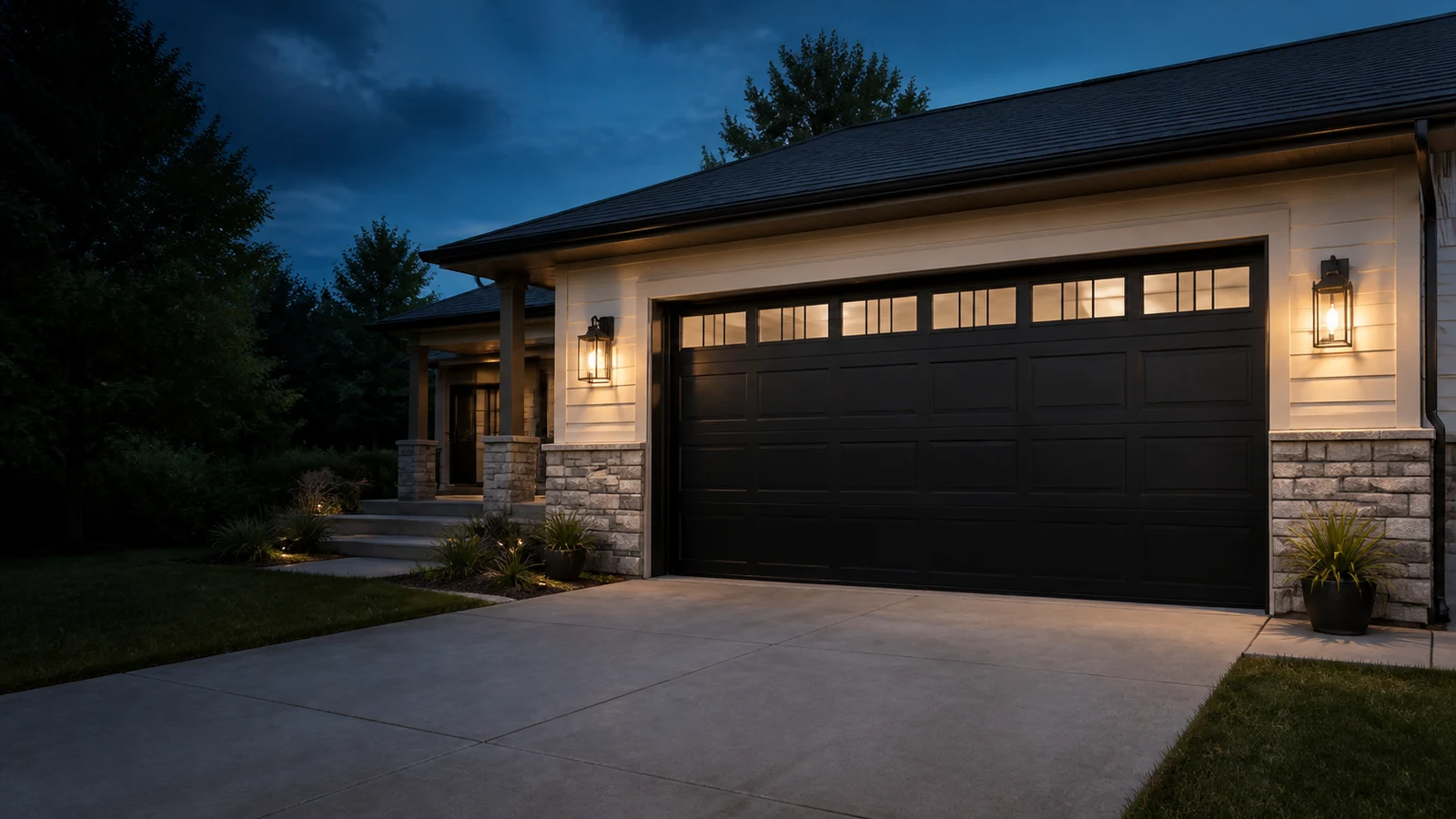
Steel garage door installation in Sellersburg starts with measuring the opening, headroom and side room before a door is ordered. Homes out toward Silver Creek get new track with springs sized to the new steel sections.
We install steel garage doors in Sellersburg, measured before we order.




Steel Doors Explained
A steel garage door is built from galvanized steel sections that roll up on tracks, balanced by springs sized to the door’s weight. Steel is strong, holds a factory finish with little upkeep, and comes in raised-panel, long-panel, carriage and flush designs.
The biggest decision is construction. A single-layer door is one steel skin. A two-layer door adds polystyrene insulation behind the steel. A three-layer door seals insulation between two steel skins, which makes it quieter, stiffer and higher in R-value.
For homes in Louisville, Lexington and Northern Kentucky, we measure the opening, check headroom and the existing opener, then install, balance and safety-test the new steel door.
Strength and Insulation
An affordable, non-insulated option best suited for detached garages or spaces where temperature control is not a priority.
A durable steel exterior with added insulation for improved comfort, energy efficiency, and quieter operation.
Insulation enclosed between two steel surfaces for maximum strength, better sound control, and a clean, finished interior.
Popular Styles
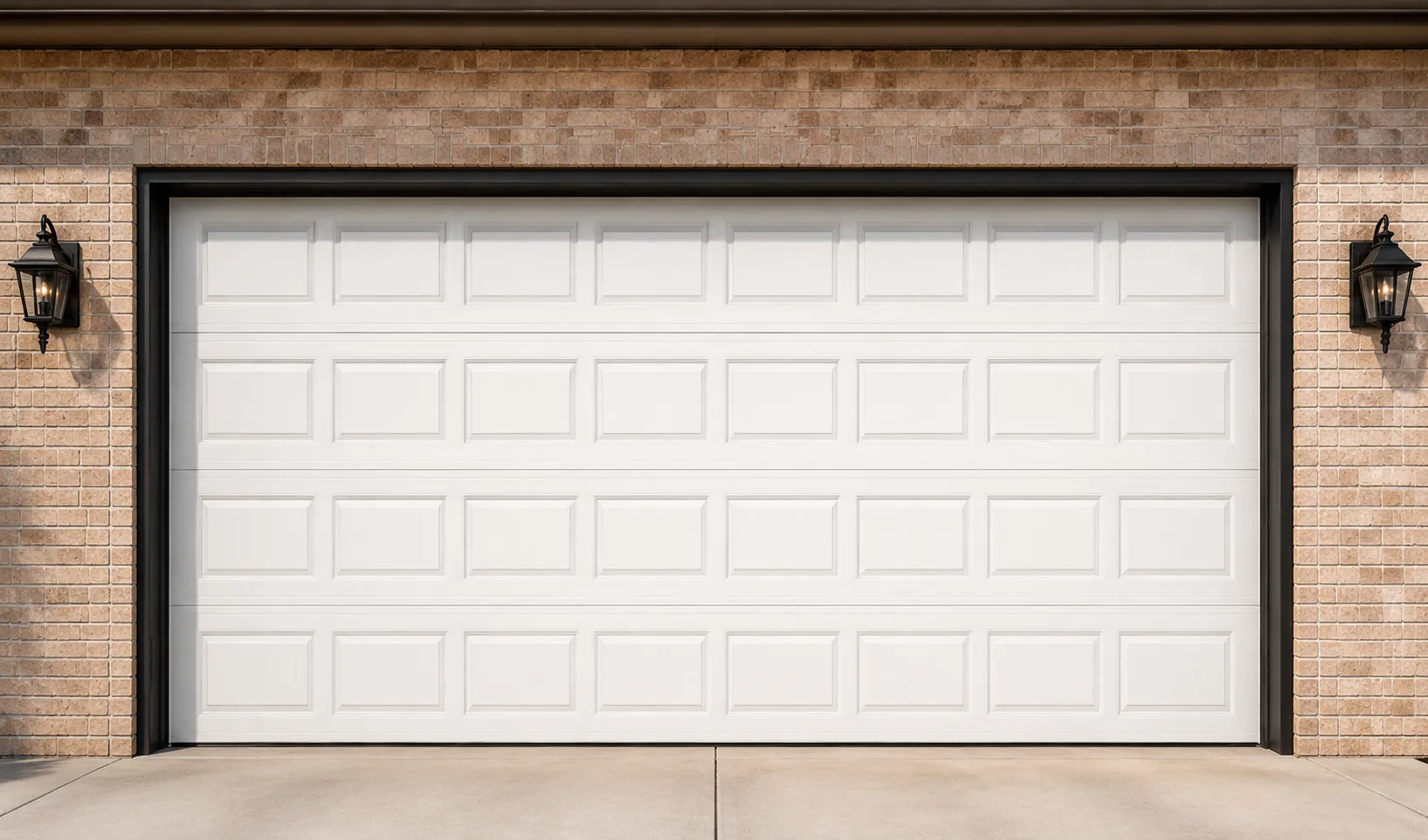
A timeless design that pairs naturally with traditional, colonial, ranch, and transitional homes.
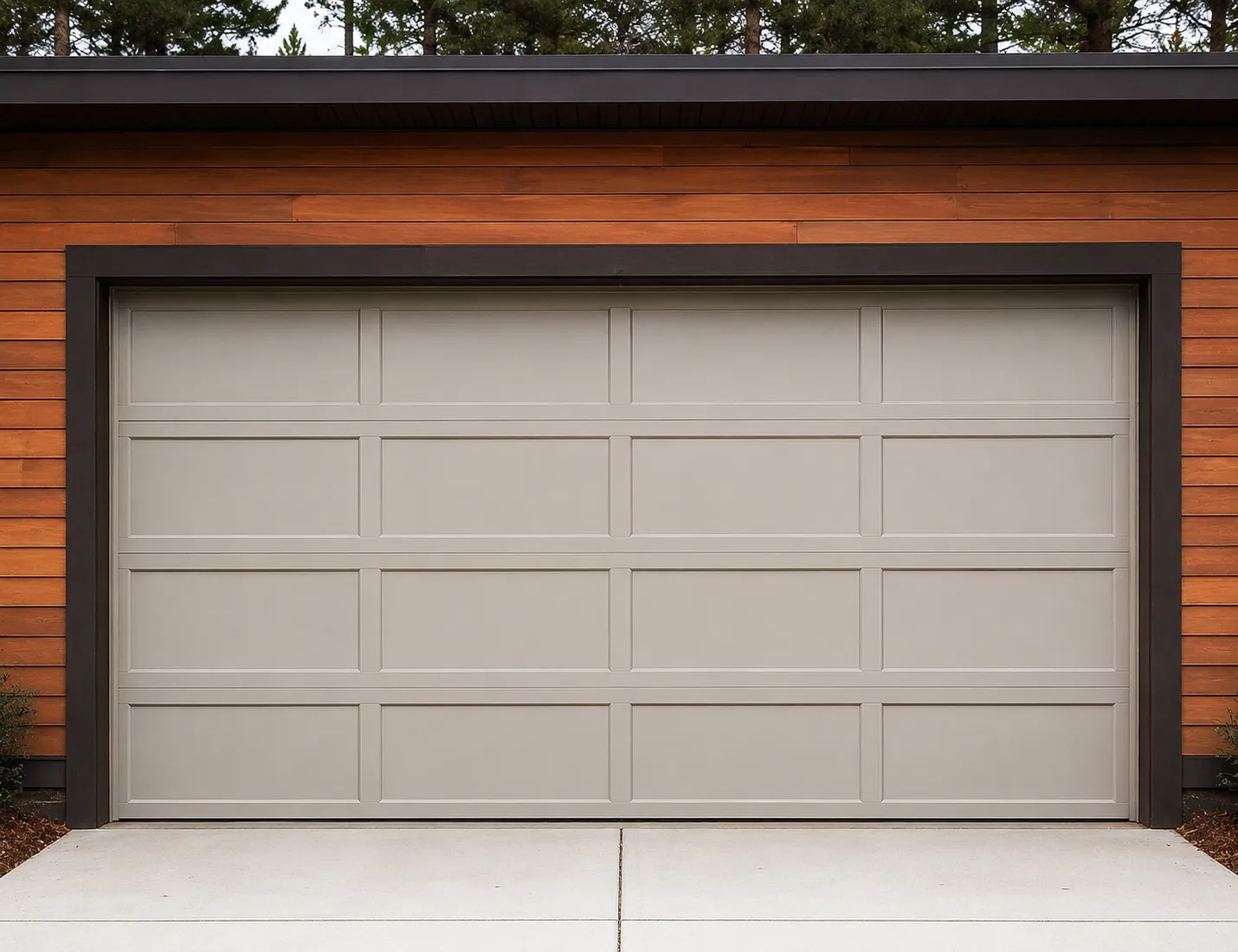
Wider panels create a clean, updated appearance while maintaining a classic residential style.
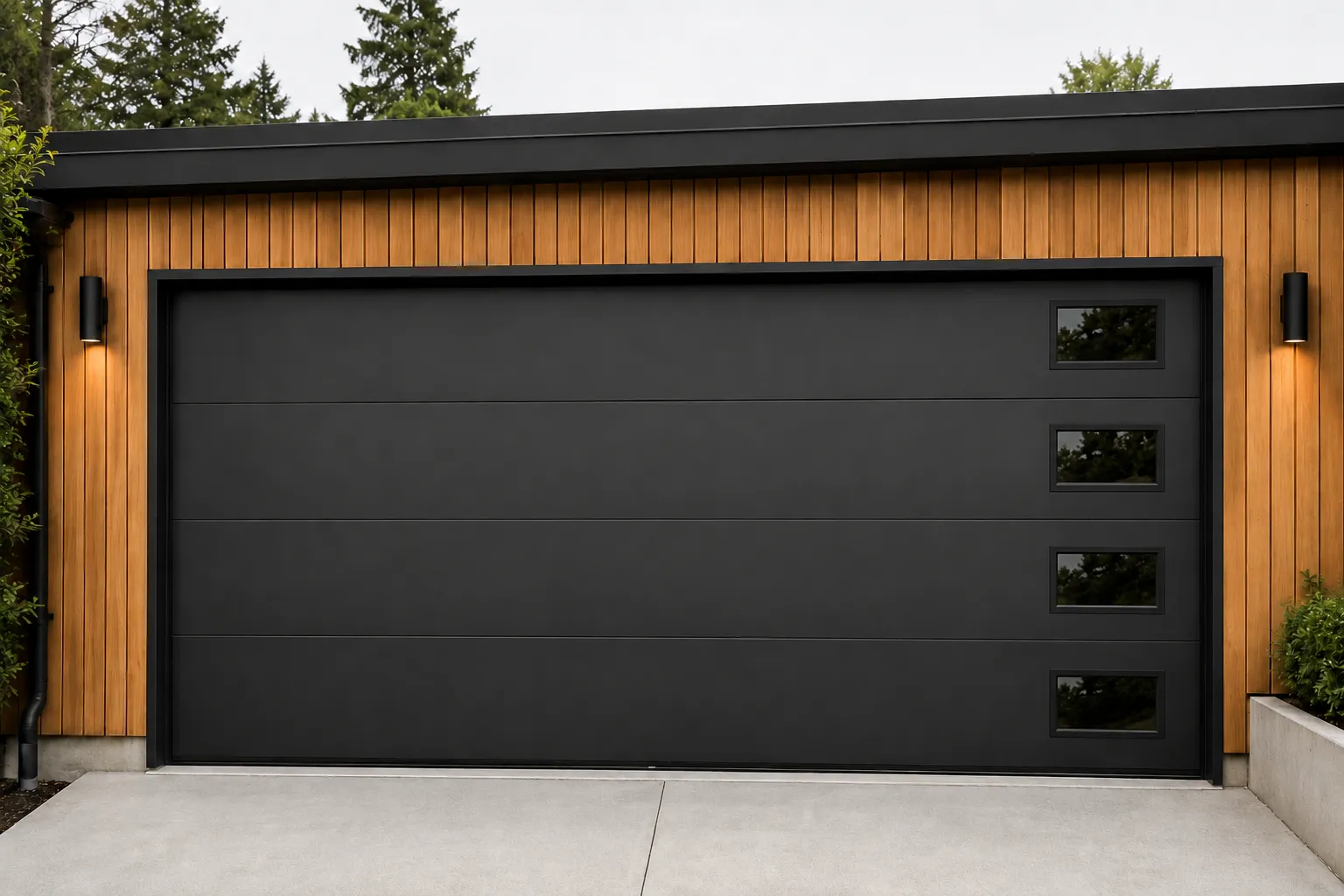
A smooth, contemporary design with optional windows that add natural light and visual interest.
Colors and Finishes
A clean, versatile choice that complements most home exteriors.
A warm neutral that pairs naturally with cream, tan, and light brick exteriors.
A soft beige-gray finish that blends well with brick, stone, and siding.
A rich architectural finish that creates warm contrast and added depth.
A bold, high-contrast option that works especially well with modern and transitional homes. Availability may vary by model.
Adds the warmth and character of wood without the maintenance requirements of a real wood door.
Trusted Brands
Amarr
Traditional steel value
Single-, double-, and triple-layer steel options with optional polystyrene insulation.
R-value: 6.48–9.05 depending on insulation thickness
View Product DetailsAmarr
High-performance insulated steel
Triple-layer steel construction with polyurethane insulation for stronger thermal performance.
R-value: 13.35–19.40 depending on insulation thickness
View Product DetailsProDoor Systems
Classic residential steel styles
Raised-panel, carriage-house, and shaker designs in non-insulated or insulated steel construction.
R-value: 0, 6.8, or 10.0 depending on construction
View Product DetailsProDoor Systems
Premium polyurethane-insulated steel
Polyurethane-insulated steel doors offered in multiple panel styles and section thicknesses.
R-value: 12 or 18 depending on section thickness
View Product DetailsBefore You Buy
An insulated door is worth considering when the garage is attached, used as a workspace, or has a living area above it.
Best for attached garages and workspaces.
Steel-backed and multi-layer doors feel more solid and generally resist daily wear better than basic single-layer doors.
Multi-layer doors resist daily wear better.
Factory finishes need little upkeep, but exposed scratches should be repaired promptly to help prevent rust.
Little upkeep. Touch up scratches early.
Compare quotes using the same insulation, windows, hardware, tracks, springs, removal, and installation—not just the door price.
Compare quotes with the same inclusions.
Plan Your New Door
Our Process
We inspect and measure your opening, available clearance, framing, floor, track area, power source, and existing opener.
We measure the opening and clearances.
We help you compare insulation levels, panel styles, colors, windows, finishes, and compatible hardware.
Compare insulation, styles and colors.
Our technicians remove your existing door and install the new panels, tracks, spring system, seals, and opener connection.
Old door out, new door and springs in.
We balance the door, adjust the opener, complete all required safety tests, and show you how to operate and care for your new system.
Balanced, safety-tested and explained.
On lots from Utica Street to Lakeside Drive, a detached Sellersburg garage does not have to face the main road. Its steel door may open toward a side yard instead. The town's plan suggests materials in keeping with the historic character of Downtown Sellersburg. Steel comes in enough colors and embossed textures to meet that standard.
Steel needs little more than an occasional wash, and it will not warp or rot. An insulated polyurethane core adds stiffness without much extra weight. It also slows summer heat on a garage that shares a wall with the house. Thicker skins stand up better to dents from bikes and car doors. Windows in the top section can let in daylight without weakening the door. We size each door to its opening, then set the springs to its finished weight. Last, we make sure the opener can handle that weight.
Service area coverage
Local ZIP: 47172
Steel Door FAQ
A common 16-foot double-car door has a planning range of about $2,000 to $4,600. Common 8- to 9-foot single-car doors come to about $1,700 to $2,900. Access, framing, hardware, windows, installation conditions, size, insulation, design, removal and opener work all shape the final price.
A standard steel garage door replacement usually takes one visit. A larger door, a custom track layout, framing changes or opener work can make it take longer. Before installation starts, we'll walk you through the expected schedule.
Yes. When we install your new door, we can take the old one down and haul it off too. The quote shows what we're removing and any cost that goes with it, before work begins.
Your installation labor is covered by our one-year warranty. The manufacturer's warranty that applies also covers the door and its components, and it depends on the brand, model, finish and part. We'll review the coverage with you for the door you select before you order.
Lead time depends on two things: the door and what the manufacturer has available now. Standard sizes and colors usually come first. Custom colors take longer, and so do windows and specialty designs. We confirm your estimated lead time before you order. Once the full door arrives, we book the install.
It's often worth insulating the door on an attached garage. Insulation slows heat and cold through the door, quiets outside noise and makes the door feel more solid. A two-layer door adds polystyrene, and a three-layer door offers the highest R-values. The level to choose depends on what you use the garage for and the rooms that share a wall or ceiling with it.
In many cases, no. We look at the opener's lifting capacity, safety sensors, age, condition and fit with the new door. If it works safely and has the right capacity for the new door's weight, you can keep it. Where it doesn't, we'll walk you through replacement options.
Before ordering, we measure the opening, the headroom above it, the side room and the space for the tracks. That's how the door ends up an exact fit. A one-car door is commonly 8 or 9 feet wide, and a two-car door commonly 16 feet. Less usual openings get other widths and heights.
No-obligation quote
Keep exploring
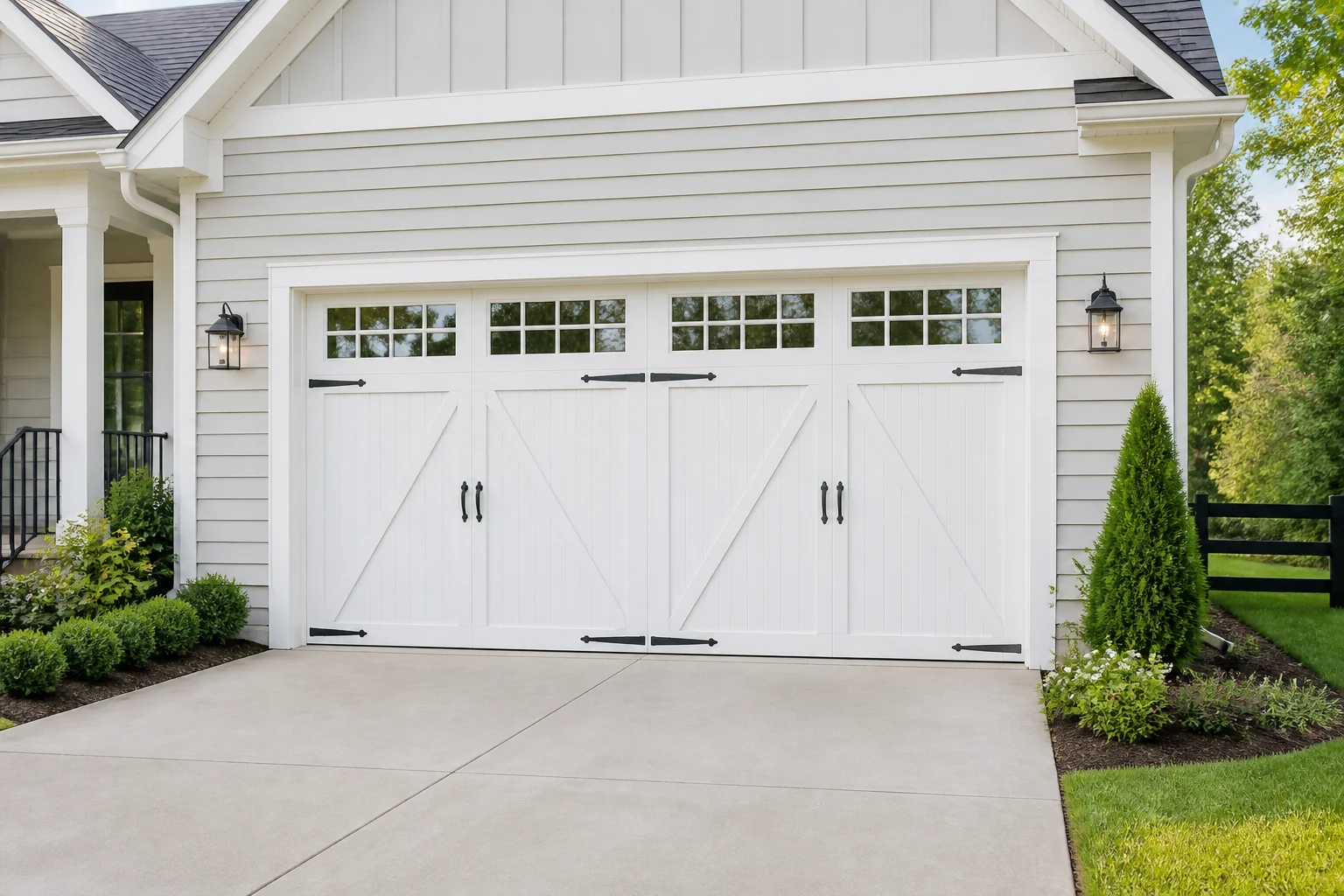
Stamped or overlay designs create a swing-door look while operating as a sectional overhead door.
Explore this door style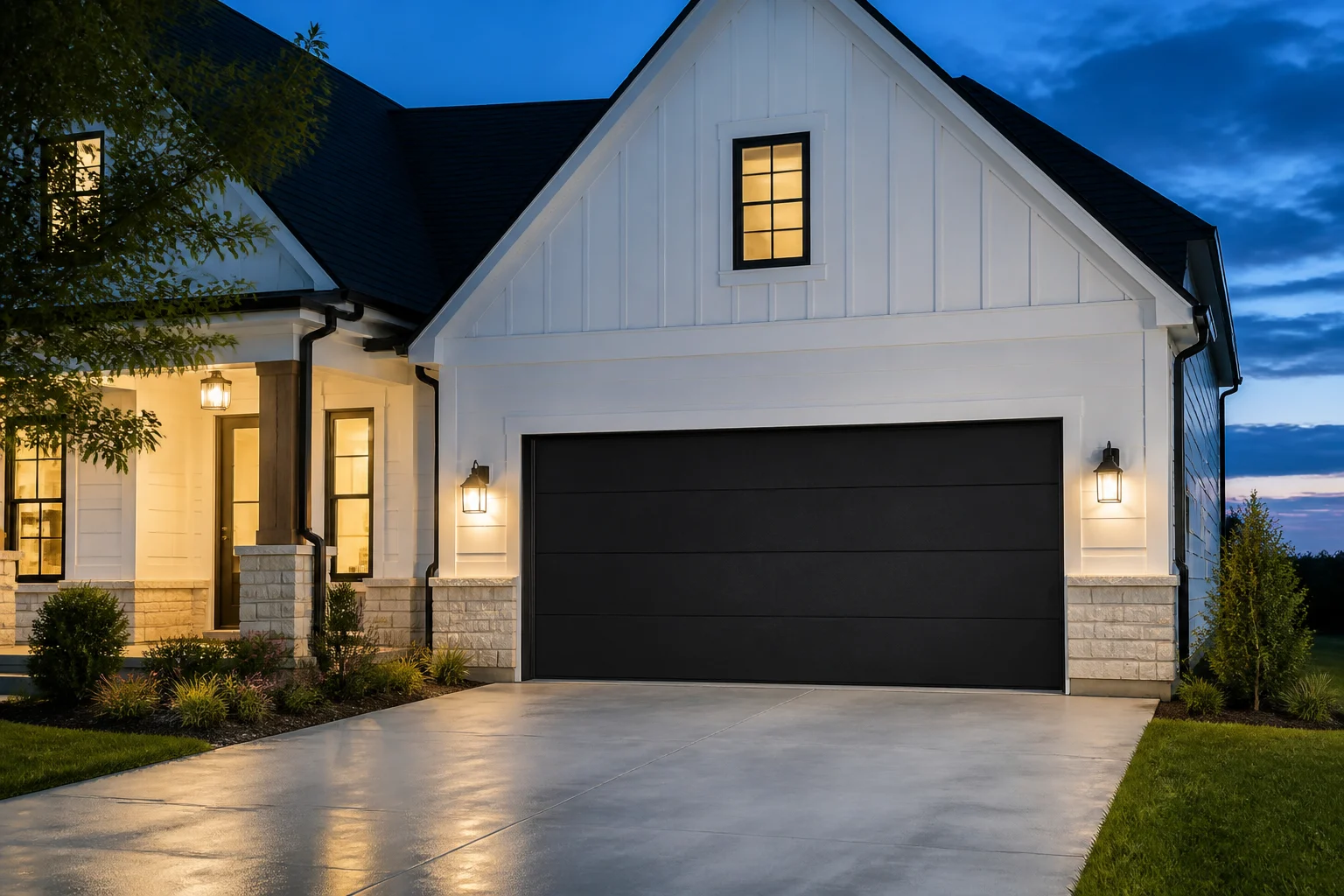
Flush faces, subtle grooves, plank lines, dark finishes, and asymmetric glass suit modern elevations.
Explore this door style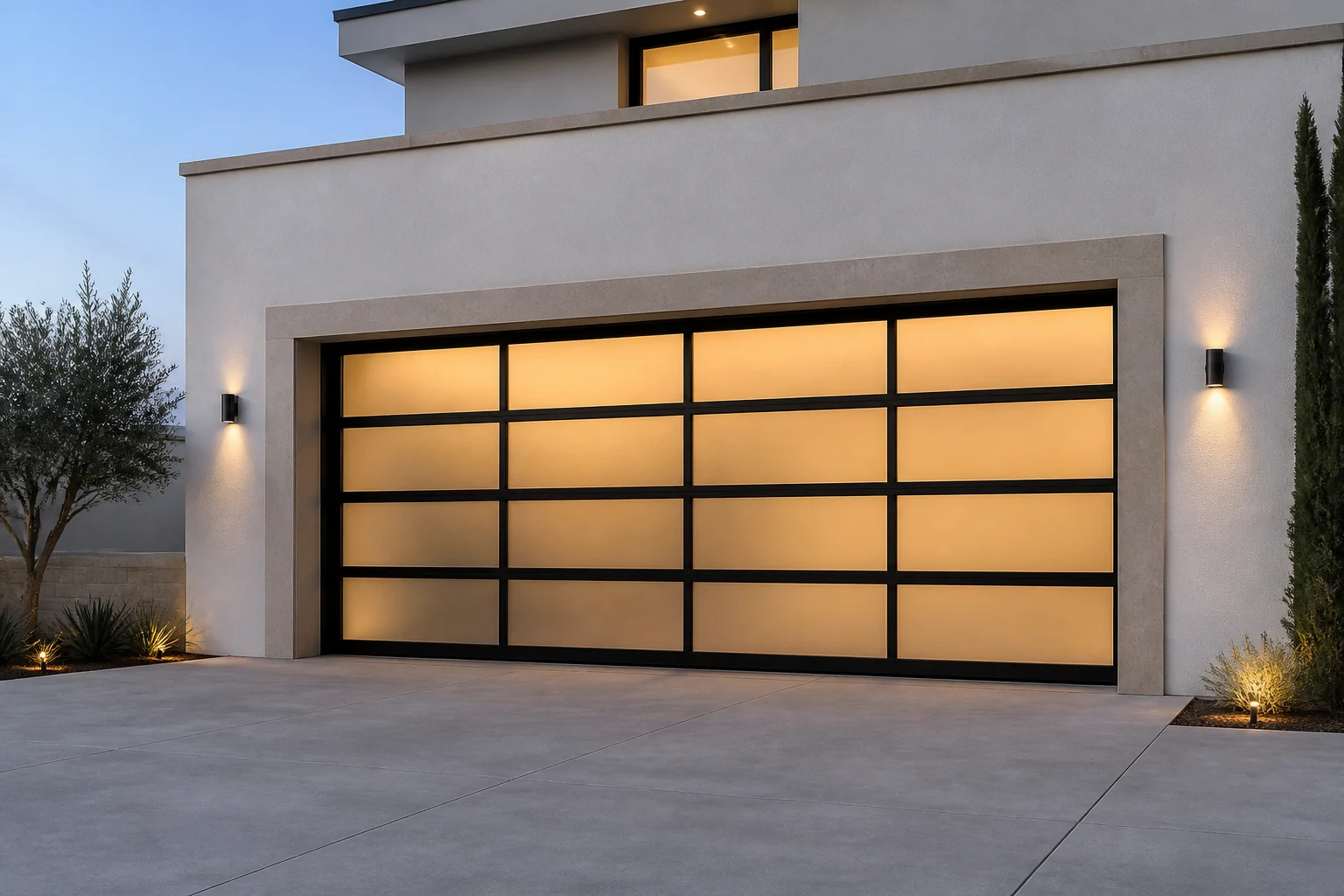
Aluminum frames and broad glass sections maximize light and create a distinctive architectural feature.
Explore this door style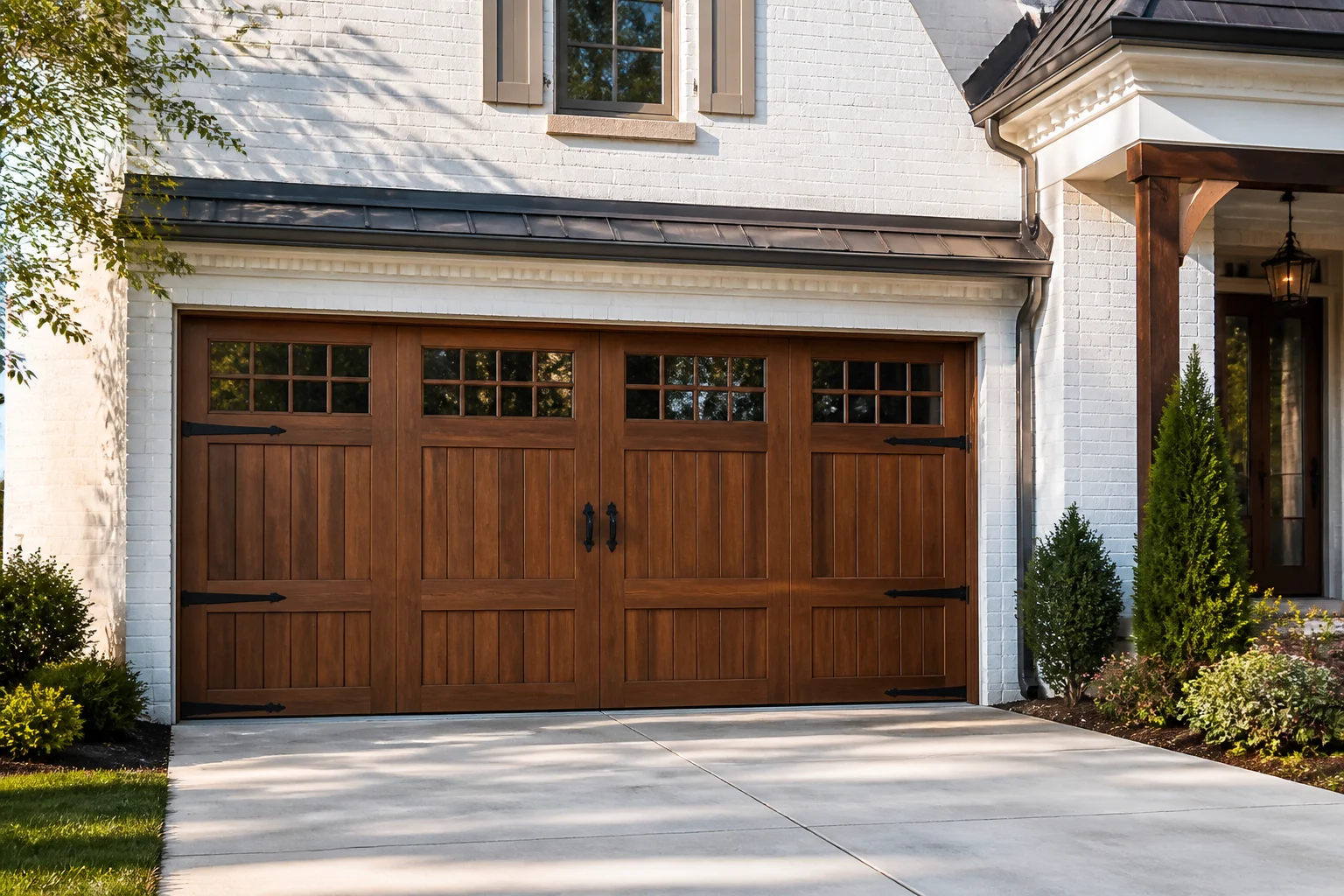
Printed, embossed, composite, and fiberglass faces offer wood character with different care and weight.
Explore this door style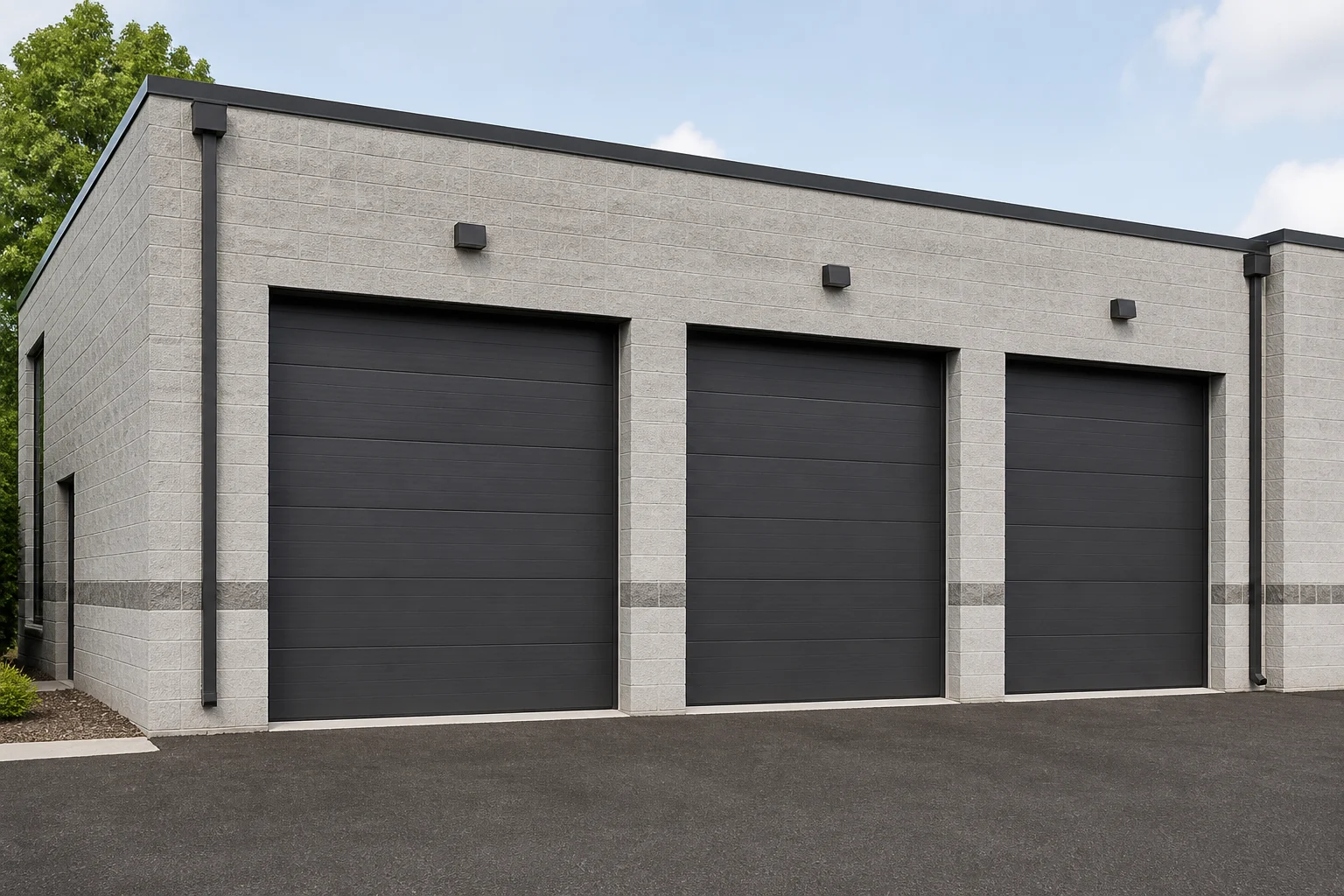
Larger openings, high-cycle use, loading areas, wind, safety, and specialty hardware need project assessment.
Explore this door style