Single-Layer Steel
An affordable, non-insulated option best suited for detached garages or spaces where temperature control is not a priority.
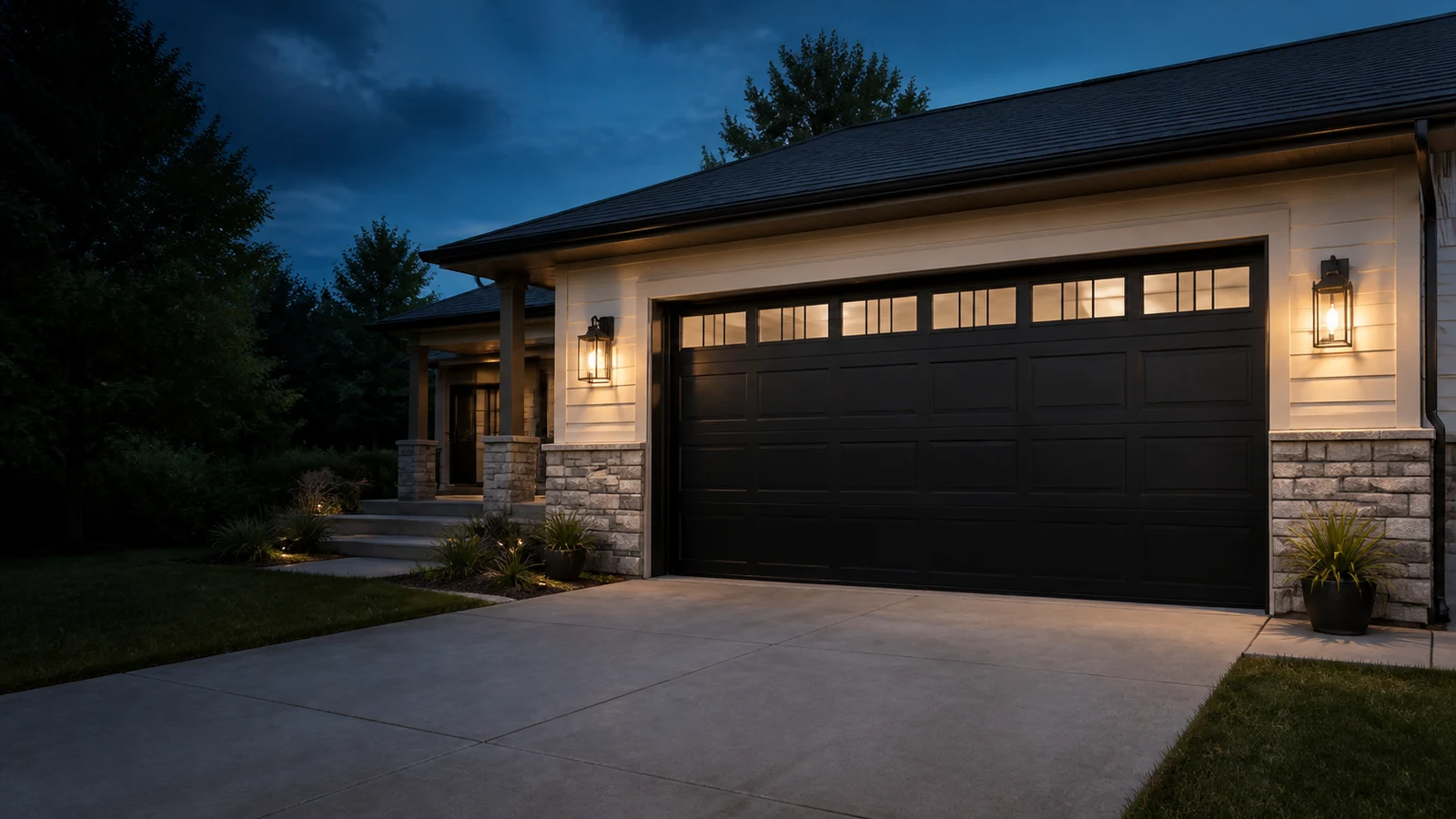
Along Dumesnil Street and Cypress Street, steel garage door installation in Parkland fits garages behind frame bungalows and shotgun houses. Inside the Parkland Historic District, we pick a simple panel face that stays true to the older block.
We install steel garage doors in Parkland, near Dumesnil Street and Cypress Street.




Steel Doors Explained
A steel garage door is built from galvanized steel sections that roll up on tracks, balanced by springs sized to the door’s weight. Steel is strong, holds a factory finish with little upkeep, and comes in raised-panel, long-panel, carriage and flush designs.
The biggest decision is construction. A single-layer door is one steel skin. A two-layer door adds polystyrene insulation behind the steel. A three-layer door seals insulation between two steel skins, which makes it quieter, stiffer and higher in R-value.
For homes in Louisville, Lexington and Northern Kentucky, we measure the opening, check headroom and the existing opener, then install, balance and safety-test the new steel door.
Strength and Insulation
An affordable, non-insulated option best suited for detached garages or spaces where temperature control is not a priority.
A durable steel exterior with added insulation for improved comfort, energy efficiency, and quieter operation.
Insulation enclosed between two steel surfaces for maximum strength, better sound control, and a clean, finished interior.
Popular Styles
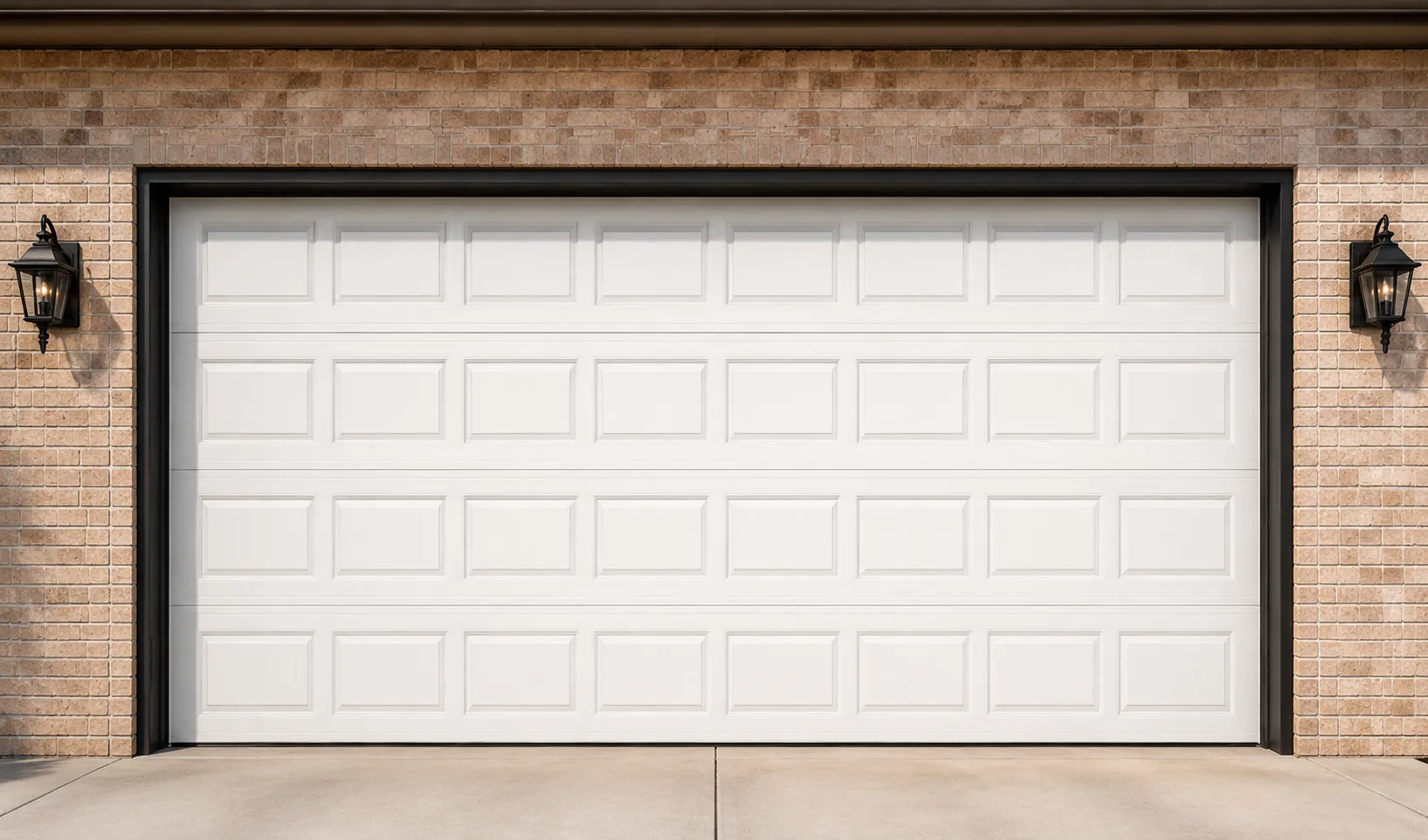
A timeless design that pairs naturally with traditional, colonial, ranch, and transitional homes.
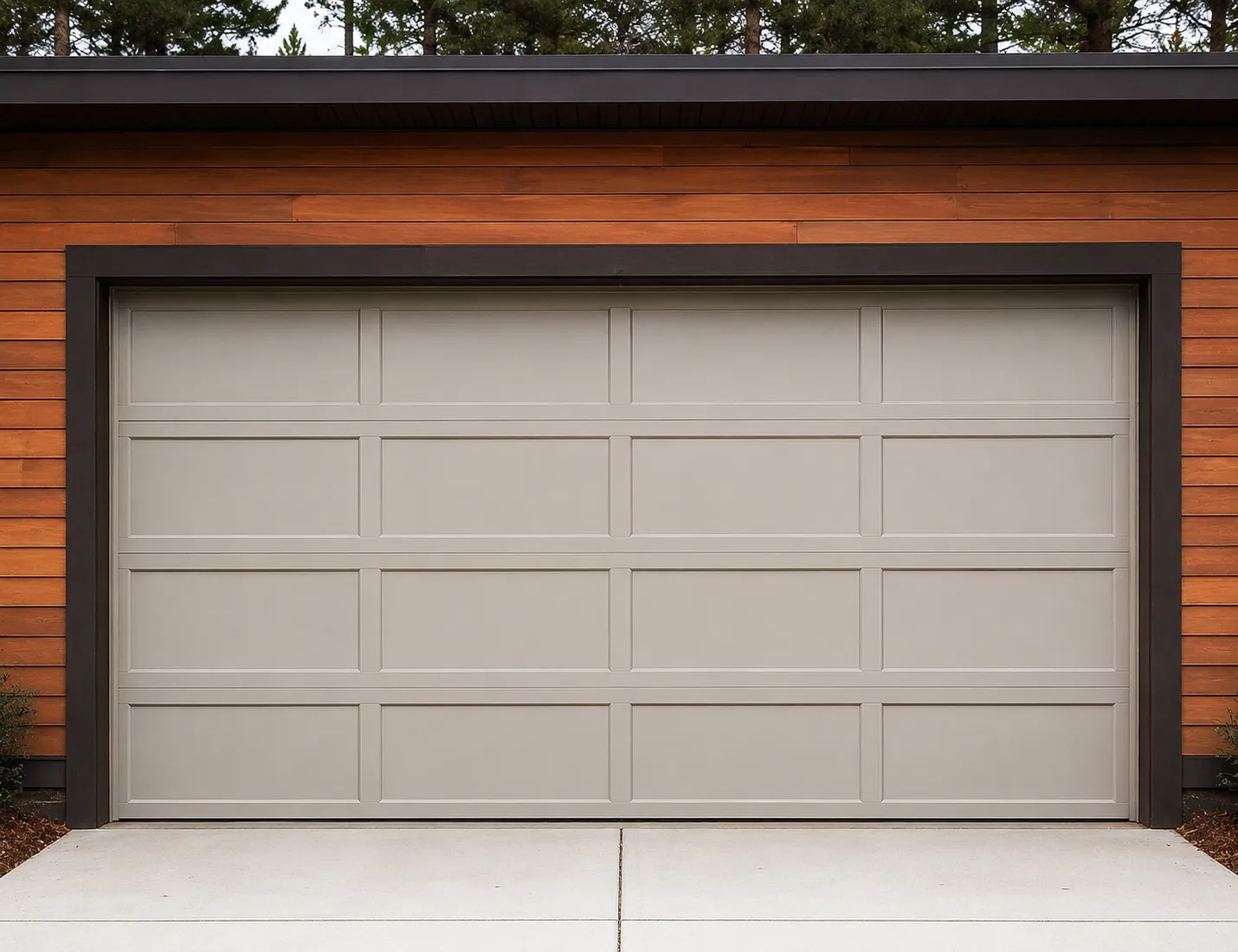
Wider panels create a clean, updated appearance while maintaining a classic residential style.
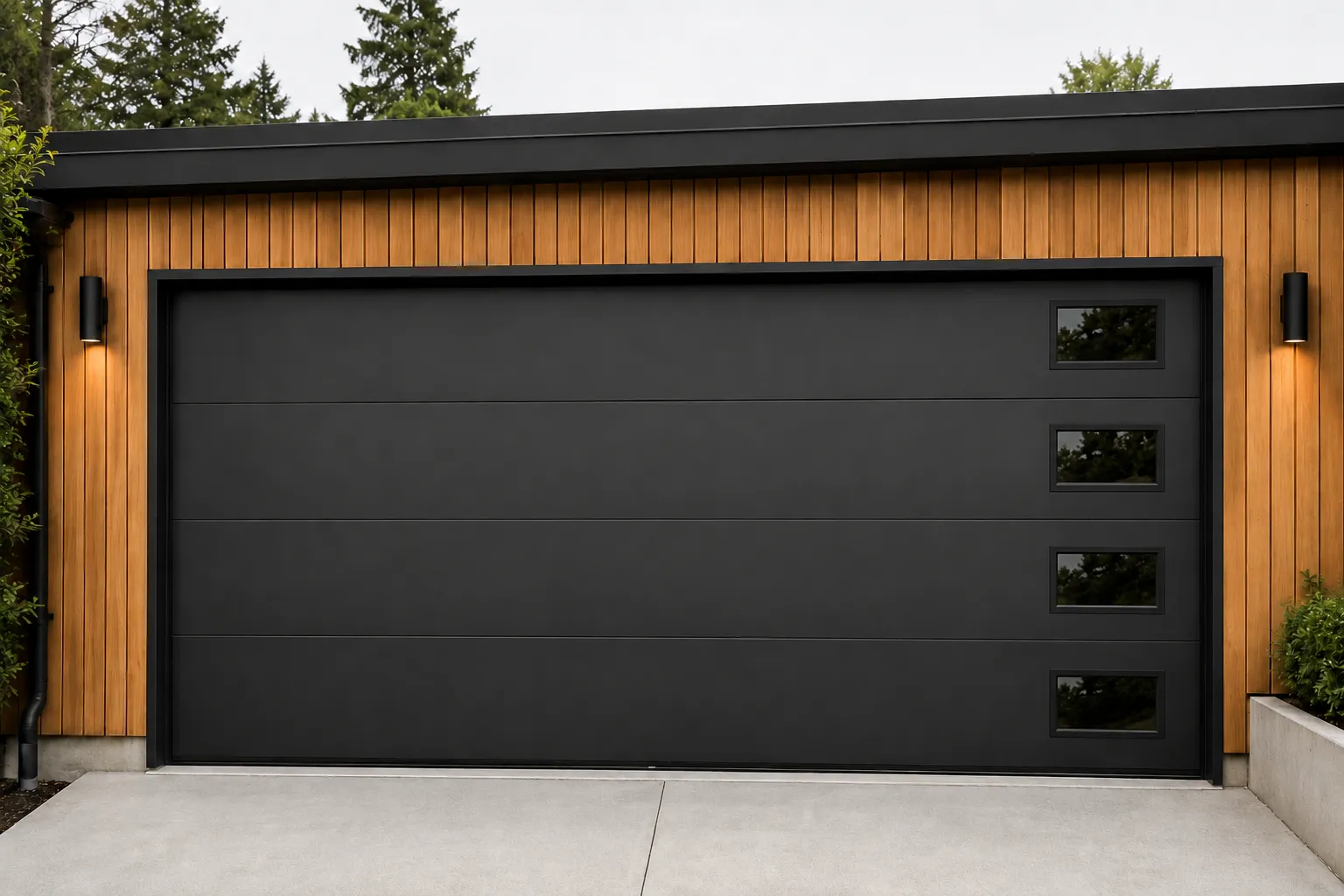
A smooth, contemporary design with optional windows that add natural light and visual interest.
Colors and Finishes
A clean, versatile choice that complements most home exteriors.
A warm neutral that pairs naturally with cream, tan, and light brick exteriors.
A soft beige-gray finish that blends well with brick, stone, and siding.
A rich architectural finish that creates warm contrast and added depth.
A bold, high-contrast option that works especially well with modern and transitional homes. Availability may vary by model.
Adds the warmth and character of wood without the maintenance requirements of a real wood door.
Trusted Brands
Amarr
Traditional steel value
Single-, double-, and triple-layer steel options with optional polystyrene insulation.
R-value: 6.48–9.05 depending on insulation thickness
View Product DetailsAmarr
High-performance insulated steel
Triple-layer steel construction with polyurethane insulation for stronger thermal performance.
R-value: 13.35–19.40 depending on insulation thickness
View Product DetailsProDoor Systems
Classic residential steel styles
Raised-panel, carriage-house, and shaker designs in non-insulated or insulated steel construction.
R-value: 0, 6.8, or 10.0 depending on construction
View Product DetailsProDoor Systems
Premium polyurethane-insulated steel
Polyurethane-insulated steel doors offered in multiple panel styles and section thicknesses.
R-value: 12 or 18 depending on section thickness
View Product DetailsBefore You Buy
An insulated door is worth considering when the garage is attached, used as a workspace, or has a living area above it.
Best for attached garages and workspaces.
Steel-backed and multi-layer doors feel more solid and generally resist daily wear better than basic single-layer doors.
Multi-layer doors resist daily wear better.
Factory finishes need little upkeep, but exposed scratches should be repaired promptly to help prevent rust.
Little upkeep. Touch up scratches early.
Compare quotes using the same insulation, windows, hardware, tracks, springs, removal, and installation—not just the door price.
Compare quotes with the same inclusions.
Plan Your New Door
Our Process
We inspect and measure your opening, available clearance, framing, floor, track area, power source, and existing opener.
We measure the opening and clearances.
We help you compare insulation levels, panel styles, colors, windows, finishes, and compatible hardware.
Compare insulation, styles and colors.
Our technicians remove your existing door and install the new panels, tracks, spring system, seals, and opener connection.
Old door out, new door and springs in.
We balance the door, adjust the opener, complete all required safety tests, and show you how to operate and care for your new system.
Balanced, safety-tested and explained.
The Parkland Historic District rings the neighborhood, where some of the first houses on Cypress Street still stand. On one block of Dumesnil Street, frame bungalows and shotguns line the north side. A steel door can give houses like these a durable new face that suits their fronts. Through damp summers and regular freezing nights, its factory finish needs no scraping or repainting.
Steel doors are built in layers. The outer skin sets the look, while an insulated core adds stiffness and quiet. A thicker skin shrugs off everyday knocks. Raised-panel patterns suit a traditional front, while flush or carriage designs change the character. Textured grain can take a painted or stained finish. We build the door to the opening and wind its springs for the finished weight. The opener is paired to that weight before we leave.
Service area coverage
Local ZIP: 40210
Steel Door FAQ
Plan on about $1,700 to $2,900 for a common single-car door of 8 to 9 feet. A common 16-foot double-car door is about $2,000 to $4,600. Size, insulation, windows, framing and removal set your final price. So do design, hardware, opener work, access and installation conditions.
Most standard steel replacements take a single visit. A bigger door can take longer, as can a custom track layout, changes to the framing or work on the opener. We'll go over the schedule to expect before we start.
Yes. Your installation can include removing the old garage door and hauling it off. Before anything starts, the quote confirms what's being taken out and what, if anything, that costs.
Two warranties apply. We cover our installation labor for one year. The door itself and its parts carry the applicable manufacturer's warranty, which differs from brand to brand and by model, finish and part. You'll see the coverage for your chosen door before you place the order.
Two things drive the lead time: the door you choose and current availability from the manufacturer. Specialty designs, windows and custom colors usually take longer than standard sizes and colors. Before the order goes in, we confirm the expected wait, and once every part of the door arrives, we set the installation date.
We start by asking how you use the garage and which rooms sit beside or above it, since that decides the right level. For attached garages, insulation is often worth it. It slows the heat and cold coming through, gives the door a sturdier feel and keeps outside noise down. Then we compare two-layer doors, which add polystyrene, with three-layer doors, which have the highest R-values.
Yes, in many cases. We start by checking the opener's safety sensors, lifting capacity, condition and age, and its compatibility with the new door. Provided it works safely and is rated for the new door's weight, it can stay. Otherwise, we'll explain your replacement options.
It might. Common one-car doors are 8 or 9 feet wide. Common two-car doors are 16 feet wide. Less common openings call for other widths and heights. Before we order, we measure four things: the opening, track space, headroom and side room. That way your door fits the garage exactly.
No-obligation quote
Keep exploring
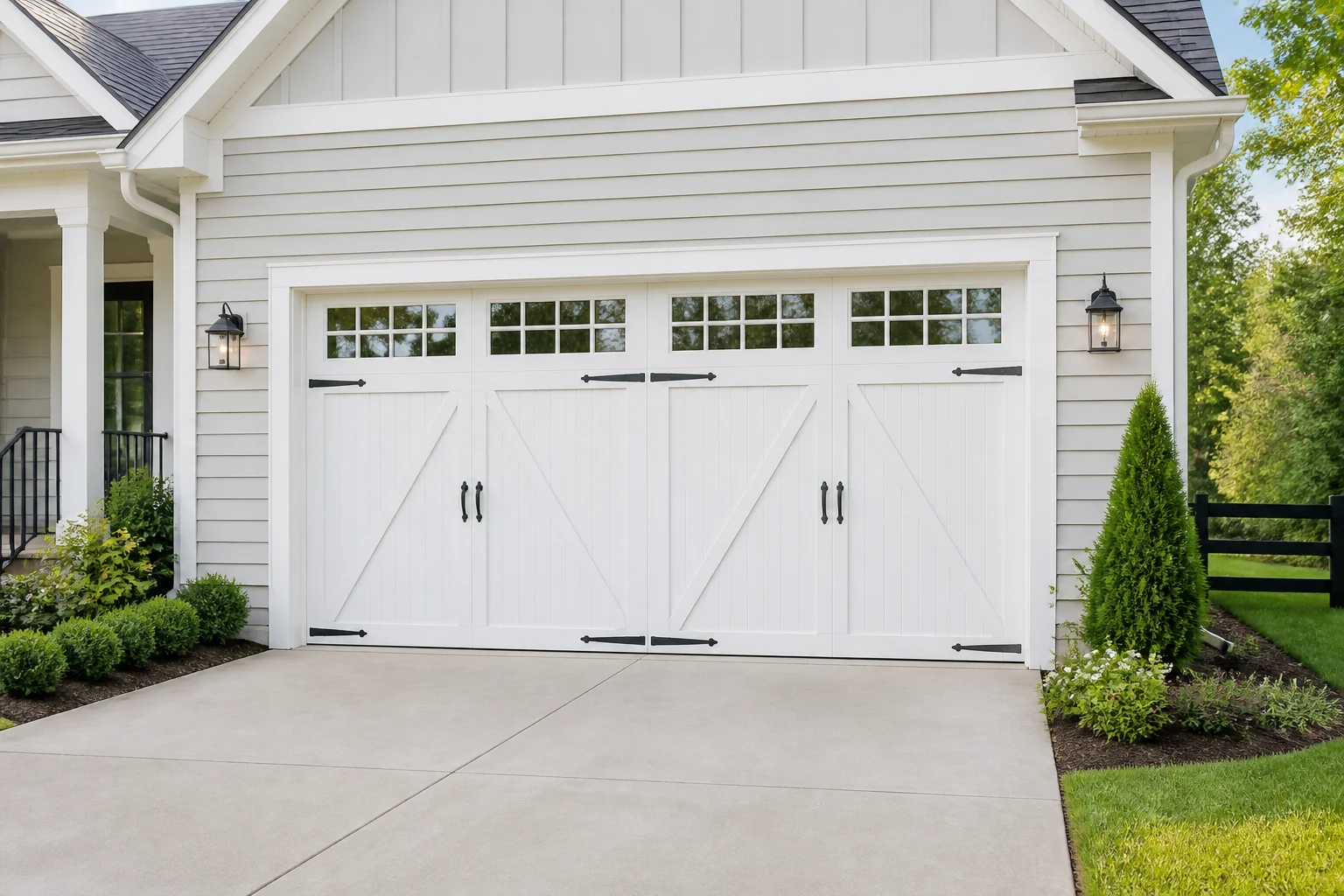
Stamped or overlay designs create a swing-door look while operating as a sectional overhead door.
Explore this door style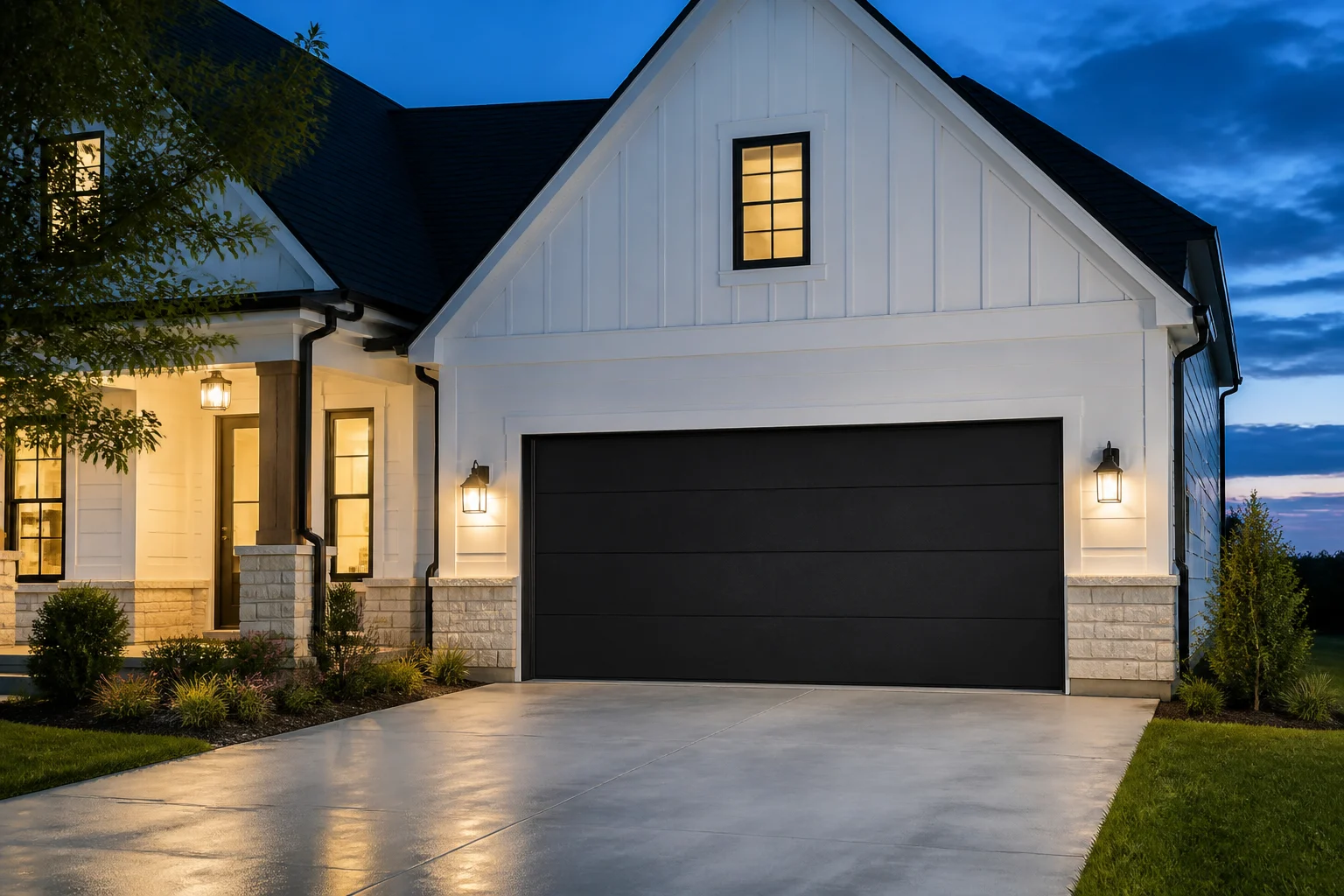
Flush faces, subtle grooves, plank lines, dark finishes, and asymmetric glass suit modern elevations.
Explore this door style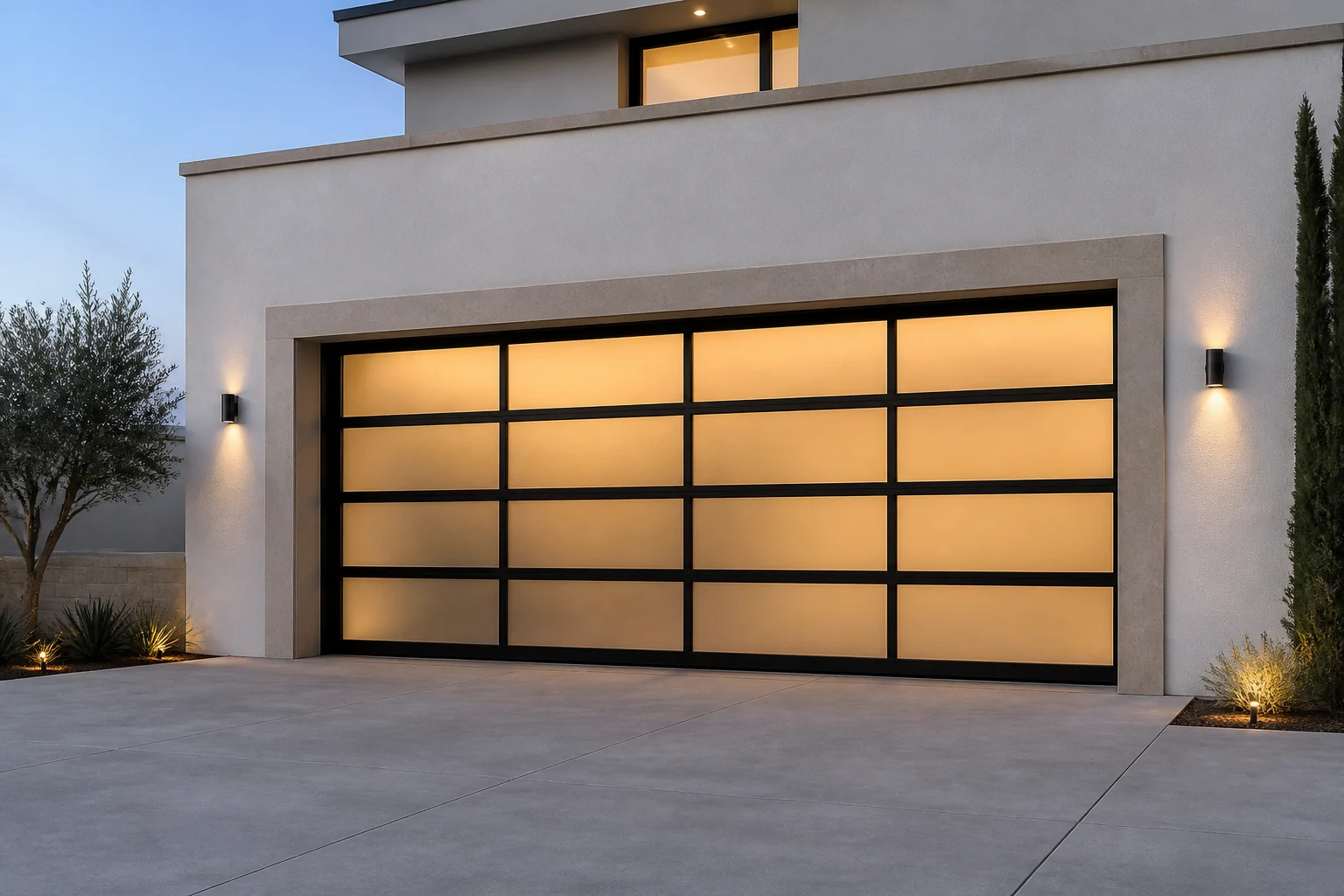
Aluminum frames and broad glass sections maximize light and create a distinctive architectural feature.
Explore this door style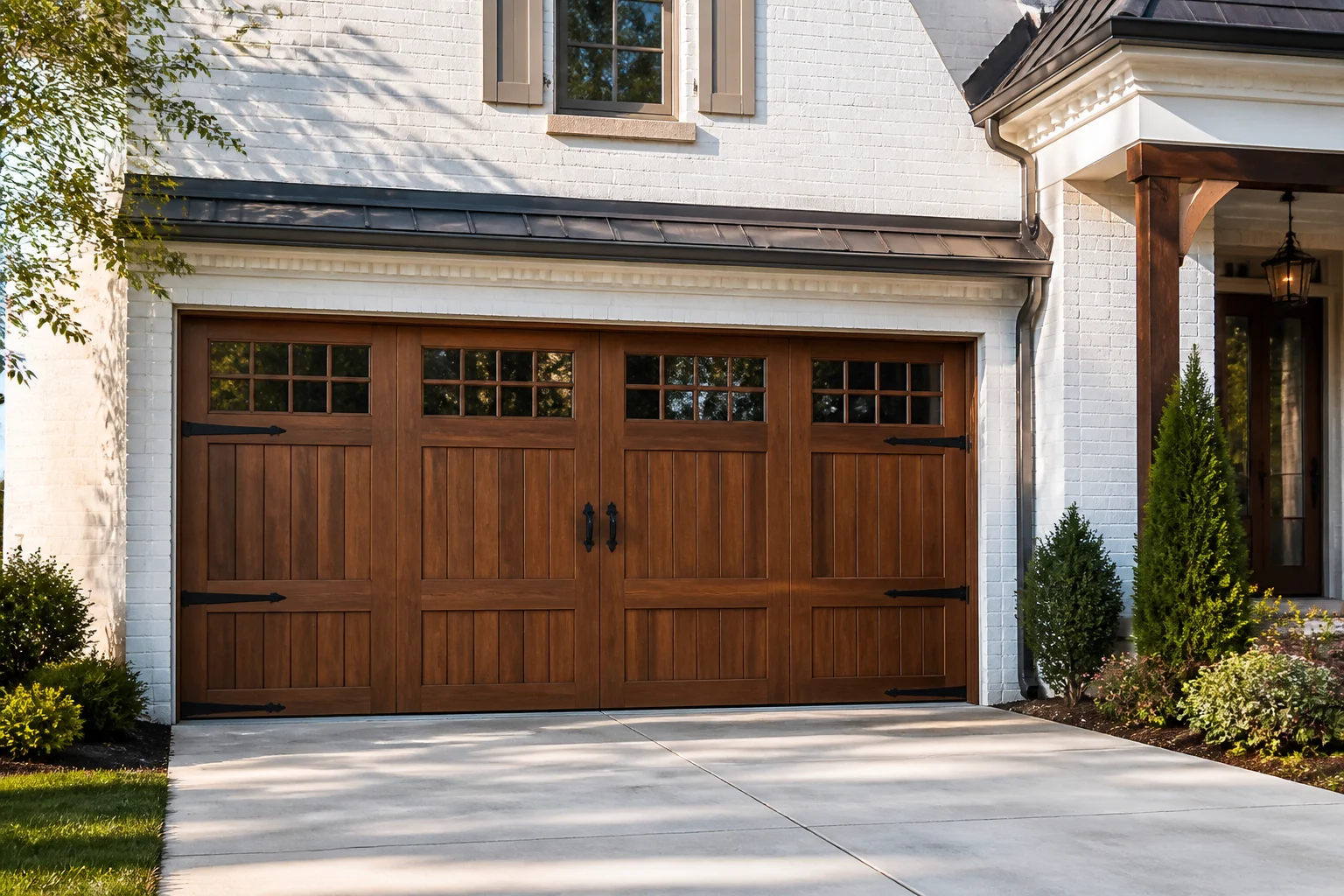
Printed, embossed, composite, and fiberglass faces offer wood character with different care and weight.
Explore this door style
Larger openings, high-cycle use, loading areas, wind, safety, and specialty hardware need project assessment.
Explore this door style