Smooth flush steel
A clean face with minimal embossing for contemporary and transitional homes.
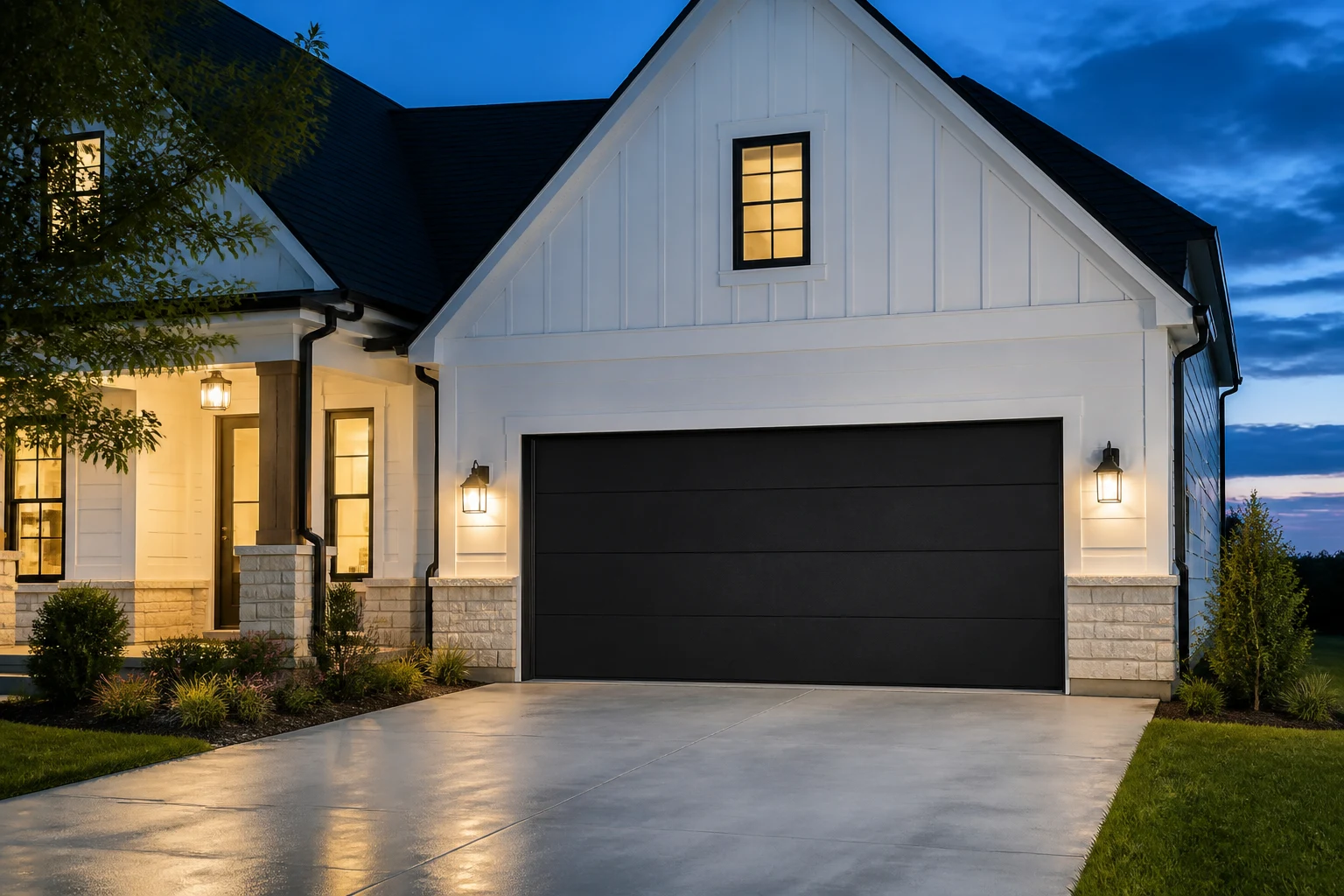
Park DuValle's newer brick homes follow traditional Victorian and Craftsman patterns, so flush or plank garage door installation stands apart on those fronts. A darker, quiet finish keeps the clean panel face from competing with the porch.
A flush or plank door stands apart against Park DuValle's brick, porch-front homes.




Modern Doors Explained
Modern garage doors trade raised panels for clean, flat faces. A flush door has a smooth or lightly textured surface. A plank or grooved door adds horizontal lines that echo lap siding and contemporary trim.
Most are insulated steel, often finished in black, charcoal or a wood-look print. Many add a long row of glass or stacked windows set off to one side. Composite and faux-wood faces are available when you want real texture.
Smooth faces show more than raised panels do. Section joints, window placement and sun on a dark color are worth reviewing up front, and we check each of them against your home before the order is placed.
Surface and Construction
A clean face with minimal embossing for contemporary and transitional homes.
Subtle horizontal lines add rhythm without a traditional raised-panel pattern.
Printed and embossed steel creates a plank appearance with simpler upkeep than real wood.
A deeper engineered face provides stronger grain and dimensional detail.
Popular Styles
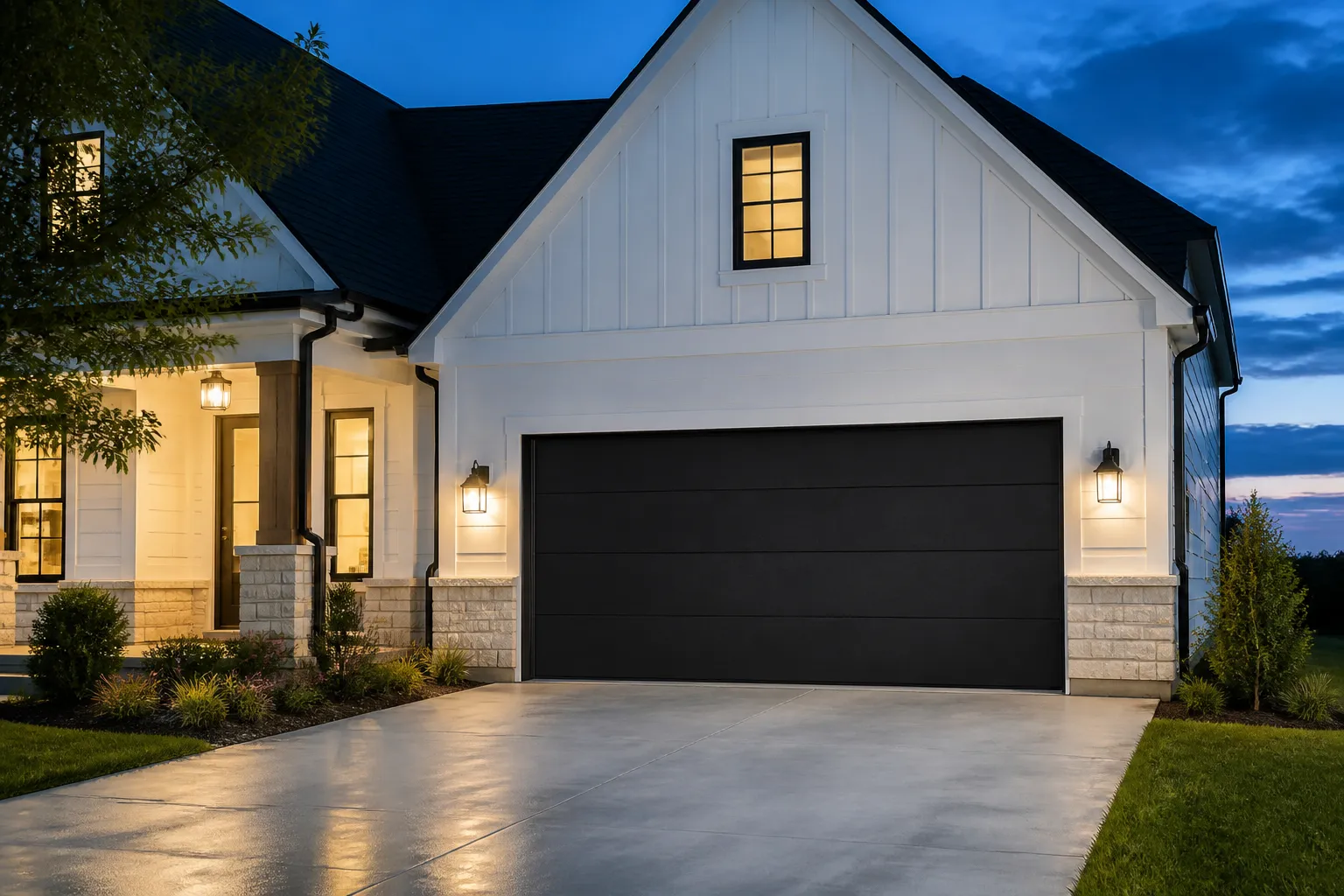
A nearly flat face that keeps the garage elevation quiet and minimal.
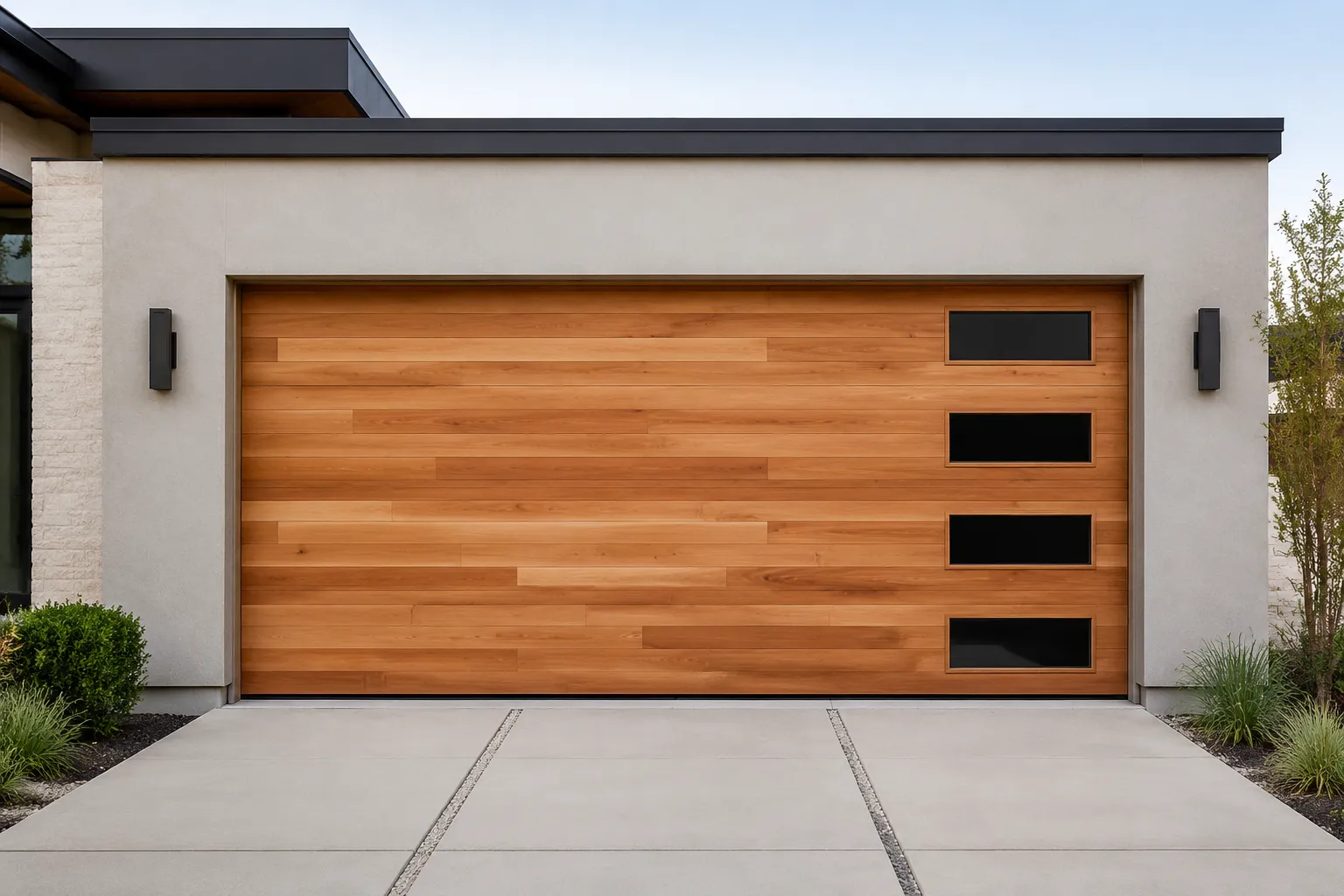
Linear grooves or wood-look planks reinforce horizontal architecture.
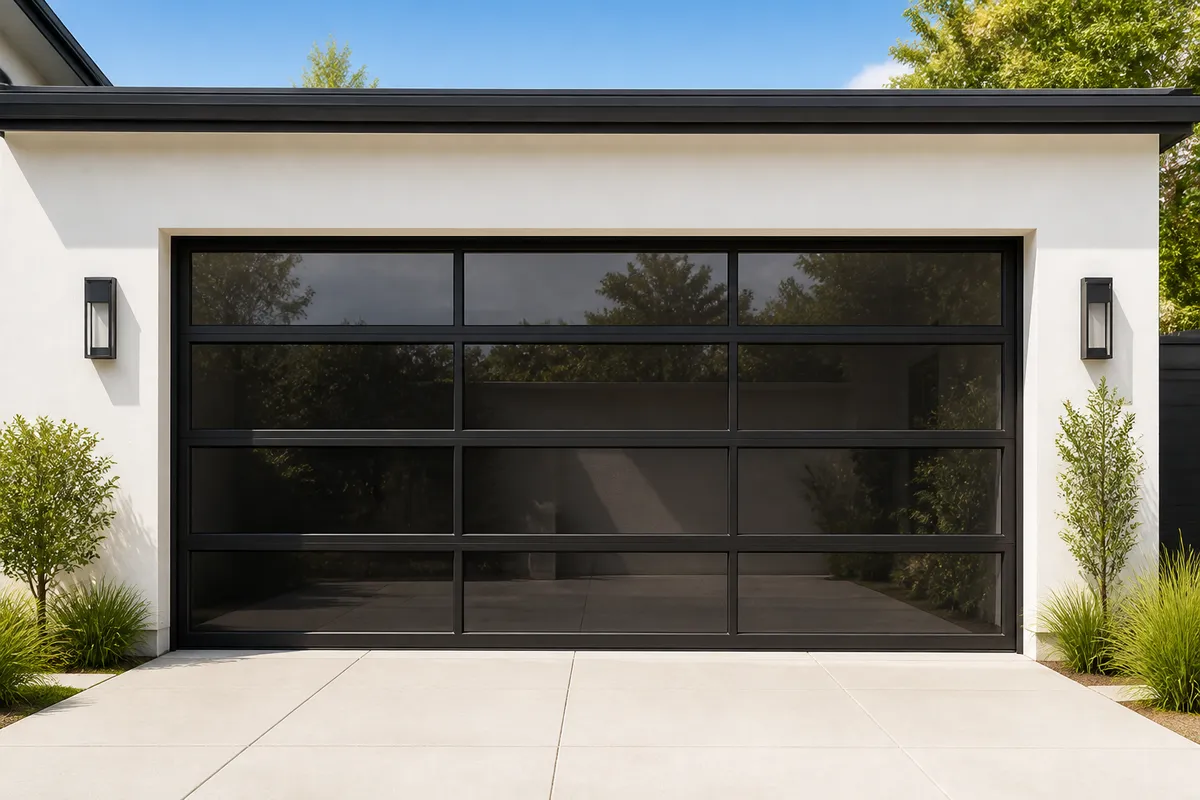
A vertical glass column creates an asymmetric modern detail.
Colors and Finishes
Strong contemporary contrast.
Softer than black with modern depth.
Minimal and bright on modern elevations.
Pairs well with dark windows and metal accents.
Warm contrast against stucco or light siding.
A cooler, weathered wood appearance.
Trusted Brands
Amarr
Smooth flush insulated steel
A smooth flush insulated-steel collection with minimalist surfaces and slim-window options in selected markets.
View collectionProDoor Systems
Flush steel with customized windows
Modern options for clean elevations, including flush panels with customized window placement and aluminum full-view doors.
View collectionBefore You Buy
A sectional door has horizontal joints and may have size-dependent seams, stiles, or reinforcement.
Flat faces show joints and seams.
Dark and wood-look finishes change with light, texture, sheen, screens, and surroundings.
View real samples in daylight.
Stacked lites must be ordered from a defined exterior viewpoint and checked for interior obstacles.
Window placement is set when ordered.
Dark faces absorb more heat; model approval, construction, exposure, and instructions matter.
Dark faces absorb more heat.
Plan Your Modern Door
From selection to installation
Document the opening, elevation, sight lines, sun orientation, clearances, and desired window handing.
Document the opening and sun direction.
Compare actual-size drawings and samples, then approve construction, glass, reinforcement, and hardware.
Approve drawings, samples and glass.
Install and align sections, track, counterbalance, seals, reinforcement, and operator system.
Sections, track, springs and seals aligned.
Inspect reveals and travel, complete safety testing, and review finish care and documentation.
Travel and safety tested, care reviewed.
Built to traditional patterns, Park DuValle's newer homes range from Victorian to Colonial Revival and Craftsman. Their brick faces and front porches came with the New Urbanism rebuild. A flush or plank door is a deliberate contrast on fronts like those. A darker, quiet finish lets the clean panel face sit well beside the traditional styles around it.
A flush door has a smooth face with no raised panels. A plank door adds long horizontal grooves that stretch the look across the opening. On a traditional front, a muted color keeps either design from competing with the porch. Wood-grain or dark metallic finishes suit a front that wants more contrast. A narrow row of windows near the top brings in daylight. We size the door exactly so its lines stay straight. Springs and the opener are then matched to its weight.
Service area coverage
Local ZIP: 40211
Modern Door FAQ
For planning, figure about $1,700–$2,900 installed for a common 8- to 9-foot single-car door. A common 16-foot double-car door runs about $2,000–$4,600. Premium insulation, wider sections, asymmetric glass, wood-look finishes, plank treatments and smooth faces can take a modern door above those ranges.
For most residential replacements, it takes one scheduled visit after the manufacturer delivers every piece of the door. New track and opener work, framing corrections, custom glass, special finishes or overlays can add to that. We confirm your lead time and installation day ahead of your order.
Yes. Removing the old door and hauling it off can go along with the installation. Your written quote spells out which parts come out and which stay, like an opener that still works, and any related cost, all before work starts.
Yes. We back our installation labor with a one-year warranty, and the manufacturer warranties that apply to your chosen products cover the door, finish, glass, hardware and opener. We'll walk you through those terms before you place the order.
It makes sense on contemporary, transitional or mid-century homes with horizontal siding, simple masonry or clean lines. Flush and plank doors look best when they line up with the rest of the front. A traditional house usually looks more natural with a raised panel or carriage house door.
If you like a flat face, flush is the one, with little or no panel relief and a smooth or lightly textured finish. If you'd rather see horizontal lines that read like boards or modern lap siding, go plank. Those lines are made with embossing, grooves, a composite face or printing.
No. A sectional door is never a single continuous surface. You'll see the section joints every time, and a wider door may carry vertical seams or reinforcement as well. We look over how the sections lay out for your opening, so the lines sit where you expect.
They can. As we compare models with you, we point out the trade-offs. A broad, smooth face shows small dents, reflections, dust and slight waviness more than a raised-panel door does. Then we look at what helps: matte finishes, lighter colors, insulation and heavier steel.
No-obligation quote
Keep exploring
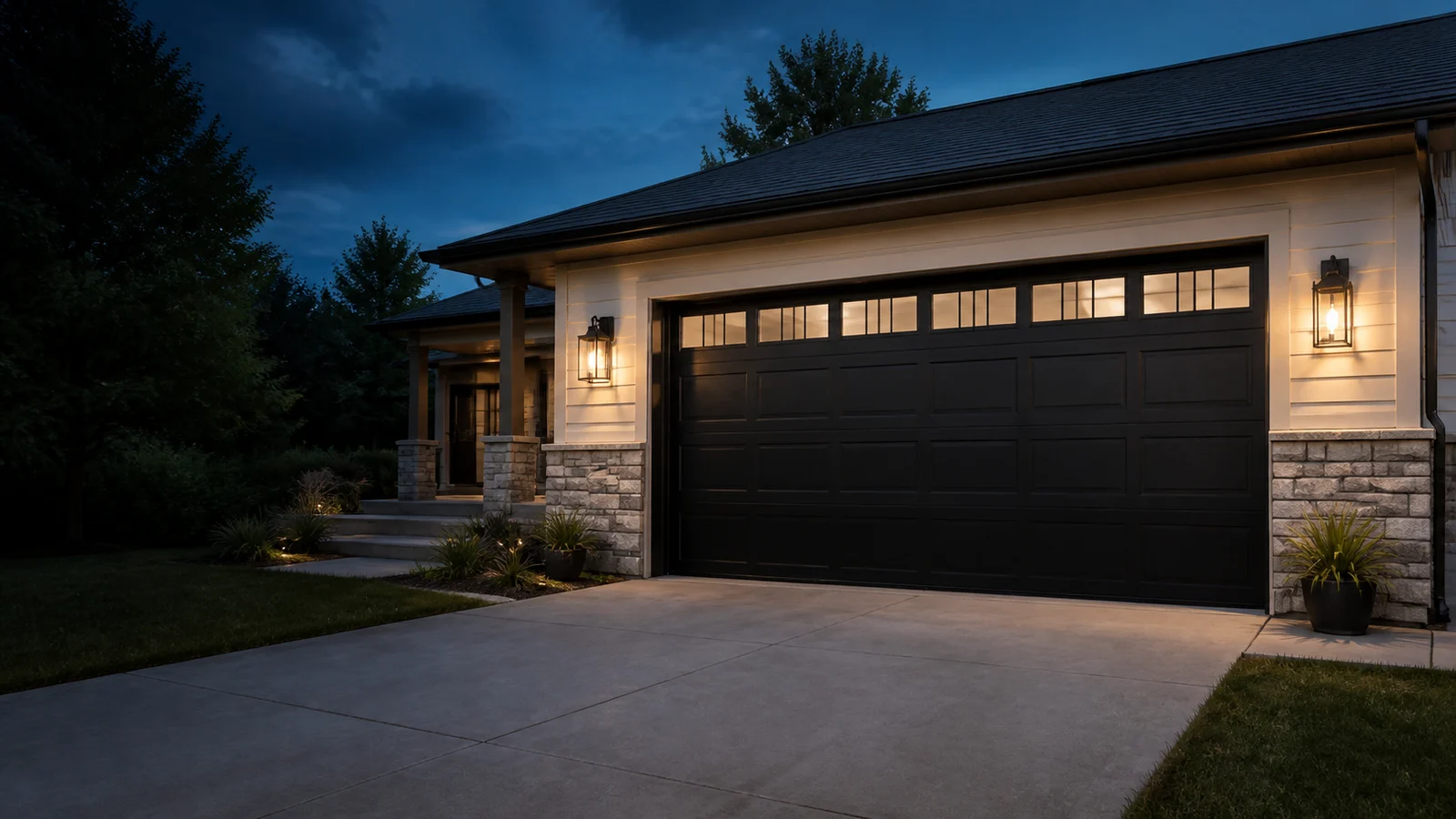
Durable, low-maintenance garage doors with flexible options for style, insulation, and budget.
Explore this door style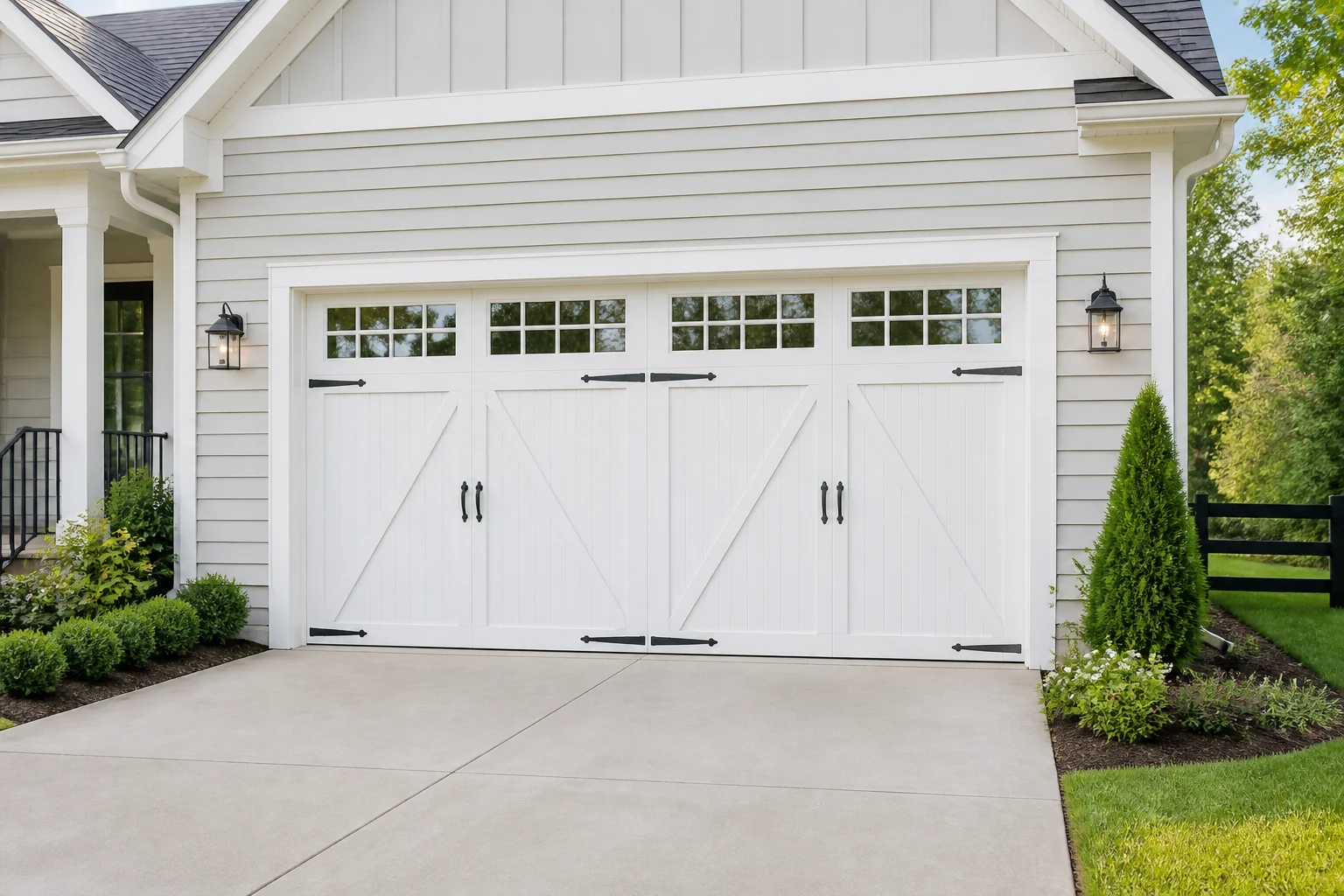
Stamped or overlay designs create a swing-door look while operating as a sectional overhead door.
Explore this door style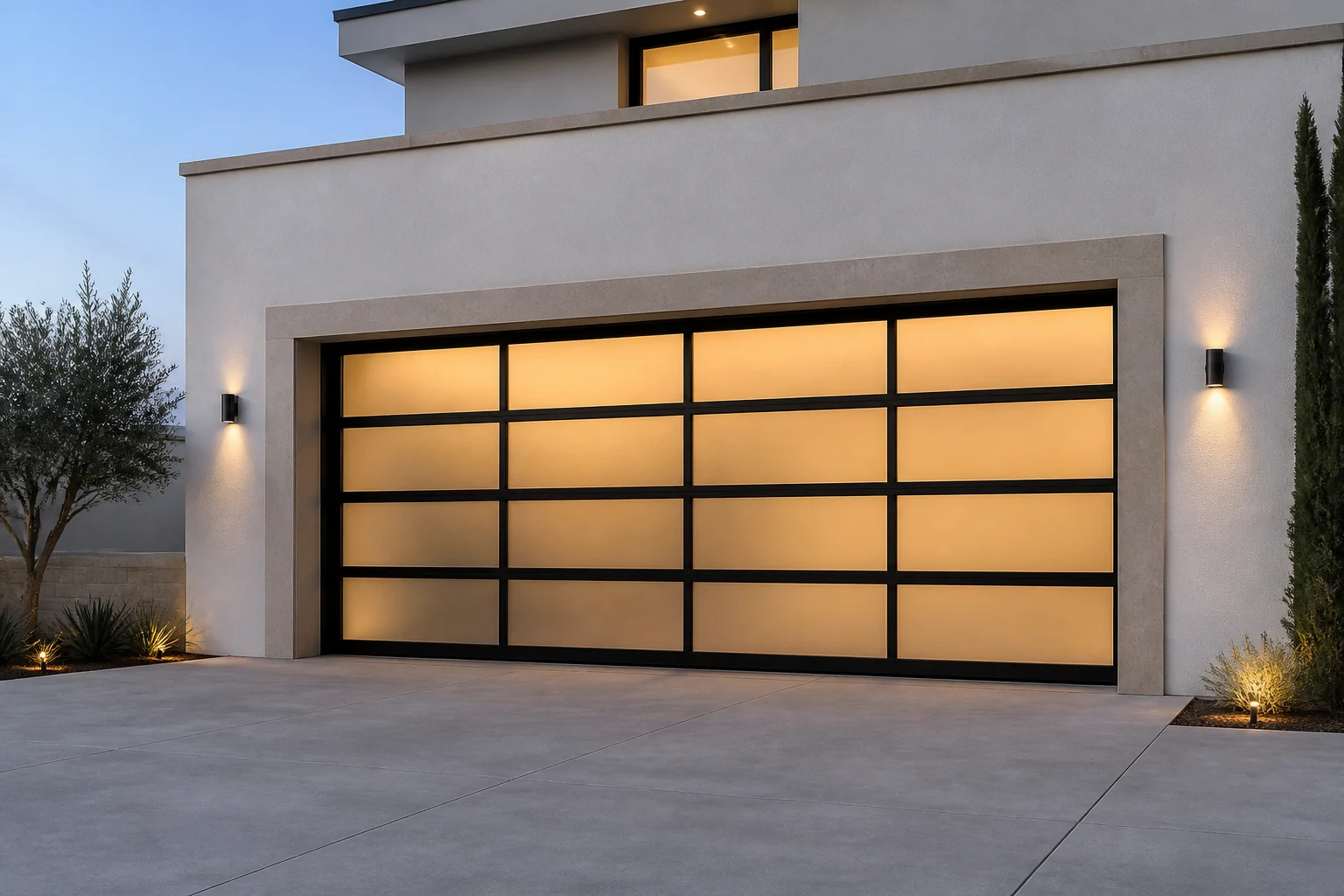
Aluminum frames and broad glass sections maximize light and create a distinctive architectural feature.
Explore this door style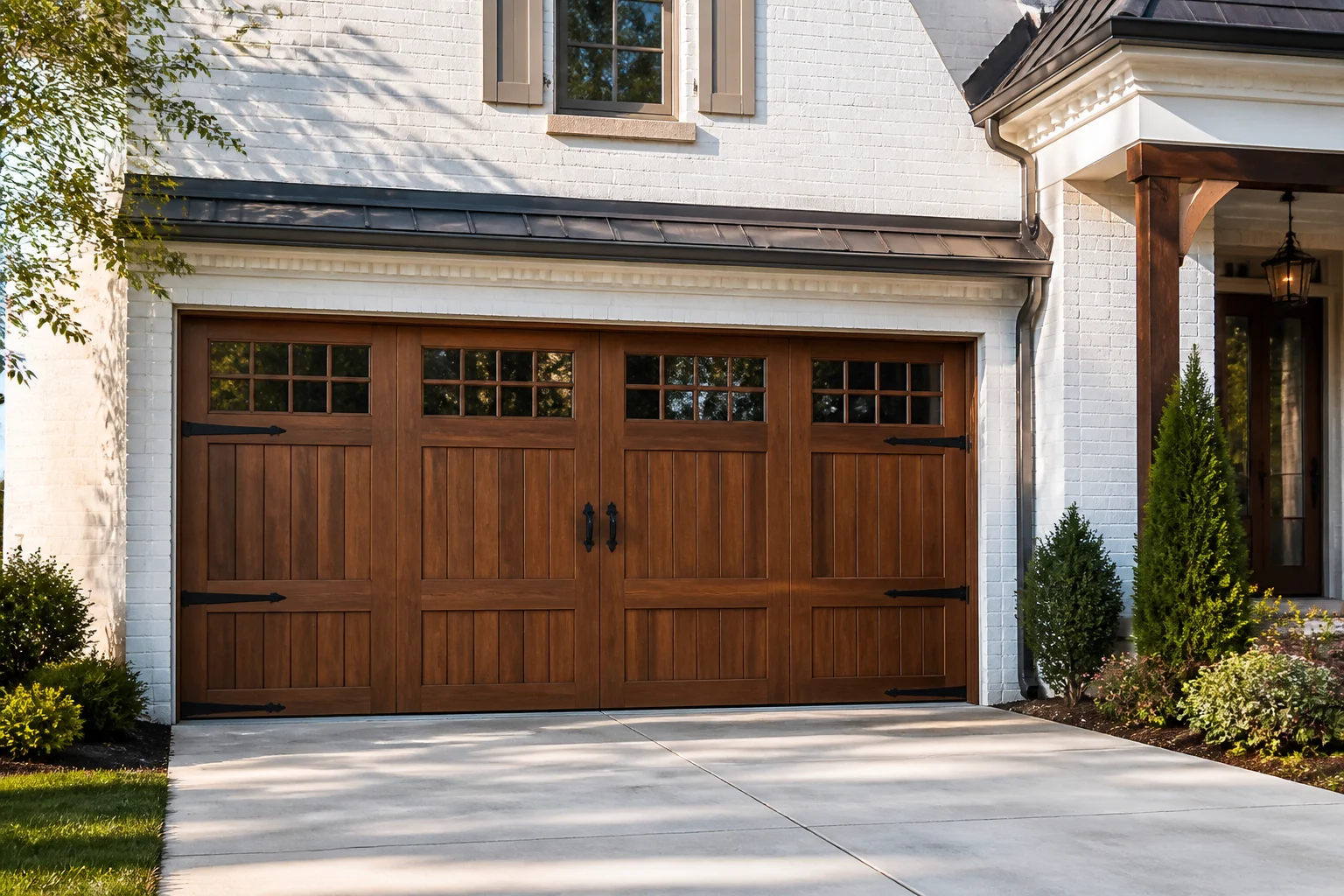
Printed, embossed, composite, and fiberglass faces offer wood character with different care and weight.
Explore this door style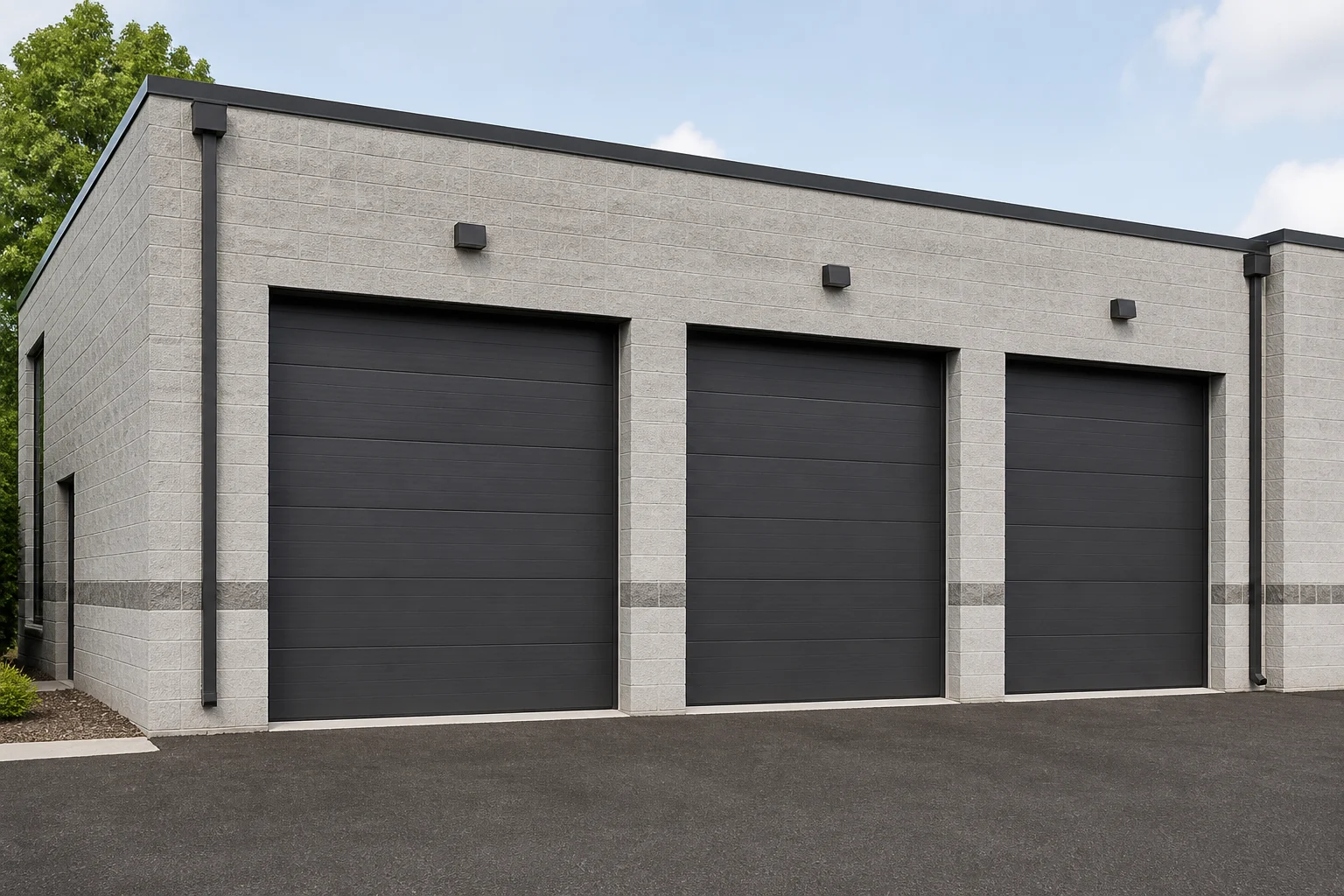
Larger openings, high-cycle use, loading areas, wind, safety, and specialty hardware need project assessment.
Explore this door style