Stamped steel
The carriage pattern is formed into the steel section for a clean, lower-maintenance option.
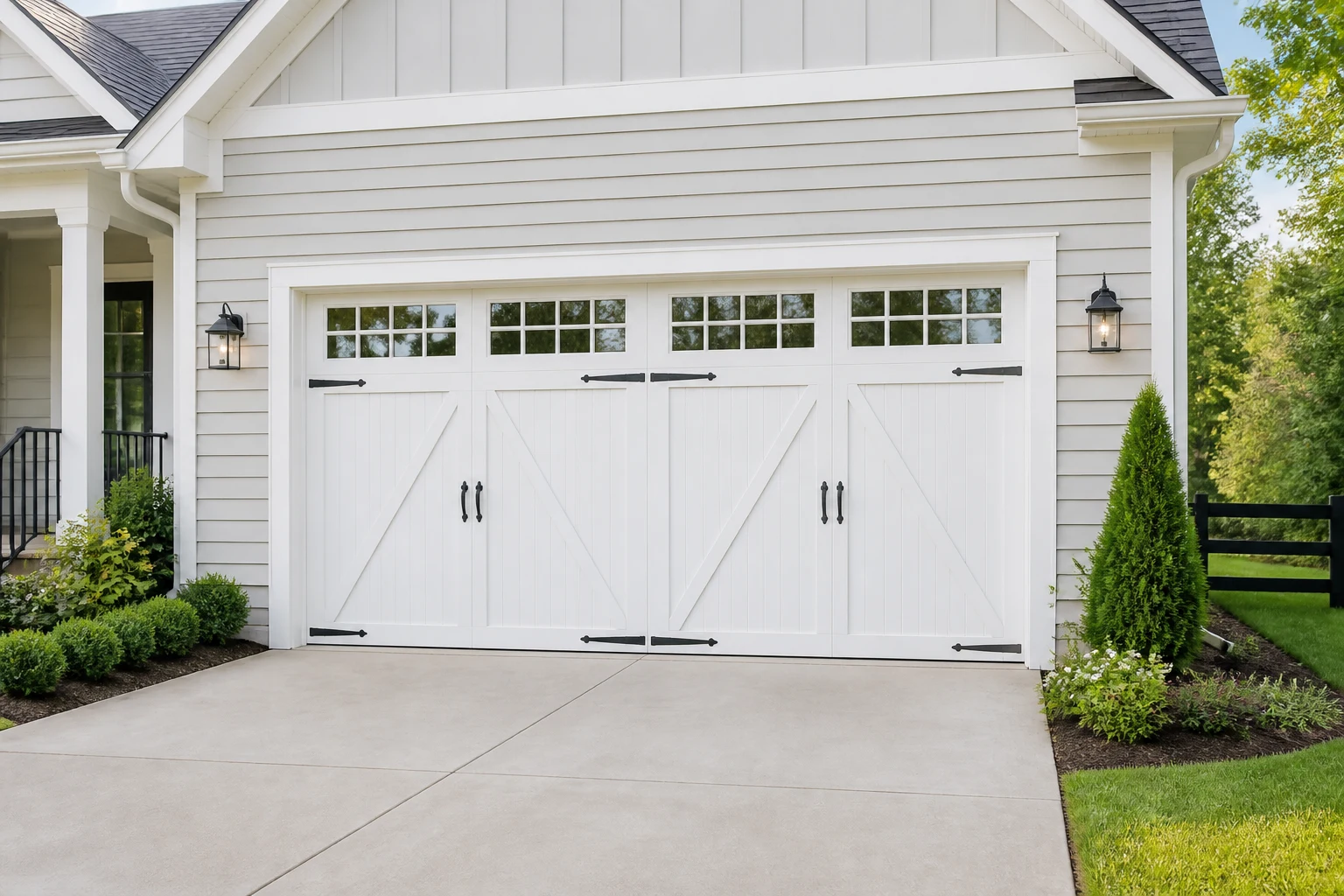
Carriage house garage door installation in Old Louisville can mean a real brick carriage house on an alley lot near St. James-Belgravia. Exterior changes go through local design review, so we raise the door design with preservation staff early.
Old Louisville carriage house doors go through design review before ordering.




Carriage Doors Explained
A carriage house garage door looks like a pair of old swing-out barn doors, but it opens overhead like any sectional door. Vertical boards, a center line, top windows and decorative handles create the look.
Carriage house describes the appearance, not the construction. Many doors stamp the board pattern into steel. Overlay doors add composite trim over an insulated steel base for deeper shadow lines, and a few collections use real wood.
Overlays, glass and hardware all add weight, so the springs and opener are matched to the finished door. We confirm the layout at your exact opening size before ordering, so the boards and windows line up the way you expect.
Construction and Character
The carriage pattern is formed into the steel section for a clean, lower-maintenance option.
Applied trim gives the door more depth while the insulated steel base provides structure.
An engineered face can provide deeper texture and wood-grain character.
Authentic wood offers natural variation but requires more finish care and weight planning.
Popular Styles
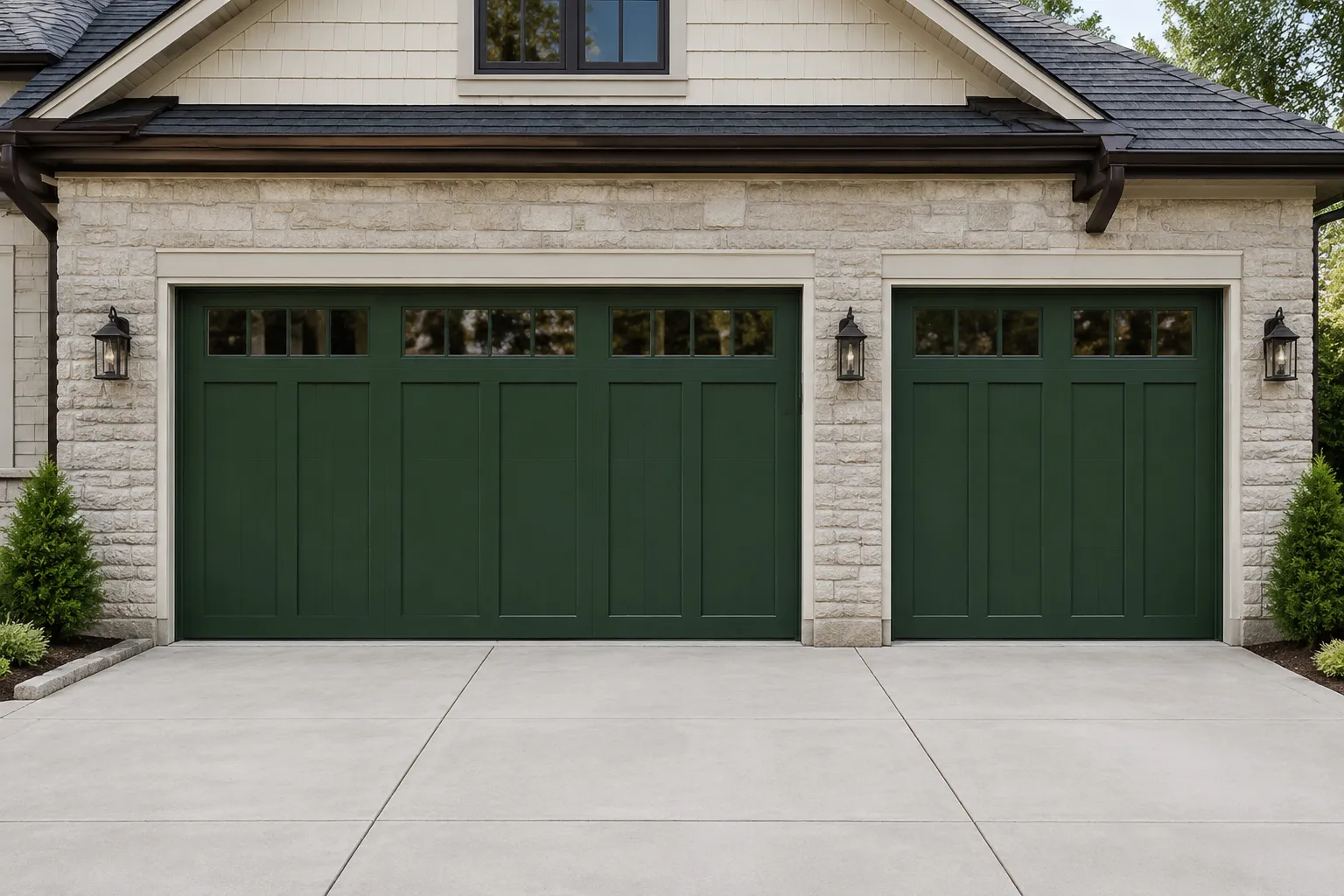
A steel door with pressed panel shapes and decorative hardware.
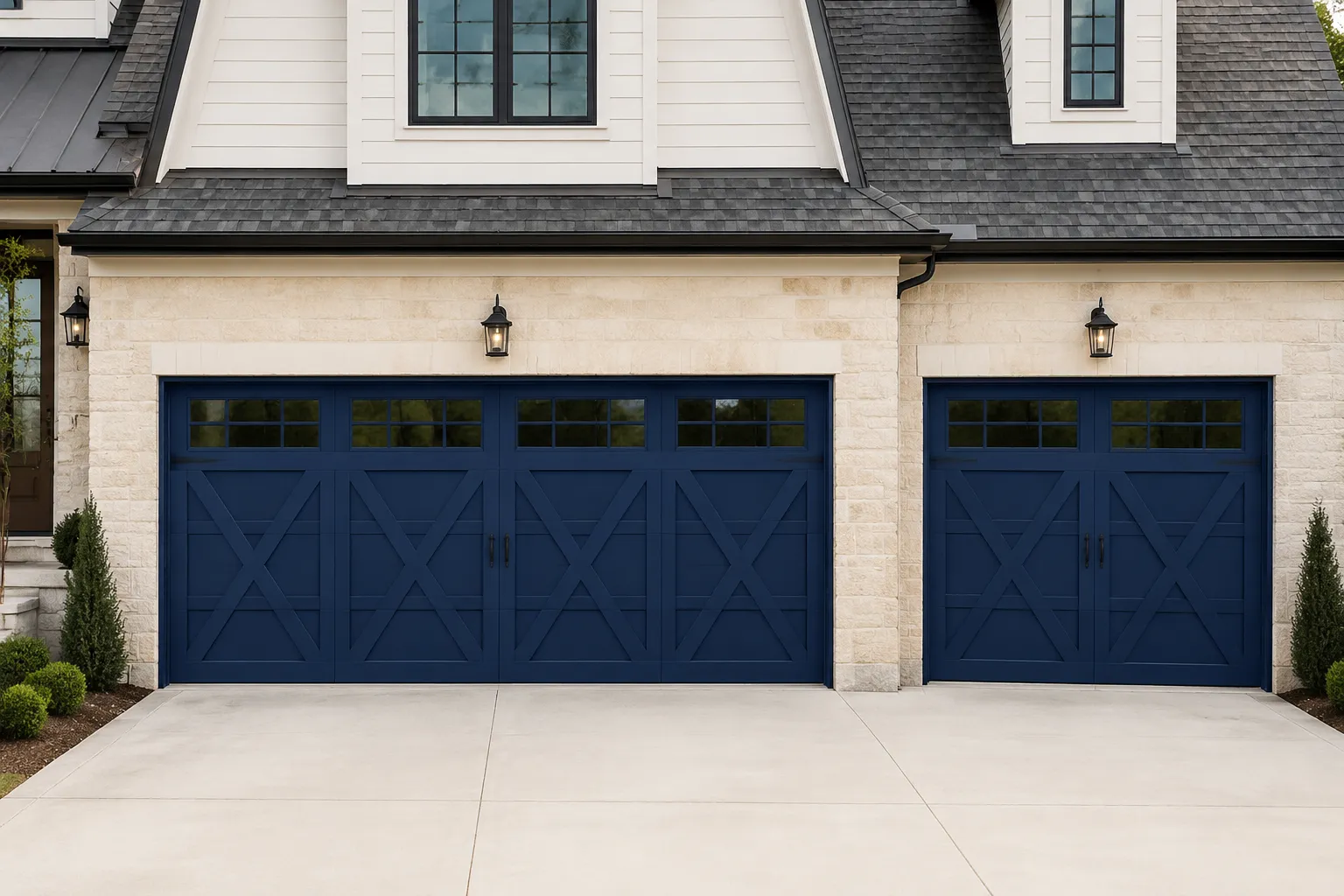
Applied trim creates deeper shadow lines and a more dimensional appearance.
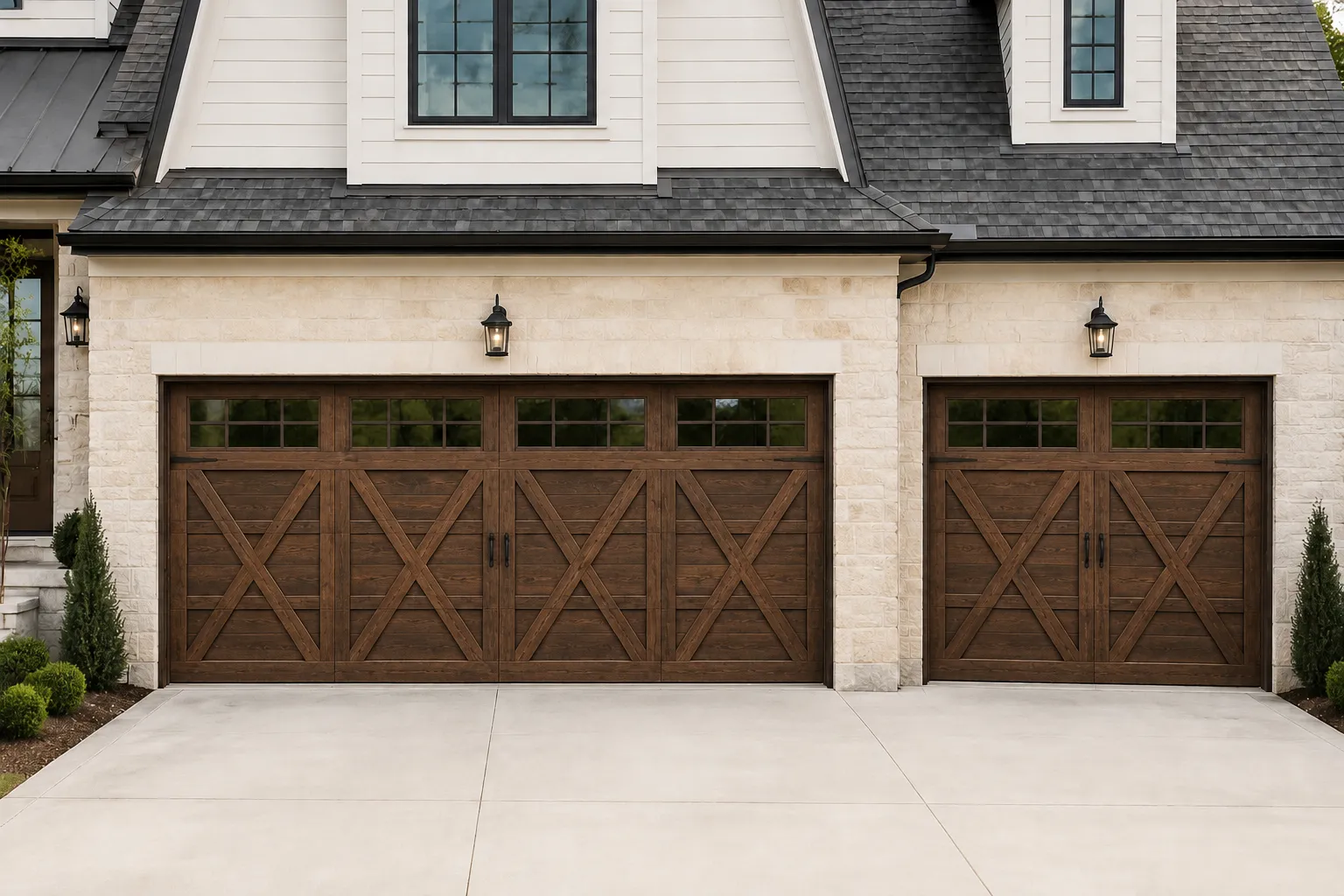
A warm grain finish creates a carriage look with engineered materials.
Colors and Finishes
Classic against brick, stone, and painted siding.
Soft traditional contrast.
Bold hardware and panel definition.
Medium-dark wood appearance.
Warm red-brown wood appearance.
Availability depends on the exact overlay and collection.
Trusted Brands
Amarr
Distinctive stamped-steel carriage design
A three-section carriage look with single-, double-, and triple-layer configurations and polystyrene or polyurethane insulation.
R-value: 6.64–13.35 depending on construction
View collectionProDoor Systems
Overlay carriage-house craftsmanship
Carriage-house overlay designs offered across multiple layer and insulation levels so appearance and performance can be compared together.
View collectionProDoor Systems
Value stamped carriage and shaker steel
Stamped Carriage and Shaker model families alongside Classic Raised designs for budget-conscious carriage looks.
View collectionBefore You Buy
Stamped and overlay systems differ in depth, weight, finish rules, thermal data, and repair options.
Stamped and overlay builds differ in weight.
Section count, breaks, windows, and centerlines change on wider, taller, or odd-size doors.
Layouts shift on wider or odd-size doors.
Heat absorption can conflict with approved colors, exposure limits, and warranty instructions.
Sun exposure can limit color choices.
Windows, overlays, struts, and hardware change weight, reinforcement, shipping, and lead time.
Windows and overlays add weight and time.
Plan Your Carriage Door
From selection to installation
Measure the opening and photograph the full elevation, interior clearances, floor, and operating system.
Measure and photograph the opening.
Compare constructions, actual-size layouts, samples, glass, hardware, and finish restrictions.
Compare layouts, samples and glass.
Install the approved sections, track, counterbalance, reinforcement, seals, and operator interface.
Sections, track, springs and seals installed.
Balance and safety-test the door, then review finish care, documents, and inspection points.
Balanced, safety-tested, care reviewed.
From the St. James-Belgravia Historic District to Central Park West, some Old Louisville lots reaching back to the alleys still carry brick carriage houses. The neighborhood plan recommends incentives for rehabilitating carriage houses like these. A carriage-house style door suits that work well. Exterior alterations in the district go through local design review and, depending on scope, need a Certificate of Appropriateness. The door design is worth raising with preservation staff early.
The door lifts overhead in sections, yet its face reads as a pair of hinged doors. Strap hinges and handles carry the look. Divided windows along the top can add to it. Steel or composite skins keep the style without the upkeep of real wood. We size the door to the opening and plan the track around the headroom inside. If the building is unheated, an uninsulated door may be enough. A dark stain or deep paint color tends to suit older brick.
Service area coverage
Local ZIP: 40203
Carriage Door FAQ
We start with the opening size. For planning, common 8- to 9-foot single-car setups come in around $1,700–$2,900, and common 16-foot double-car setups around $2,000–$4,600. Then we look at construction. Stamped steel may stay near typical residential pricing. Specialty finishes, overlays, custom windows and real wood can lift the final price.
Before you order, we confirm two things: the lead time and your installation day. Most residential replacements need just one scheduled visit, once the complete door is in from the manufacturer. New track and opener work, framing corrections, custom glass, special finishes or overlays can make the job longer.
Leave it to us. We can take the old door out and haul it off with the install. Your written quote spells out what leaves, what stays behind, say a working opener, and any cost that goes with it, before we start.
Yes. You get our one-year warranty on installation labor, and each product you select carries its applicable manufacturer warranty. That means the operator, hardware, glass, finish and the door itself. We walk you through those terms before you order.
They pay off when the garage sits on the street side and the home is farmhouse, Craftsman, cottage or historic in character. A well-proportioned carriage door passes for a set of swing doors but opens overhead like any everyday door. Stamped steel keeps the price closer to a standard door. Overlays cost more, since you're paying for deeper detail.
They don't. Almost all of the carriage house doors sold today are sectional overhead doors. The paired swing-door look comes from a center line, decorative handles, windows and vertical boards. In practice, the sections roll up along tracks inside the garage.
Yes, they're built differently. A stamped door's steel skin has the board pattern pressed into it, which keeps cost and weight down. With an overlay door, composite trim or cladding goes over an insulated steel base. You get deeper shadow lines, and usually higher cost, extra weight and specific finish care.
Some are, but most aren't. Many use fiberglass, steel, printed wood-grain finishes or composite overlays instead. Before you order, we confirm the exact material, because repairs, weight, warranty terms and maintenance all depend on it.
No-obligation quote
Keep exploring
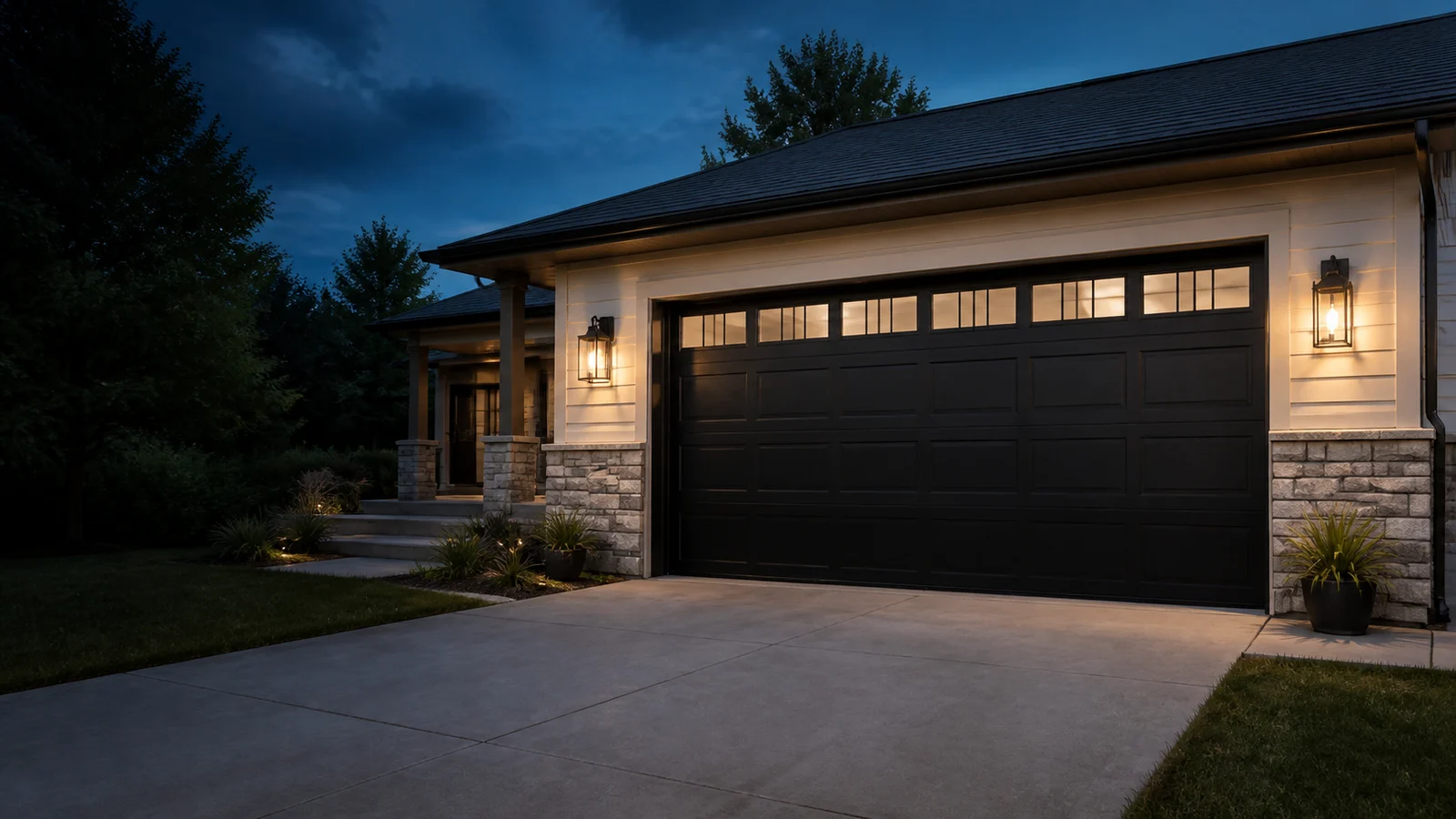
Durable, low-maintenance garage doors with flexible options for style, insulation, and budget.
Explore this door style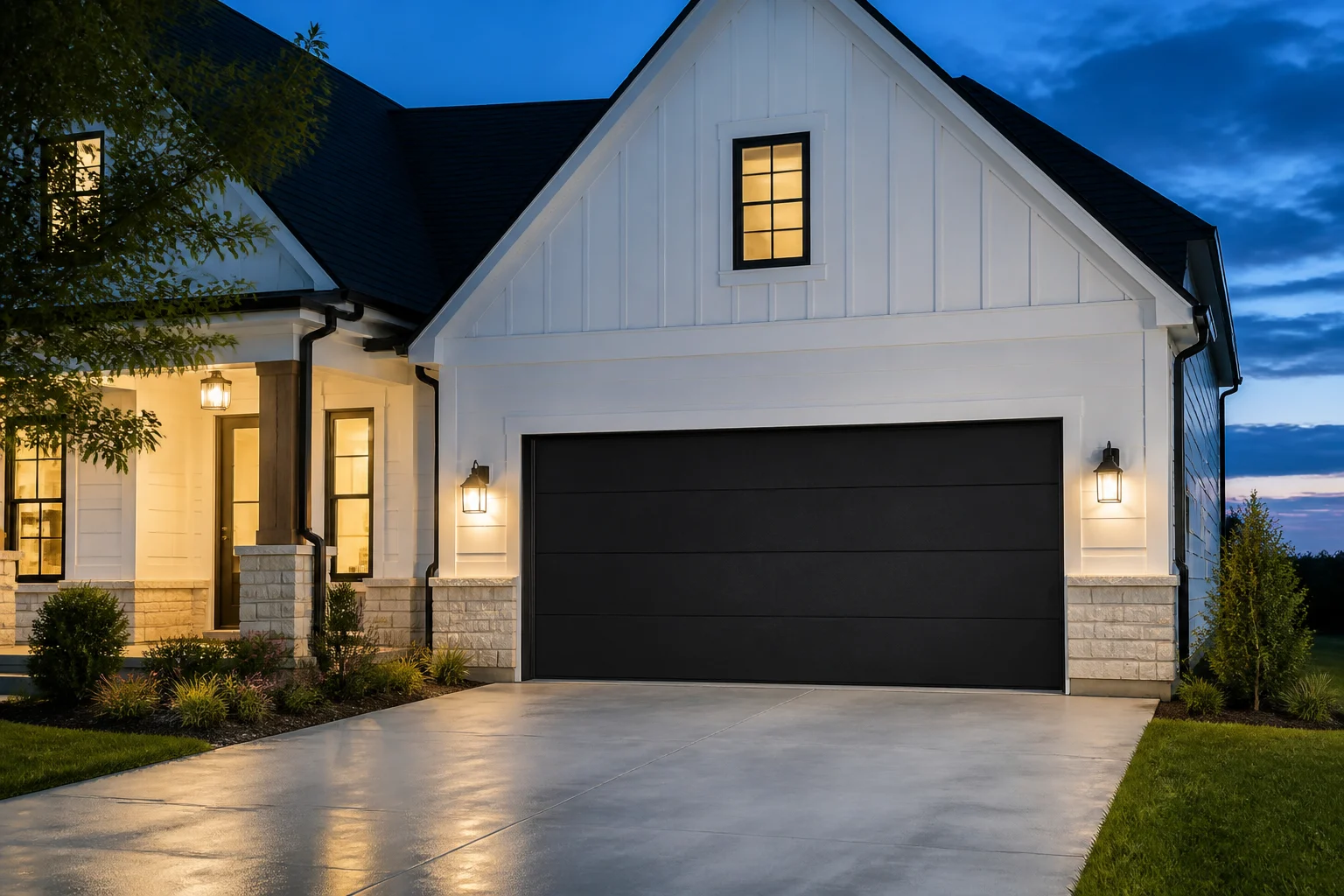
Flush faces, subtle grooves, plank lines, dark finishes, and asymmetric glass suit modern elevations.
Explore this door style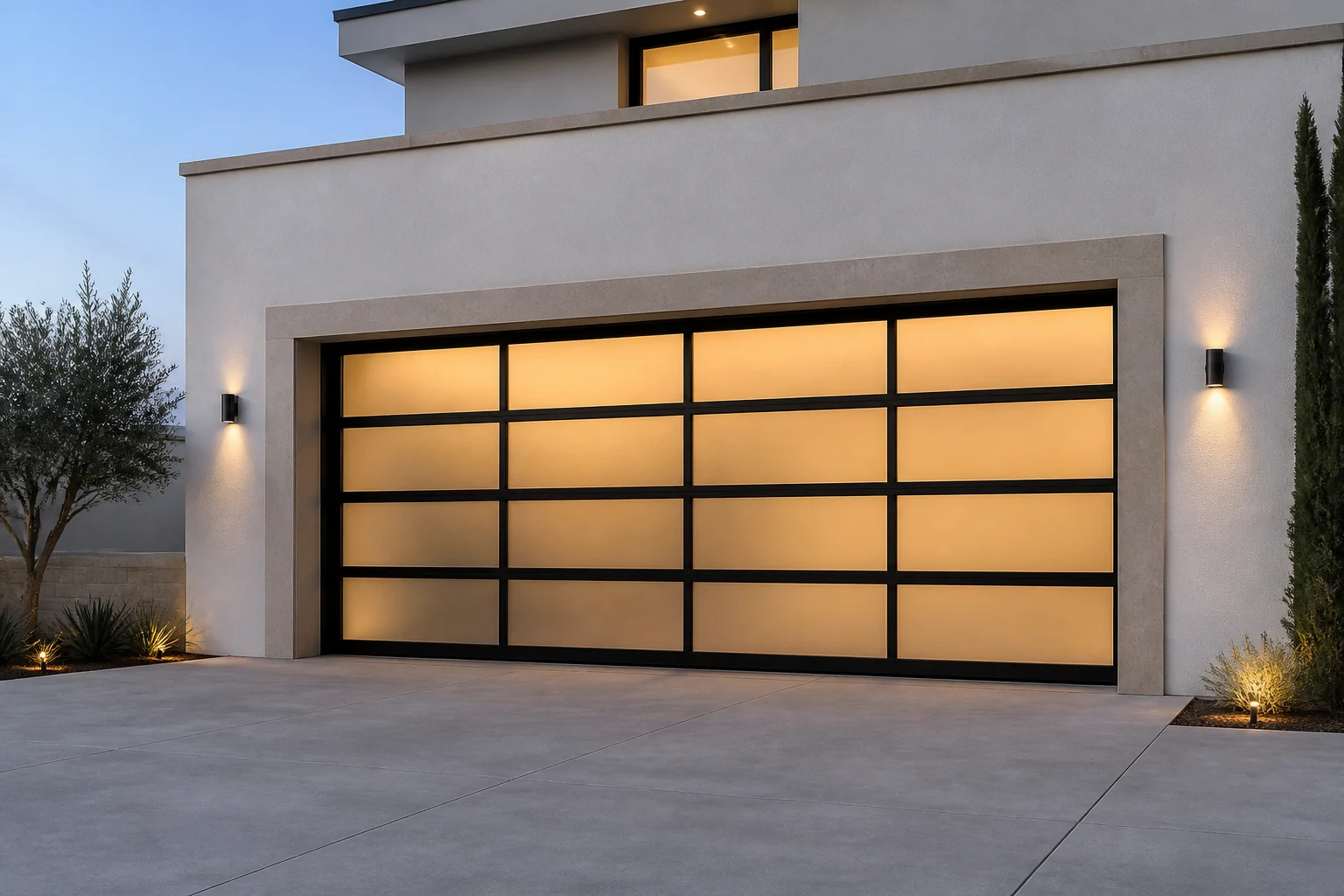
Aluminum frames and broad glass sections maximize light and create a distinctive architectural feature.
Explore this door style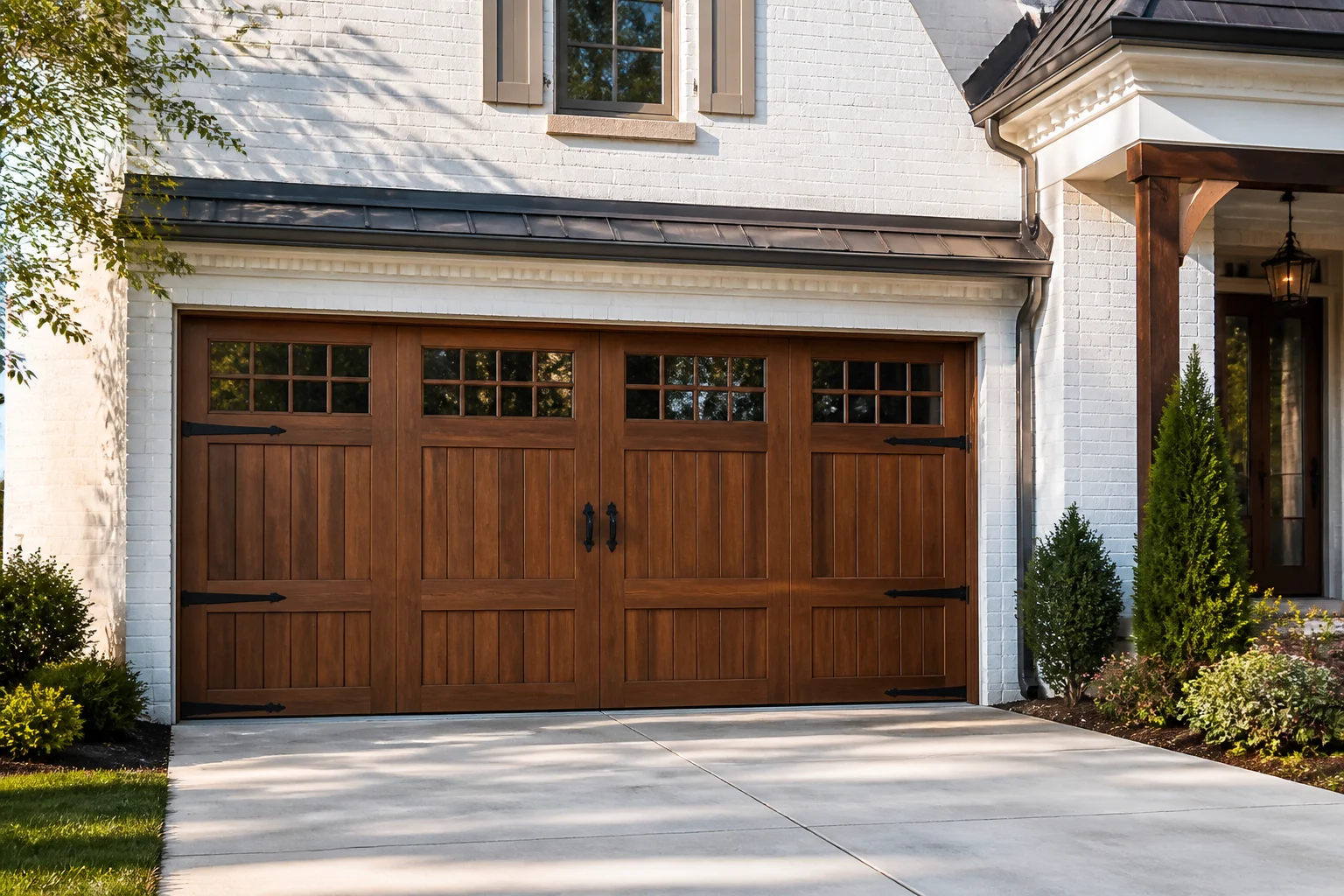
Printed, embossed, composite, and fiberglass faces offer wood character with different care and weight.
Explore this door style
Larger openings, high-cycle use, loading areas, wind, safety, and specialty hardware need project assessment.
Explore this door style