Printed wood-look steel
The most straightforward way to add grain and warm color to an insulated steel door.
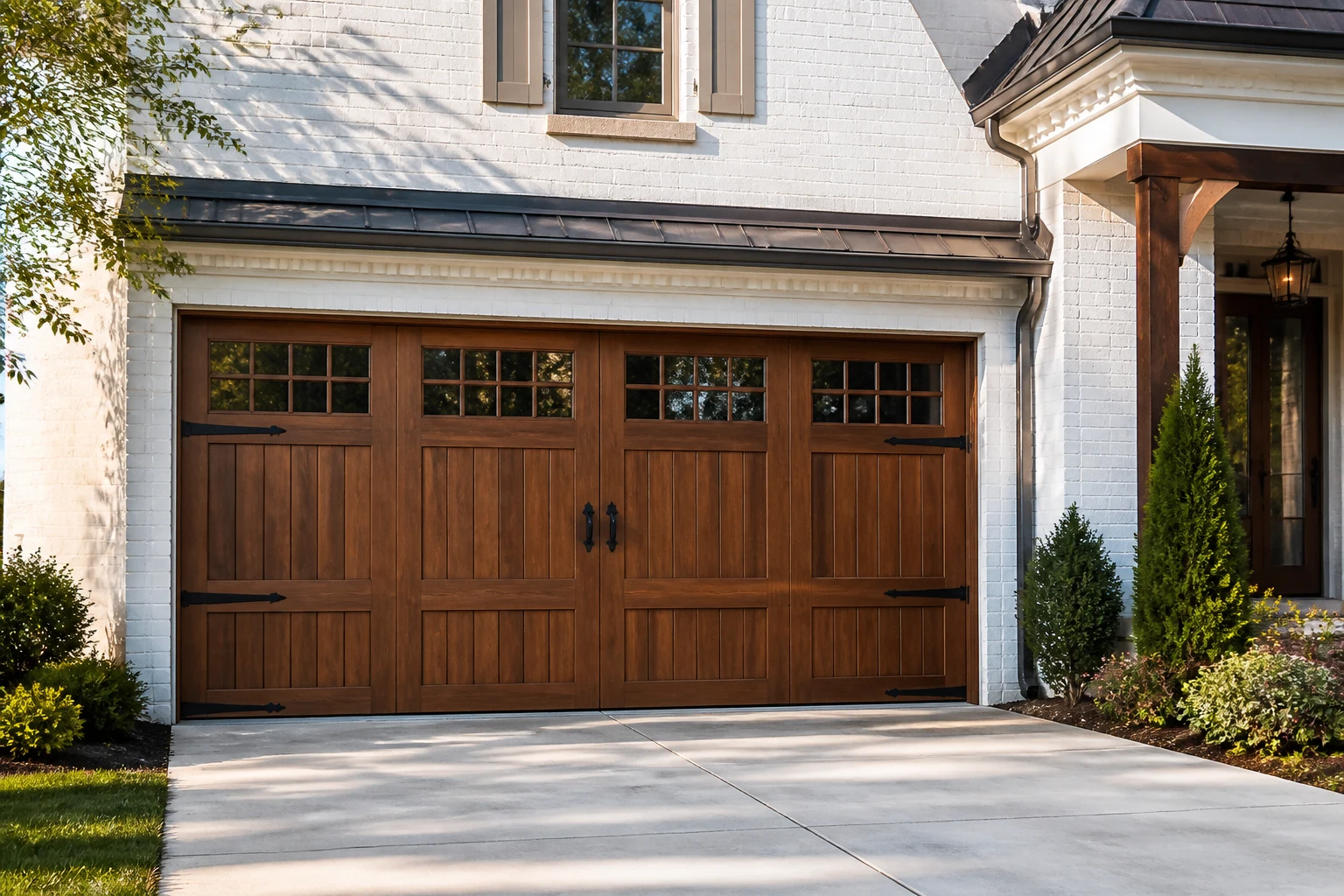
Wood-look garage door installation in Okolona gives an older home near Preston Highway timber warmth without a wooden bottom edge to rot. The grain is pressed or printed into steel or composite, then finished in a stained tone.
Wood-look doors give older Okolona homes warmth without rot.




Wood-Look Doors Explained
A wood-look garage door gives you the warmth of cedar, walnut or oak without the sanding and staining a real wood door needs. The grain comes from printed or embossed steel, composite cladding, or a molded fiberglass face over steel.
Each material wears differently. Printed steel is the lightest and usually the most affordable. Composite and fiberglass faces carry deeper grain and board depth, and their extra weight must be matched by the springs and opener.
Color and grain change with light and distance. Compare finish samples beside your front door, trim and siding before choosing, and we confirm the exact material and its care before the order is placed.
Materials and Finish
The most straightforward way to add grain and warm color to an insulated steel door.
A structural steel base with an engineered exterior face for added depth.
A molded face provides pronounced grain and a different finish and repair profile.
Applied trim creates carriage or plank styling without using a full real-wood door.
Popular Styles
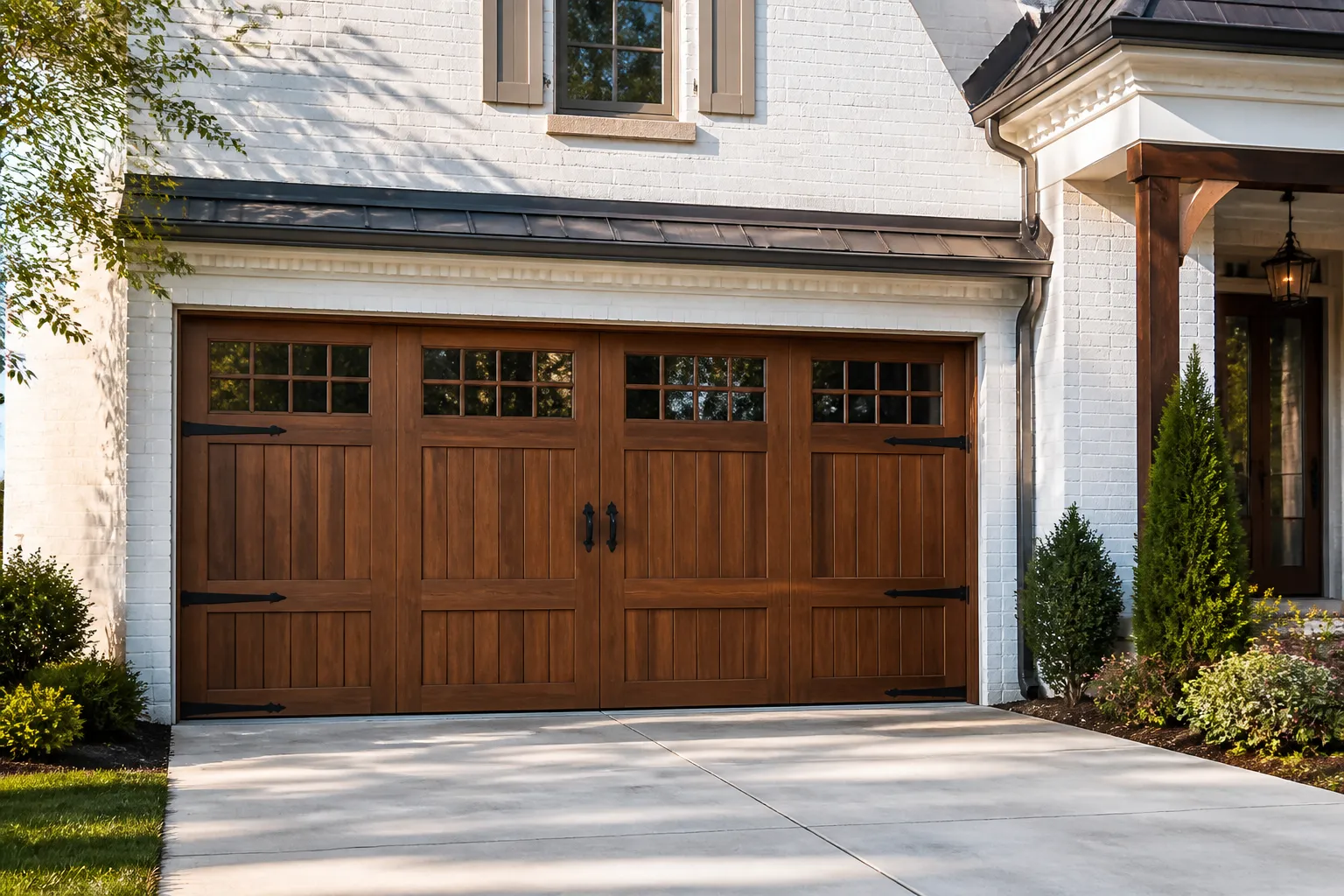
A factory-applied grain pattern on a sectional steel door.
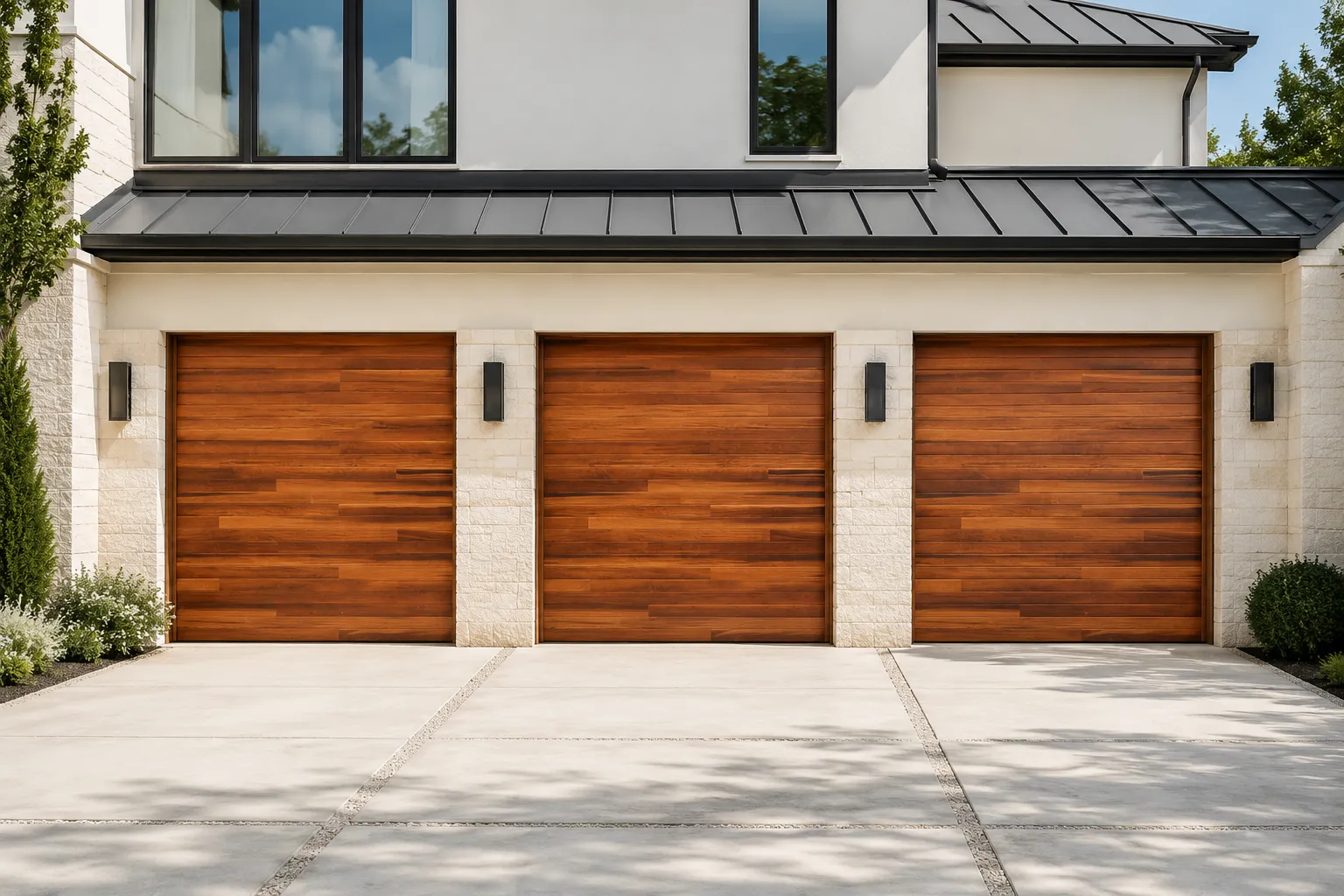
Engineered trim and cladding create deeper grain and shadow lines.
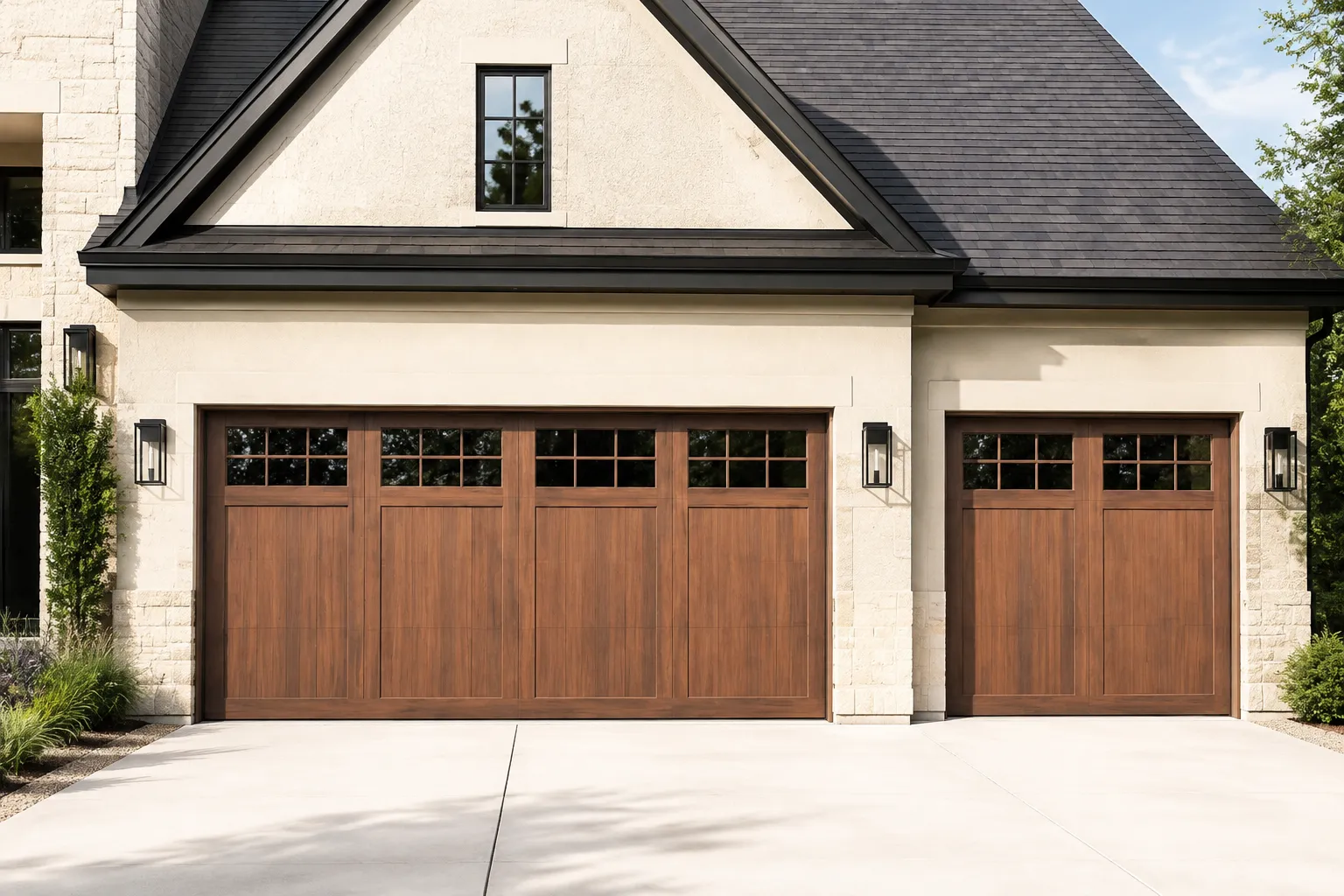
A formed surface creates a dimensional wood appearance with engineered materials.
Wood Tones and Finishes
Warm, lighter wood appearance.
Balanced medium-dark brown.
Rich red-brown tone.
Deep brown with strong grain contrast.
Cooler gray-brown finish.
Lighter neutral wood appearance.
Trusted Brands
Amarr
Steel base with wood-look finish options
Traditional steel construction in single-, double-, and triple-layer options. Woodgrain finish availability is confirmed on the exact model and size before ordering.
View collectionProDoor Systems
Insulated steel with woodtone options
Panel and design families built around higher thermal performance. Woodtone finish availability is confirmed per model and size before ordering.
View collectionBefore You Buy
Similar wood looks can be printed steel, fiberglass, or composite with different ownership.
Similar looks, different materials.
Screens hide undertone, sheen, embossing, repetition, plank scale, and seams.
Judge real samples, not screens.
Engineered surfaces still need cleaning, inspection, approved touch-up, and seal care.
Still needs cleaning and seal care.
Cladding, glass, reinforcement, and width alter springs, hardware, transport, and opener setup.
Cladding and glass change the weight.
Plan Your Wood-Look Door
From selection to installation
Measure the opening and document the elevation, adjacent materials, sun, water exposure, and clearances.
Measure the opening and exposure.
Compare material and finish samples, actual-size layouts, glass, care guides, and approved construction.
Compare materials and finish samples.
Install sections, track, counterbalance, reinforcement, seals, hardware, and opener interface.
Sections, track, springs and seals installed.
Balance and safety-test the door, inspect the finish, and hand off care and warranty records.
Safety-tested, with care records.
From Jefferson Boulevard to the Outer Loop, Okolona sits on some of the most flood-prone ground in the city. Its ground is as low as downtown's, yet the river is far off. Most homes from Clay Avenue to Preston Highway were built decades ago. A wood-look door in steel or composite gives one of them the warmth of timber without a wooden bottom edge to rot.
The grain is pressed or printed into the surface, then given a stained tone that reads as wood from the curb. Unlike real timber, it needs no sanding or resealing between seasons. Oak, cherry and walnut tones are common choices. Carriage or raised-panel styles both come in these finishes. For an attached garage, an insulated version is worth the step up. The door is sized to the existing opening, with springs set to its finished weight.
Service area coverage
Local ZIP: 40219
Wood-Look Door FAQ
Your budget depends on size and face material. To plan, a common single-car door 8 to 9 feet wide comes to roughly $1,700–$2,900, and a common 16-foot double to roughly $2,000–$4,600. Printed steel stays close to a regular residential door. Premium finishes, overlays, fiberglass faces, composite cladding and added weight can raise the installed cost.
One scheduled visit covers most residential replacements, and it happens after the complete door comes in from the manufacturer. New track and opener work, special finishes, custom glass, overlays or framing corrections can add time. You'll have the lead time and your installation day confirmed before you order.
Yes, we can take out your existing door and haul it off with the installation. Before any work starts, your written quote shows what we remove, what we leave in place, like an opener that still works, and any cost tied to it.
Yes, in two parts. Our installation labor has a one-year warranty from us. The manufacturer warranties that apply to your selected products cover the operator, door, finish, glass and hardware. Before you place the order, we'll walk you through those terms.
It does for many homes. The door brings wood's warmth to brick, stone or siding, and it takes away the regular round of sanding and staining that natural wood doors need. On price, printed steel stays modest. Faces in composite or fiberglass cost more, and that buys grain with greater depth and realism, the kind that holds up to a closer look.
In most cases, no. The grain comes from composite cladding, a molded fiberglass face over steel, or steel that's printed or embossed. It's worth knowing the exact material, because it affects the price, weight, realism and care.
Steel with a factory finish usually takes the least effort: an occasional wash and quick touch-ups on scratches. Compared with real wood, composite and fiberglass faces also call for far less work, although each needs its own cleaning routine. Even so, no exterior door is fully free of maintenance.
From the street, yes, if the printing and embossing are good. Up close is different. Composite and fiberglass faces have deeper grain and board depth, so they hold up better there. The best test is simple. View large samples from the spot people usually see your house from.
No-obligation quote
Keep exploring
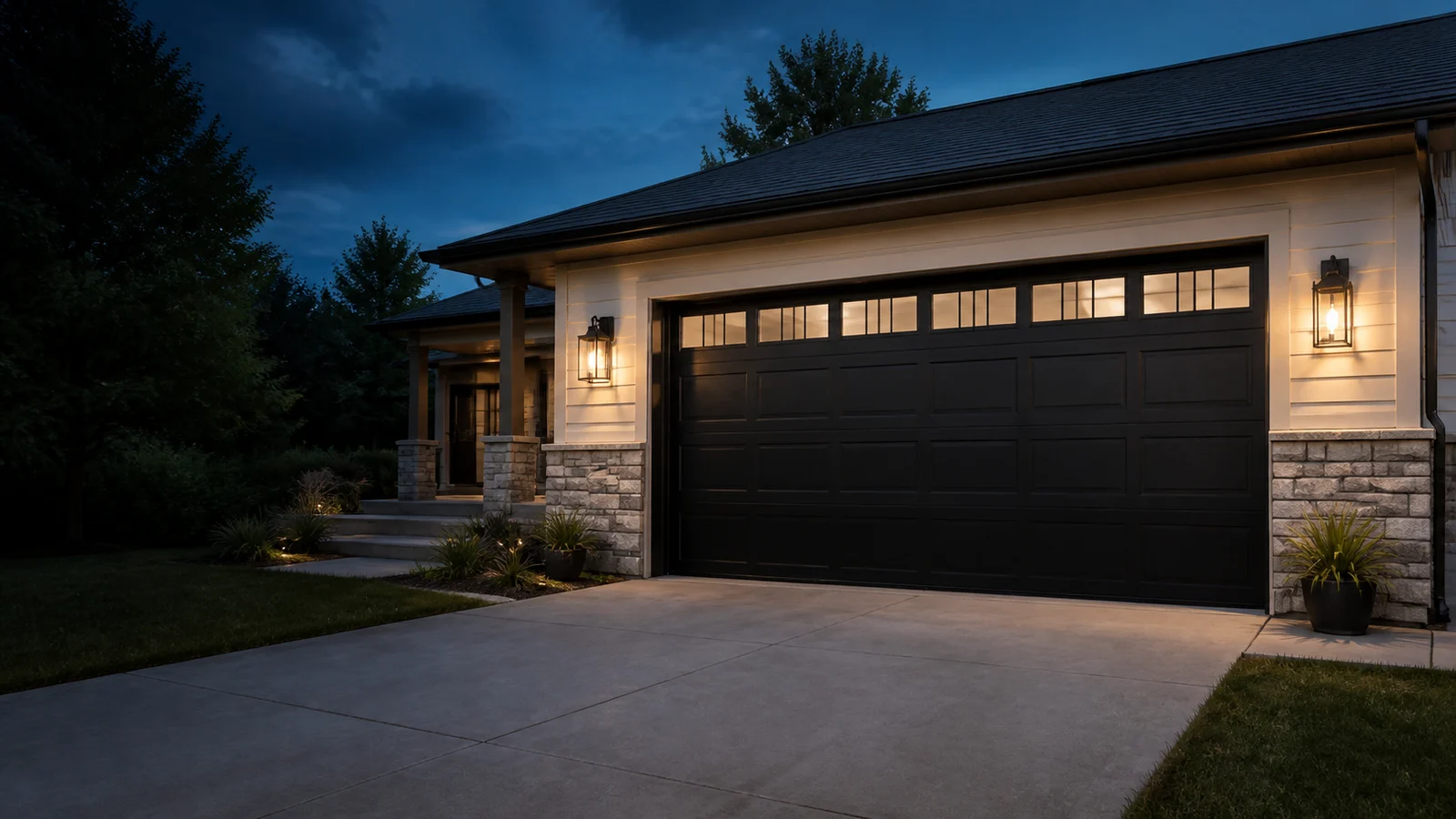
Durable, low-maintenance garage doors with flexible options for style, insulation, and budget.
Explore this door style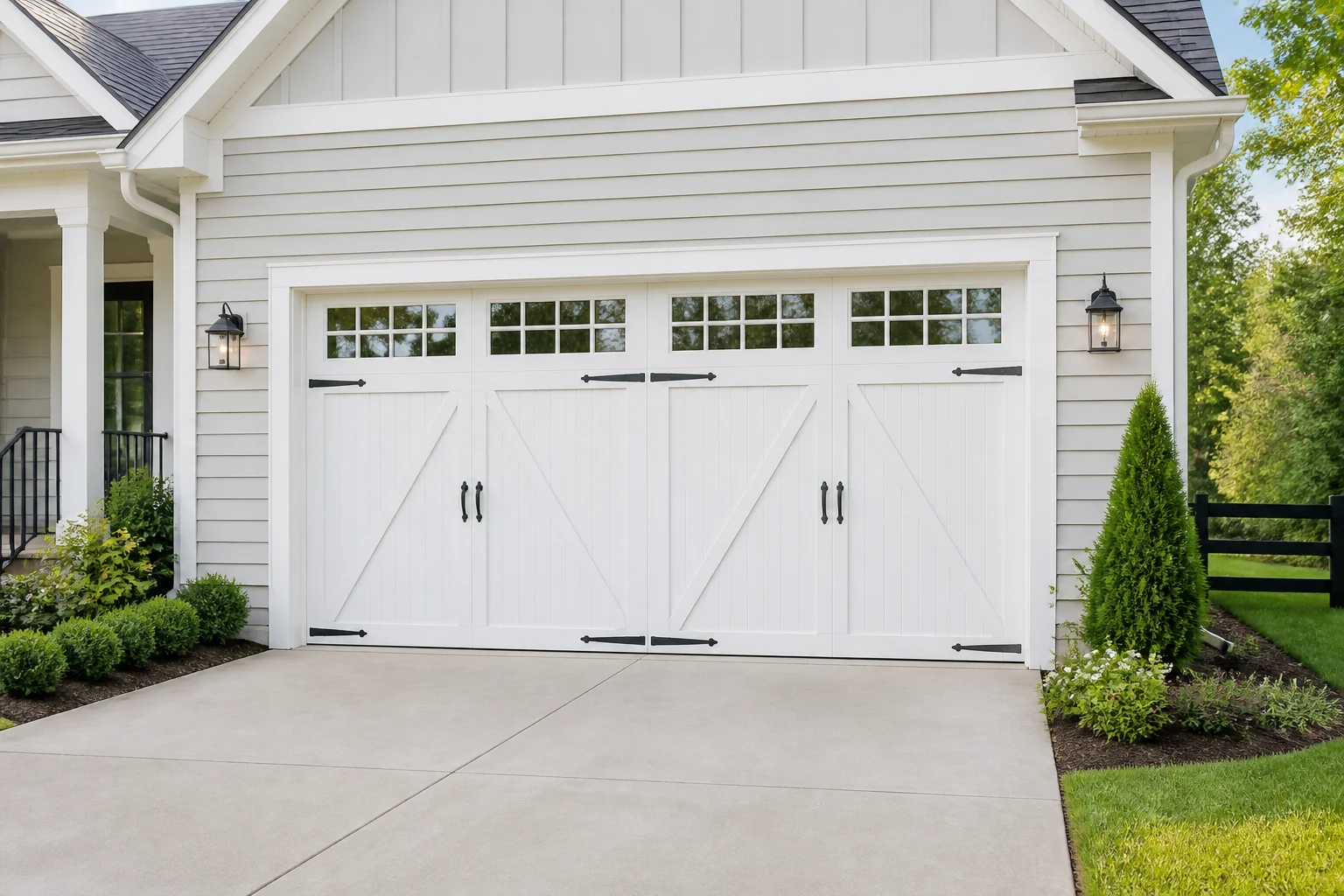
Stamped or overlay designs create a swing-door look while operating as a sectional overhead door.
Explore this door style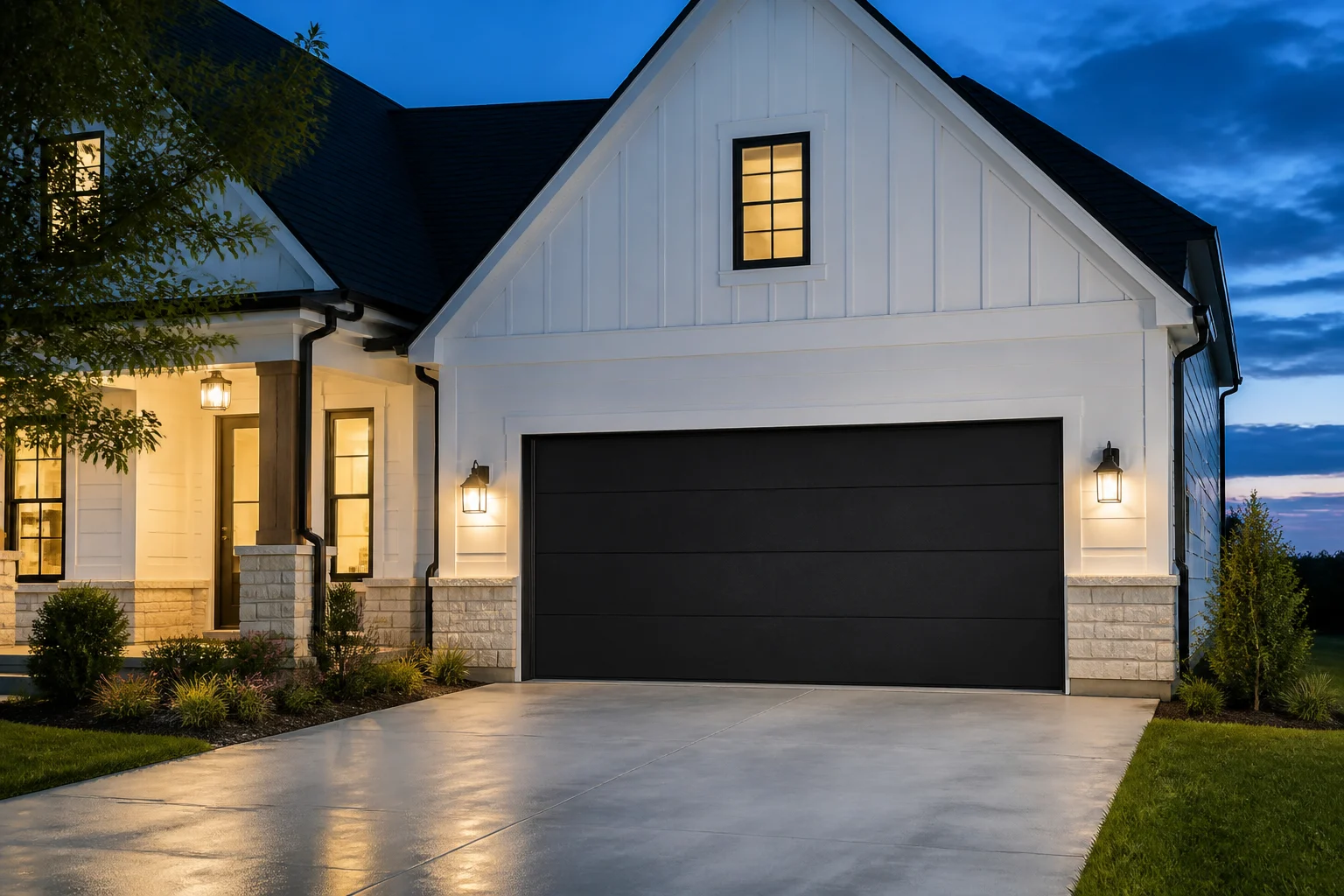
Flush faces, subtle grooves, plank lines, dark finishes, and asymmetric glass suit modern elevations.
Explore this door style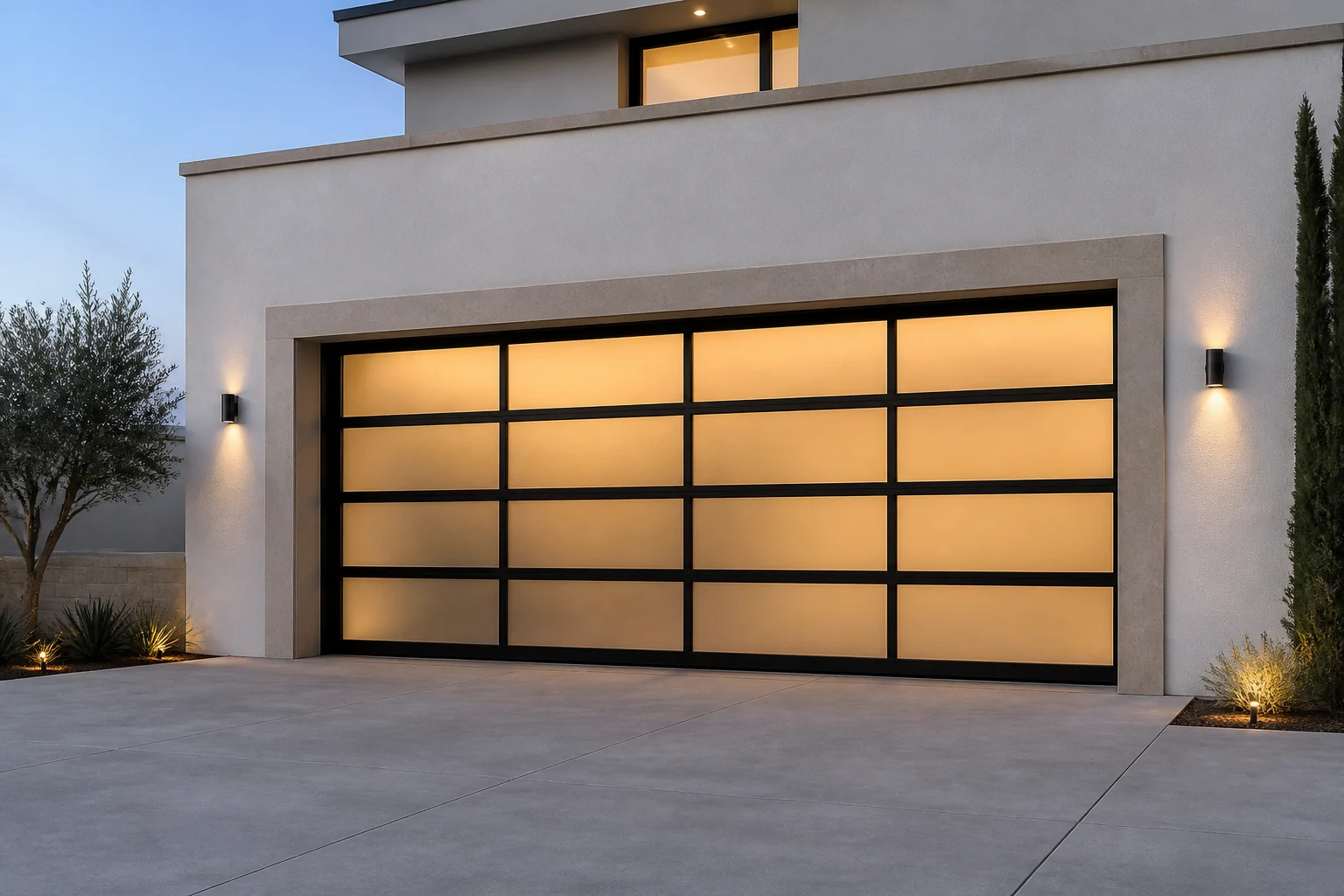
Aluminum frames and broad glass sections maximize light and create a distinctive architectural feature.
Explore this door style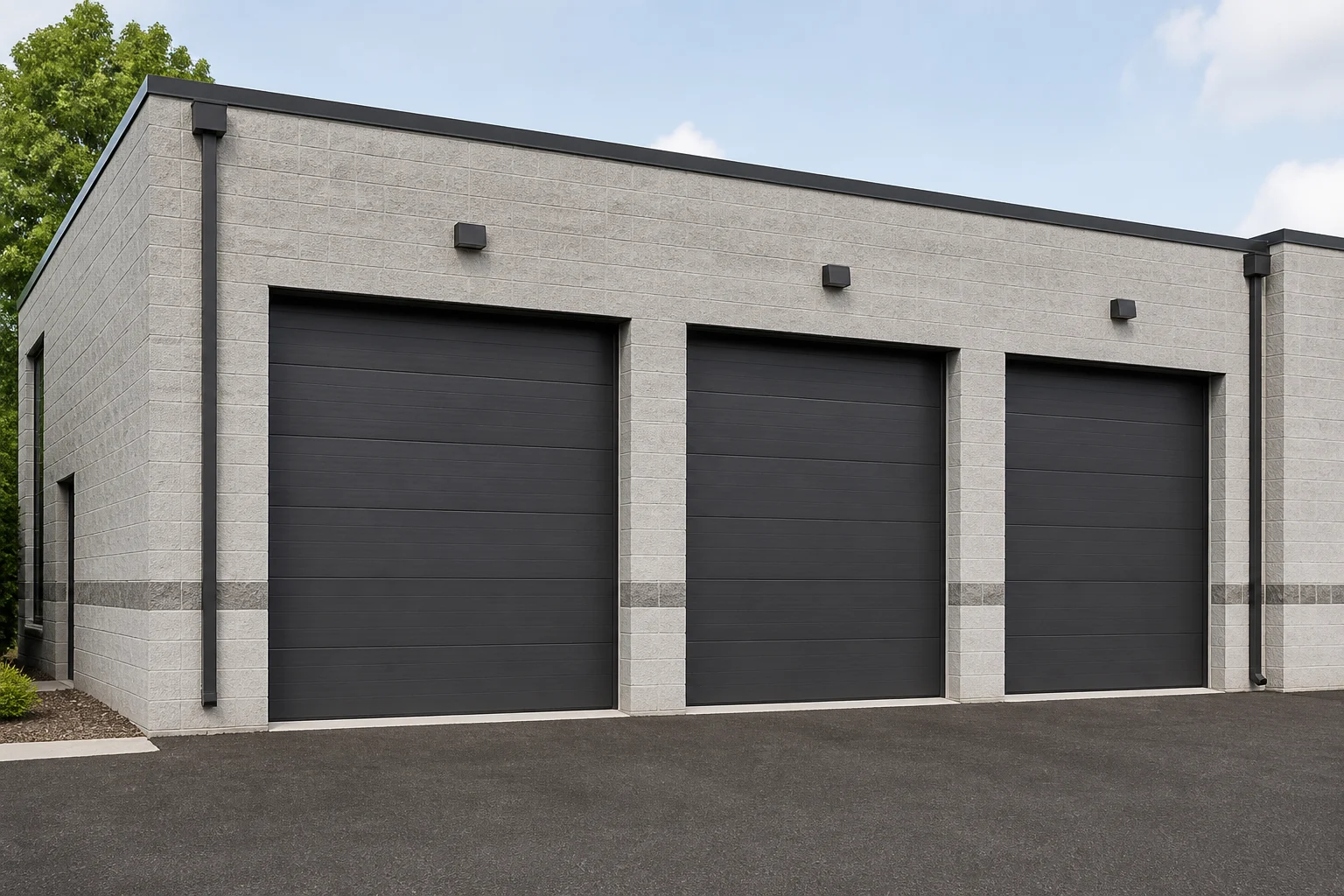
Larger openings, high-cycle use, loading areas, wind, safety, and specialty hardware need project assessment.
Explore this door style