Commercial sectional steel
Hinged sections travel on tracks and can support insulation, windows, and multiple lift arrangements.
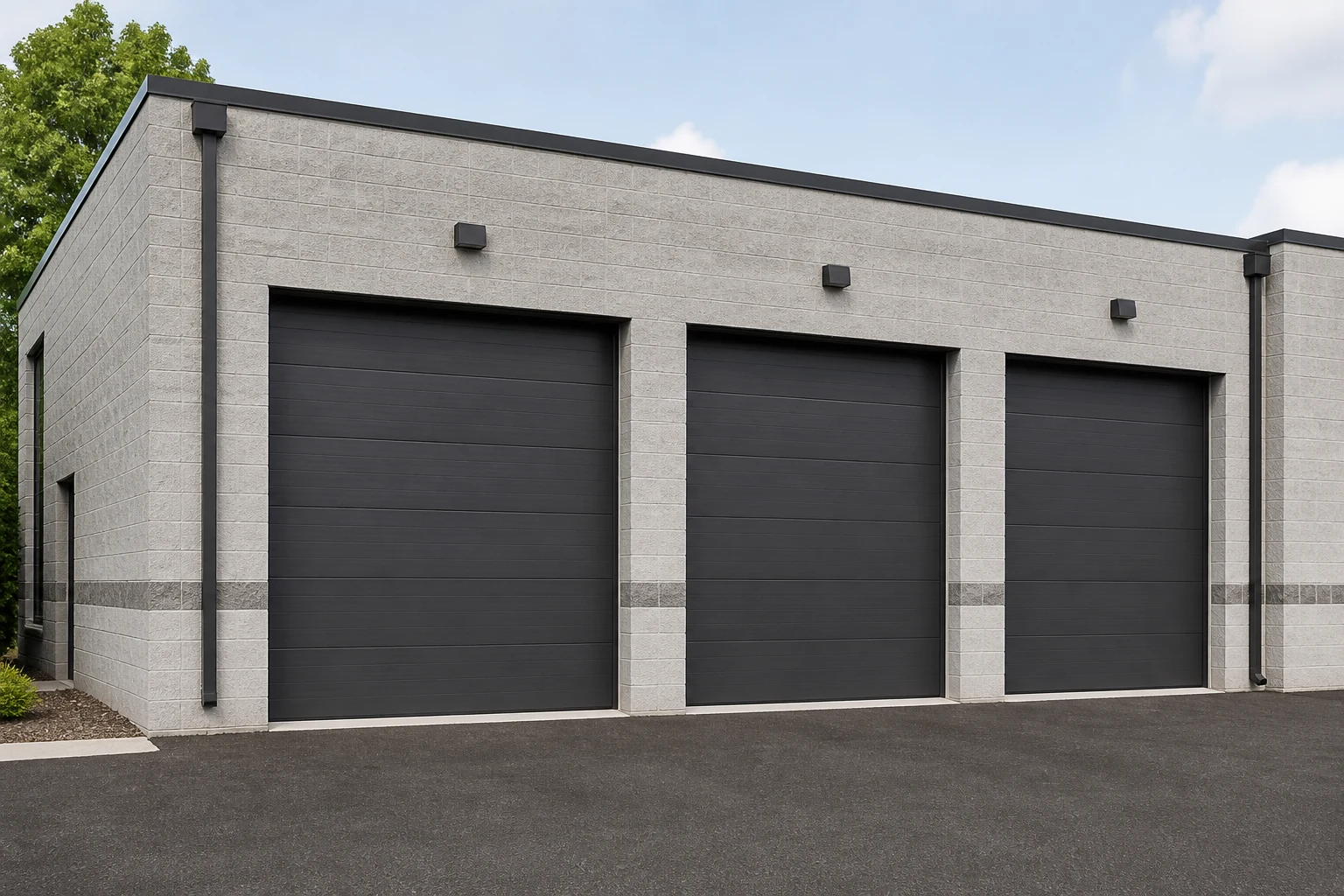
Along Petersburg Road and Indian Trail, commercial and specialty door installation in Newburg starts with older openings that leave little room overhead. A rolling steel curtain on a compact coil fits there, while buildings toward Fern Valley can take a sectional door.
Older Newburg openings with little room overhead suit a compact rolling steel coil.




Commercial Systems Explained
Commercial overhead doors are built for openings that work harder than a home garage, such as warehouses, service bays, shops, fleet buildings and loading docks. They come in larger sizes, heavier construction and higher cycle ratings than residential doors.
The main systems are insulated sectional doors, rolling steel doors that coil above the opening, and aluminum full-view doors for showrooms and service areas. Operators, controls and safety devices are chosen for how often the door runs.
Every commercial door is quoted from a site visit. In Louisville, Lexington and Northern Kentucky, we document the opening, structure, clearances, traffic and power, then schedule the installation with your team.
Door Families
Hinged sections travel on tracks and can support insulation, windows, and multiple lift arrangements.
Interlocking slats coil above the opening for security and compact overhead storage.
Aluminum and glazed sections create visibility for service, showroom, and interior applications.
Purpose-built systems address speed, cycles, fire, impact, airflow, security, or other operating needs.
Common Applications
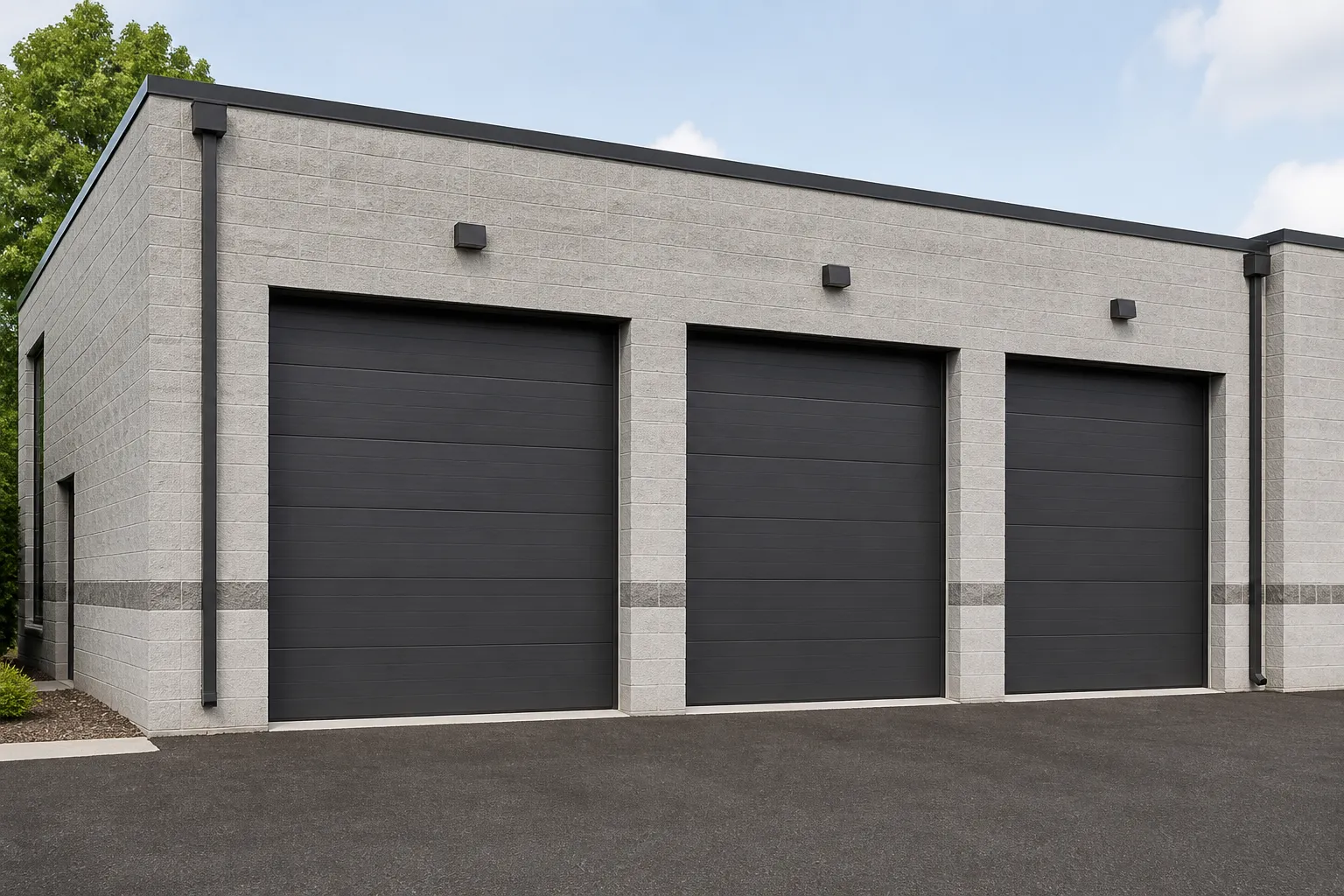
A practical choice for shops, warehouses, loading areas, and service facilities.
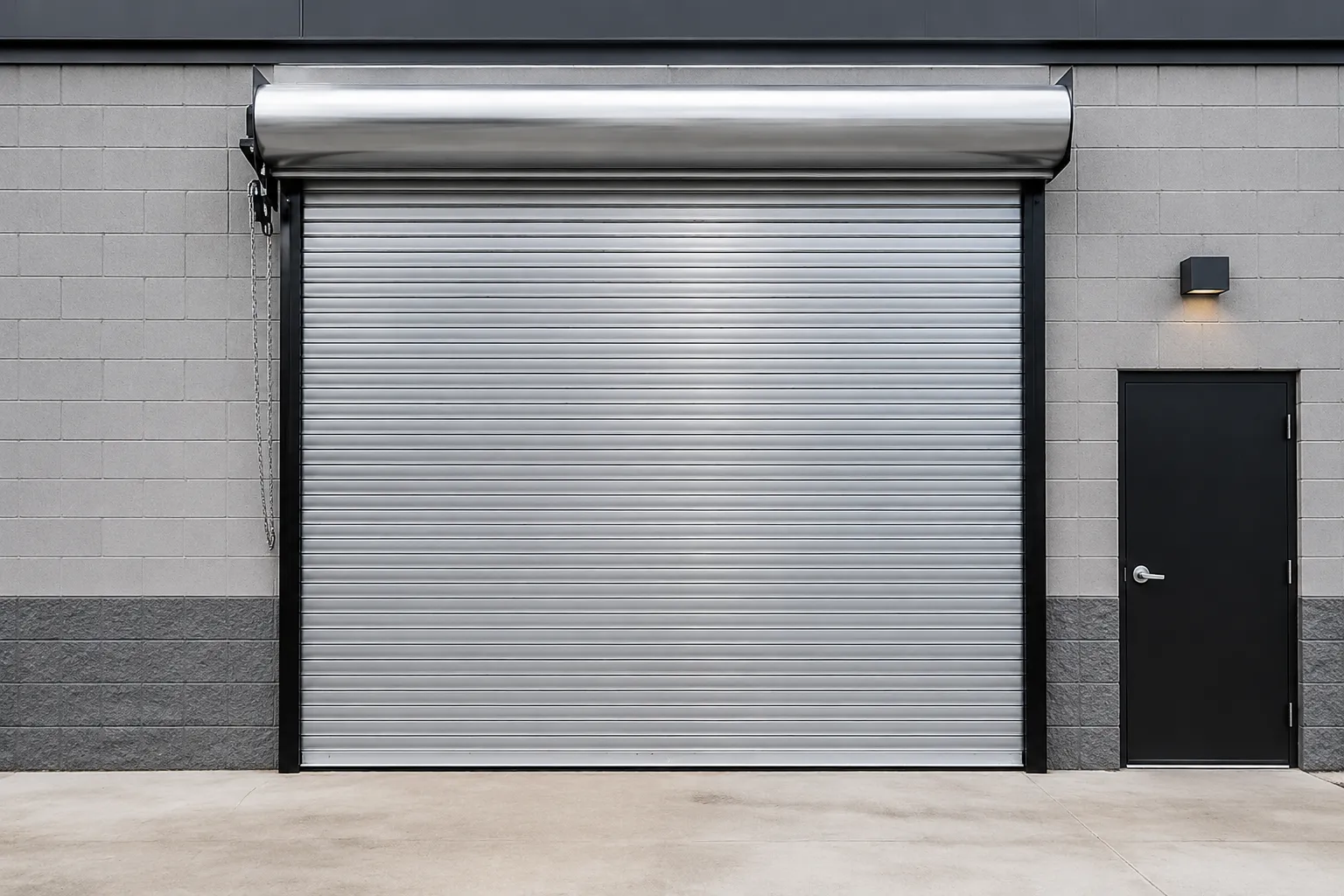
A compact coil system for security and openings where horizontal track is undesirable.
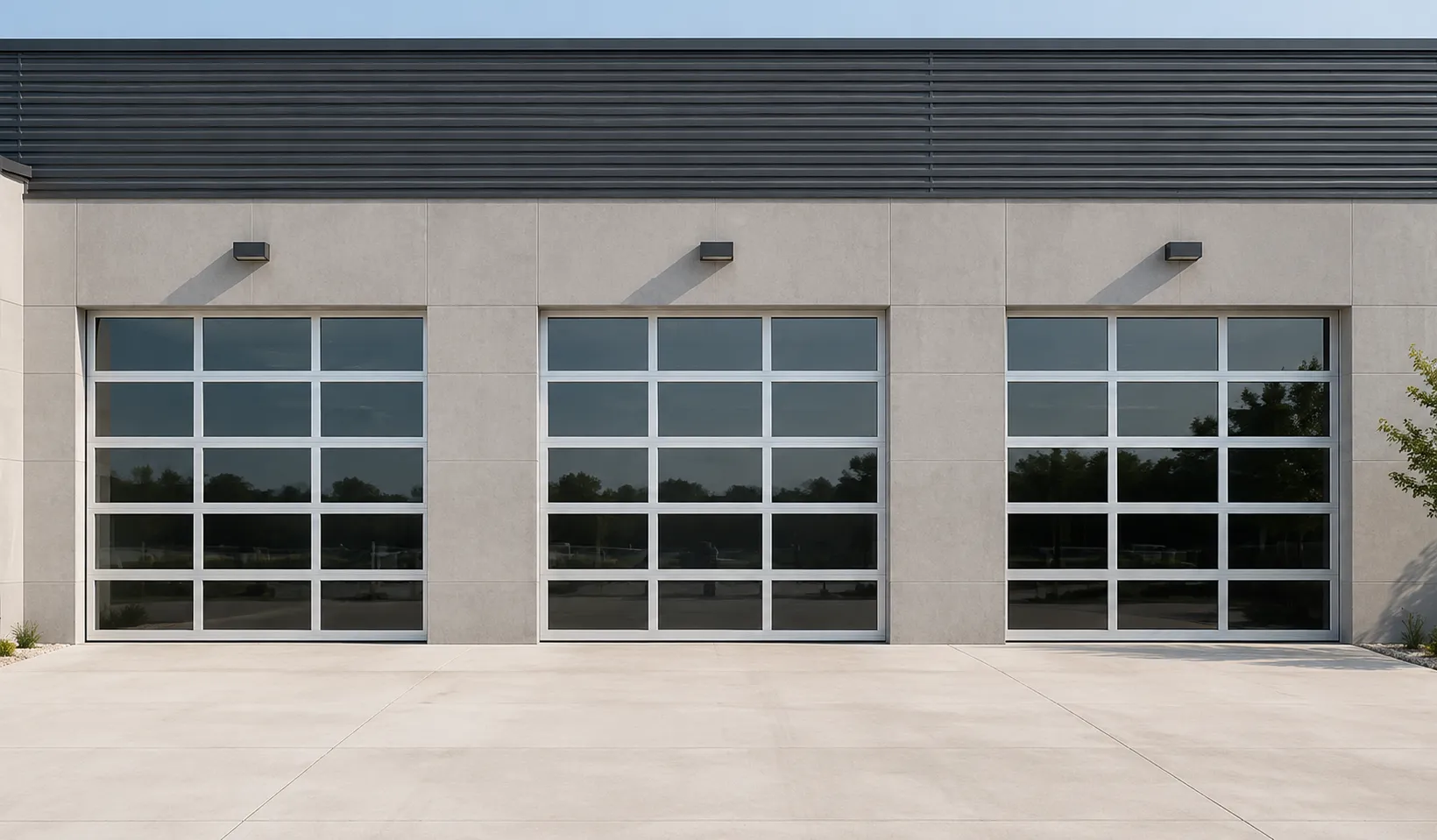
Broad glazing supports visibility and daylight in showrooms and automotive bays.
Finishes and Materials
Bright, simple commercial finish.
Common neutral for industrial buildings.
Warm neutral for masonry and metal buildings.
Dark contemporary service-bay finish.
High-contrast architectural option.
Selected sectional, rolling, and aluminum systems offer project-specific finishes.
Before You Specify
The same opening needs different doors based on cycles, speed, wind, security, temperature, and traffic.
Cycles, speed and traffic set the door.
Speed and design-cycle life answer different questions and must be matched to peak and annual use.
Match speed and cycle life to real use.
Track, coils, hoods, operators, sprinklers, lights, HVAC, lifts, and structure compete for clearance.
Tracks, hoods and HVAC share clearance.
Protection, fire interfaces, egress, wind, electrical, permits, and AHJ review can change the assembly.
Code and permits can change the assembly.
Plan the Opening
From selection to installation
Survey openings, structure, clearances, equipment, utilities, power, traffic, environment, and controls.
Survey openings, structure and power.
Define performance and coordinate family, operator, safety, code, electrical, drawings, and responsibilities.
Define the door, operator and safety.
Install the approved door, counterbalance, tracks or guides, operator, controls, seals, and protection.
Door, operator and controls installed.
Commission travel and safety, train users, deliver documents, and establish maintenance needs.
Commissioned, users trained, docs delivered.
Beside Newburg, the older Petersburg settlement was built out along Petersburg Road and Indian Trail. Most of what stands there went up decades ago. On an older building, a wide opening may leave little room overhead, so a rolling steel curtain on a compact coil is often the answer. A building toward Fern Valley with headroom to spare can take a sectional or high-speed door instead.
The opening decides a specialty door first, and its use decides the rest. A sectional door needs clear room above the header for its tracks. A high-speed door earns its place where forklifts pass often into a cooled room. Counter doors lock a service window at closing. Fire doors close on their own through a tested release. Springs and operators are sized once the door itself is settled.
Service area coverage
Local ZIP: 40218
Commercial Door FAQ
Commercial and specialty doors get quoted site by site. The complete price comes from the opening, structure, environment, access and code requirements. Speed, duty cycle, controls, operator, safety devices and commissioning scope go into it too.
Product lead time comes first. The site must be ready, with electrical and control work done and equipment able to get in. Permits or code coordination can matter too. Once you approve the scope, we confirm the timing for your team.
Coverage comes from us and from the manufacturers. The door, glass, finish, operator and hardware you select carry the applicable manufacturer warranties. Our own one-year warranty covers the installation labor. We review all of those terms before you place the order.
Think about what goes through that opening every day. How often does it open? How big is the traffic using it? Then decide what the space needs in insulation, security and visibility, and check your headroom. Put together, that tells you if you need a sectional, rolling steel or specialty door, and which operator suits it.
Rolling steel doors coil up into a hood mounted above the opening, so they save ceiling space and add security. The trade-off is the room you need for the coil, guides and brackets. Sectional doors move on tracks and insulate well, and they're available with windows or full-view aluminum sections.
Yes, you do. A door that cycles many times a day goes through its operator parts, rollers, cables and springs sooner than a home garage door would. Scheduled inspections, lubrication and safety-device testing let you find worn parts before they shut the door down, and your work with it.
They're not. High-cycle describes a door whose springs and hardware carry a rating for many more openings in its lifetime. High-speed describes a door built to open and close rapidly, which reduces drafts and wait times. Certain commercial doors do both.
Tally the open-and-close cycles on a normal day and again on your busiest days. Multiply across a year, then add an allowance for growth. Size your springs, operator and maintenance plan for the number you end up with.
No-obligation consultation
Keep exploring
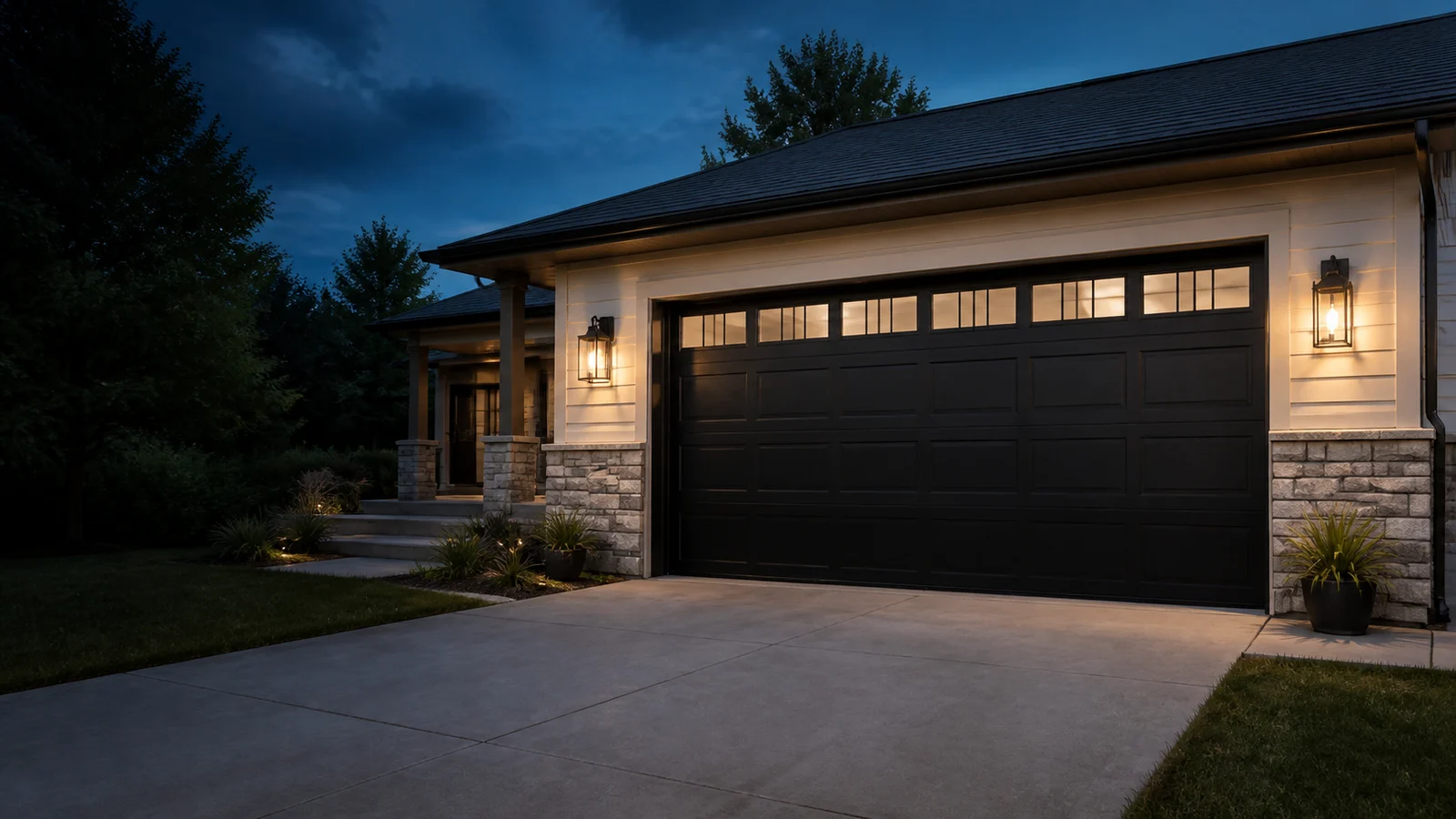
Durable, low-maintenance garage doors with flexible options for style, insulation, and budget.
Explore this door style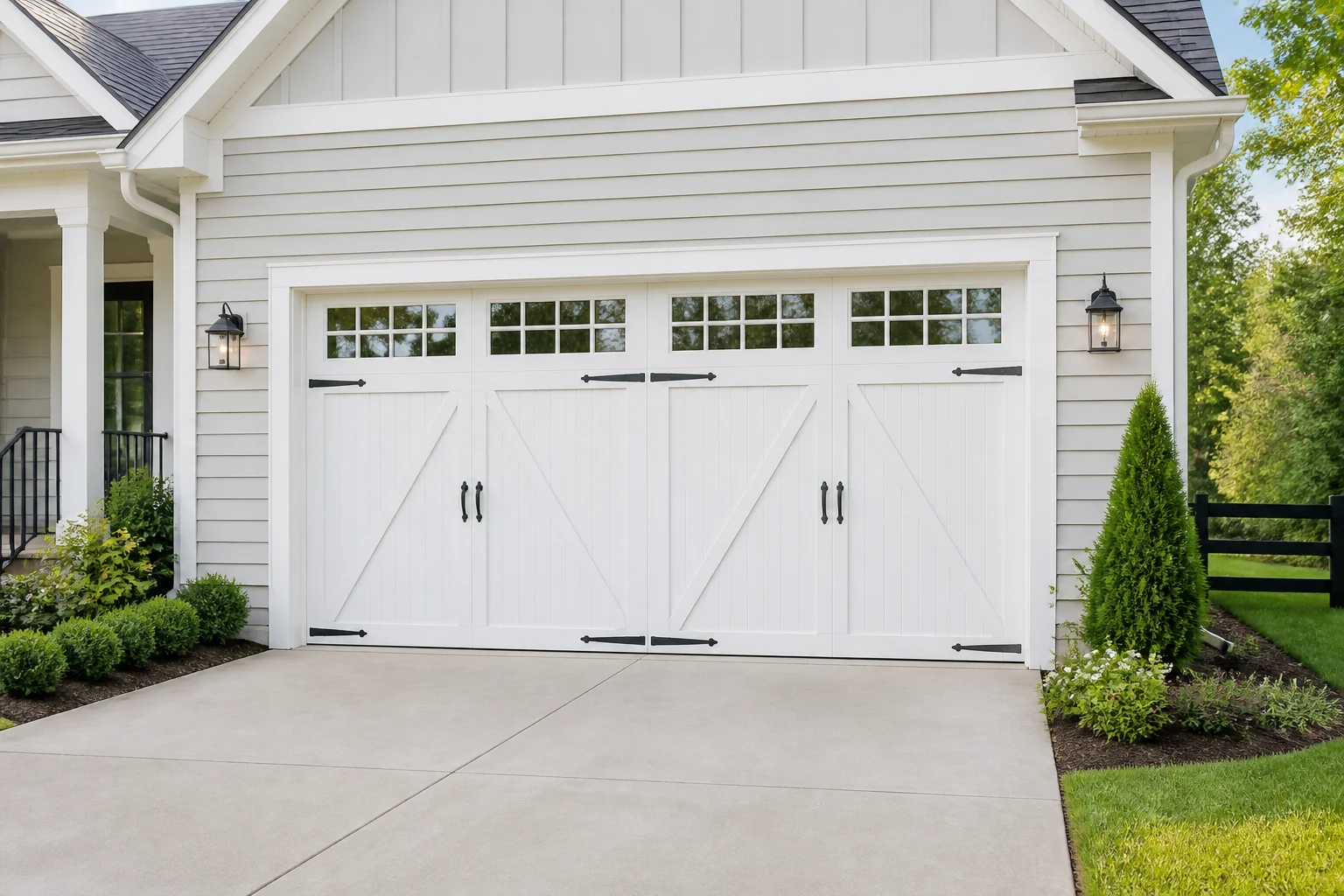
Stamped or overlay designs create a swing-door look while operating as a sectional overhead door.
Explore this door style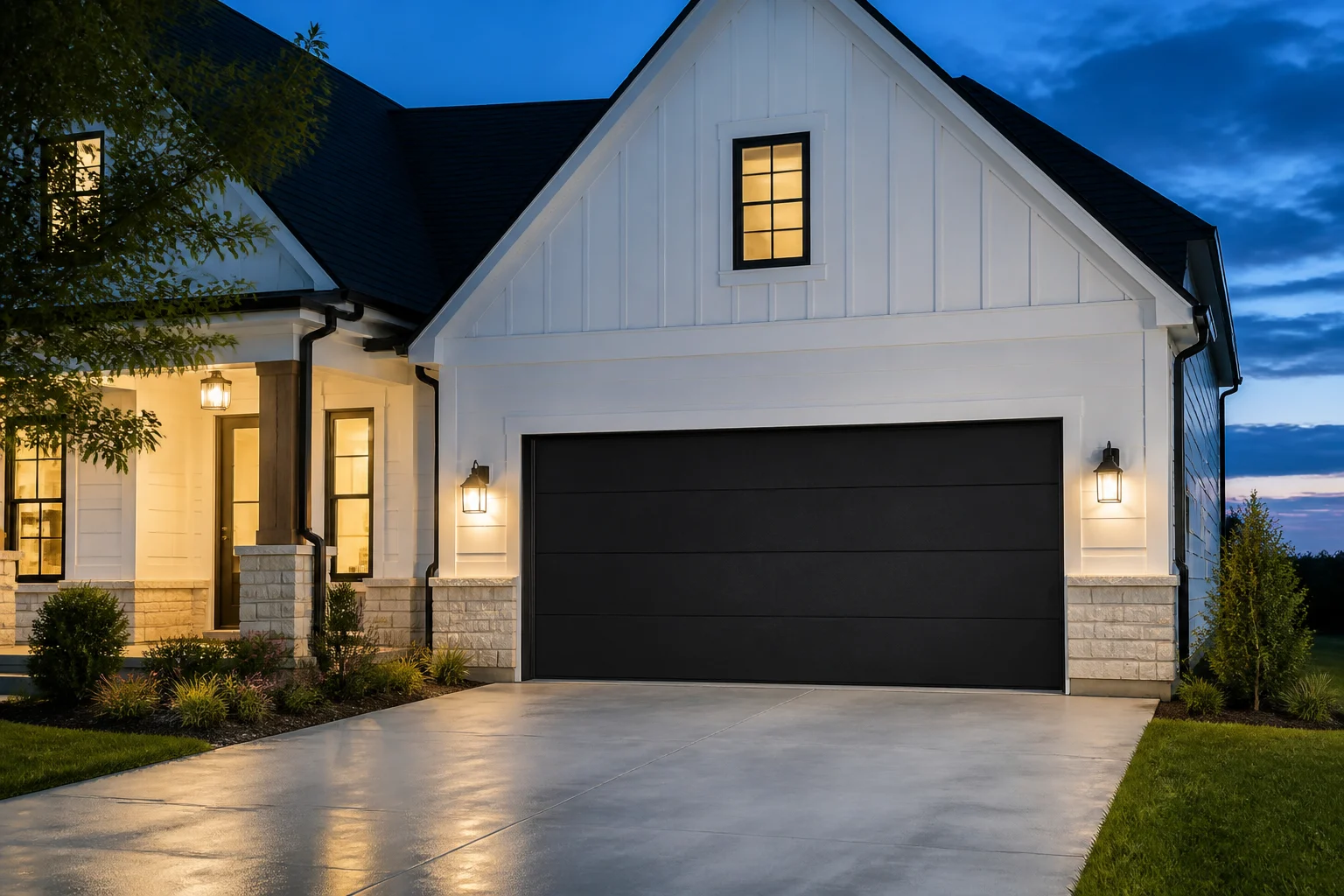
Flush faces, subtle grooves, plank lines, dark finishes, and asymmetric glass suit modern elevations.
Explore this door style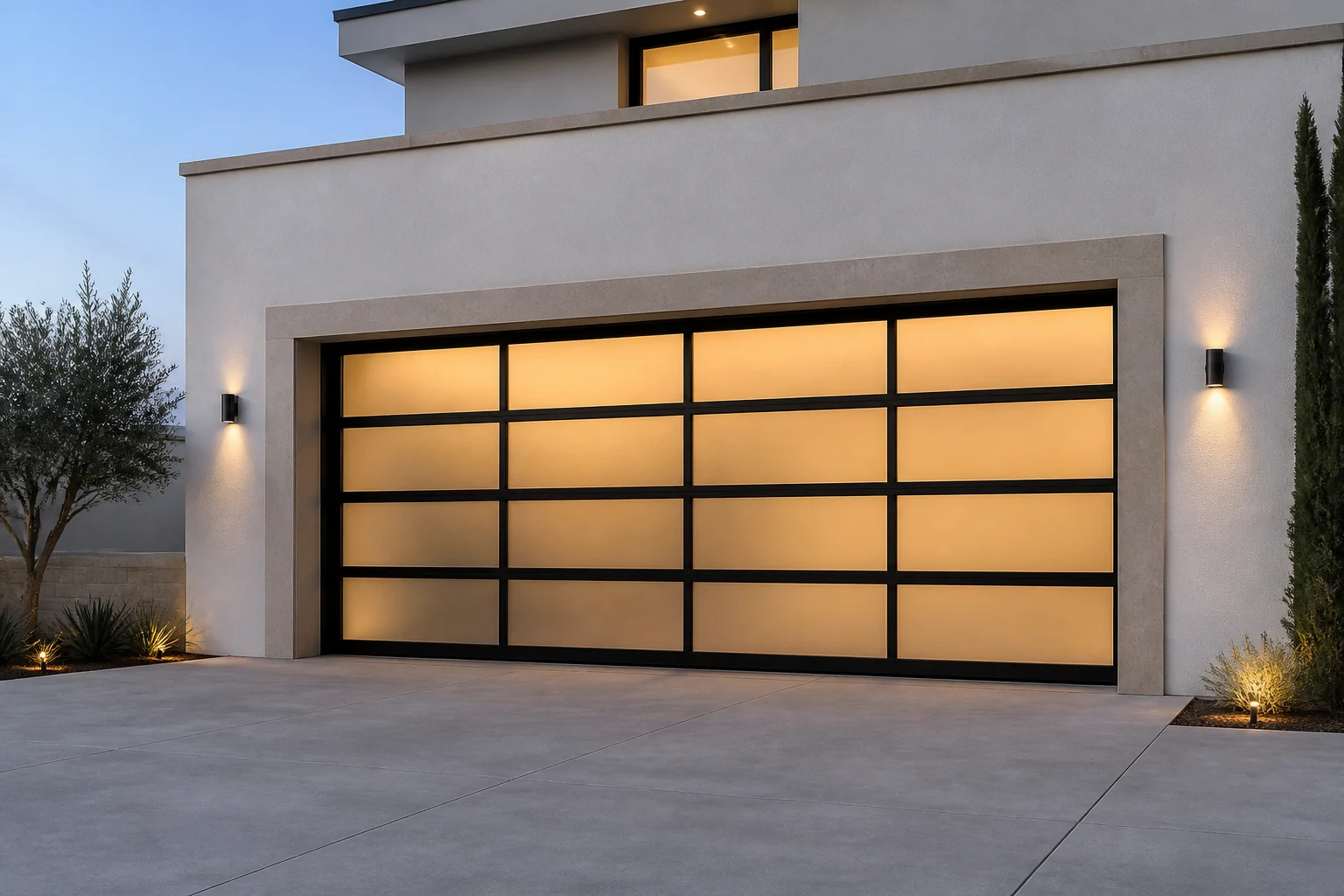
Aluminum frames and broad glass sections maximize light and create a distinctive architectural feature.
Explore this door style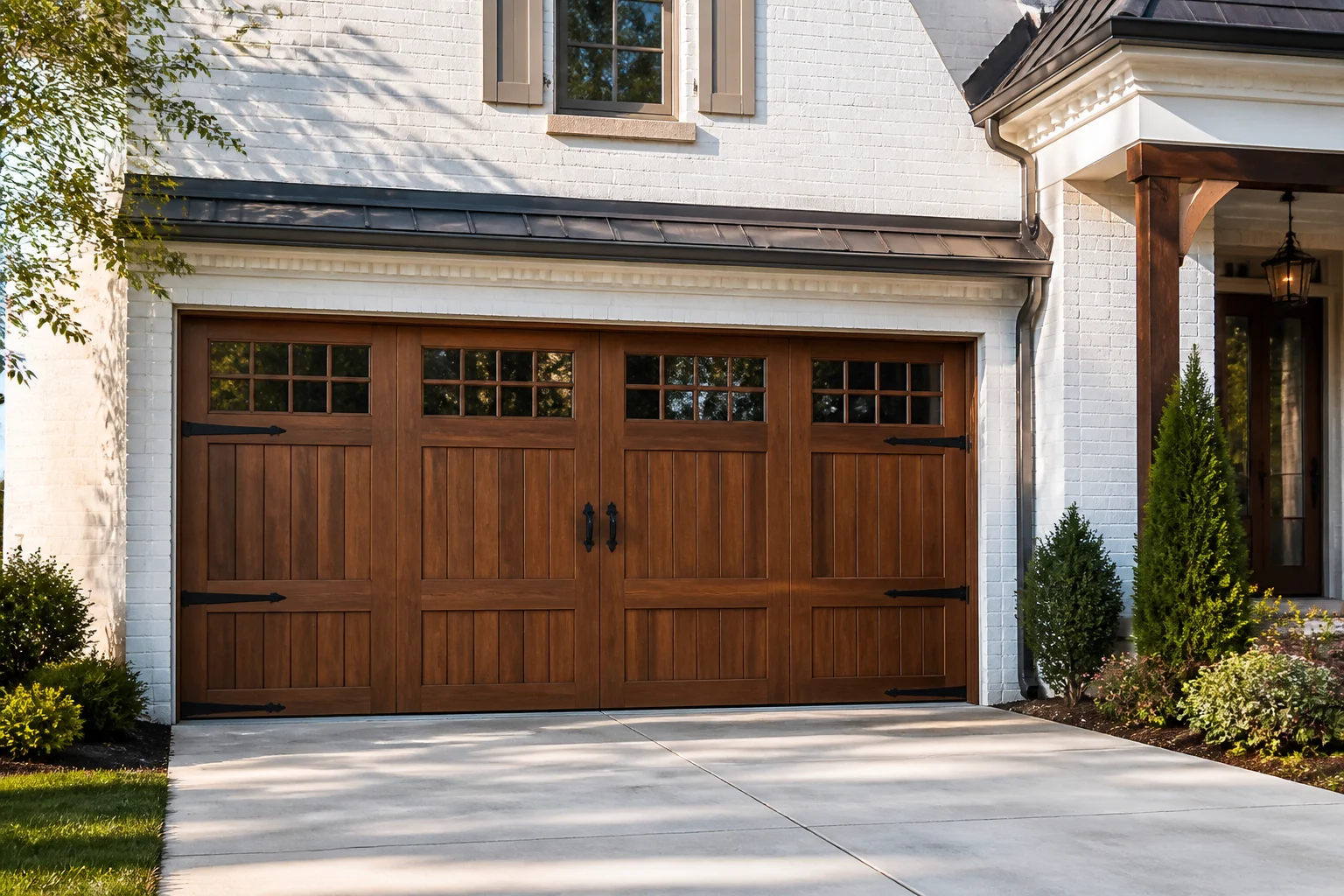
Printed, embossed, composite, and fiberglass faces offer wood character with different care and weight.
Explore this door style