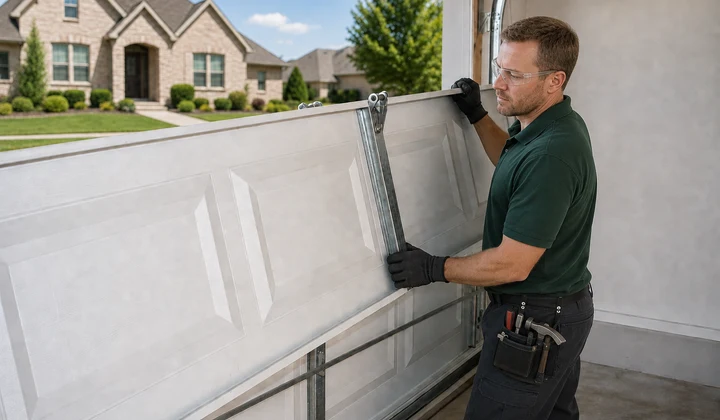
Section replacement
Best when the damage is isolated
- One section is damaged
- The door and hardware remain serviceable
- A compatible section is available
- The expected finish match is acceptable
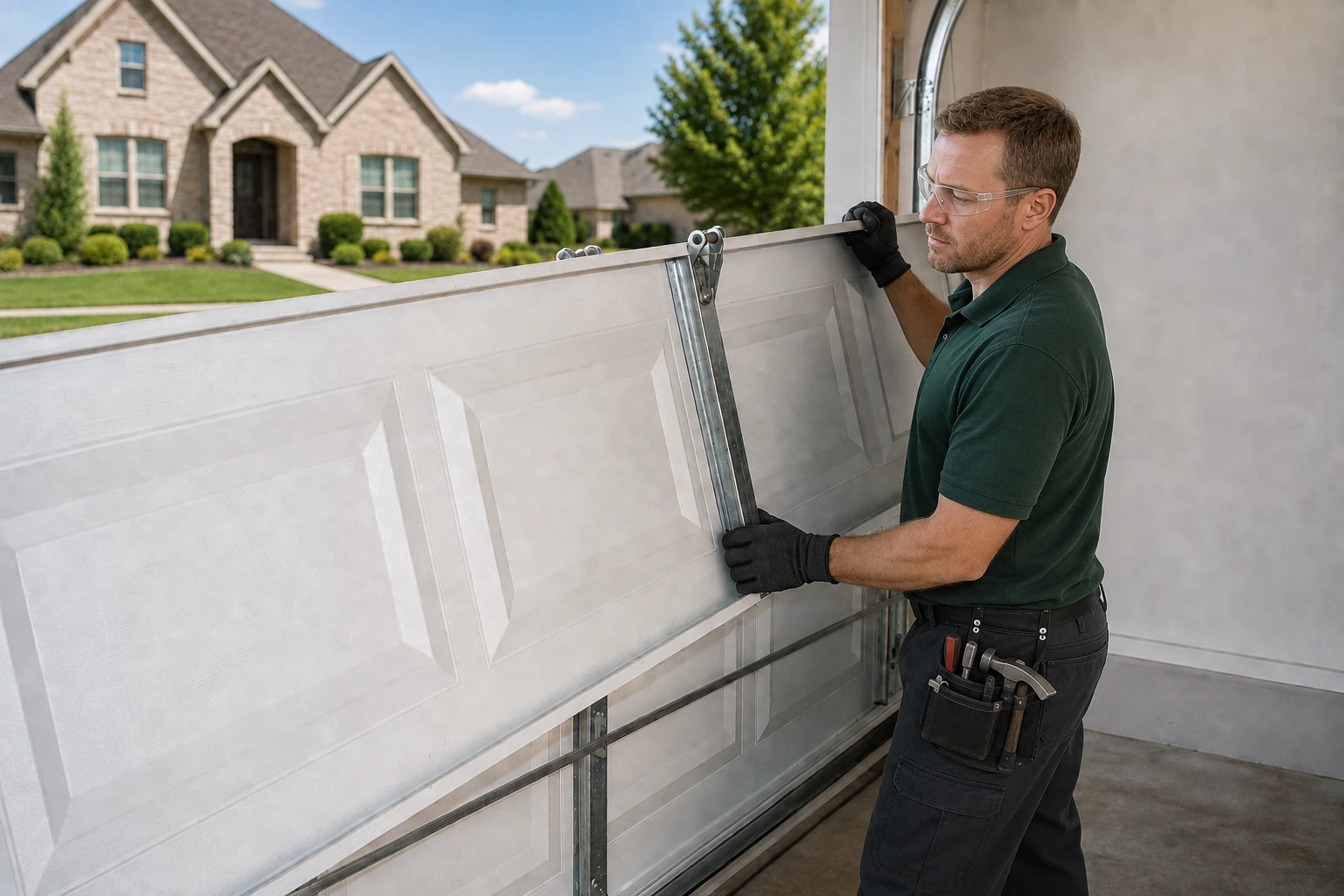
Panel matching · Structural inspection · Clear options
An older door in the Main Street historic core may be a retired model, which makes garage door panel replacement in Middletown a matching task first. Newer homes toward Crosby Middle School are more likely to have a section still in production.
Garage door panel replacement in Middletown fits historic Main Street homes and newer builds.




Start with the damage
Cosmetic dents can sometimes wait. Structural damage, loose hardware, or uneven movement should be inspected before the door is used again.
A vehicle, mower, or heavy object left a deep dent, crease, or split in one section.
The damaged panel rubs, pulls away at the joint, or no longer closes evenly.
Gaps around the section allow air, water, debris, or pests into the garage.
The panel bends while the door moves or no longer stays square between the tracks.
Hinges, struts, or opener hardware are pulling away from damaged material.
The door travels crooked, binds, shakes, or makes new popping and scraping sounds.
Safety first
Our assessment
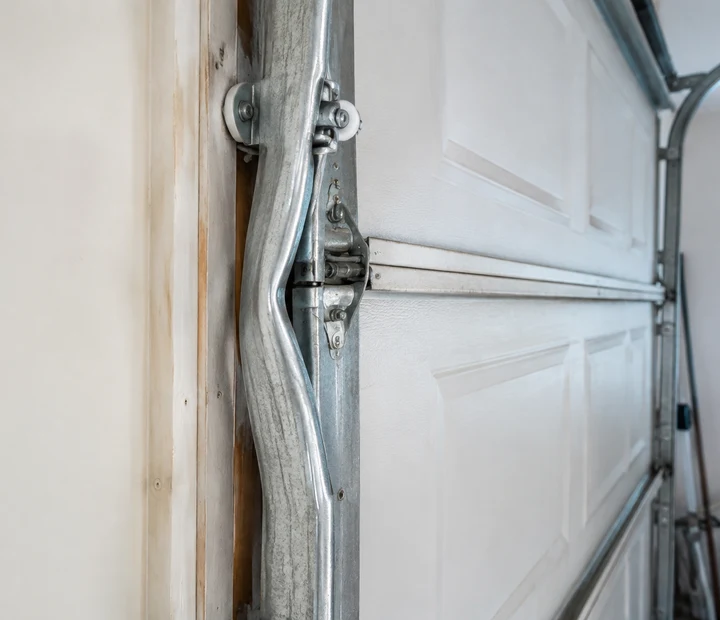
We check the damaged section, hinges, struts, rollers, tracks, cables, springs, seals, and opener attachment points.We check the section, hardware, tracks, cables and springs.
Labels, stamps, measurements, profile, insulation, finish, and panel height help us research a compatible replacement.Labels and measurements identify a compatible section.
You receive a clear explanation of section replacement versus a complete new door before special-order parts are approved.You see both options before special-order parts are approved.
We fit the replacement, transfer or update hardware, balance the door, and test full travel and safety reversal.We fit the section, balance the door and test its travel.
What has to match
Repair vs. replacement
We show you both options when both are realistic—without pushing a full door when a sound panel repair will do.
Section replacement
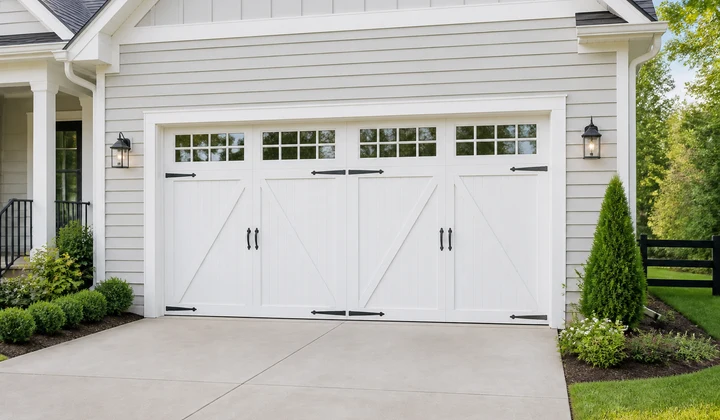
Complete replacement
Why Derby Strong
Panel work is only successful when the replacement fits the structure, balances correctly, and makes financial sense for the age of the door.
Customer experiences
From South Madison Avenue to Crosby Middle School, many Middletown doors hang on homes built in recent decades. A newer door can often be matched with a section still in production. An older door in the Main Street historic core may be a model no longer made. A dented panel shows plainly from the street either way, so matching comes first.
We look for the maker's label on the inside of the door to identify its model. A new section has to line up with the others in height, thickness and panel pattern. Color is matched to the existing finish as closely as the maker allows. The impact that dented the panel may also have bent a hinge or knocked a roller loose. We replace those parts while the section is out. The door then runs through its full travel to confirm everything lines up.
Service area coverage
Local ZIP: 40243
Useful answers
Still unsure whether the section can be matched? Send the photos you already have and we’ll help with the next step.
Request a callbackOften, yes. Replacing one section makes the most sense when the damage is isolated and the rest of the door and hardware are sound. A compatible section also has to be available. Before we recommend it, we inspect the whole door.
On an older door, possibly. The finish has weathered, so the new section may show some color difference. Otherwise, we match the manufacturer, construction, finish, embossing, height, model and section profile as closely as possible. Before ordering, we explain what you'll see.
Because sometimes a repair isn't good value. Several sections may be damaged. Compatible panels may be discontinued. The door may sag or rust. Hardware and structure may be failing throughout. In those cases, a complete door can be the better buy.
Not when the section is buckled or rubbing the track. The same goes for a section that's pulling away from a hinge or making the door travel crooked. Further use can damage the springs, opener, tracks, rollers or cables.
First we gauge the depth of the dent, its position on the door and how the section flexes. A small, shallow dent in steel may come out. If we find a bent end stile, a crease or a split skin, that damage tends to come back or weaken the section. It can also make the door bind at the bend in the track. Last, we tell you what's better value: a repair, a matched section in place of the old one, or a new door.
Stand back for one photo of the whole door, then move in for a close one of the damaged section. Photograph any manufacturer label too, provided you can see it safely. If the door's unstable, don't climb on it or run it for the shots.