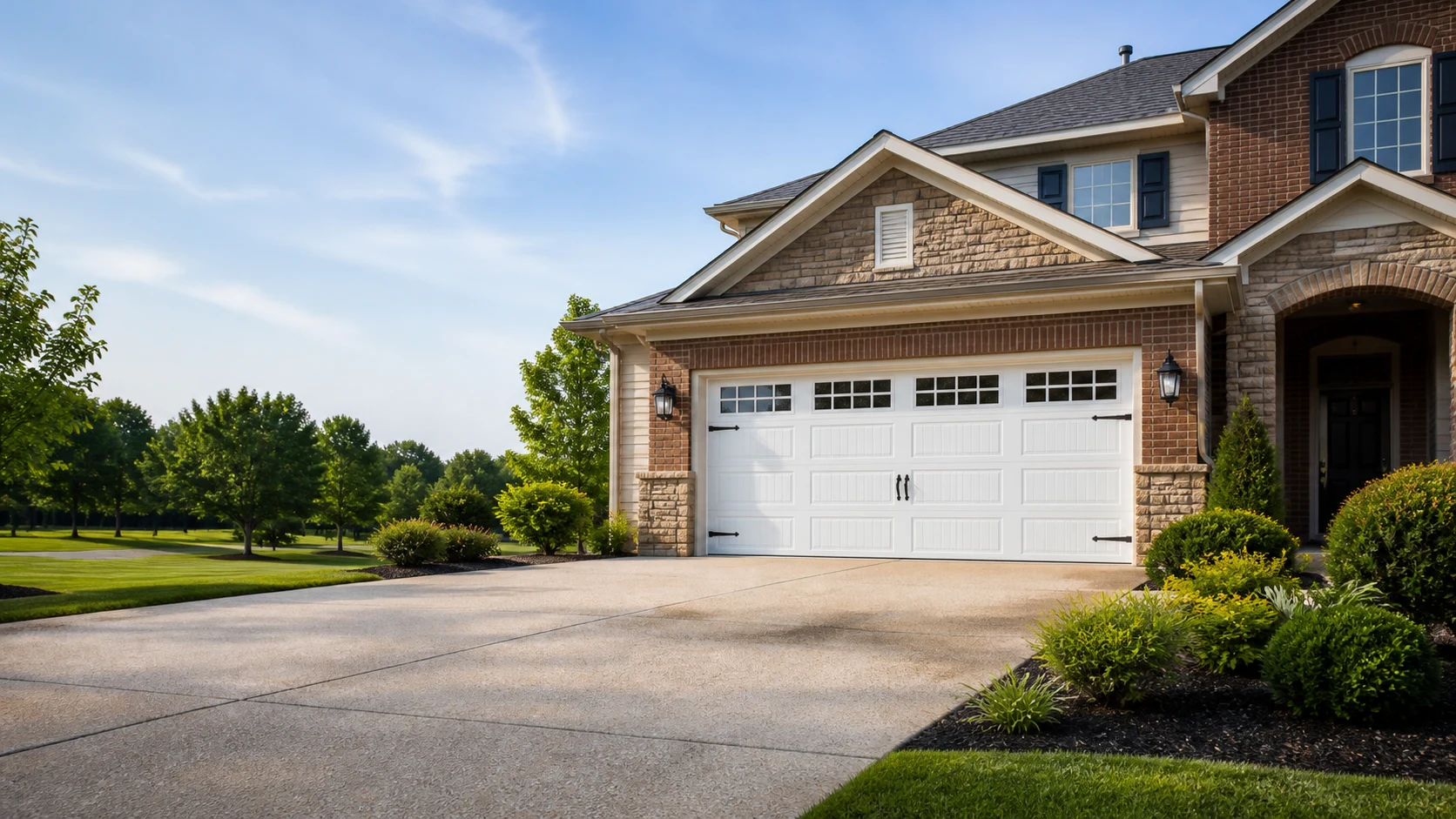
White sectional garage door closed tight against a Kentucky driveway

Garage Door Bottom Seal and Weatherstrip Replacement in Hillview, KY

In Maryville, Lone Acres and Overdale, many Hillview garage doors still run on seals as old as the house. Our garage door weatherstripping service replaces the shrunken bottom seal and closes gaps at the corners.

We replace shrunken bottom seals on older Hillview garage doors.

Get Your Free Weather Seal Quote

Bottom seal, perimeter, and threshold • No-obligation quote

Step 1 of 2
Required field
Required field
Required field

Seal check

6 Signs Your Garage Door Seals Have Failed

  • 01
    Daylight under or around the closed doorStand inside with the door closed and the lights off. Light at the floor means the bottom seal has flattened, split, or no longer reaches an uneven slab; light at the sides or top means the perimeter stop molding has pulled away or hardened.Light at the floor or edges means a seal has failed.
  • 02
    A cracked, brittle, flattened, or torn bottom sealVinyl and rubber harden with sun, salt, and freeze-thaw cycles. A seal that no longer springs back, shows splits at the ends, or has worn through to the retainer is no longer sealing.A hardened, split or worn-through seal no longer seals.
  • 03
    Water, leaves, or grit coming in at the floorA seal that lifts on one side or a slab that has settled lets wind-driven rain and debris under the door. Puddles near the edge, damp cardboard, or a tide line on the concrete are the usual tells.A lifted seal or settled slab lets rain and debris in.
  • 04
    Drafts, cold floors, or a garage that swings with the weatherThe bottom and perimeter seals are the largest gap in the garage envelope. When they fail, an attached garage loses conditioned air, and the rooms above and beside it feel it.Failed seals let conditioned air out of the garage.
  • 05
    Mice, insects, or spiders finding their way inA quarter-inch gap is enough for a mouse. Chewed seal ends and droppings along the door line point to an entry at the bottom corners or where the seal meets the jamb.A quarter-inch gap is enough for a mouse.
  • 06
    The retainer or stop molding is bent, loose, or rottedA bottom seal is only as good as the aluminum or PVC retainer that holds it, and perimeter weatherstrip depends on sound jambs. Damaged retainers and rotted wood stops need correcting, not just a new strip.Bent retainers or rotted stops need repair, not just a strip.

What to do now

Do the light test tonight. Then tell us what you saw.

Close the door, turn off the garage lights, and look along the floor and up both sides. Note where the light shows: bottom, one corner, the sides, or the top, and whether the floor looks uneven. That tells us whether you need a bottom seal, perimeter stop molding, a threshold, or all three, and we can usually bring the right profile on the first visit.

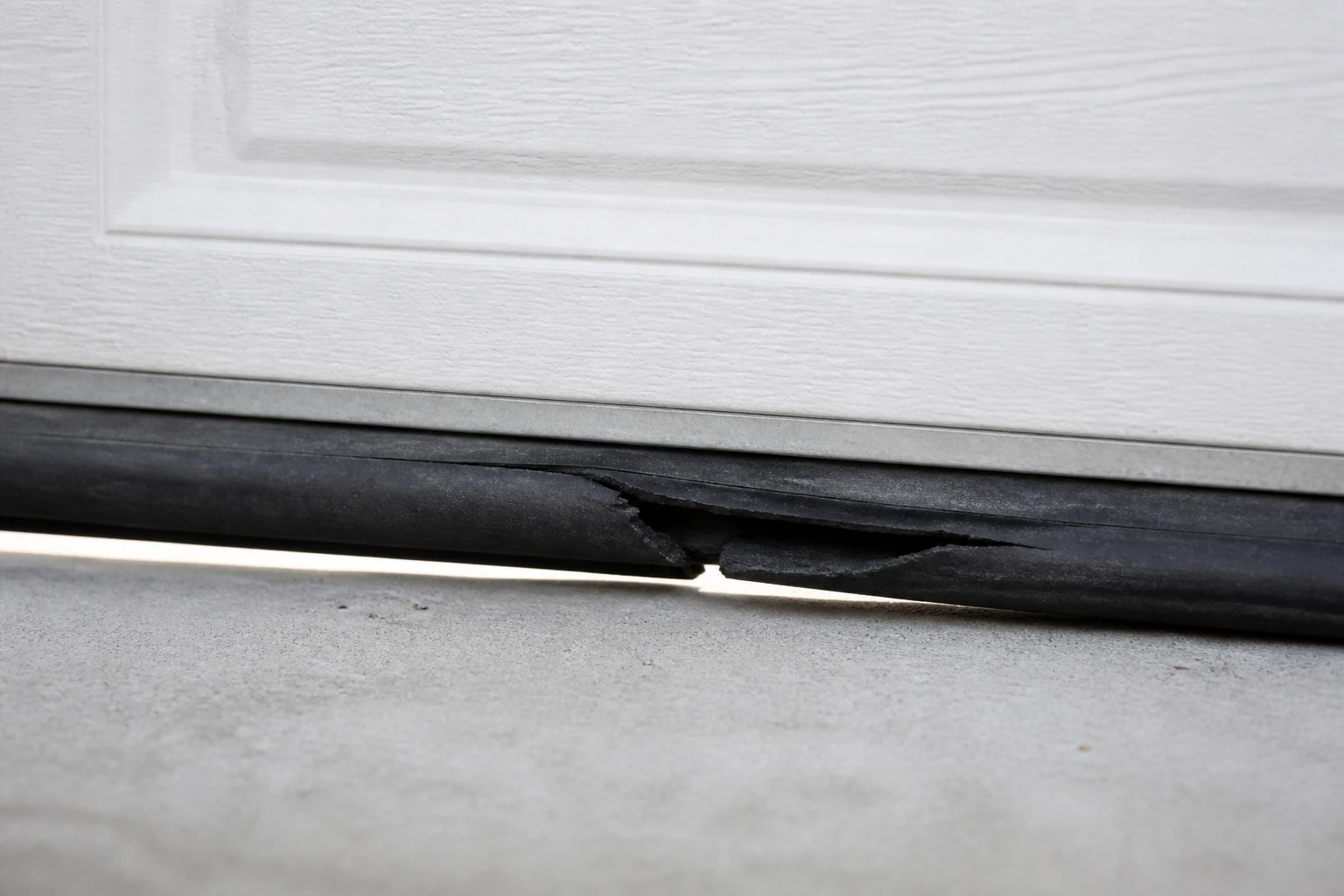
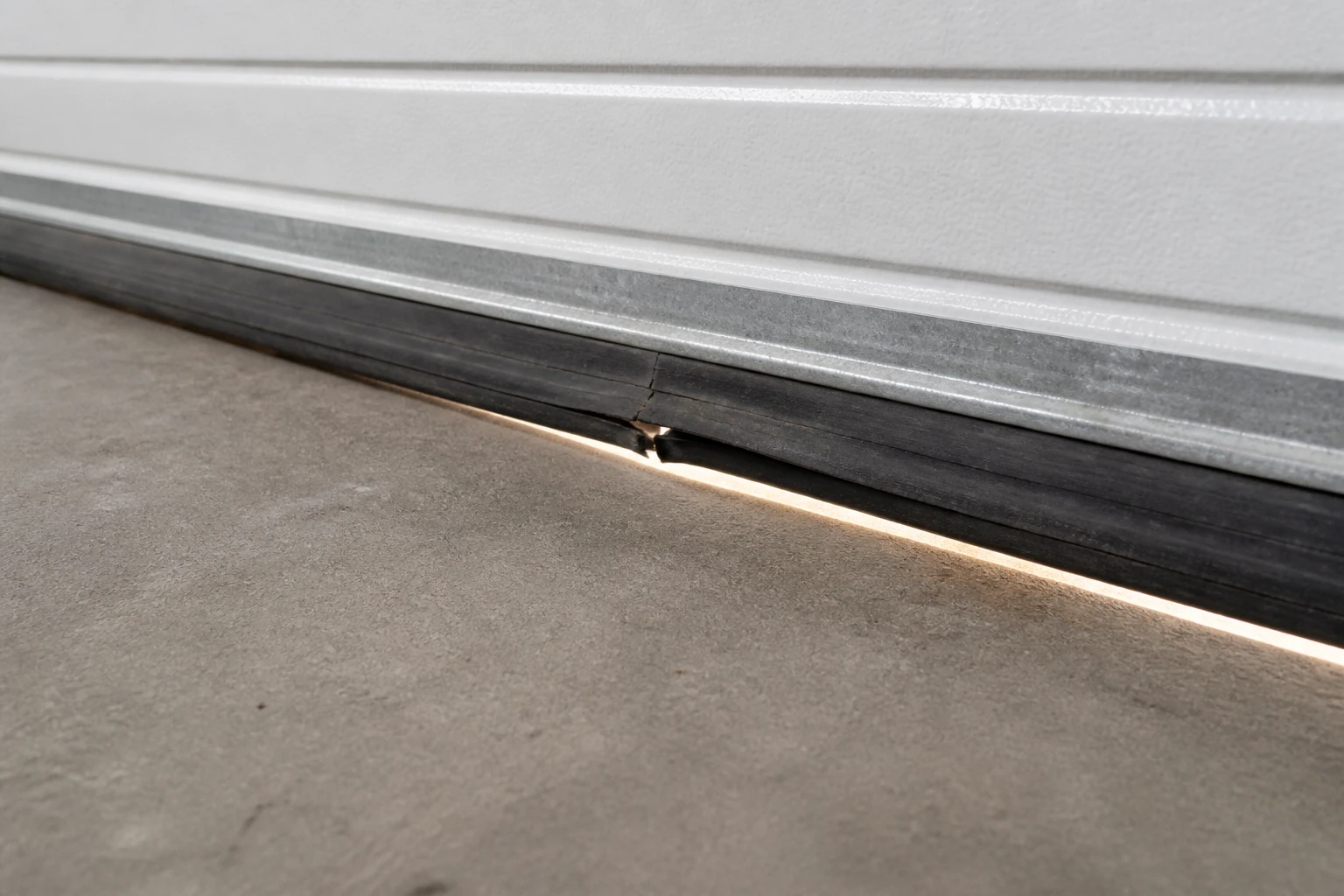
Split, brittle garage door bottom seal with daylight showing through
A split, hardened bottom seal lets light, water, and pests in at the floor. It is the most common seal failure we see.

Customer reviews

Kentucky homeowners recommend Derby Strong.

Understand your options

Choose the right seal for your garage

Know the seals

Bottom Seal vs. Perimeter Weatherstrip: Which One Is Leaking?

Along the floorBottom seal
Up the sides and across the topPerimeter weatherstrip
What it is A rubber or vinyl strip seated in the aluminum or PVC retainer on the door’s lower edge Vinyl stop molding with a flexible fin nailed or screwed to the jambs and header
What it stops Water, wind, grit, insects, and mice at the floor, the largest gap on the door Side and top drafts, driving rain, dust, and the rattle of the door against the stops
Sign it failed Daylight at the floor, a flattened or split strip, puddles or tide lines inside Light at the edges, a hardened or curled fin, a gap between molding and door face
Styles and profiles T-end, bead, U-shape, bulb; standard or oversized; rodent-resistant with mesh core Vinyl stop molding with fin; solid or hollow; white, brown, or color-matched
Along the floor

Bottom seal

Rubber or vinyl fitted into the retainer on the door’s lower edge.

Stops
Water, wind, grit, insects, and mice at the floor.
Replace when
You see daylight, splits, flattening, or water lines inside.
Common profiles
T-end, bead, U-shape, bulb, and rodent-resistant.
Sides and top

Perimeter weatherstrip

Vinyl stop molding with a flexible fin fitted to the jambs and header.

Stops
Side and top drafts, rain, dust, and door rattle.
Replace when
You see edge light, a curled fin, or a gap beside the door.
Common profiles
Solid or hollow vinyl in white, brown, or matched colors.

Uneven floor? That is what a threshold seal is for.Uneven floor? Add a threshold.

A raised rubber threshold bonded to the concrete gives the bottom seal something level to land on, turns water away from a slab that slopes toward the garage, and closes a low corner no bottom seal can reach. It is added to a bottom seal, not substituted for it.A bonded rubber threshold gives the bottom seal a level surface and helps turn water away. It works with—not instead of—the bottom seal.

Not sure what you have? Send a photo of the bottom corner of the closed door from inside, and a close-up of the retainer edge if you can reach it safely. We can usually identify the profile before the visit.

The complete seal

Three Seals That Close the Garage Door Envelope

01

Bottom seal with retainer

The single most important seal on the door. A compressible rubber or vinyl strip seated in the bottom retainer closes the gap to the floor against water, air, and pests. Oversized profiles handle uneven slabs; rodent-resistant versions add a metal mesh core.Closes the floor gap against water, air and pests.

02

Perimeter weatherstrip (stop molding)

Vinyl stop molding with a flexible fin runs up both jambs and across the header. It seals the side and top gaps, blocks drafts and driving rain, and keeps the door from rattling against the stops.Seals the side and top gaps and stops door rattle.

03

Threshold seal

A raised rubber barrier bonded to the concrete where the door closes. It is the answer when the slab slopes toward the garage, water tracks in under the seal, or the floor is too uneven for a bottom seal alone.A floor barrier for sloped or uneven slabs.

Seal selection

The Four Things We Match Before Fitting a Seal

  1. 01

    Retainer profile and seal style

    Bottom seals come in T-end, bead, U-shape, and bulb styles, each made for a specific retainer channel. We match the profile to your door’s retainer rather than forcing a near-fit that leaks at the ends or pulls out of the track.We match the seal profile to your retainer.

  2. 02

    Floor condition

    Many Kentucky garage slabs have settled, cracked, or sloped toward one corner. An oversized or U-shape seal fills a low spot; a badly uneven floor may also call for a threshold seal bonded to the concrete.We check the slab for slopes and low spots.

  3. 03

    Perimeter stop molding and jambs

    Vinyl stop molding with an integral flexible fin seals the sides and top. We check the fin for hardening and the jambs for rot, and set the molding so it touches the door face without dragging.We check the side and top fins and the jambs.

  4. 04

    Material for the climate

    EPDM rubber stays flexible through Kentucky winters where thin vinyl turns brittle; silicone lasts longest. Solid versus hollow trim, black versus gray, and rodent-resistant seals with a mesh core are chosen for the exposure the door sees.Flexible material, rodent-resistant where needed.

Why the ends matter: most do-it-yourself bottom seals fail at the corners, where the strip was cut flush and shrank back, leaving the exact gap a mouse or a stream of water needs. We leave extra length and fold it into the retainer at each end, then re-check the opener’s travel limit so it does not crush the thicker new seal.Corner fit matters. We fold extra seal into both ends, then check the opener so the new seal is not crushed.

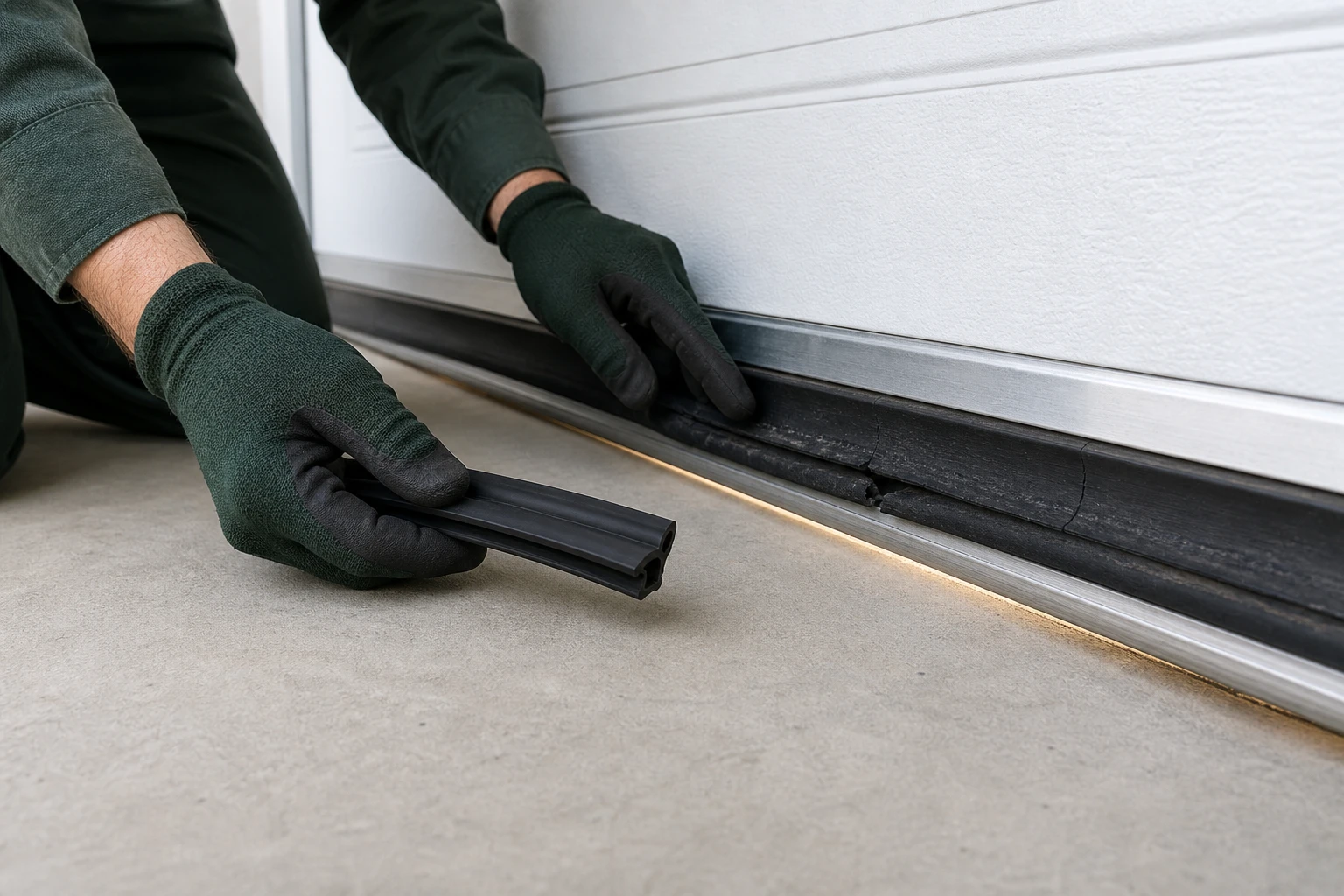
Worn garage door bottom seal with a visible gap and daylight below Worn · Gap and daylight at the floor
Technician fitting a new rubber bottom seal on a white garage door New · Seal fitted to the retainer
A flattened seal that has pulled away from the floor, and a new seal being fitted into the retainer where it can compress against the slab.

Service and pricing

What Seal Replacement Includes—and What It May Cost

Four clear stepsHow installation works

  1. 01

    Inspect the whole door edge

    The technician checks the bottom seal and retainer, the perimeter stop molding and jambs, the header seal, and the floor line for gaps, wear, rot, and water tracks.We check the bottom, sides, top, retainer, and floor for gaps or damage.

  2. 02

    Match the seal to the door

    Profile, size, and material are selected for your retainer, door width, and floor condition, so the new seal seats correctly and seals at the ends.We match the profile and material to your door, retainer, and floor.

  3. 03

    Replace, reseat, and set

    Old material is removed, the retainer or stop molding is repaired or replaced where needed, and the new seal is fitted with extra length folded at the ends rather than cut short.We remove the old material, make needed repairs, and fit the new seal.

  4. 04

    Close, test, and check the light

    The door is closed and checked from inside for daylight, the seal contact is verified across the full width, and the travel limits are confirmed so the opener does not crush the new seal.We close the door, check for light, and confirm even contact and travel.

Garage door weatherstripping across Hillview

Maryville went in over the same short stretch of years that produced Lone Acres and Overdale. Many Hillview homes built then are now decades old, and their door seals may be too. Mornings are humid for much of the year, and winters bring many freezing nights. A bottom seal in good shape keeps damp air and drafts from slipping under the door.

Old rubber hardens and shrinks, leaving gaps at the corners or along the floor. You may feel a draft or see water tracking in after rain. We replace the bottom seal to fit the door's retainer, or fit a new retainer if the old one is worn. Side and top seals are renewed so the door closes tight against the stops. If the floor leaves a gap the seal cannot bridge, a threshold strip can fill it. Finally, the door is closed to check the seal all the way across.

Service area coverage

Local ZIP: 40229

Open in Google Maps

Before you schedule

Answers to Common Garage Door Seal and Weatherstrip Questions

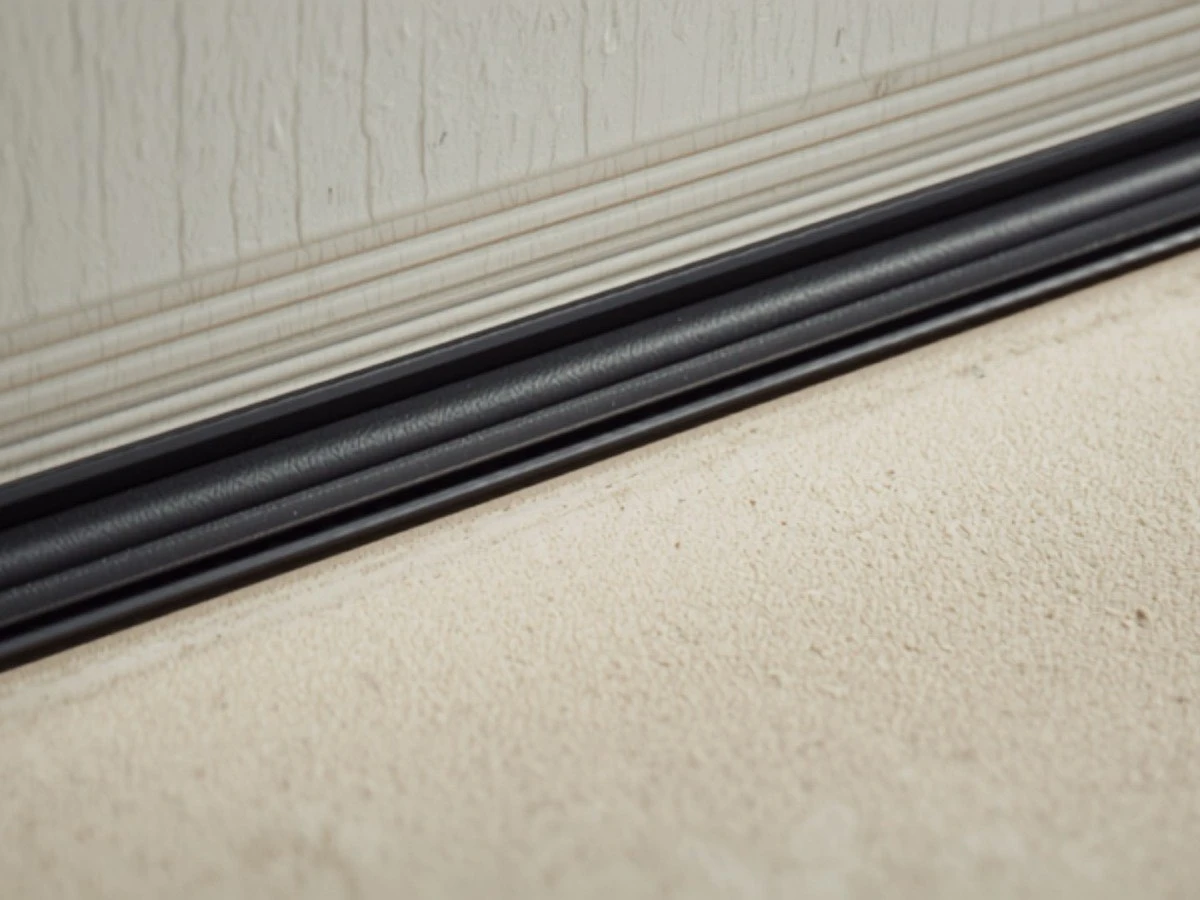
Bottom seal seated in its retainer and meeting the concrete floor
Bottom seal
T-end, bead, U-shape, or bulb; must match the retainer channel
Retainer
Aluminum or PVC channel on the door’s lower edge that holds the seal
Stop molding
Vinyl perimeter weatherstrip with a flexible fin on both jambs and the header
Threshold
Rubber barrier bonded to the floor for sloped or uneven slabs
Seals at a glanceThe four parts that close the gap around a sectional door.
01What's the price range for garage door weatherstripping in Hillview?

It depends on which seals your door needs. At the bottom, a new seal runs $95–$165 installed on a single door, or $125–$195 on a double. Vinyl stop molding around the sides and header usually costs $150–$275, and a floor-mounted threshold seal is $110–$195. A rotted jamb or damaged bottom retainer adds to the job, and you'll see that quote before we begin. Usually the best value is to get the bottom seal and perimeter done on one trip.

02T-end, bead, U-shape or bulb: which bottom seal is right for my door?

The retainer on your door decides it. The most common aluminum retainer channels take a T-end seal, which slides in. Bead seals go with the round-channel retainers on many steel doors. If your floor is uneven or the door needs a thicker profile, a U-shape or bulb seal is the one to use. Send us a photo of the retainer's edge, or a scrap cut from the old seal, and we can match it ahead of the visit.

03What lifespan should I expect from my garage door seals?

A typical bottom seal or weatherstrip lasts roughly three to eight years. Sun, road salt, freeze-thaw cycles and heavy use all shorten that. Silicone lasts longest, and EPDM rubber stays flexible longer than vinyl. Thin vinyl is the first to go brittle in cold weather. Check them each year before winter to spot a seal near the end of its life.

04Why is light still coming under my garage door after a new seal?

Usually it's the floor, not the seal. Concrete slabs settle, crack and slope, and a standard seal can't reach down into a low corner. An oversized or U-shape seal will fill that low spot. A threshold seal bonded to the floor works too, or we can use both. Where the gap is on one side alone, the door may be sitting crooked. That's a cable or track problem rather than a seal problem.

05Is a garage door bottom seal a good DIY project?

Often, yes. On a standard steel door it's one of the easier jobs, as long as the floor is level and the retainer isn't damaged. Most mistakes are simple. People buy the wrong profile for the retainer. They cut the seal flush, with no extra to fold at the ends. Or they skip re-checking the opener's travel limit, and the door crushes the thicker new seal. Some jobs need a professional: rodents finding a way in, rotted jambs, a bent retainer or water coming in regularly.

06What separates the bottom seal from the weatherstripping?

They seal different edges. Weatherstripping, also known as stop molding, is vinyl trim along both sides and the top of the opening, and its flexible fin seals against the face of the door. The bottom seal is a separate piece. It's fastened to the door's lower edge and touches the floor. Most draft and water problems come down to the bottom seal. If you hear rattles or feel drafts at the sides, it's usually the stop molding around the perimeter.

07Will mice still get past new seals?

New seals close the main way mice get in: the bottom corners and the line where the seal meets the jamb. If your garage has had rodent trouble, a rodent-resistant bottom seal with metal mesh in its core holds up to chewing. The perimeter stop molding also has to sit tight against the jambs. Even then, seals are only one part of pest control, not all of it.

08Do the door seals matter on an attached garage?

They do, because the garage shares walls, and often a ceiling, with the rooms you live in. The gap around the door is the largest uncontrolled one the garage has. Seals in good shape keep conditioned air inside and wind outside. They also steady the temperature in the garage and let an insulated door work the way it should. Of all the door's parts, they're the cheapest to get right.

09Do I want a black or gray seal, and solid or hollow?

Black absorbs more heat, so it suits cold climates. Gray keeps cooler when the sun is strong. Solid trim profiles are made for colder regions, hollow ones for warmer regions. On most Kentucky doors, the right pick is standard vinyl stop molding with a flexible EPDM seal at the bottom, in black or gray. We match the seal to how much exposure your door gets.

10Could a new seal change the way the garage door closes?

It can, because the replacement is thicker than the flattened seal coming off. When the travel limit was set to the old seal, your opener may stop the door short or reverse it. We check that limit after installation and adjust it, so the door closes all the way with the safety reversal still working.

11How can I check if my garage door seals are failing?

Close the door and look for daylight underneath or at the edges. A draft at the floor, or water and leaves blowing in, also points to worn seals, and so does a cracked, flattened or brittle seal. Mice in the garage are another common sign, since the bottom seal may no longer meet the floor.

Local help for a drafty, leaking, or pest-prone door

Tell us where the light shows. We’ll bring the right seal.

Let us know whether it is a single or double door, where you see light or water at the bottom, sides, or top, whether the floor looks uneven, and whether you have had pests. We will confirm the materials and price before work begins.

  • Single or double door
  • Light or water at the bottom, sides, or top
  • Uneven floor, pests, or rotted trim
Call (502) 619-5198

Request Weather Seal Service

Serving Hillview and nearby Louisville Metro communities. Share the essentials and we’ll call to confirm the right service timing.

Step 1 of 2
Required field
Required field
Required field

Derby Strong Garage Doors

Garage door trouble?

Talk to our local team now about a broken spring, a stuck door, an opener or a new door.

Call (502) 619-5198 Schedule online

5.0 from 306 reviews

Before you go

Pick your coupon

Choose an offer and we’ll save it with your request. Every visit includes a free safety inspection.

Choose one coupon

One coupon per household. Not combinable with other offers. Good for 30 days.