Out of balance
The door drifts, feels heavy, or slams even though it sits level.
- Likely cause
- Springs have lost tension or do not match the door’s weight.
- Repair
- Set spring tension, or replace springs that can no longer hold.
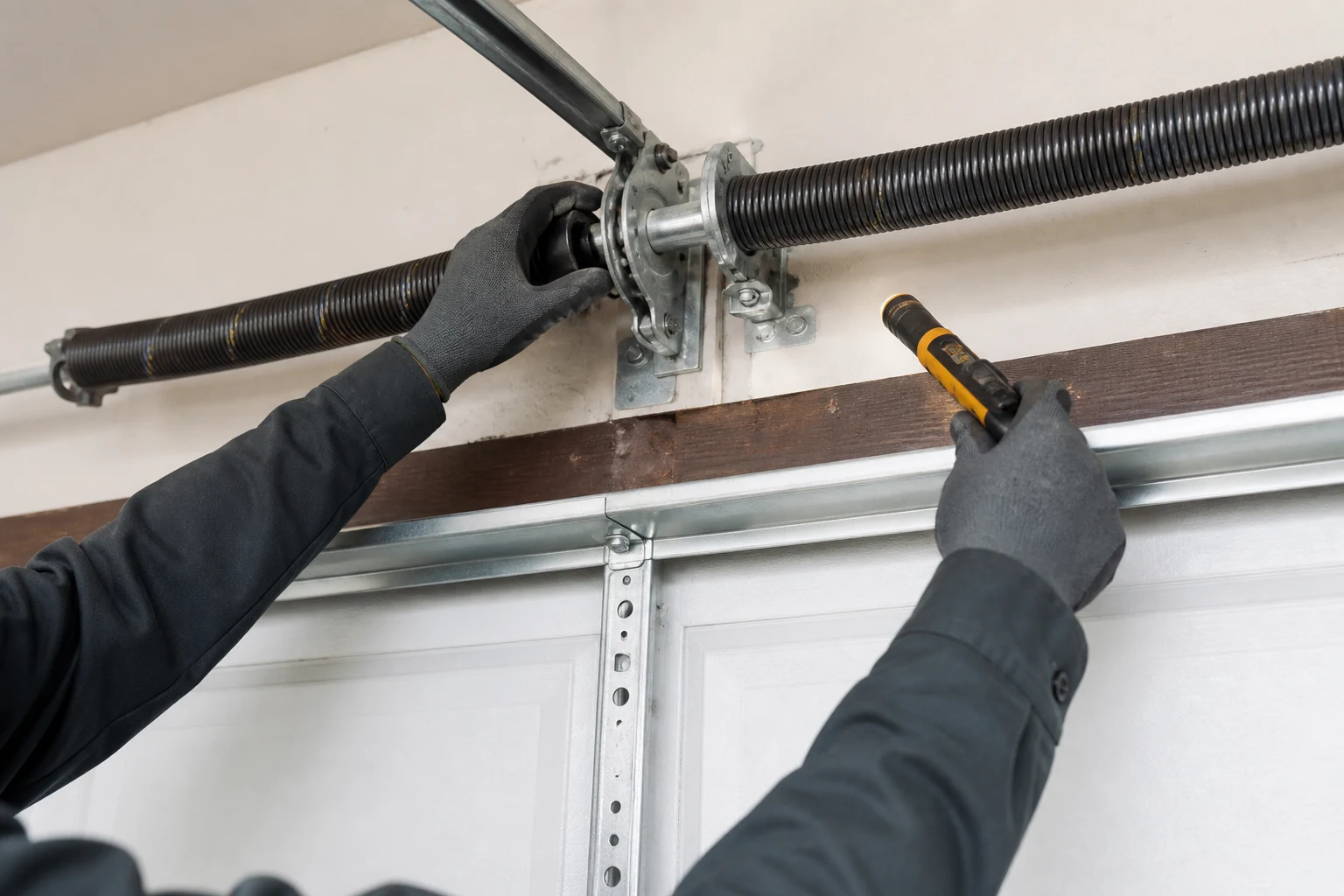
Garage door balance adjustment in Goshen keeps a door along US-42 lifting on its springs rather than on the opener motor. We release the opener, check how the door holds halfway, then fine-tune the torsion or extension springs.
Along US-42, Goshen doors are set so the springs lift and the opener only guides.




Safety check
What to do now
Run the halfway balance test with the opener disconnected. If the door drifts, sinks, or feels heavy, reconnect the opener and keep cycles to a minimum until it is adjusted. Do not raise the opener’s force setting to compensate, do not touch the springs or cables, and do not use a door that is crooked or will not hold.
Customer reviews
Know the difference
The door drifts, feels heavy, or slams even though it sits level.
The door looks crooked or shifts sideways while moving.
Force and travel settings are meant to be calibrated to a balanced door. Turning the force up so a heavy door will close hides the problem, wears the opener out early, and can stop the door from reversing on a person, a pet, or a car. We set force last, after the balance is right.Force is calibrated only after the door is balanced. Turning it up can damage the opener and weaken safety reversal.
Not sure which you have? Send a wide photo of the door from the floor, open and closed if it is safe to operate. Crooked usually means alignment; square-but-heavy usually means balance. We confirm on site.
Before any tension is set
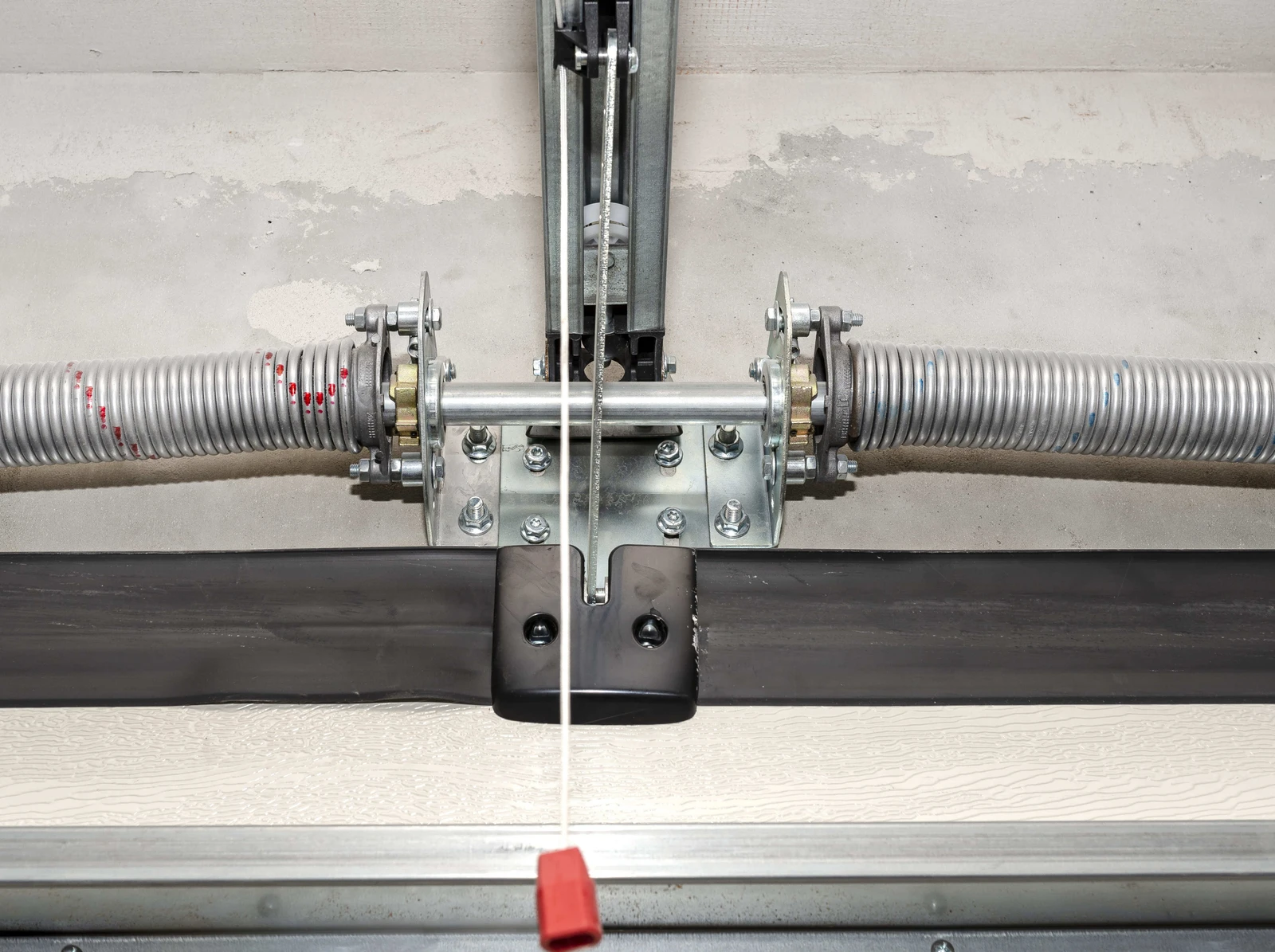
We weigh the door at the floor and test it at three positions. Worn, undersized, mismatched, or over-wound springs are the usual cause of drift and heaviness. Sometimes the honest answer is replacement, not adjustment.Can the springs still hold the door?
Uneven cable tension, a cable off its drum groove, a slipped set screw, or a worn end bearing makes a door crooked or heavy on one side. These are corrected before tension is set so the door rises level.Fixed before any tension is set.
A seized roller, stiff hinge, or rubbing track can make a correctly balanced door behave as if it is heavy. We remove the drag first so the springs are tuned to the actual door, not to friction.Drag removed so springs fit the door.
Once the door is balanced, the opener’s force and travel limits are set so it closes fully and reverses on contact, the photo-eyes are aligned, and the auto-reverse is tested with a 1½-inch board.Opener and photo-eyes set last.
When adjustment is not the honest answer: springs near the end of their cycle life can be re-tensioned and will drift again within months. If the weight test and spring condition say replacement, we quote it plainly and let you choose, rather than selling an adjustment that will not hold.
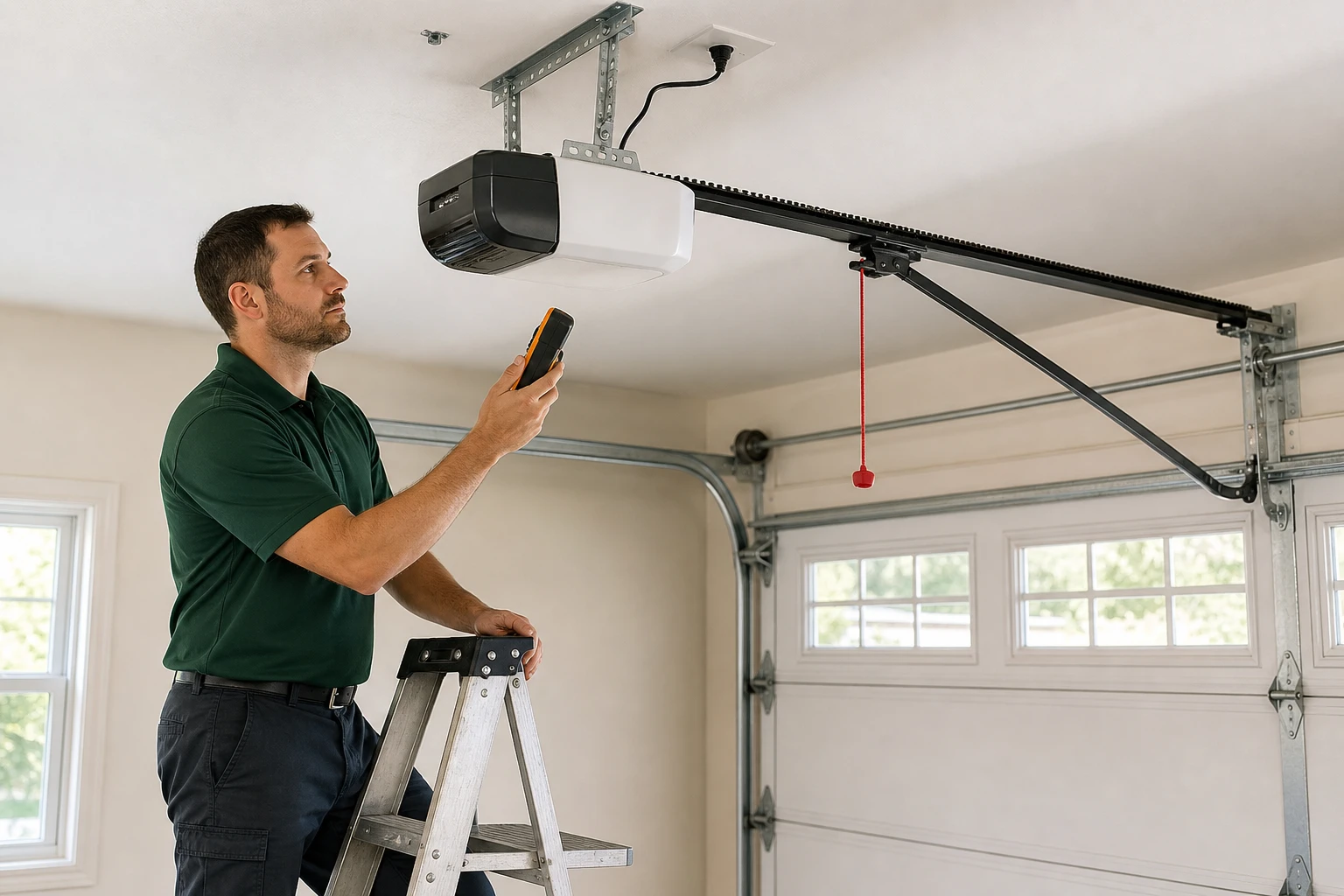 Calibrate · Opener force and travel
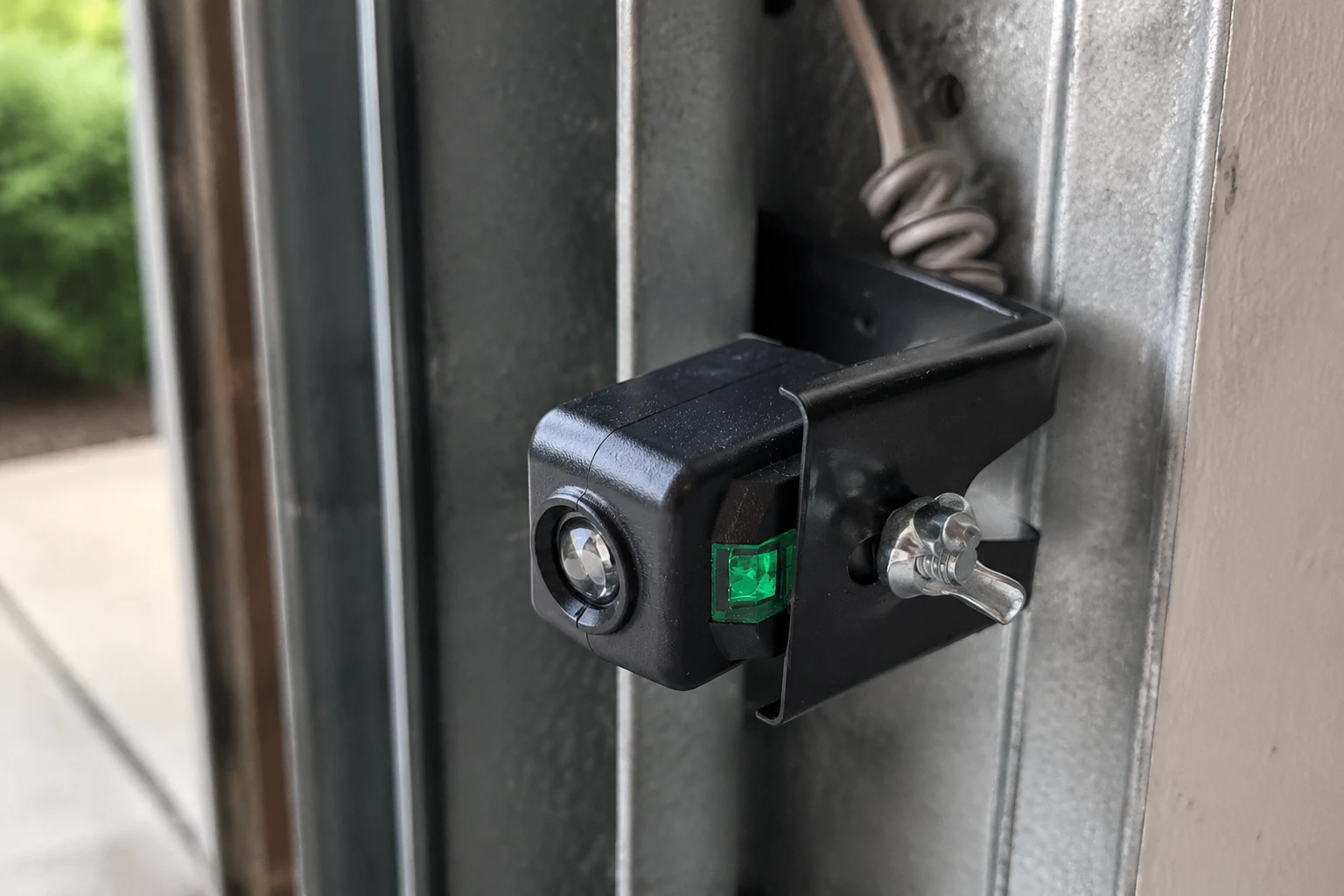 Verify · Photo-eyes and auto-reverse
Service and pricing
The technician disconnects the opener, secures the door, and runs the balance test at three positions and the weight test at the floor before touching a spring.Door secured, balance tested.
Cables, drums, bearings, rollers, hinges, and track are checked so tension is not set against a slipped cable or a dragging roller.Cables, drums and drag checked.
Torsion or extension springs are adjusted with the correct bars and the door secured. If the springs cannot hold a door their size, you get a clear replacement quote instead.Tension set, or a spring quote.
Opener force and travel are set to the balanced door, photo-eyes are aligned, the auto-reverse is tested against a 1½-inch board, and the door is cycled before handoff.Opener set, auto-reverse verified.
Along Highway 42, Goshen lots run from quarter-acre subdivision lots to multi-acre estates. Some of that acreage belongs to thoroughbred breeding farms such as Upson Downs Farm. Within the City of Goshen, the houses are mostly decades old. On any of those homes, a door swapped for a heavier insulated model may still hang on springs set for the old one. It then drifts down from halfway instead of holding its place.
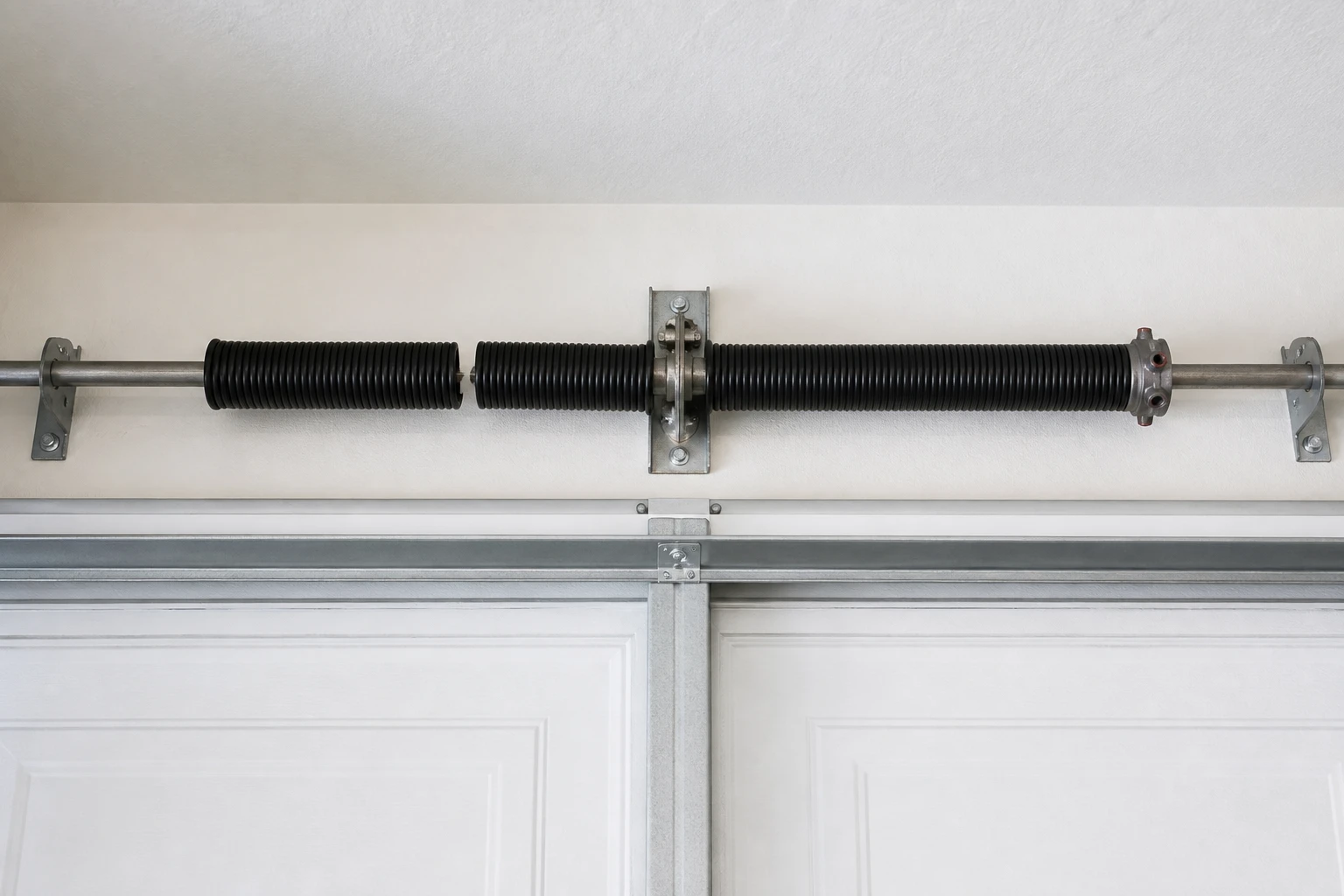
To test it, pull the release cord and raise the door to halfway by hand. Let go gently. A balanced door hangs there without drifting. One that falls needs more spring tension, while one that rises needs less. We adjust the torsion springs to the door's current weight. The cables and drums are inspected at the same time, since they share the load. With the balance right, the opener only has to guide the door.
Service area coverage
Local ZIP: 40026
Before you schedule
A balance test with spring re-tensioning typically comes to $125–$225. Calibrating the opener's force and travel limits, along with the photo-eye and auto-reverse checks, is usually $85–$150, and the two often happen in one visit. Plan on $125 to $250 to reseat or replace a cable or drum on a crooked door. Some springs have lost so much tension they can't hold the door at all, and adjusting those isn't the honest fix. New springs typically run $275 to $750, priced on site.
Yes, and you should. It's the one test every homeowner ought to run once a month. With the door down, pull the red emergency release to separate it from the opener. Raise it by hand about halfway, then carefully let go. A balanced door holds its place. If it moves up, drops or feels heavy to you, reconnect the opener, run it only as much as you need to and ask for an adjustment. Leave the spring tension alone, and never change it yourself.
It is, even if nothing looks wrong yet. The opener was designed to move a door that's a few pounds in your hand, with the springs carrying the rest. As they weaken, the opener carries real weight on every cycle. That shortens the life of its gears and motor. Your door may start to slam or drop, and you can't rely on the safety reversal as much. You won't get a warning. You find out when the bill comes for a broken spring or the opener.
No. A torsion spring stores enough energy to raise a door weighing 150–300 pounds, and an extension spring holds that same load as it stretches. Adjusting either one without the right bars, a secured door and training has seriously injured people's hands, arms and heads. You can test the balance. A technician sets the tension.
Notice how the door feels and how it sits. Heavy but square is a balance problem: the springs aren't carrying the weight evenly enough for the door to hold still at any height. Crooked, or higher on one side, means alignment: the door isn't traveling level in the tracks. That usually traces back to a cable, drum or bearing. Force a crooked door and you can drag it farther out.
Travel limits are your opener's reference points for fully open and fully closed. They let the door reach the floor and seal without straining against it. Force is the amount of push the opener uses before it judges that something's wrong and reverses. Both are set to suit a balanced door. Increasing the force so a heavy door closes is dangerous, because a bumper, a person or a pet may then not make the door reverse.
It's two checks, and you do both each month. As the door comes down, wave an object through the photo-eye beam close to the floor. The door should turn around immediately. Next, lay a 1½-inch board across the floor where the door lands and run the door closed. The moment it touches the board, it must reverse. A fail on either check means you park the opener until the balance and force get looked at.
Sometimes, and only briefly. The two springs on a door share their age and cycle count, so a weak one usually means the other's close behind. We can adjust what's adjustable. When the springs are nearing the end of their life, we'll be honest that re-tensioning them is worse value than a matched replacement.
Springs slowly lose tension over ordinary cycles, so normal use plays a part. They may be undersized for the door or mismatched, or carrying weight from a new section, insulation or glass added without re-springing. Uneven cable tension, worn bearings and a previous job that set tension by feel and ignored the door's weight can do it too.
Run your own balance test once a month; it's about a minute of your time. Every yearly tune-up should include a professional check, covering the weight test and opener calibration. If the door turns heavy, slams or hesitates, don't wait for the tune-up.
Release it at halfway. If it drifts down or creeps up, it's off balance. Feel the weight too, because a door that's heavy by hand is a sign. So is one that closes hard or sits crooked. Watch the opener. Straining, slowing or stopping partway counts as well. Usually weak springs are the cause, and they need resetting or replacing.
Local help for a heavy, dropping, or slamming door
Let us know whether the door drifts, drops, feels heavy, slams, sits crooked, or fails to reverse, whether it still opens and closes, and whether a vehicle is trapped. Keep clear of the opening if the door will not hold.