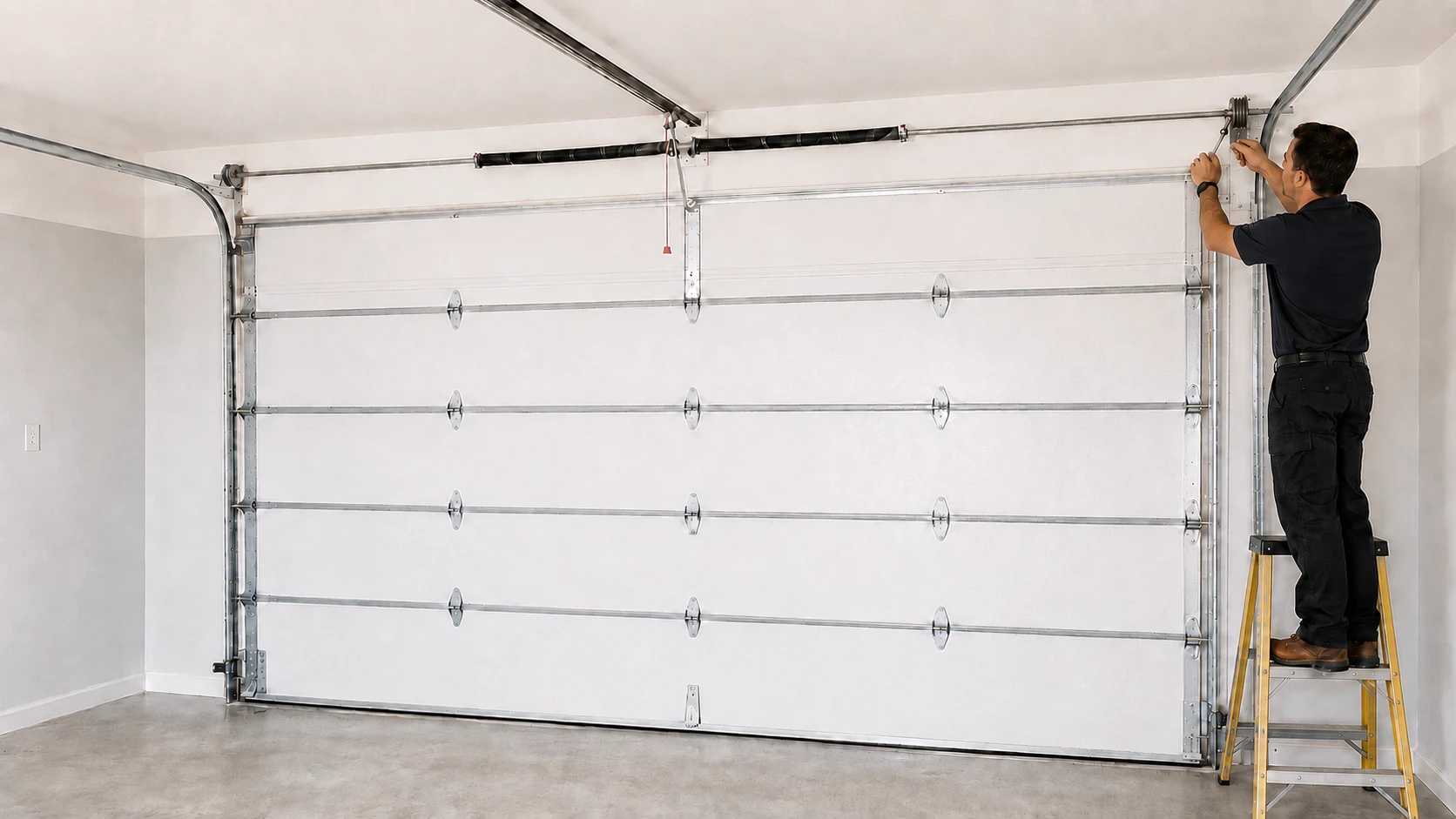




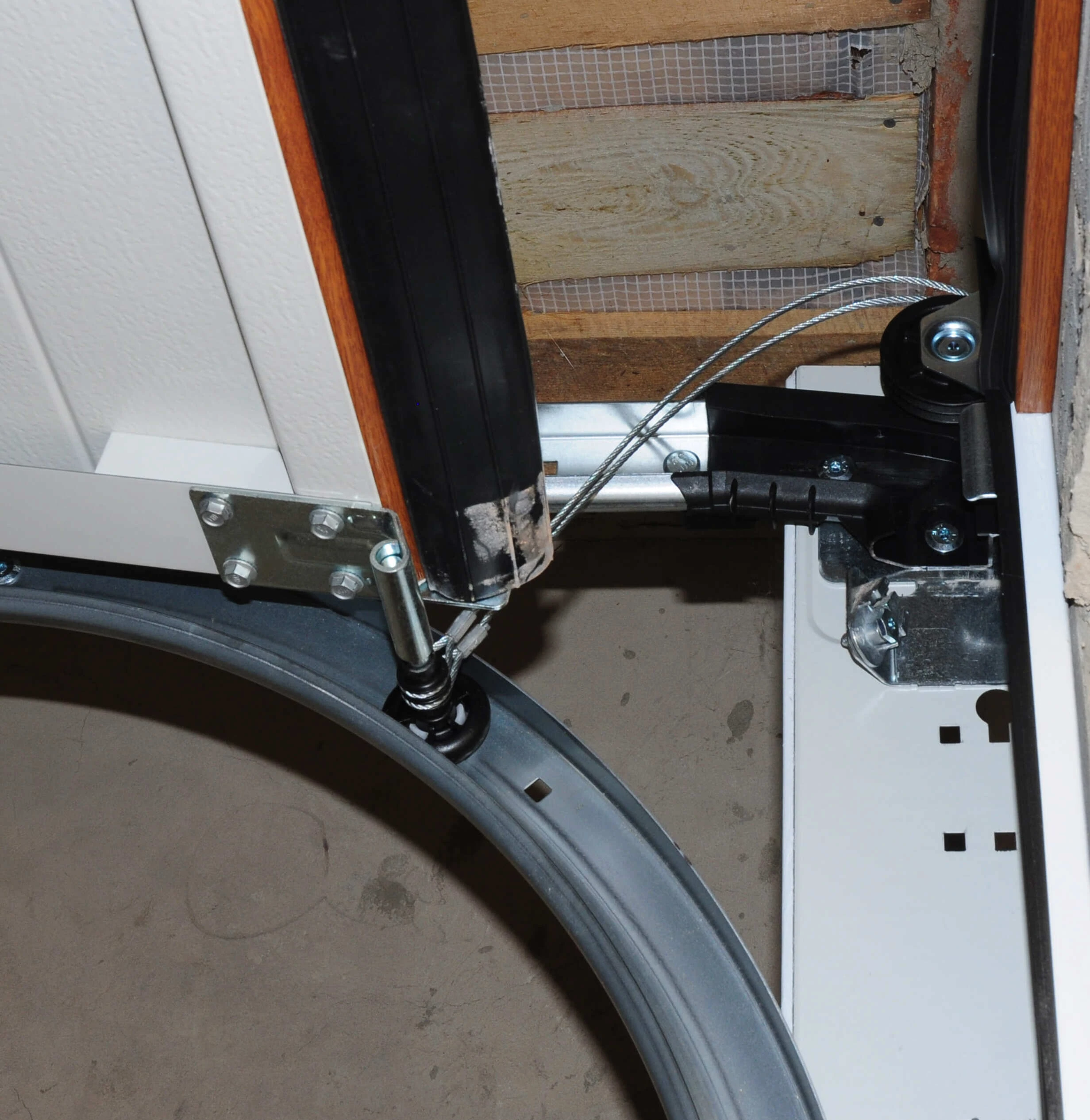
Technician servicing the lift cable and drum on a residential door

Garage Door Cable Repair & Replacement in California, Louisville

Older homes between Broadway and Chestnut Street often have cables from a separate repair, so garage door cable repair in California starts with those cables. We watch for broken strands near the bottom brackets and replace both cables together.

California homes near Chestnut Street often have mismatched cables, and we replace them together.

Get Your Free Cable Repair Quote

Same-day service available • No obligation quote

Step 1 of 2
Required field
Required field
Required field

Safety check

6 Signs Your Garage Door Cable Needs Attention

  • 01
    Frayed strands, kinks, or rustSeparated wire strands, flattened sections, and corrosion weaken a lift cable. Inspect only from the floor and do not touch the cable or bottom bracket.Worn cable. Inspect from the floor.
  • 02
    A loose, hanging, or off-drum cableSlack cable beside the track or cable piled near the drum means the counterbalance system is no longer routing the load correctly.The cable no longer routes the load.
  • 03
    The door is crooked or one side sits lowerUneven support can rack the door in its tracks. Stop the opener before the remaining cable, rollers, panels, or tracks are damaged.Stop the opener to limit damage.
  • 04
    The door is stuck or the opener is strainingA failed cable can leave the door too heavy or uneven for the opener. Repeated attempts may bend hardware or damage the opener.Repeated tries can bend hardware.
  • 05
    Scraping, grinding, or cable slappingA cable rubbing the track, crossing over itself on a drum, or moving through a worn pulley can create new sounds before complete failure.Can be heard before a cable fails.
  • 06
    A sudden drop or faster movement on one sideLoss of cable support can let one side descend without control. Keep people, pets, and vehicles away from the opening.Keep everyone clear of the opening.

What to do now

Stop using the door and keep the opening clear.

Do not touch the cable, bottom fixtures, drums, pulleys, springs, or emergency release. If you can stand safely away from the door, a wide photo from the floor can help us understand the setup.

Broken lift cable hanging loose beside the track and bottom fixture
A failed lift cable leaves the door without even support.

Customer reviews

Kentucky homeowners recommend Derby Strong.

Know the system

Which Garage Door Cables Does Your System Use?

Most modern sectional doorsTorsion-system lift cables
Some lighter or older doorsExtension-system lift cables
Where it sits From bottom fixtures to grooved drums above the door From the door through pulleys beside the horizontal tracks
How it moves Winds onto drums as the door rises Moves through pulleys as the springs stretch and contract
Sign it failed Loose cable, uneven drum wraps, fraying, or a crooked door Slack routing, pulley wear, fraying, or uneven lifting
Safety detail Drums, shaft, bottom fixtures, and springs can remain under high tension A separate retaining cable should run through each extension spring
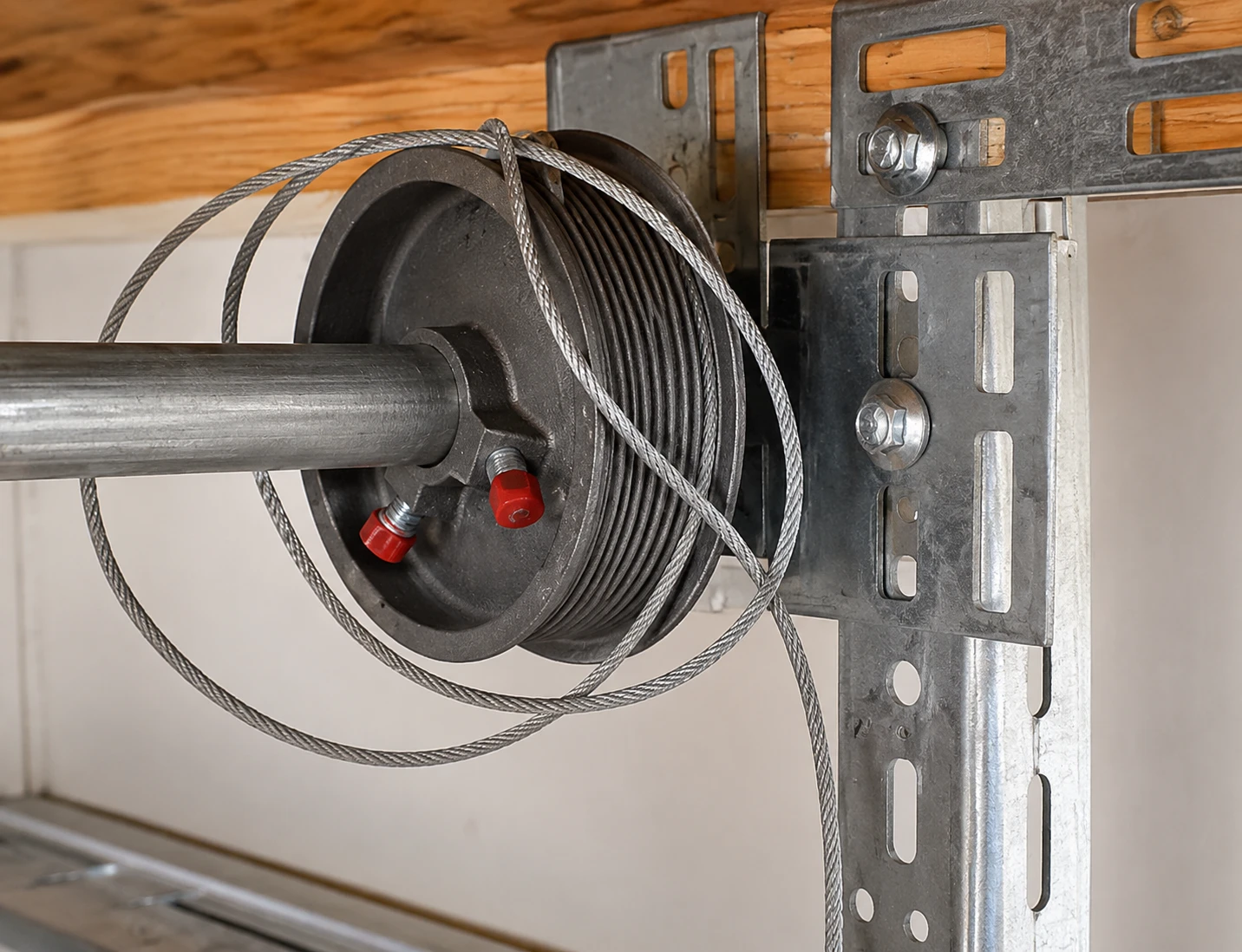
Most modern sectional doors

Torsion-system lift cables

Where it sits
From bottom fixtures to grooved drums above the door
How it moves
Winds onto drums as the door rises
Sign it failed
Loose cable, uneven drum wraps, fraying, or a crooked door
Safety detail
Drums, shaft, bottom fixtures, and springs can remain under high tension
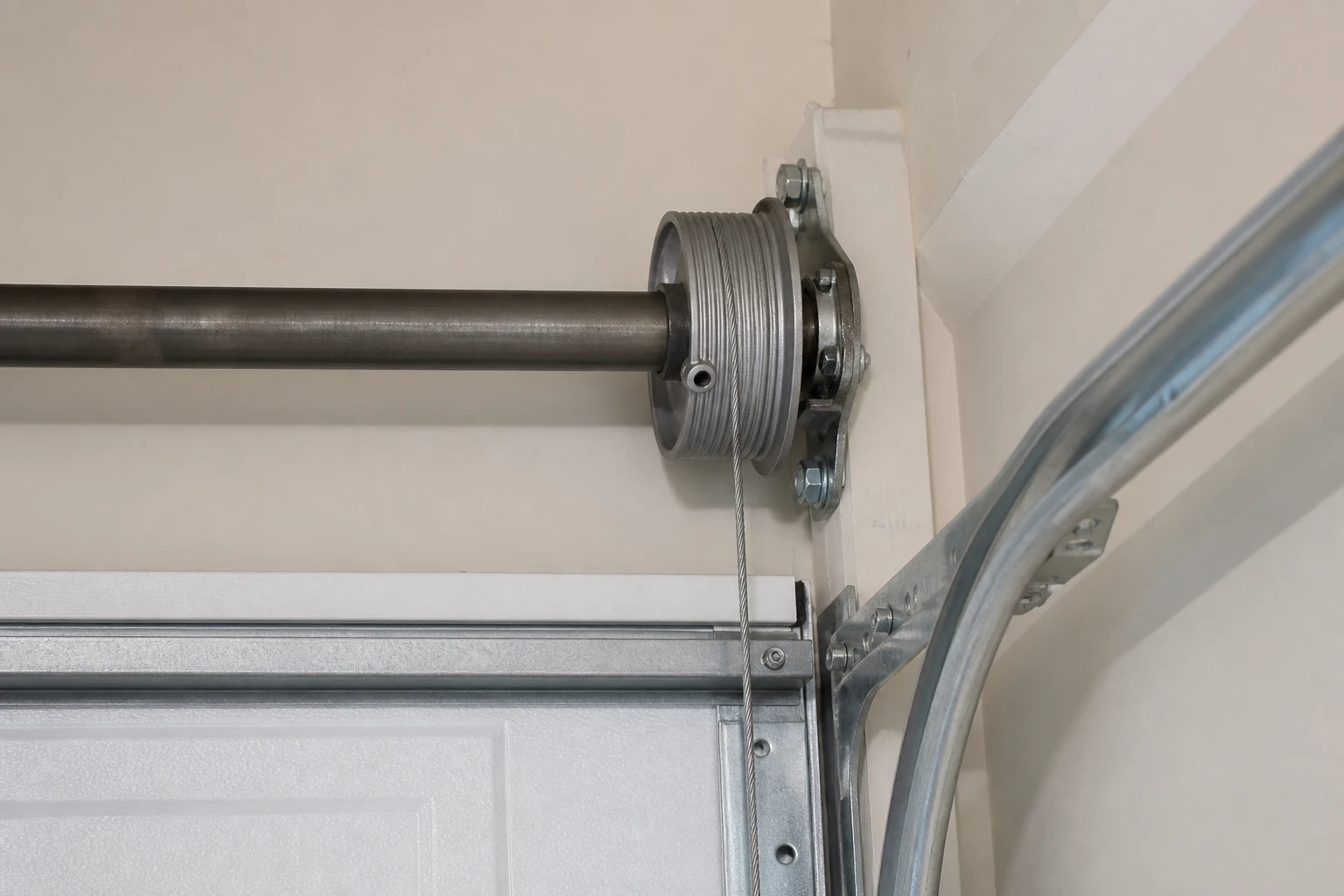
Some lighter or older doors

Extension-system lift cables

Where it sits
From the door through pulleys beside the horizontal tracks
How it moves
Moves through pulleys as the springs stretch and contract
Sign it failed
Slack routing, pulley wear, fraying, or uneven lifting
Safety detail
A separate retaining cable should run through each extension spring

Safety cables are not the same as lift cables.

Retaining cables run through extension springs to help contain them if they break. High-lift, low-headroom, vertical-lift, and commercial systems may require different lengths, routing, drums, or cable construction.

Not sure what you have? Send a wide photo from the floor showing both sides and the area above the door. We can often identify the general setup before the appointment, then confirm measurements on site.

Cable system fit

What Makes a Cable Repair Safe and Long Lasting?

Correct length and construction

Cable length, diameter, end loops or stops, and wire construction must match the door height, weight, and lift system.Length and wire matched to the door.

Matched left and right support

The two lift cables need equal routing and tension so the door rises level instead of transferring extra load to one side.Equal tension so the door rises level.

Compatible drums, pulleys, and fixtures

A new cable cannot correct a worn drum groove, seized pulley, damaged bearing, or loose bottom fixture. Those parts must be inspected together.Worn drums and pulleys are checked too.

Cable matching

The Four Factors We Check Before Replacing a Cable

  1. 01

    Door height, weight, and lift type

    Cable length and load rating depend on the actual door, including its width, material, insulation, glass, track radius, and standard, high-lift, or low-headroom setup.Cables sized to the actual door.

  2. 02

    Spring and track configuration

    Torsion and extension systems route lift cables differently. The spring system, tracks, drums, and pulleys must work as one balanced assembly.Spring type sets the routing.

  3. 03

    Drums, pulleys, bearings, and fixtures

    Groove wear, seized bearings, sharp edges, loose fasteners, and damaged bottom fixtures can fray a new cable or make it leave the drum again.Worn parts can fray a new cable.

  4. 04

    Why the cable failed

    Normal wear, corrosion, poor balance, a broken spring, an obstruction, incorrect installation, or a door that went off track can all change the required repair.The cause of failure shapes the repair.

Why both lift cables may be quoted: the left and right cables usually share the same age, use, and environment. If one has failed from wear or corrosion, replacing the pair may support even operation and reduce the chance of another service call. The technician should inspect both sides and explain the recommendation before work begins.

Garage door lift cable tangled around a cable drum before service Before · Broken cable
Garage door lift cable seated evenly on a cable drum After · Properly seated
Examples of a failed lift cable and correct cable routing on a drum.

Service and pricing

What Cable Repair Includes—and What It May Cost

Four clear steps

  1. 01

    Secure and inspect

    The technician keeps the unstable door from moving and checks both cables, springs, drums or pulleys, bearings, bottom fixtures, tracks, and opener.Door secured, then inspected.

  2. 02

    Find the cause and match the parts

    The cable system and failure point are identified before the correct length, construction, ends, and related hardware are selected.Cause found, parts matched.

  3. 03

    Review and complete the repair

    Required work and any optional recommendations are explained before damaged cables are replaced or a serviceable cable is correctly re-seated.Work explained before it starts.

  4. 04

    Balance, cycle, and safety-check

    Cable routing and tension are set evenly, the door is balanced and cycled, and opener and safety operation are checked before handoff.Even tension, full safety test.

Cable repair across California

Older construction fills most of the California neighborhood, from Broadway to Chestnut Street. On a door that has served an older house, the cables and springs may date from separate repairs. Parts that were never installed together seldom wear at the same pace. The cable is often the one that gets overlooked.

In a torsion system, the lift cables wind onto drums at each end of the shaft above the door. They share the load with the springs, so a failing cable puts the whole door at risk. Watch for broken strands near the bottom brackets or a cable riding loose beside its drum. A door that hangs crooked should stay shut until it is repaired. We replace both cables together and look closely at the drum grooves. The door is then brought back into balance so it rises level.

Service area coverage

Local ZIP: 40211

Open in Google Maps

Before you schedule

Answers to Common Garage Door Cable Repair Questions

Garage door lift cable tangled around a cable drum before service
Drag to compareFrayed, crossed cable wraps compared with cable seated evenly in the drum grooves.
01How much should I budget for garage door cable repair or replacement in California?

For a typical home, cable work costs between $150 and $400. Where your price lands depends on the repair: safely re-seating the cable or replacing it, and replacing one lift cable or both. The cable and the lift system play a part, along with the door's position and access. So does the shape your springs, drums, tracks, pulleys, bottom fixtures and bearings are in. Spring-related, after-hours, off-track, custom and commercial work may fall outside this range.

02Can a garage door still be used with a snapped cable?

No. When a lift cable has broken, slipped loose or come off the drum, the door may be extremely heavy, crooked or able to fall. Don't run the opener, and don't try to raise, lower or release the door. Keep the opening clear until a trained technician has secured and inspected it.

03How does a cable end up broken or off its drum?

Corrosion and normal wear on the strands are common causes. Wrong routing or cable length, seized bearings and a worn pulley or drum are others. A broken spring, an obstruction, poor balance, track or roller problems or a mistake in an earlier installation can also cause it. Put that cause right before the door goes back in service.

04Will a loose lift cable need replacing, or can it be repaired?

A cable with damaged ends, kinks, heat damage, flattening, broken strands or corrosion should be replaced, not patched. If it left its drum undamaged, it can sometimes be re-seated once the underlying cause has been corrected. Either way, the technician should go over the entire cable before making a recommendation.

05Does it make sense to replace both cables together?

It often does. The two cables are typically the same age, see the same use and sit in the same environment. Replacing a worn set together can support even operation and make a return trip less likely. The technician should still check both and go over the recommendation with you before the work starts.

06What role does a safety cable play compared with a lift cable?

Lift cables carry the load, using spring force to lift the door and guide its travel. A safety cable, which you may also hear called a retaining cable, runs inside an extension spring and helps contain it if it breaks. It's a separate safety part. It doesn't stand in for the load-bearing lift cables.

07How do I stop my garage door cable from breaking again?

Look from the floor once a month for fraying, rust or slack in the cables, and for uneven drum wraps. Keep the tracks and doorway clear. Stop using the door if it starts sounding noisy or runs crooked or unbalanced. Don't adjust cables or bottom brackets yourself. A yearly professional inspection can catch wear in the springs, cables, drums, pulleys, bearings and door balance.

08My cable looks slack. Can I tighten or replace it on my own?

No. If you loosen the wrong fastener, or move the door with nothing supporting it, you can free stored energy or drop the door. High spring tension can be sitting in your lift cables and in the shafts, pulleys, drums, bottom fixtures and related brackets. Have a trained door-system technician do the cable work.

09How do you repair a garage door cable, step by step?

First we secure the door. Next we inspect the counterbalance system and tracks, pin down why the cable failed and explain the quote. Then the correct cable and required hardware go on, or we re-seat the old cable, with even routing and tension. To finish, we balance and cycle the door, run an opener test and explain the applicable warranty.

10Why does the time for a garage door cable repair vary?

Because it depends on what's wrong. One service appointment is often all a straightforward residential cable repair needs. An open door is a different job from one that's closed, crooked or off track. Re-seating a cable is not the same as replacing it. And the springs, drums or pulleys may need attention, or the bearings, tracks or bottom fixtures. So we inspect the system first, and the reliable time estimate comes after.

11How can I tell if a garage door cable is starting to fail?

The usual signs start near the bottom brackets, where strands may be frayed or rusted. A loose, dangling cable or one sitting off its drum is another, as is a door that lifts unevenly or hangs crooked. If you see any of them, stop using the door and keep well clear. Under tension, a snapping cable can let one side drop.

Local help for a crooked or stuck door

Tell us what happened. We’ll help with the next step.

Let us know whether the door is open, closed, or crooked, whether a vehicle is trapped, and whether you see a loose or damaged cable. Keep clear of the opening until it can be inspected.

  • Door open, closed, or crooked
  • Vehicle trapped or clear
  • Loose, frayed, or off-drum cable
Call (502) 619-5198

Request Cable Repair

Serving California and nearby Louisville Metro communities. Share the essentials and we’ll call to confirm the right service timing.

Step 1 of 2
Required field
Required field
Required field

Derby Strong Garage Doors

Garage door trouble?

Talk to our local team now about a broken spring, a stuck door, an opener or a new door.

Call (502) 619-5198 Schedule online

5.0 from 306 reviews