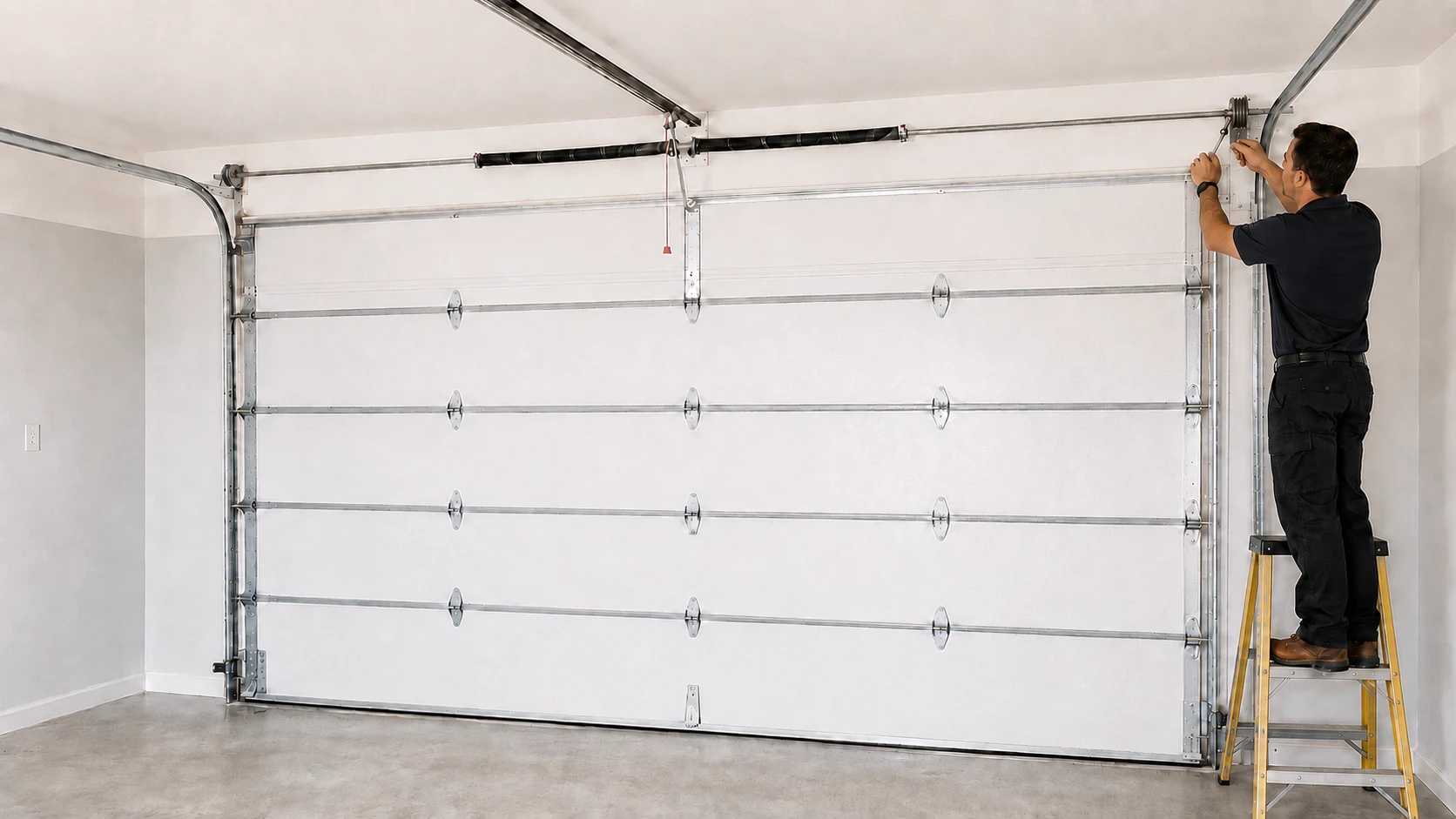




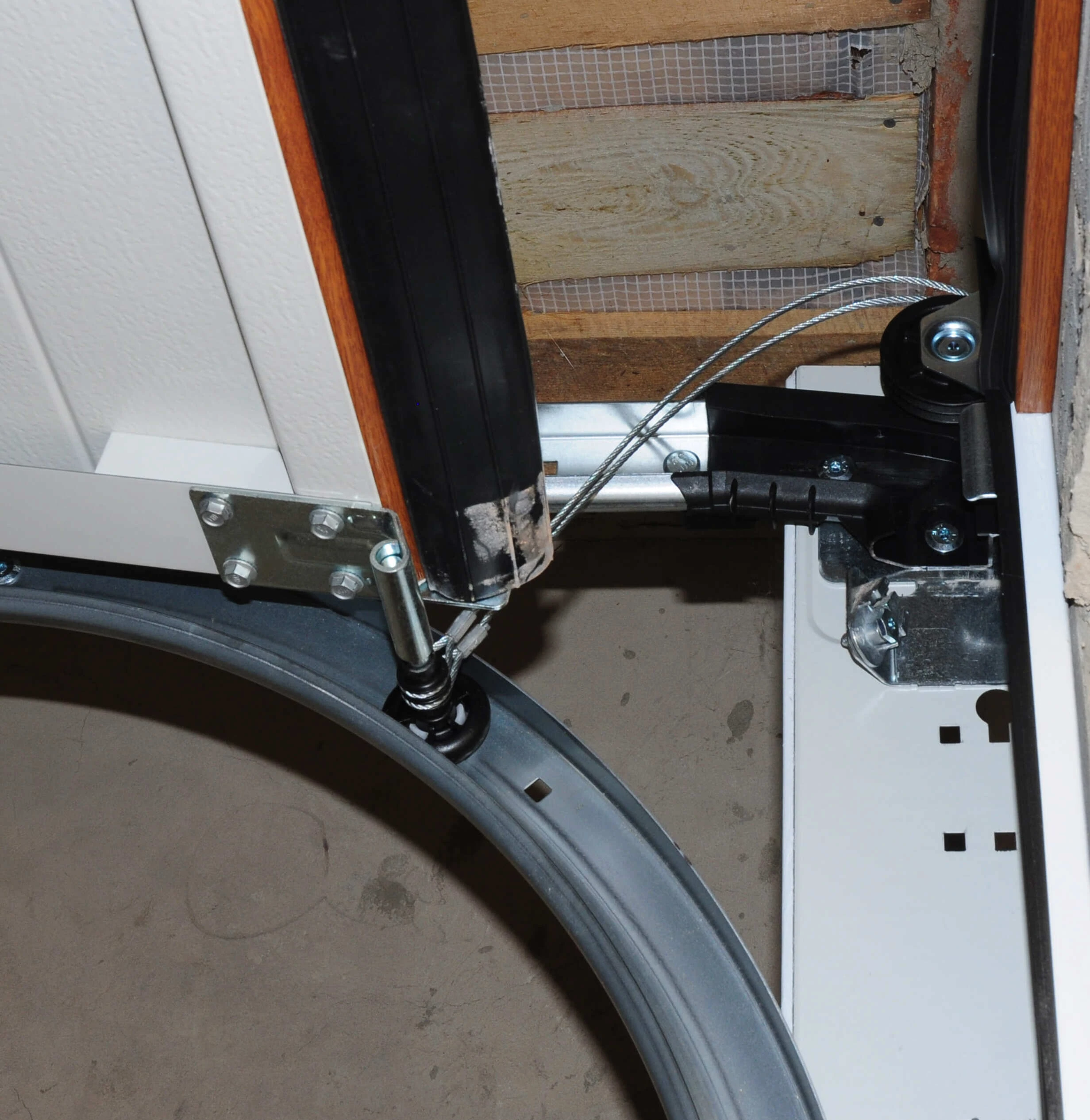
Technician servicing the lift cable and drum on a residential door

Garage Door Cable Repair & Replacement in Butchertown, KY

From narrow shotgun houses on Story Avenue to larger Italianate homes, garage door cable repair in Butchertown often finds cables that stayed through several rounds of repair. We replace both and seat them on the drums before the door runs.

Butchertown doors off Story Avenue often keep old cables through repairs, and we replace both.

Get Your Free Cable Repair Quote

Same-day service available • No obligation quote

Step 1 of 2
Required field
Required field
Required field

Safety check

6 Signs Your Garage Door Cable Needs Attention

  • 01
    Frayed strands, kinks, or rustSeparated wire strands, flattened sections, and corrosion weaken a lift cable. Inspect only from the floor and do not touch the cable or bottom bracket.Worn cable. Inspect from the floor.
  • 02
    A loose, hanging, or off-drum cableSlack cable beside the track or cable piled near the drum means the counterbalance system is no longer routing the load correctly.The cable no longer routes the load.
  • 03
    The door is crooked or one side sits lowerUneven support can rack the door in its tracks. Stop the opener before the remaining cable, rollers, panels, or tracks are damaged.Stop the opener to limit damage.
  • 04
    The door is stuck or the opener is strainingA failed cable can leave the door too heavy or uneven for the opener. Repeated attempts may bend hardware or damage the opener.Repeated tries can bend hardware.
  • 05
    Scraping, grinding, or cable slappingA cable rubbing the track, crossing over itself on a drum, or moving through a worn pulley can create new sounds before complete failure.Can be heard before a cable fails.
  • 06
    A sudden drop or faster movement on one sideLoss of cable support can let one side descend without control. Keep people, pets, and vehicles away from the opening.Keep everyone clear of the opening.

What to do now

Stop using the door and keep the opening clear.

Do not touch the cable, bottom fixtures, drums, pulleys, springs, or emergency release. If you can stand safely away from the door, a wide photo from the floor can help us understand the setup.

Broken lift cable hanging loose beside the track and bottom fixture
A failed lift cable leaves the door without even support.

Customer reviews

Kentucky homeowners recommend Derby Strong.

Know the system

Which Garage Door Cables Does Your System Use?

Most modern sectional doorsTorsion-system lift cables
Some lighter or older doorsExtension-system lift cables
Where it sits From bottom fixtures to grooved drums above the door From the door through pulleys beside the horizontal tracks
How it moves Winds onto drums as the door rises Moves through pulleys as the springs stretch and contract
Sign it failed Loose cable, uneven drum wraps, fraying, or a crooked door Slack routing, pulley wear, fraying, or uneven lifting
Safety detail Drums, shaft, bottom fixtures, and springs can remain under high tension A separate retaining cable should run through each extension spring
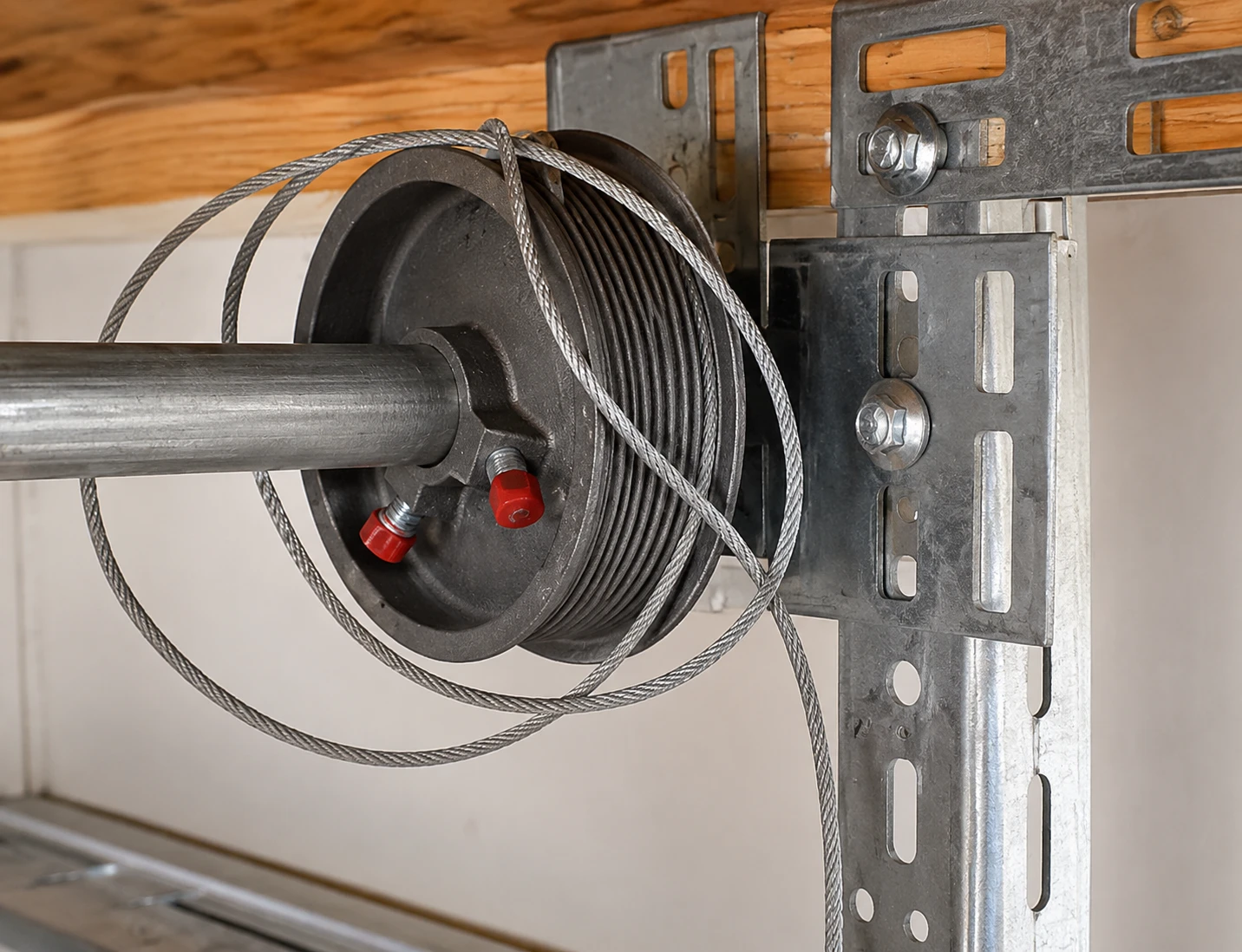
Most modern sectional doors

Torsion-system lift cables

Where it sits
From bottom fixtures to grooved drums above the door
How it moves
Winds onto drums as the door rises
Sign it failed
Loose cable, uneven drum wraps, fraying, or a crooked door
Safety detail
Drums, shaft, bottom fixtures, and springs can remain under high tension
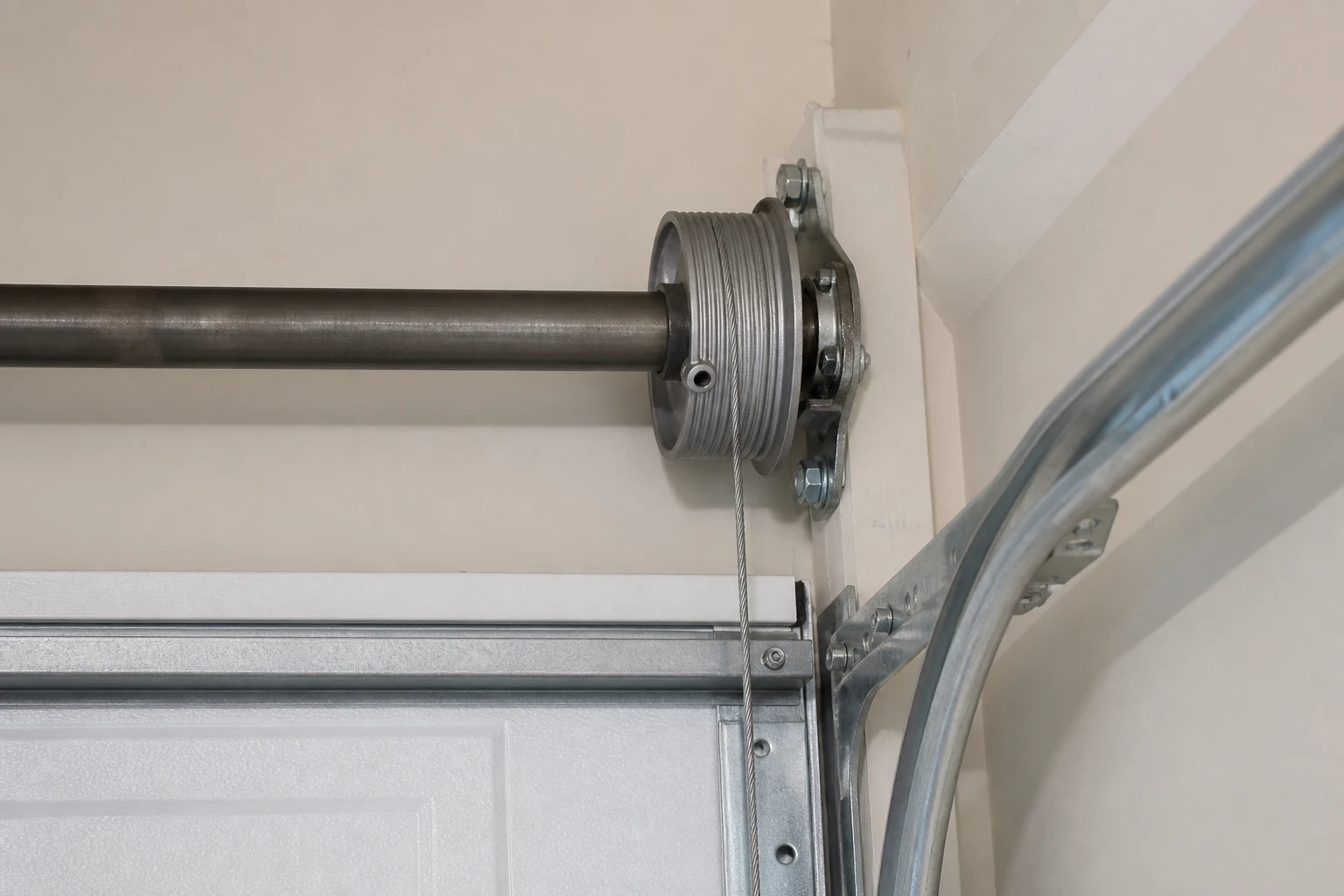
Some lighter or older doors

Extension-system lift cables

Where it sits
From the door through pulleys beside the horizontal tracks
How it moves
Moves through pulleys as the springs stretch and contract
Sign it failed
Slack routing, pulley wear, fraying, or uneven lifting
Safety detail
A separate retaining cable should run through each extension spring

Safety cables are not the same as lift cables.

Retaining cables run through extension springs to help contain them if they break. High-lift, low-headroom, vertical-lift, and commercial systems may require different lengths, routing, drums, or cable construction.

Not sure what you have? Send a wide photo from the floor showing both sides and the area above the door. We can often identify the general setup before the appointment, then confirm measurements on site.

Cable system fit

What Makes a Cable Repair Safe and Long Lasting?

Correct length and construction

Cable length, diameter, end loops or stops, and wire construction must match the door height, weight, and lift system.Length and wire matched to the door.

Matched left and right support

The two lift cables need equal routing and tension so the door rises level instead of transferring extra load to one side.Equal tension so the door rises level.

Compatible drums, pulleys, and fixtures

A new cable cannot correct a worn drum groove, seized pulley, damaged bearing, or loose bottom fixture. Those parts must be inspected together.Worn drums and pulleys are checked too.

Cable matching

The Four Factors We Check Before Replacing a Cable

  1. 01

    Door height, weight, and lift type

    Cable length and load rating depend on the actual door, including its width, material, insulation, glass, track radius, and standard, high-lift, or low-headroom setup.Cables sized to the actual door.

  2. 02

    Spring and track configuration

    Torsion and extension systems route lift cables differently. The spring system, tracks, drums, and pulleys must work as one balanced assembly.Spring type sets the routing.

  3. 03

    Drums, pulleys, bearings, and fixtures

    Groove wear, seized bearings, sharp edges, loose fasteners, and damaged bottom fixtures can fray a new cable or make it leave the drum again.Worn parts can fray a new cable.

  4. 04

    Why the cable failed

    Normal wear, corrosion, poor balance, a broken spring, an obstruction, incorrect installation, or a door that went off track can all change the required repair.The cause of failure shapes the repair.

Why both lift cables may be quoted: the left and right cables usually share the same age, use, and environment. If one has failed from wear or corrosion, replacing the pair may support even operation and reduce the chance of another service call. The technician should inspect both sides and explain the recommendation before work begins.

Garage door lift cable tangled around a cable drum before service Before · Broken cable
Garage door lift cable seated evenly on a cable drum After · Properly seated
Examples of a failed lift cable and correct cable routing on a drum.

Service and pricing

What Cable Repair Includes—and What It May Cost

Four clear steps

  1. 01

    Secure and inspect

    The technician keeps the unstable door from moving and checks both cables, springs, drums or pulleys, bearings, bottom fixtures, tracks, and opener.Door secured, then inspected.

  2. 02

    Find the cause and match the parts

    The cable system and failure point are identified before the correct length, construction, ends, and related hardware are selected.Cause found, parts matched.

  3. 03

    Review and complete the repair

    Required work and any optional recommendations are explained before damaged cables are replaced or a serviceable cable is correctly re-seated.Work explained before it starts.

  4. 04

    Balance, cycle, and safety-check

    Cable routing and tension are set evenly, the door is balanced and cycled, and opener and safety operation are checked before handoff.Even tension, full safety test.

Cable repair across Butchertown

Many Butchertown homes were built generations ago, from Story Avenue to the Bourbon Stockyards site. Whether the house is a narrow shotgun or one of the larger Italianate and Victorian homes, its garage door may have been repaired several times. Its cables can be older than the springs beside them, since springs are usually replaced first.

Each lift cable runs from a bottom bracket up to a drum at one end of the torsion shaft. Working with the springs, the cables carry the full weight of the door. A fraying cable often shows loose strands near the floor. One that slips off its drum leaves the door hanging crooked. At that point, keep the door closed and leave the opener alone. We replace the cables as a pair so both sides wind evenly. Drums with chipped grooves are replaced too.

Service area coverage

Local ZIP: 40206

Open in Google Maps

Before you schedule

Answers to Common Garage Door Cable Repair Questions

Garage door lift cable tangled around a cable drum before service
Drag to compareFrayed, crossed cable wraps compared with cable seated evenly in the drum grooves.
01What does it cost to repair or replace a garage door cable in Butchertown?

Residential cable service typically runs $150 to $400. A few things decide the final price. Can the cable be safely re-seated, or does it need replacing? Do both lift cables need replacing? The cable and lift system count, as do the door's position and how easy it is to get to. Then there's the condition of the tracks, springs, drums, pulleys, bearings and bottom fixtures. Off-track, spring-related, custom, commercial and after-hours jobs may fall outside that range.

02Should I still use my garage door after a cable breaks?

Leave it where it is. With a broken, loose or off-drum lift cable, don't use the opener, and don't try to move the door up or down or release it. It may sit crooked, be extremely heavy or come down. Clear the doorway and have a trained technician come out to secure and inspect it.

03What causes a garage door cable to fail or come off the drum?

Often it's the cable itself: normal strand fatigue, corrosion, or the wrong length or routing. Seized bearings and a worn drum or pulley can also do it. Other causes are poor door balance, track or roller faults, a broken spring, an obstruction and earlier installation errors. Fix the cause before anyone uses the door again.

04When a cable comes loose, can it be repaired or does it have to be replaced?

Re-seating is sometimes an option. That's for an undamaged cable that came off its drum, once the underlying cause is corrected. Heat damage, corrosion, flattening, kinks, damaged ends or broken strands call for a new cable rather than a patch. Before recommending either one, the technician should inspect the cable from end to end.

05Is replacing the lift cables in pairs a good idea?

Yes, in many cases. A door's two lift cables have usually aged, worked and weathered together. Putting in a new pair when both are worn can help the door run evenly and cut the odds of a second service call. The technician should look at both sides first and explain the recommendation before doing any work.

06Is a safety cable just another lift cable?

No. Lift cables are load-bearing: they transfer the spring force that raises the door and keeps it under control. A retaining cable, also known as a safety cable, runs through an extension spring and helps contain it if that spring breaks. It's a separate safety component and can't stand in for a lift cable.

07What upkeep helps prevent the next cable failure?

Every month, look over the cables from the floor for uneven drum wraps, rust, slack or fraying. Keep anything that's in the way out of the tracks and doorway. Stop if the door becomes unbalanced, noisy or crooked, and don't adjust the cables or bottom brackets. A professional inspection each year can catch wear in the drums, door balance, springs, bearings, cables and pulleys.

08Can I replace a garage door cable or tighten it myself?

No. The lift cables can be under high spring tension, along with the drums, pulleys, shafts, bottom fixtures and related brackets. Back off the wrong fastener or move the door without support, and that stored energy can let go or the door can fall. Cable work is a job for a trained door-system technician.

09What will I see the technician do during a cable repair visit?

First you'll see the door secured. We then inspect the complete track and counterbalance system, find what caused the failure and explain the quote. Next the correct cable and its required hardware go on, or the cable is re-seated, with routing and tension set evenly. Last, the door is balanced, cycled and tested on the opener, and you hear which warranty applies.

10How much time do you need on site for a cable repair?

For a straightforward residential cable repair, we can often finish in one service appointment. We inspect the system before we give a time estimate, because that's what makes it reliable. First we note how the door is sitting: off track, crooked, closed or open. Then we see if we can re-seat the cable or have to replace it. Last we check the bottom fixtures, bearings, pulleys, drums, springs and tracks, in case they need attention too.

11What does a worn garage door cable look like, and is it dangerous?

A worn cable shows rusted or frayed strands near the bottom brackets. You might also see it hanging slack or sitting off the drum, or notice the door lifting unevenly or hanging crooked. Those are the usual signs. And yes, it's dangerous. A cable that snaps under tension can bring one side of the door down. So stop using the door, and keep well clear.

Local help for a crooked or stuck door

Tell us what happened. We’ll help with the next step.

Let us know whether the door is open, closed, or crooked, whether a vehicle is trapped, and whether you see a loose or damaged cable. Keep clear of the opening until it can be inspected.

  • Door open, closed, or crooked
  • Vehicle trapped or clear
  • Loose, frayed, or off-drum cable
Call (502) 619-5198

Request Cable Repair

Serving Butchertown and nearby Louisville Metro communities. Share the essentials and we’ll call to confirm the right service timing.

Step 1 of 2
Required field
Required field
Required field

Derby Strong Garage Doors

Garage door trouble?

Talk to our local team now about a broken spring, a stuck door, an opener or a new door.

Call (502) 619-5198 Schedule online

5.0 from 306 reviews

Before you go

Pick your coupon

Choose an offer and we’ll save it with your request. Every visit includes a free safety inspection.

Choose one coupon

One coupon per household. Not combinable with other offers. Good for 30 days.