Printed wood-look steel
The most straightforward way to add grain and warm color to an insulated steel door.
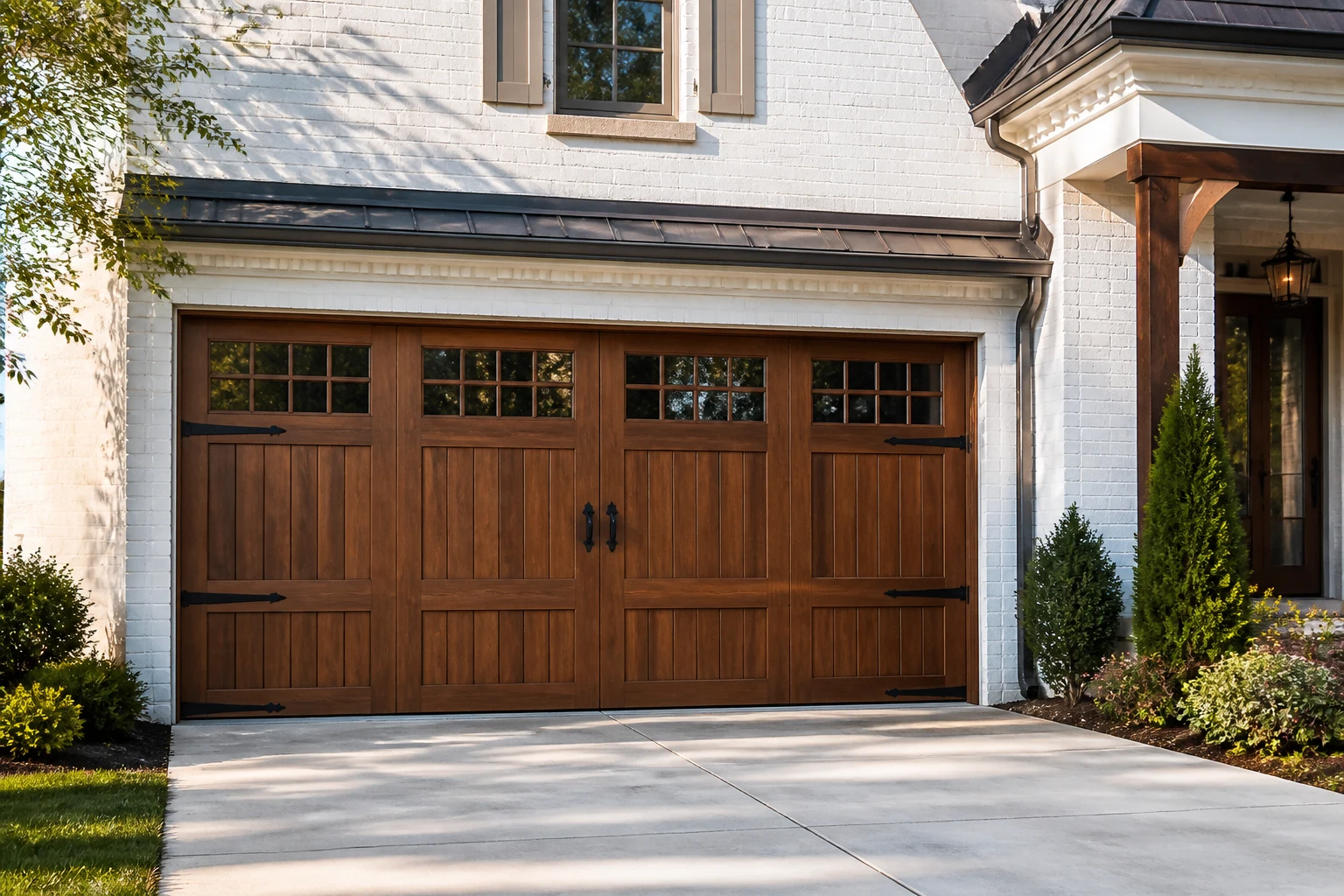
On the wooded hills along Goose Creek, a wood-look garage door installation lets an Anchorage home sit easily among the oaks. Composite versions carry a deeper texture, while insulated steel suits an attached garage.
Wooded Anchorage lots suit the grain of a wood-look garage door.




Wood-Look Doors Explained
A wood-look garage door gives you the warmth of cedar, walnut or oak without the sanding and staining a real wood door needs. The grain comes from printed or embossed steel, composite cladding, or a molded fiberglass face over steel.
Each material wears differently. Printed steel is the lightest and usually the most affordable. Composite and fiberglass faces carry deeper grain and board depth, and their extra weight must be matched by the springs and opener.
Color and grain change with light and distance. Compare finish samples beside your front door, trim and siding before choosing, and we confirm the exact material and its care before the order is placed.
Materials and Finish
The most straightforward way to add grain and warm color to an insulated steel door.
A structural steel base with an engineered exterior face for added depth.
A molded face provides pronounced grain and a different finish and repair profile.
Applied trim creates carriage or plank styling without using a full real-wood door.
Popular Styles
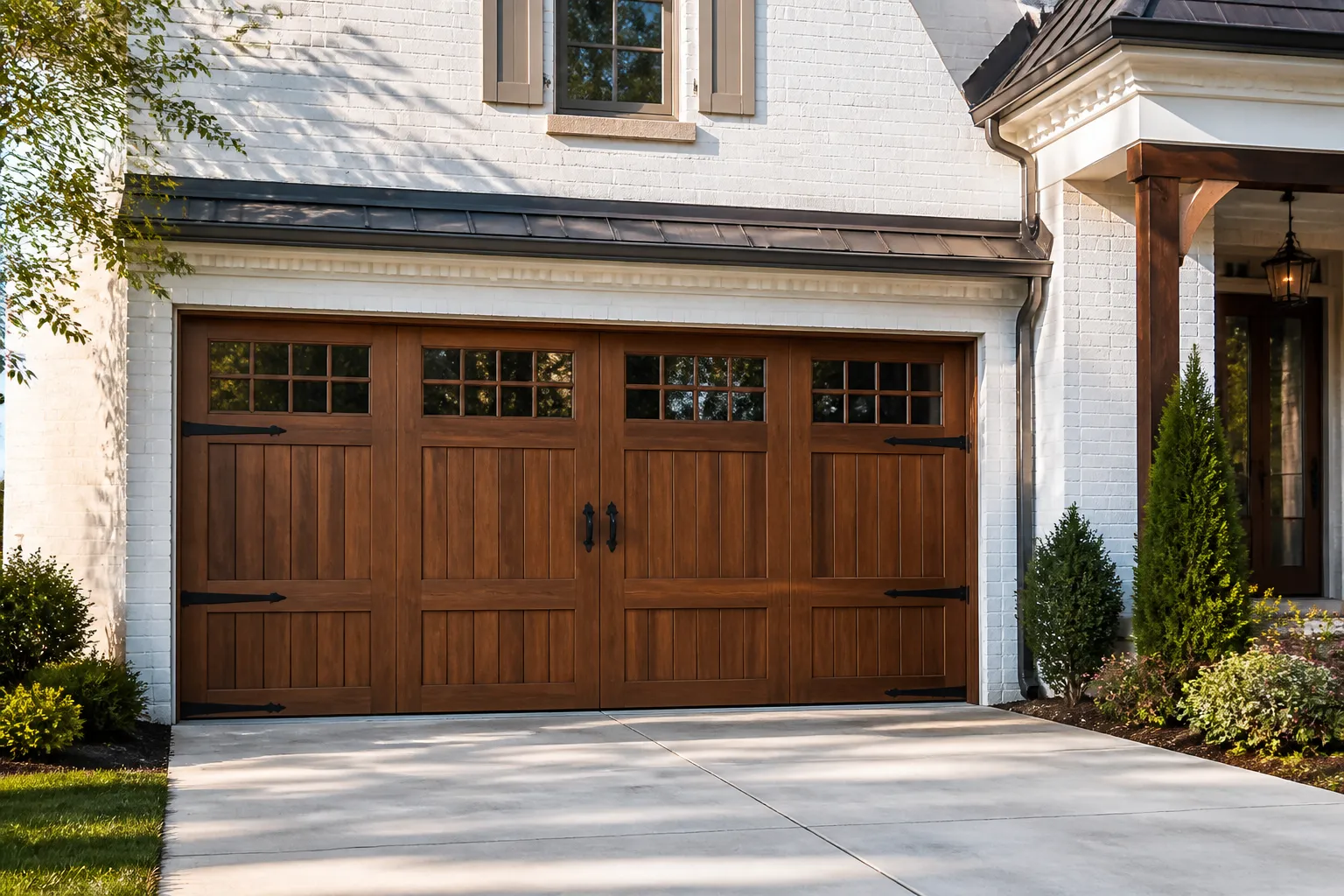
A factory-applied grain pattern on a sectional steel door.
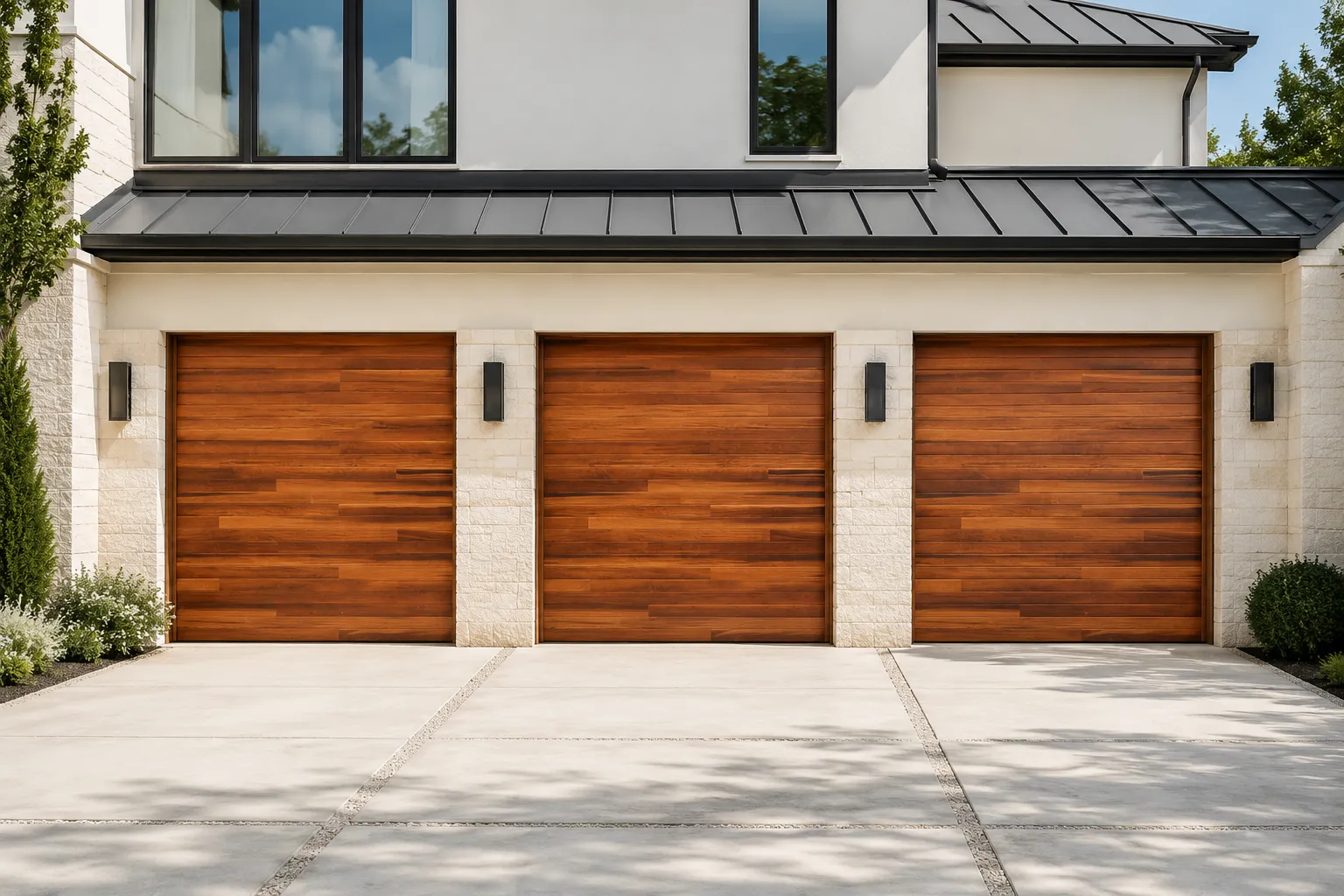
Engineered trim and cladding create deeper grain and shadow lines.
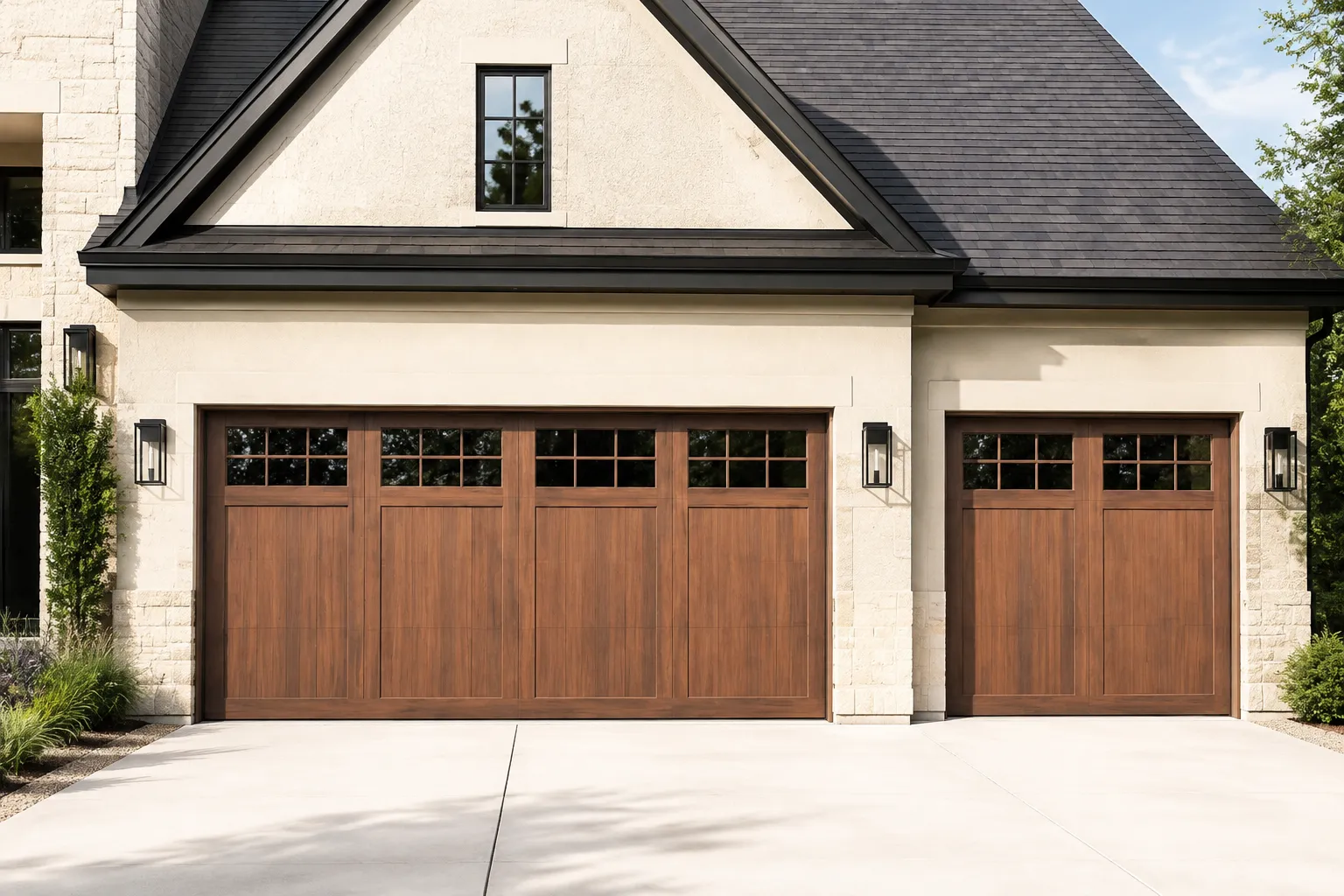
A formed surface creates a dimensional wood appearance with engineered materials.
Wood Tones and Finishes
Warm, lighter wood appearance.
Balanced medium-dark brown.
Rich red-brown tone.
Deep brown with strong grain contrast.
Cooler gray-brown finish.
Lighter neutral wood appearance.
Trusted Brands
Amarr
Steel base with wood-look finish options
Traditional steel construction in single-, double-, and triple-layer options. Woodgrain finish availability is confirmed on the exact model and size before ordering.
View collectionProDoor Systems
Insulated steel with woodtone options
Panel and design families built around higher thermal performance. Woodtone finish availability is confirmed per model and size before ordering.
View collectionBefore You Buy
Similar wood looks can be printed steel, fiberglass, or composite with different ownership.
Similar looks, different materials.
Screens hide undertone, sheen, embossing, repetition, plank scale, and seams.
Judge real samples, not screens.
Engineered surfaces still need cleaning, inspection, approved touch-up, and seal care.
Still needs cleaning and seal care.
Cladding, glass, reinforcement, and width alter springs, hardware, transport, and opener setup.
Cladding and glass change the weight.
Plan Your Wood-Look Door
From selection to installation
Measure the opening and document the elevation, adjacent materials, sun, water exposure, and clearances.
Measure the opening and exposure.
Compare material and finish samples, actual-size layouts, glass, care guides, and approved construction.
Compare materials and finish samples.
Install sections, track, counterbalance, reinforcement, seals, hardware, and opener interface.
Sections, track, springs and seals installed.
Balance and safety-test the door, inspect the finish, and hand off care and warranty records.
Safety-tested, with care records.
Under the oaks that shade Anchorage's wooded hills along Beargrass and Goose Creeks, a wood-toned door often suits a house better than painted metal. The homes between the Anchorage Historic District and the Anchorage Trail are largely decades old. On houses like those, a wood-look door brings the grain without the upkeep of real wood.
A wood-look door carries the grain of cedar or oak on a steel or composite base. The embossed grain holds its color far longer than stained wood. It will not rot, split or swell. Composite versions carry a deeper texture that reads well up close. Steel versions come insulated for attached garages. You can pair the finish with carriage-house hardware or keep a simple panel style. Lighter oak tones suit painted trim, while darker walnut reads well against brick.
Service area coverage
Local ZIP: 40223
Wood-Look Door FAQ
Use these as planning figures. Common single-car sizes of 8 to 9 feet run about $1,700–$2,900 installed, and common 16-foot double-car sizes about $2,000–$4,600. If you pick printed steel, the price may stay closer to an ordinary residential door. Composite cladding, overlays, fiberglass faces, added weight and premium finishes can raise it.
Once the manufacturer delivers the complete door, most residential replacements take one scheduled visit. Framing corrections, new track and opener work, custom glass, overlays and special finishes can make the job longer. Before you order, we give you the lead time and confirm your installation day.
Yes. Removing the old door and hauling it off can go along with the installation. Your written quote spells out which parts come out and which stay, like an opener that still works, and any related cost, all before work starts.
Yes, in two parts. Our installation labor has a one-year warranty from us. The manufacturer warranties that apply to your selected products cover the operator, door, finish, glass and hardware. Before you place the order, we'll walk you through those terms.
For a lot of homes, they are. The door gives brick, stone or siding the warmth of wood, with none of the regular sanding and staining natural wood would need. What you pay depends on the face. Printed steel stays modestly priced. Composite and fiberglass cost more, but you get grain that's deeper and more realistic and holds up when someone looks closely.
Not usually. The wood grain comes from printed steel, embossed steel, composite cladding, or a fiberglass face molded over steel. It pays to know which one you're getting, since it changes the door's cost, weight, realism and care.
Usually it's factory-finished steel. You wash it once in a while and do a quick touch-up on any scratches. Composite and fiberglass faces need much less attention than real wood too, and each has its own cleaning routine. No door that faces the weather is ever totally maintenance free.
With good printing and embossing, it's convincing from the street. Closer in, composite and fiberglass faces have the edge, since their deeper grain and board depth hold up. The best way to decide is with large samples, viewed from where people usually see your home.
No-obligation quote
Keep exploring
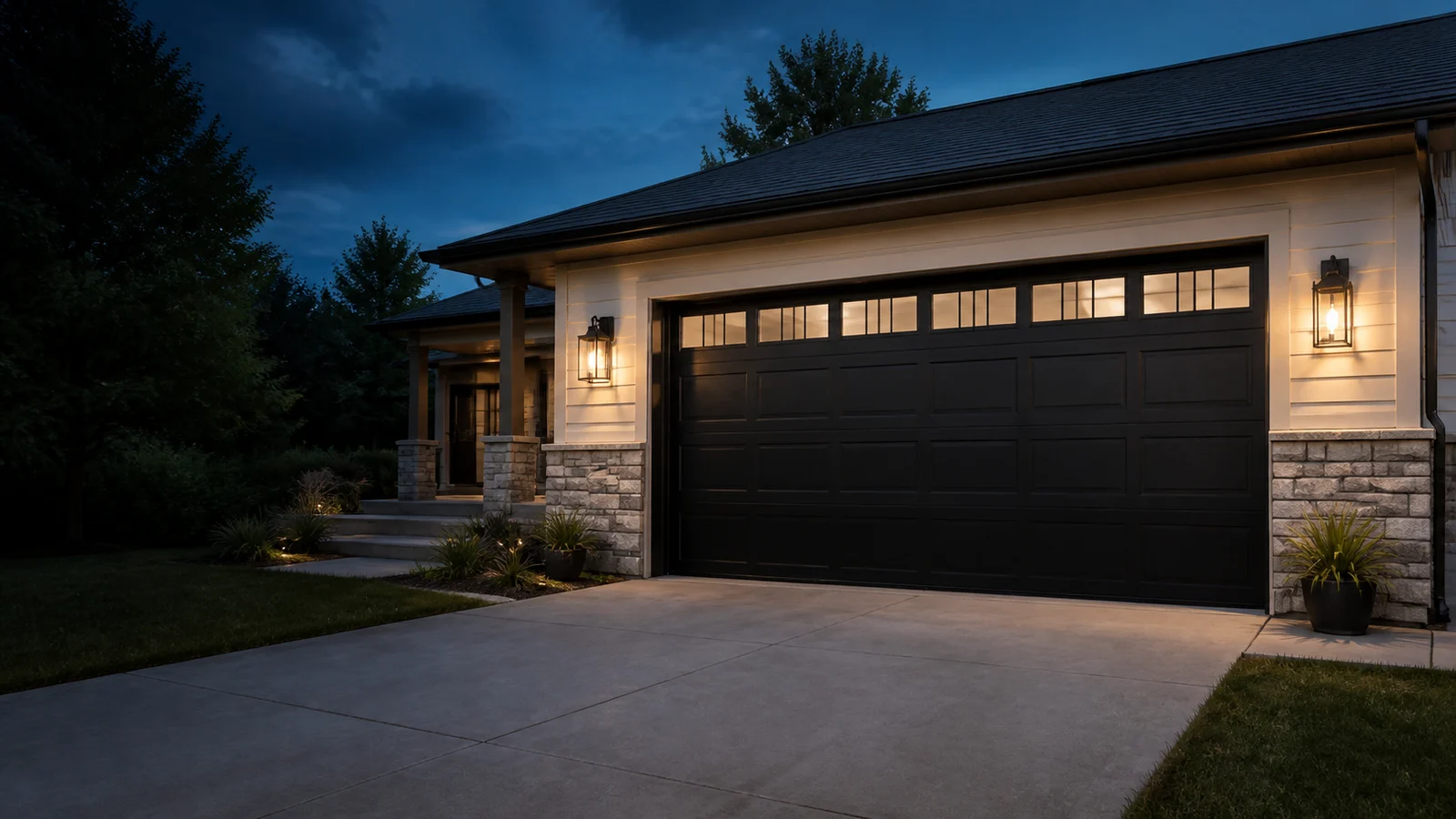
Durable, low-maintenance garage doors with flexible options for style, insulation, and budget.
Explore this door style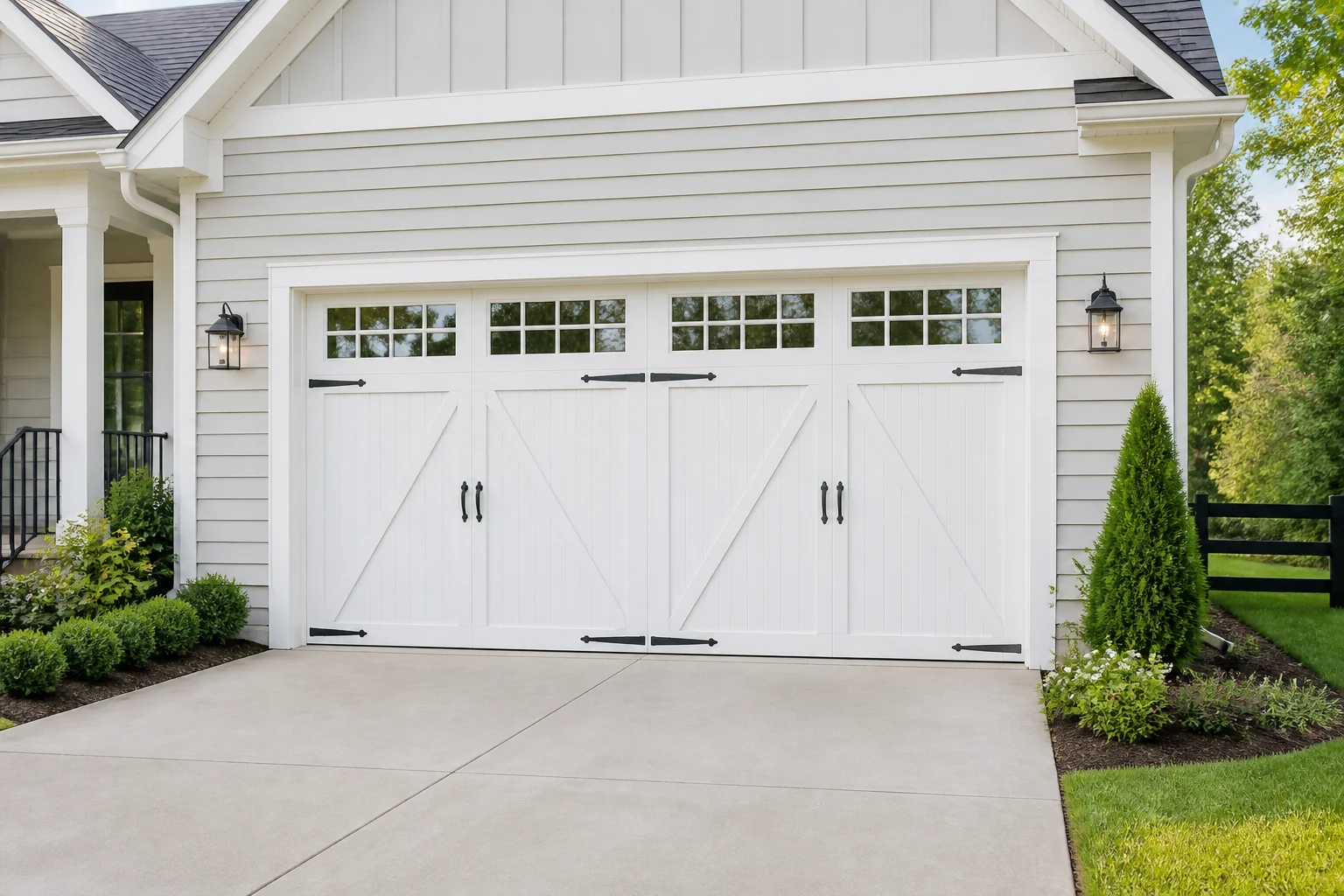
Stamped or overlay designs create a swing-door look while operating as a sectional overhead door.
Explore this door style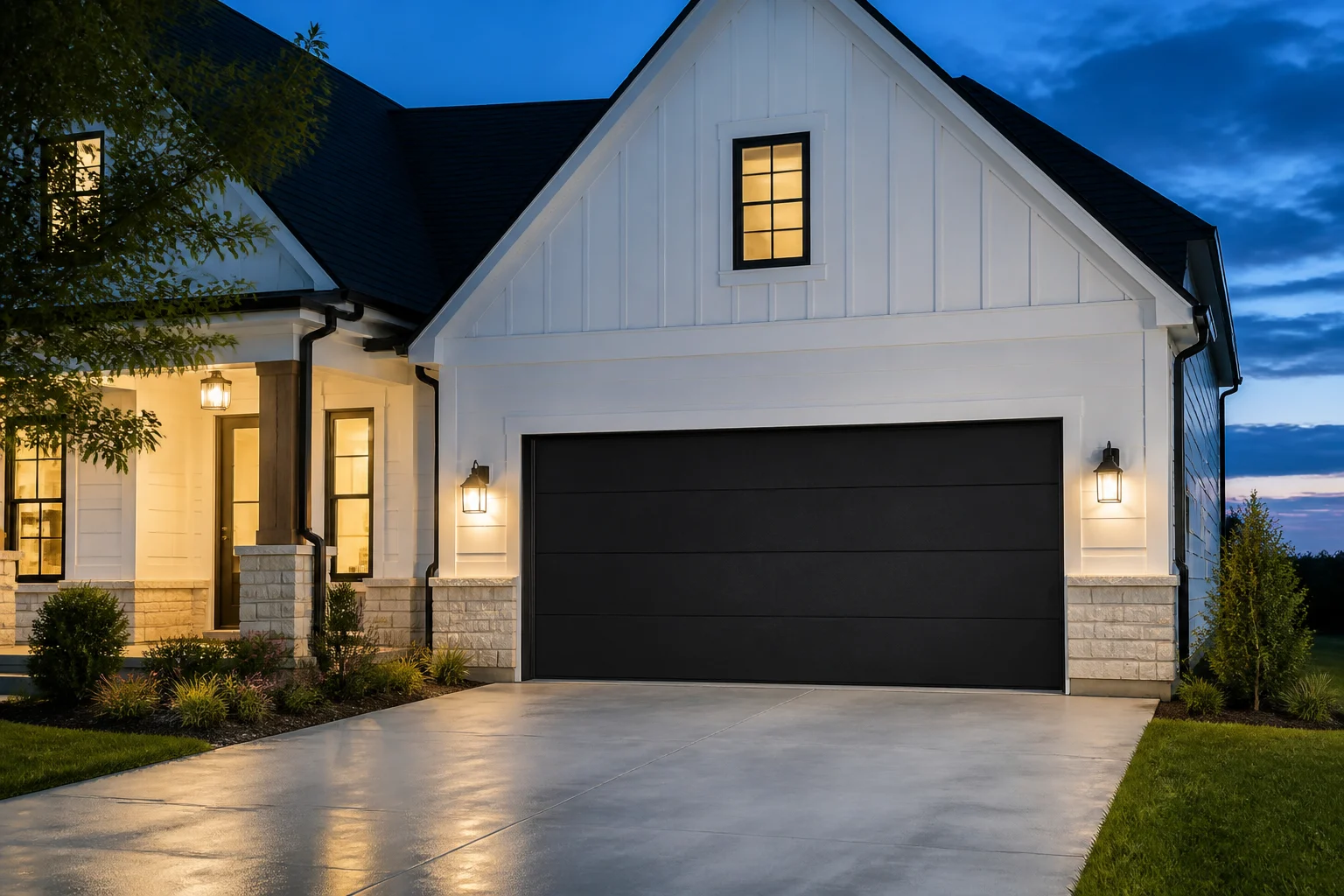
Flush faces, subtle grooves, plank lines, dark finishes, and asymmetric glass suit modern elevations.
Explore this door style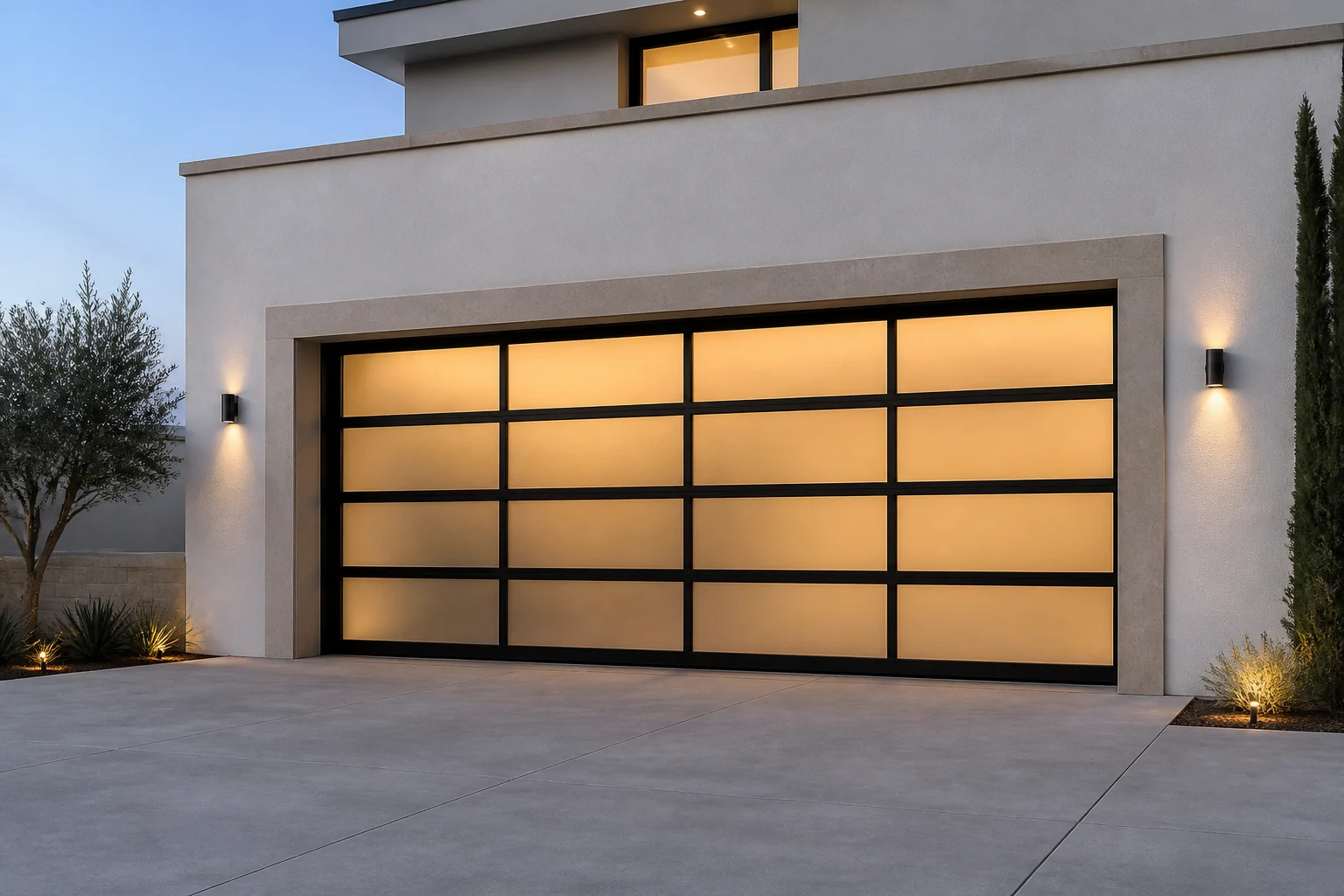
Aluminum frames and broad glass sections maximize light and create a distinctive architectural feature.
Explore this door style
Larger openings, high-cycle use, loading areas, wind, safety, and specialty hardware need project assessment.
Explore this door style