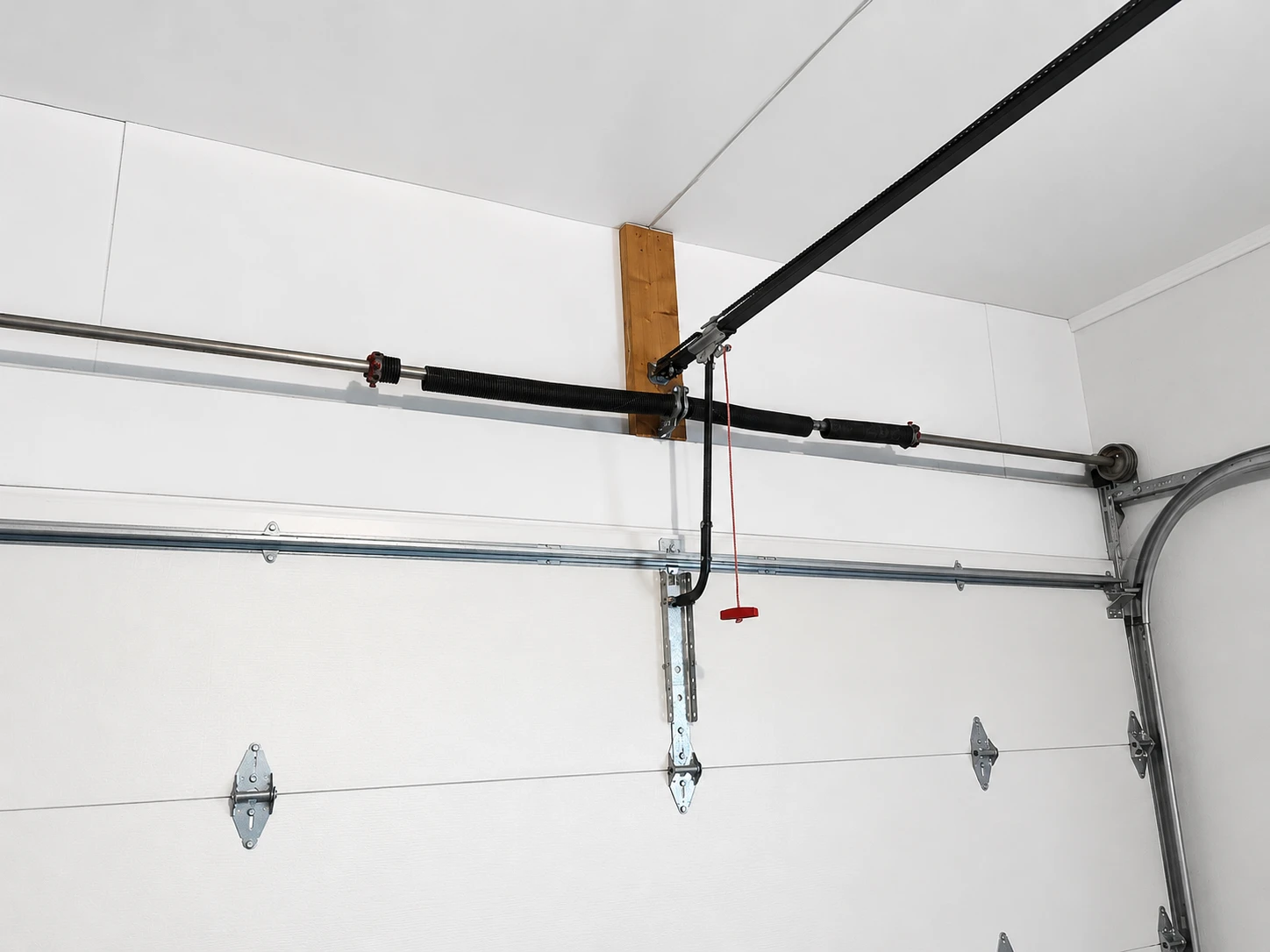
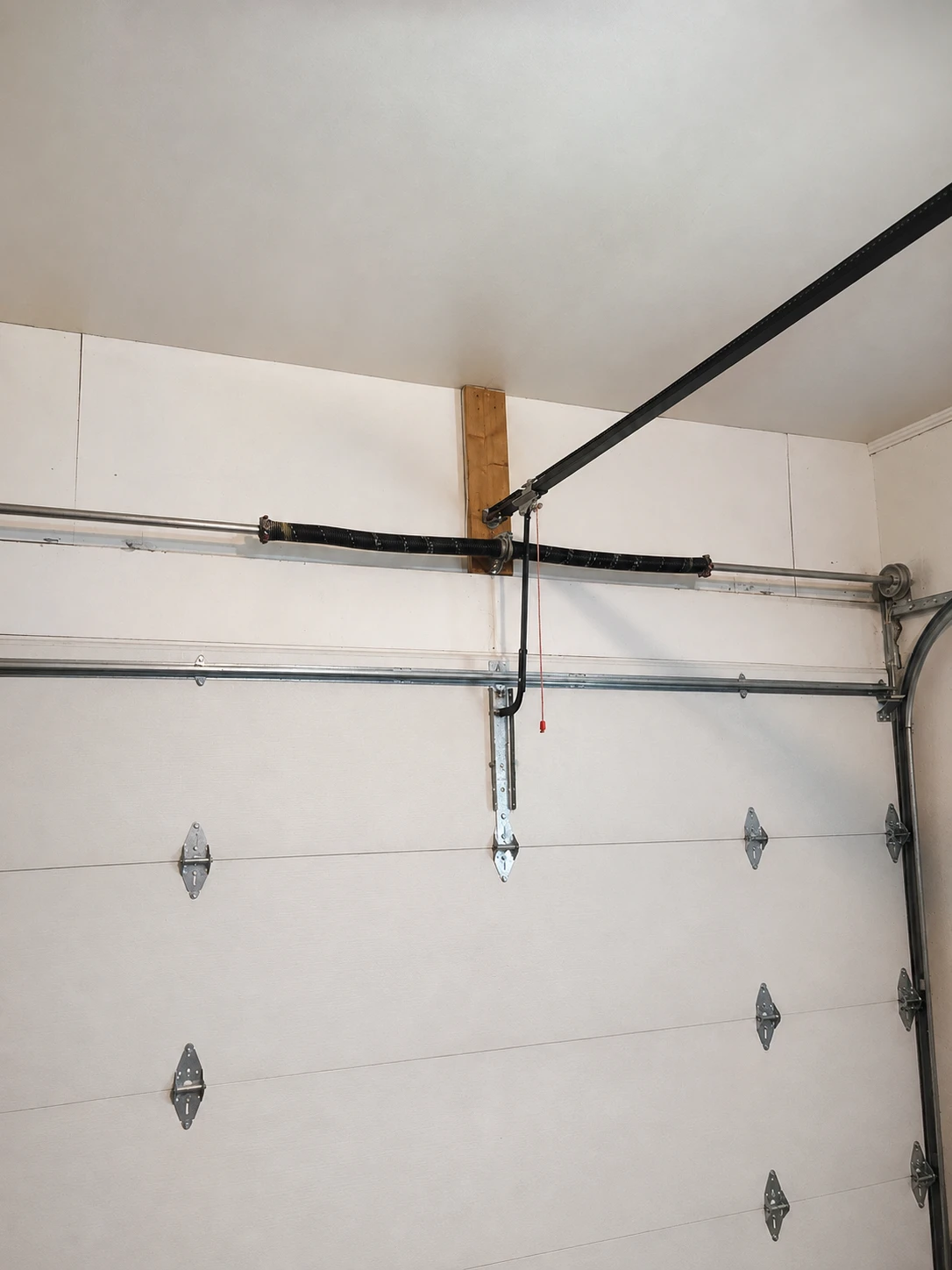
Torsion springs
- Location
- On a steel shaft above the door
- Movement
- Twists on the shaft to create torque
- Failure sign
- A visible gap opens in the coil
- Safety
- The shaft and hardware remain under high tension
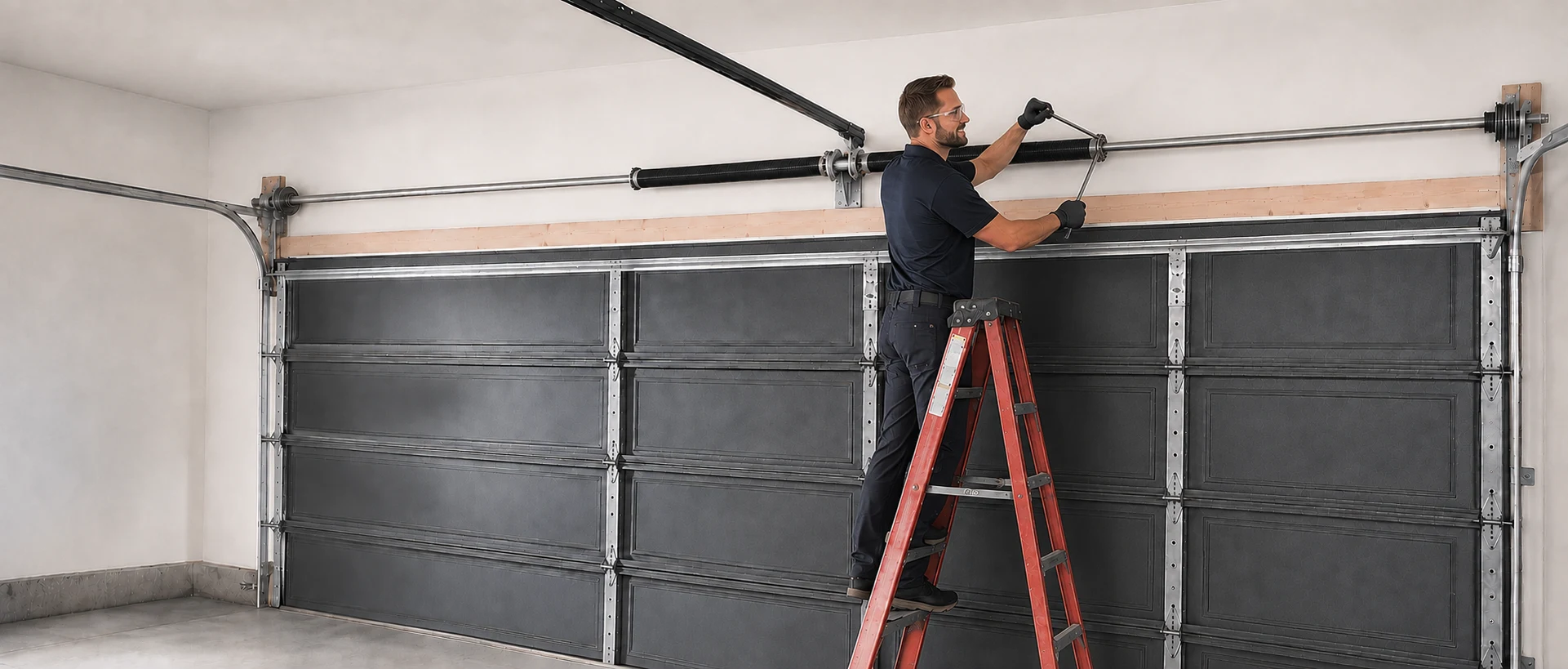
Garage door spring replacement in Spindletop Estates usually involves two torsion springs sharing one shaft on the newer garages near Newtown Pike. Both are replaced together, sized for the door you have now if a heavier insulated model went in.
Spindletop Estates spring replacement covers paired torsion springs on newer garages.




Safety check
What to do now
Do not touch the spring, cables, brackets, or emergency release. If the spring area is visible from the floor, a wide photo can help us prepare the right parts.
Customer reviews
Know the system
Some doors use enclosed spring assemblies, low-headroom hardware, conversion kits, or custom commercial configurations. These systems require model-specific parts and measurements before a quote can be finalized.
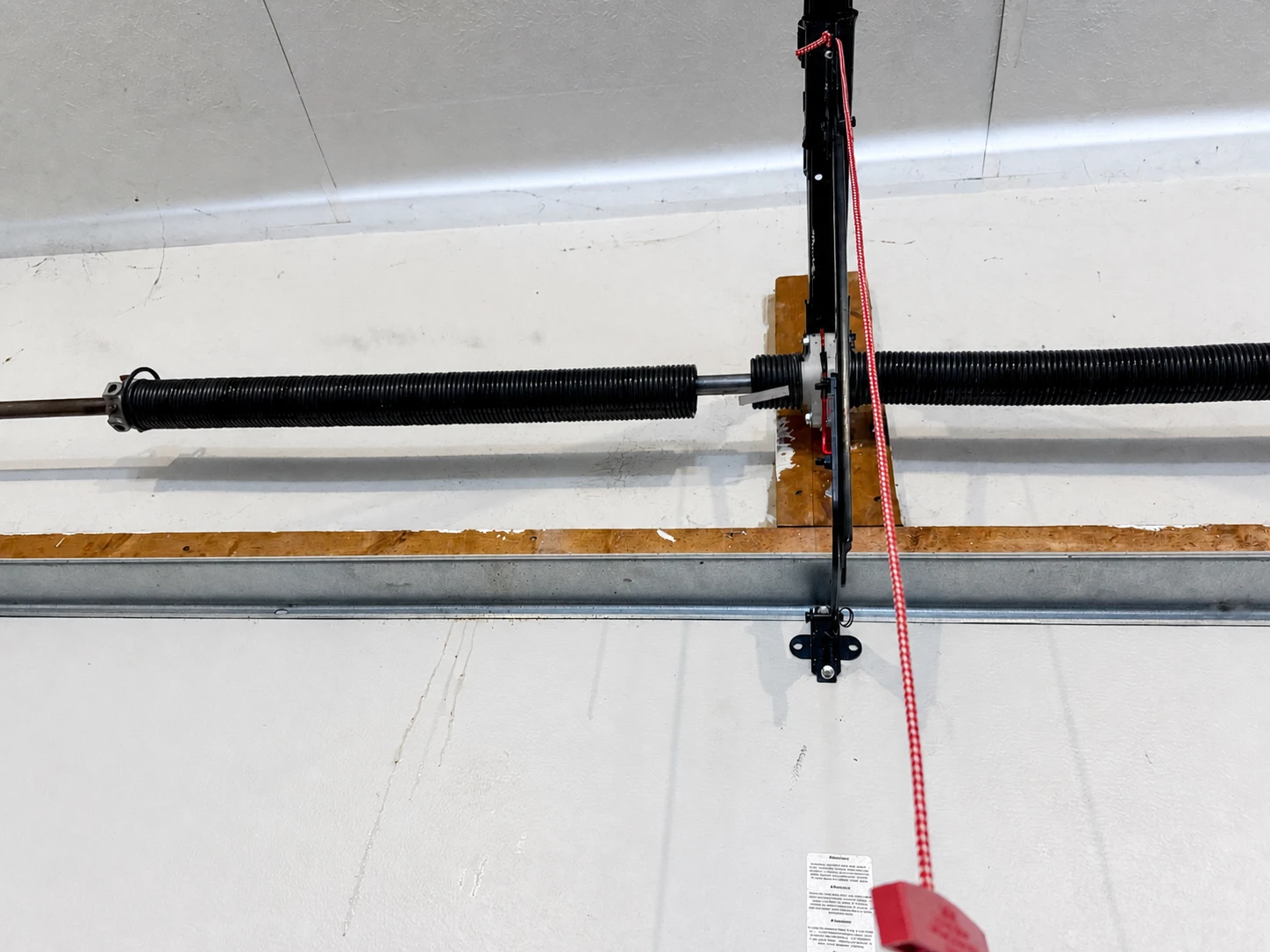
Not sure what you have? Send a wide photo from the floor. We can often identify the general system before the appointment, then confirm measurements on site.
Spring selection
A spring must counterbalance the actual weight of the door. We account for its width, height, panel material, insulation, glass, and any replacement sections.Sized to the actual weight of your door.
Cables, drums, bearings, center brackets, the torsion shaft, and fasteners share the load. Worn or mismatched parts can cause poor balance or repeat failure.Cables, drums and bearings share the load.
Wire size, inside diameter, coil length, winding direction, spring count, and cycle rating have to work together—not simply resemble the old part.Wire, diameter and length must all match.
Frequent operation, low-headroom tracks, custom doors, earlier conversions, and unusual access can all change the recommended setup.Use and headroom can change the setup.
On a two-spring garage door: both springs usually share the same age and cycle history. If one breaks, the other may be close behind. A paired replacement is often recommended, and the technician should explain the reason for your specific door before work begins.
Before · Broken spring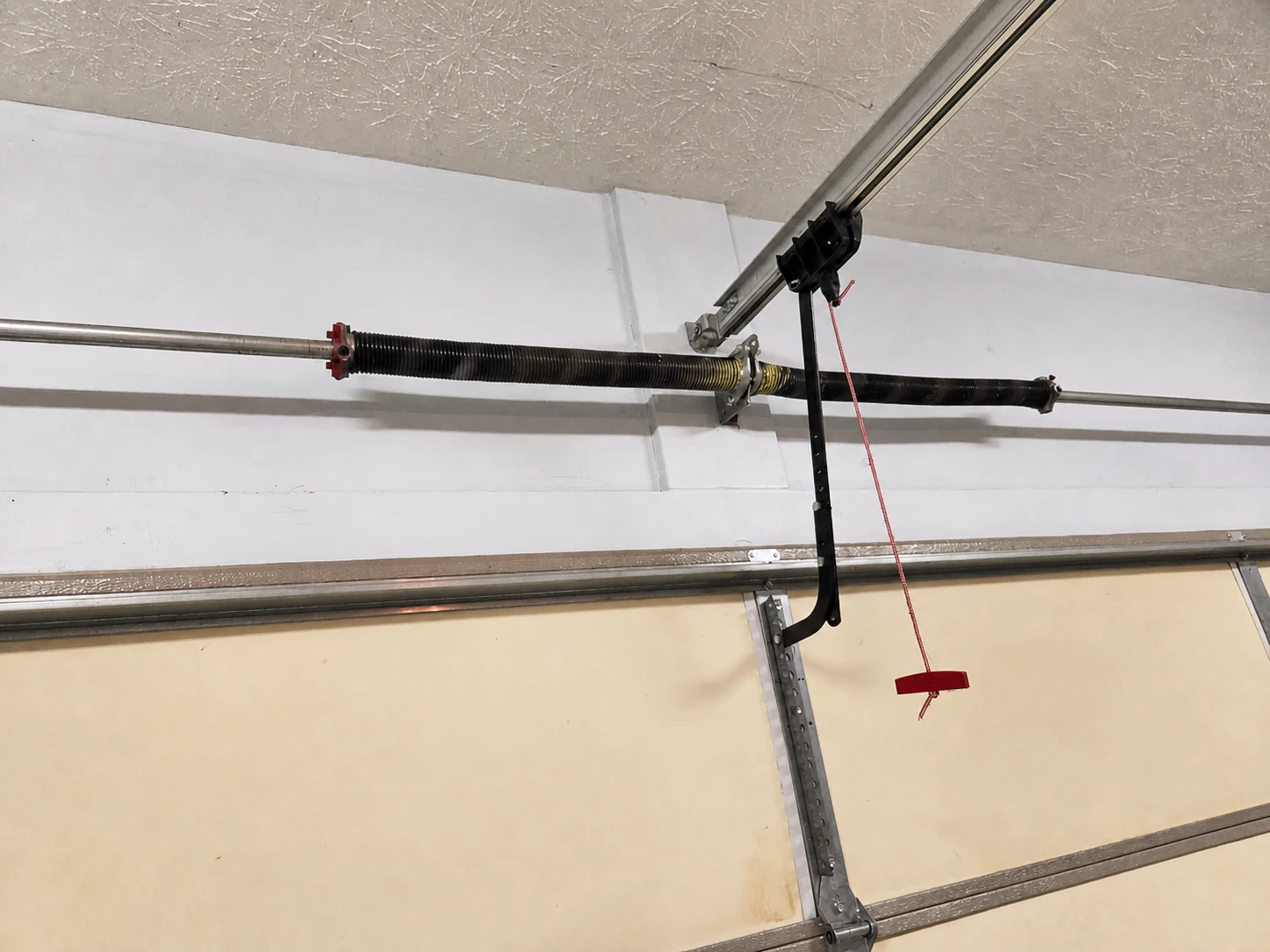 After · Replaced
Service and pricing
The technician documents the spring system, cables, drums, bearings, tracks, opener, and position of the door.Springs, cables, drums and tracks checked.
Door weight and spring dimensions are used to identify a replacement that balances the complete door.A spring sized to balance the whole door.
Required work and optional upgrades should be explained before installation begins.Required work explained before we start.
After professional replacement, the door is balanced, cycled, and safety-checked with the opener.Balanced, cycled and safety-checked.
Spindletop Estates was named for Spindletop Hall on Iron Works Pike, but its houses are mostly recent construction. On newer garages near Newtown Pike, the door usually hangs on torsion springs above the opening. If a heavier insulated door has replaced the original, those springs may no longer match its weight.
Each replacement spring is chosen for the door's current weight, whether it is the original door or a later upgrade. Many doors use two torsion springs sharing one shaft. When one breaks, the other has carried the same cycles, so we normally replace both. A broken spring leaves the door too heavy for the opener. Please do not force it. After the work, the door should lift by hand with little effort. It should also rest halfway open without drifting.
Service area coverage
Local ZIP: 40511
Before you schedule
A typical residential spring replacement generally costs $275 to $750. Where your door falls in that range depends on several details. Its weight, size and spring system are part of it. Spring count, cycle rating, the hardware needed and access matter as well, along with any conversion or custom part. Commercial, custom and unusually heavy systems may be priced outside the range.
You'll find extension springs beside or above the horizontal tracks. They stretch as the door closes. A torsion spring sits on a shaft over the door instead and uses torque to counterbalance it. Torsion setups usually give more controlled movement. On some lighter or older doors, extension setups are common, and they should include containment cables.
If the two springs are a matched set, they usually have the same age and cycle history. Replacing both may leave the door more evenly balanced and lower the chance you'll need service again soon. Before you approve the job, the technician should explain that recommendation as it applies to your door.
Most often, it's normal cycle fatigue. Added door weight, worn bearings or cables and poor balance can shorten a spring's life too, and so can incorrect sizing, earlier installation problems and corrosion.
Springs are rated in cycles, not a guaranteed number of years. Many standard residential springs carry a rating of about 10,000 cycles, while higher-cycle springs are built for heavier use. How long yours lasts depends on how often the door runs, correct sizing, the environment, balance and the state of related hardware.
No. Stop running it. Never pull the emergency release, and never try lifting the door. Without a working counterbalance system, a door can turn extremely heavy and unstable. Keeping it running can damage other parts.
Its job is to counterbalance the door you actually have. Track setup, spring count, door weight and cycle rating all affect the choice, and so do wire size, length, inside diameter, winding direction and spring type. A spring picked by looks alone may overload other parts or leave the door poorly balanced.
The technician should look over the complete door and measure the spring system and door load. They should explain the quote and install the correct parts before balancing and cycling the door. Then they test the opener and go over the parts-and-labor warranty that applies.
It can be dangerous. When a spring breaks, the cables and opener take the door's full weight, and so does anyone trying to lift it. Keep the door closed where you can, and unplug the opener too. People and cars should stay clear until a new spring is in and the drums and cables have been checked.
Local help for a heavy or stuck door
Let us know whether the door is open or closed, whether a vehicle is trapped, and what you heard or saw. Keep clear of the opening until it can be inspected.