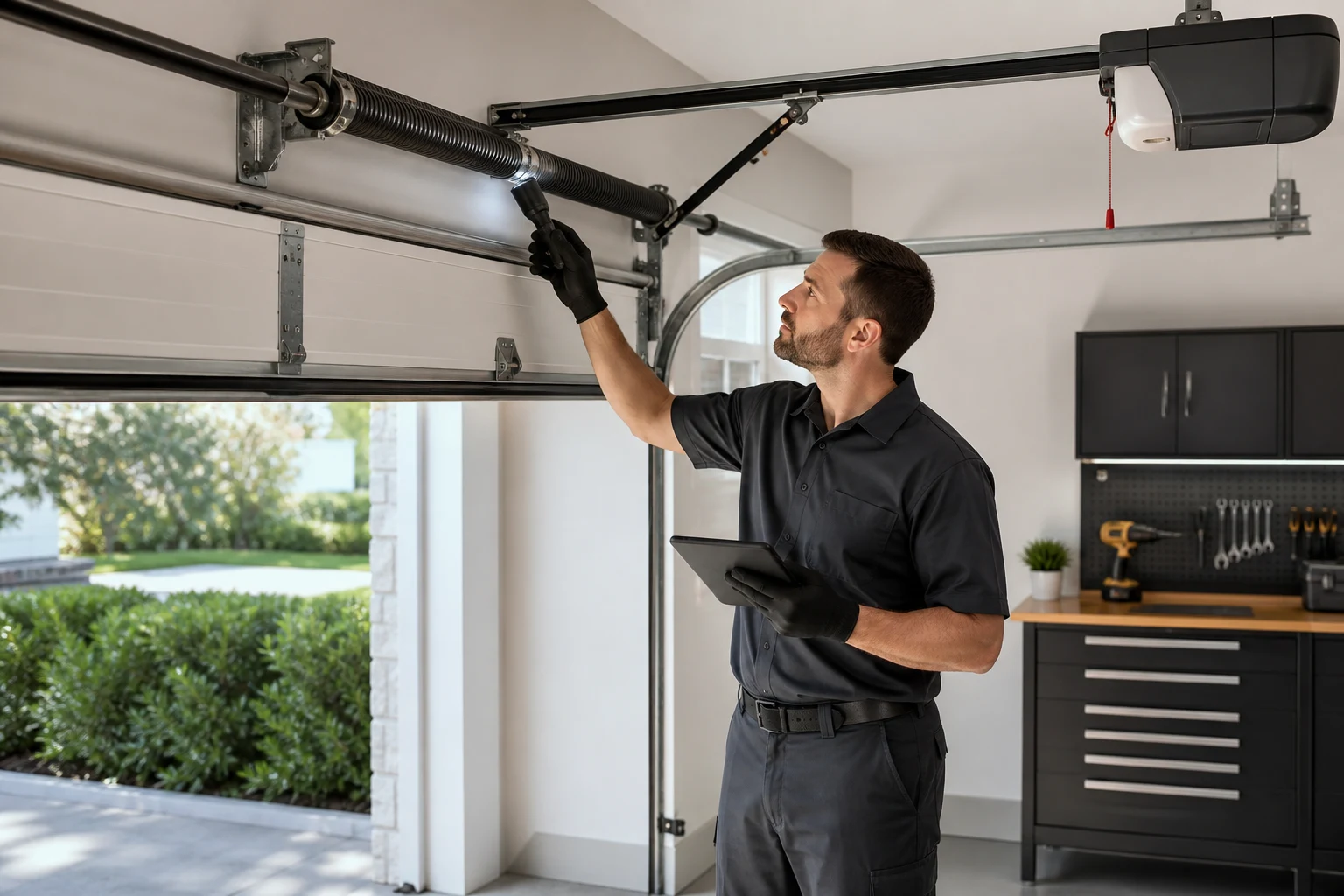
Technician recording torsion spring inspection findings on a tablet

Garage Door Tune-Up and Maintenance in Garden Springs, KY

A garage door tune-up in Garden Springs usually means a single-car door on one of the brick ranches off Harrodsburg Road. We tighten fasteners that decades of use have loosened, lubricate the hinges and rollers, then check the spring's tension.

Garden Springs garage door tune-ups tighten single-car doors on brick ranches.

Book Your Garage Door Tune-Up

25-point inspection • Clear, written summary

Step 1 of 2
Required field
Required field
Required field

Maintenance check

6 Signs Your Garage Door Is Due for a Tune-Up

  • 01
    The door is louder than it used to beSqueaks, grinding, rattles, and popping usually trace back to dry rollers, loose hardware, or a door slipping out of balance. Those are the exact things a tune-up corrects before they cost parts.Noise usually means dry rollers, loose hardware or imbalance.
  • 02
    Slower, jerky, or hesitant travelA door that stutters through its cycle or pauses partway is binding somewhere. Lubrication, track cleaning, and balance work often restore smooth travel without a repair.Stuttering travel means the door is binding somewhere.
  • 03
    The door will not hold at halfwayWith the opener disconnected, a balanced door stays put when lifted halfway. If it drifts up or sinks, the springs have lost tension and the opener is carrying weight it was never meant to lift.A door that drifts up or sinks has lost spring tension.
  • 04
    The opener hums, strains, or reversesAn opener fighting a heavy door or a misaligned photo-eye works harder every cycle. A tune-up tests the force and travel settings, cleans and aligns the sensors, and checks the safety reversal.The opener may be fighting a heavy door or a misaligned eye.
  • 05
    Rust, fraying, or loose hardware you can seeFrayed cable strands, rusted springs, elongated hinge holes, and backed-out lag bolts are all visible from the floor, and all far cheaper to address at a scheduled visit than after they fail.Frayed cables, rust and loose bolts cost less to fix early.
  • 06
    It has been more than a yearA typical Kentucky door cycles 1,200–1,500 times a year through freeze-thaw winters and humid summers. Manufacturers and the International Door Association recommend professional service at least annually.Professional service is recommended at least once a year.

What to do now

Schedule a tune-up for a noisy or slow door.

A noisy or slow door can wait for a scheduled visit; just skip unnecessary cycles until then. If the door is crooked, hanging, will not stay up, or you can see a broken spring or frayed cable, stop using it and keep the opening clear. That is a repair call, not a tune-up.

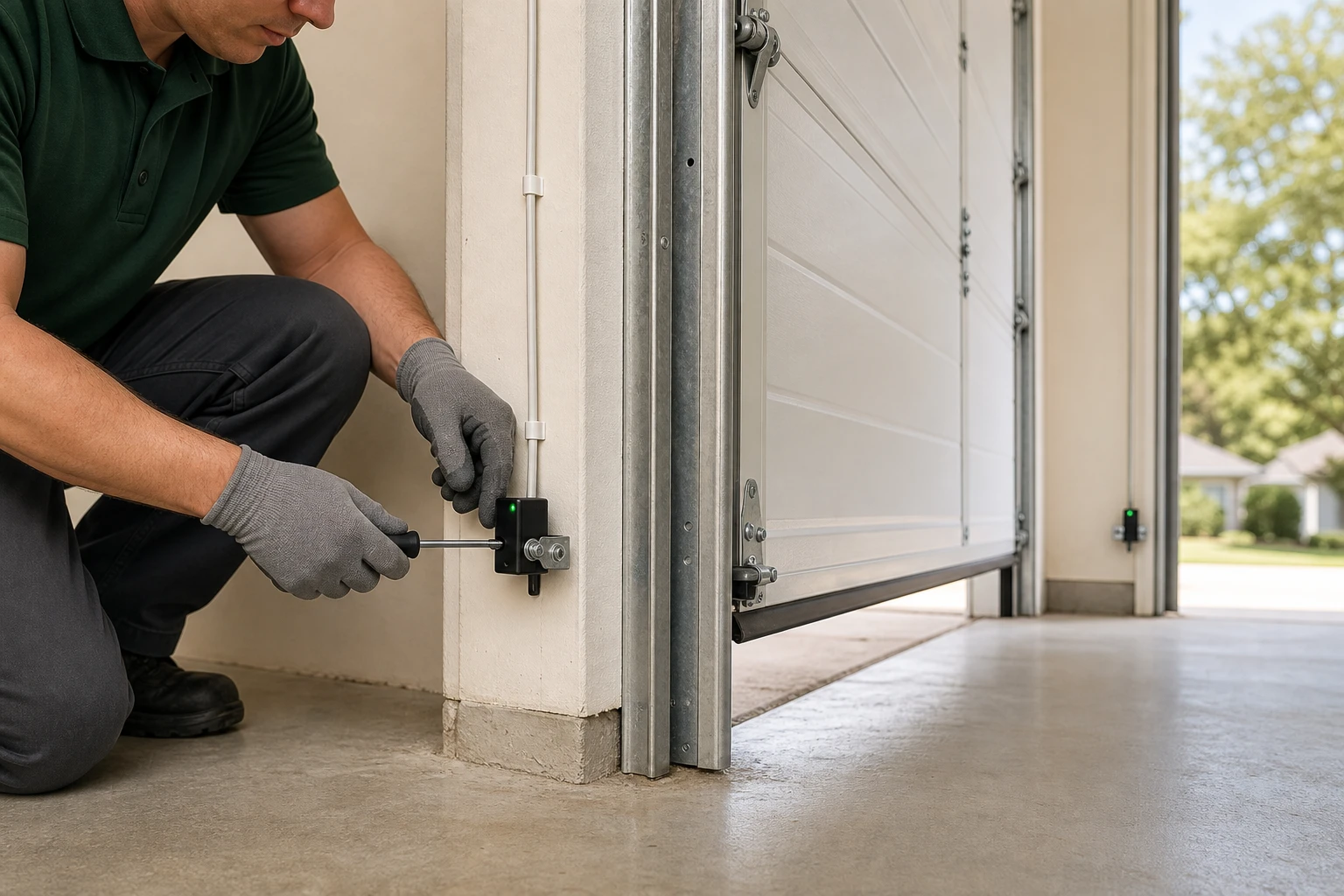
Technician checking a photo-eye safety sensor near the floor
Photo-eyes are cleaned, aligned, and beam-tested on every tune-up. It is the safety system most often found out of adjustment.

Customer reviews

Kentucky homeowners recommend Derby Strong.

Understand the service

What your garage door tune-up covers

Know the difference

Monthly Homeowner Check vs. Professional Annual Tune-Up

Five minutes, once a monthHomeowner check
About an hour, once or twice a yearProfessional tune-up
What gets looked at Watch and listen from the floor; look for rust, fraying, loose parts, daylight at the sealsListen for new noise and look for rust, frayed cables, loose hardware, or light around the seals. 25-point inspection of springs, cables, drums, bearings, hardware, tracks, opener, sensors, and sealsWe inspect 25 points across the springs, cables, tracks, opener, sensors, hardware, and seals.
Safety tests Balance test at halfway; break the photo-eye beam; 1½-inch board auto-reverse testConfirm the disconnected door holds halfway. Test the photo-eyes and auto-reverse. Three-position balance test and door weight; force, travel, photo-eye, auto-reverse, and emergency releaseWe test door weight and three-position balance, then verify force, travel, photo-eyes, auto-reverse, and emergency release.
What gets adjusted Nothing under tension: clean the tracks, lubricate hinges and steel roller bearings, change remote batteriesClean the tracks, lubricate safe moving parts, and replace remote batteries. Leave anything under tension alone. Spring tension, opener force and limits, photo-eye alignment, fastener torque, track alignment, set screwsWe adjust spring tension, opener limits, sensor and track alignment, and tighten fasteners and set screws.
What you walk away with An early warning that something changedAn early warning when something changes. A written summary of what was done, what is fine, and what to plan forA written summary of what was completed, what is working properly, and what to plan for.

Timing it to Kentucky seasons.

Early spring, after freeze-thaw winters have loosened hardware and dried out lubrication, and early fall, before the first hard freeze tests tired springs and seals. If the garage is your main entrance or the door cycles more than six times a day, plan on both.Schedule in early spring or fall. If the garage is your main entrance or the door runs more than six cycles daily, schedule twice a year.

Not sure when it was last serviced? That is reason enough. Most doors we see have never had a professional tune-up, and the first one tends to find the most.

The three things that matter most

Lubrication, Balance, and the Safety Tests, Done Right

01

Lubrication done correctly

Garage-door-specific silicone or white lithium on hinge pivots, roller bearings, springs, bearing plates, and the opener chain or screw. Never on the track, which should be cleaned, and never general-purpose penetrating spray, which displaces water and attracts grit rather than lubricating.Door-specific lubricant on moving parts, never on the track.

02

Balance and tension

The door should hold at one panel up, at halfway, and fully open, and should weigh under roughly 5 pounds on a scale at the floor. If it fails, spring tension is adjusted by the technician, never by the homeowner, so the opener is no longer carrying the door.A balanced door holds in place; a technician sets the tension.

03

Force, travel, and safety reversal

Opener force and travel limits are set so the door closes fully and reverses on contact. The photo-eyes are tested by breaking the beam, and the auto-reverse is tested with a 1½-inch board on the floor. These are the tests that keep people and vehicles safe.Force and travel set, photo-eyes and auto-reverse tested.

The 25-point inspection

The Four Systems Every Tune-Up Works Through

  1. 01

    Counterbalance system

    Springs are checked for rust, gaps, and cycle wear; the door is weighed and balance-tested at three positions; cables, drums, end and center bearings, and the torsion shaft are inspected and set screws verified.Springs, cables, drums and bearings, plus a balance test.

  2. 02

    Door, hardware, and tracks

    Hinges, rollers, bottom and top brackets, struts, and every fastener are inspected and torqued; tracks are checked plumb and parallel, cleaned, and their mounting brackets tightened; panels are checked for stress cracks.Hinges, rollers, brackets, fasteners and track alignment.

  3. 03

    Opener and controls

    Chain, belt, or screw tension and trolley wear; gear and sprocket condition; force and travel-limit settings; remotes, keypad, wall console, and battery backup; light bulbs that can interfere with the remote signal.Drive tension, gears, force and travel limits, and remotes.

  4. 04

    Safety systems and seals

    Photo-eyes are cleaned, aligned, and beam-tested; the auto-reverse is tested against a 1½-inch board; the emergency release is checked; bottom seal and perimeter weatherstrip are inspected for gaps and daylight.Photo-eyes, auto-reverse, emergency release and seals.

Nothing is replaced without a quote: the tune-up price covers inspection, lubrication, tightening, balance work, and the safety tests. If we find a worn roller, a frayed cable, a split seal, or a tired spring, we show you, price it, and let you decide, today or later.

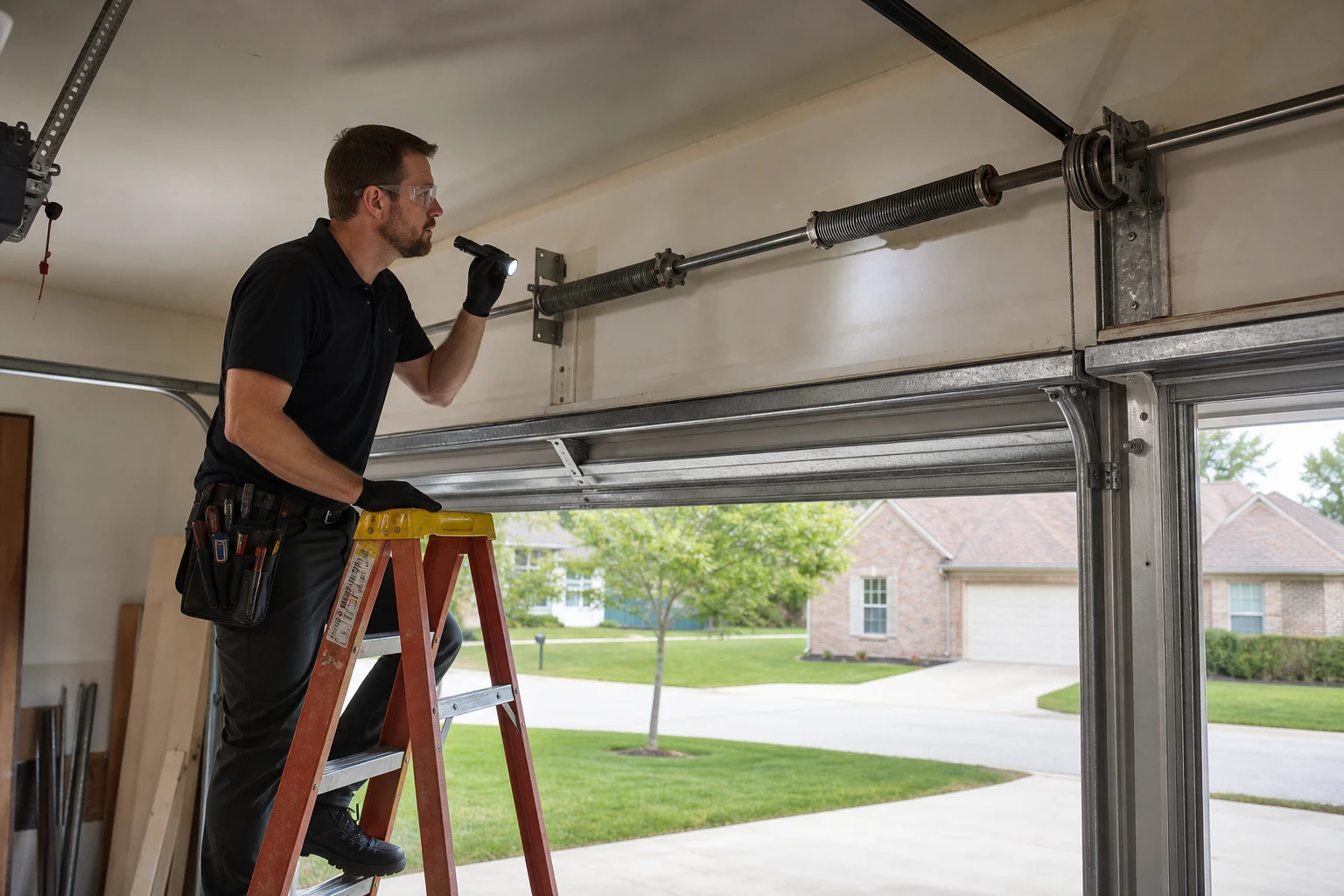
Technician on a ladder inspecting the torsion spring and track Inspect · Springs, shaft, and track
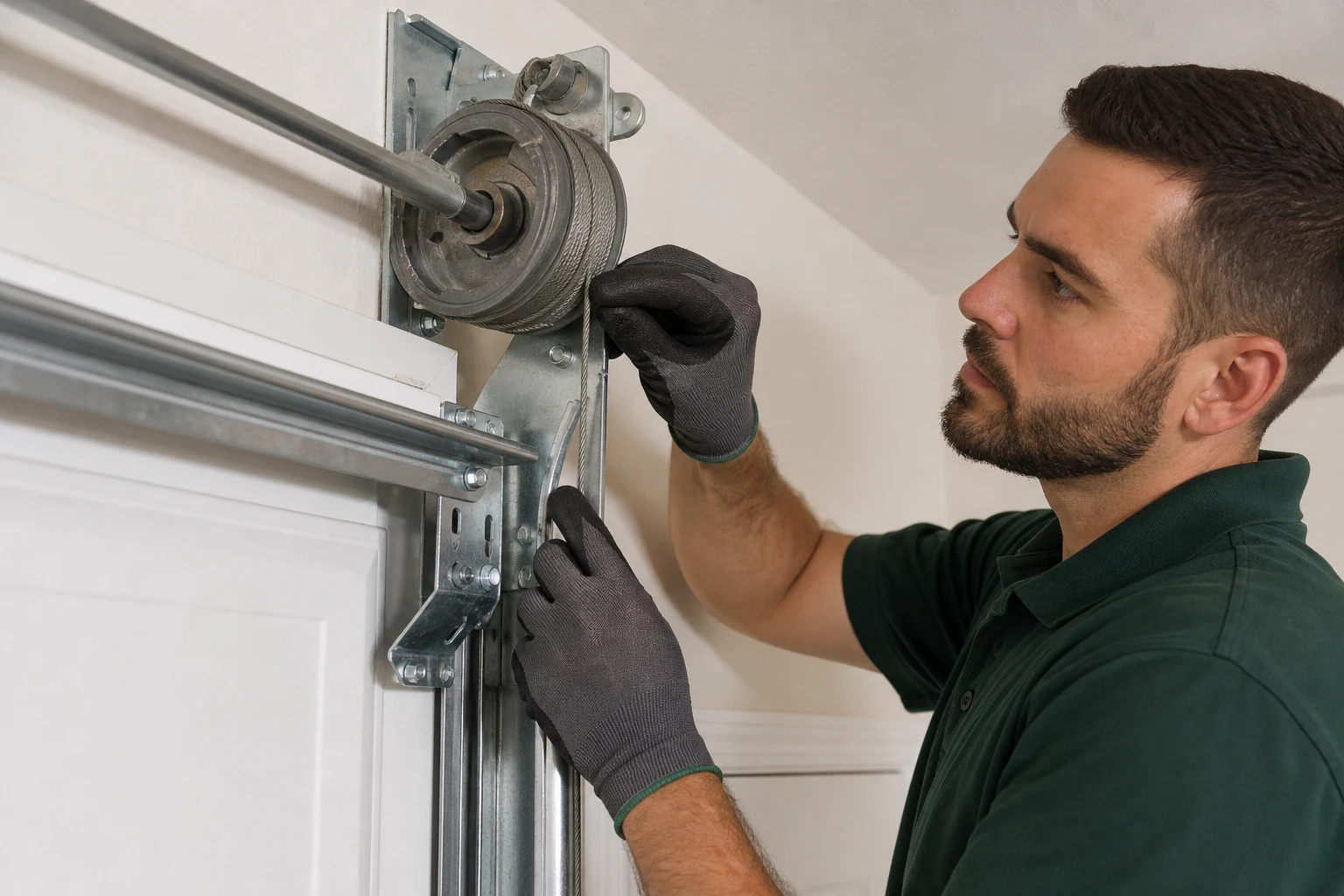
Technician checking the lift cable and drum at the top door corner Check · Cables, drums, and set screws
Every tune-up works from the counterbalance down: springs and shaft, then cables and drums, then hardware, opener, and safety systems.

Service and pricing

What a Tune-Up Includes—and What It Costs

Four clear steps

  1. 01

    Inspect and document

    The technician works through the 25-point checklist from the springs to the sensors and notes every condition before touching a tool.We work through the 25-point checklist first.

  2. 02

    Lubricate, clean, and tighten

    Moving hardware is lubricated with the right product, tracks are cleaned, and every fastener, bracket, and lag is checked and torqued.We lubricate moving parts, clean tracks and torque fasteners.

  3. 03

    Balance, calibrate, and test

    Balance is tested and corrected where needed; opener force, travel, photo-eyes, and auto-reverse are tested and set; the seals are checked.We correct the balance and test the opener and safety systems.

  4. 04

    Walk through the report

    You get a plain-language summary of what was done, what looks good, and anything worth planning for, with no pressure to fix it today.You get a plain-language summary, with no pressure.

Garage door tune-up across Garden Springs

Winter in Garden Springs brings frequent freezing nights. From Harrodsburg Road to Georgian Way, its brick ranches have single-car garages, some attached and some detached. Fasteners and hinges on an older door work loose with use. A check before the first hard freeze keeps the moving parts ready for winter.

A tune-up covers the whole door, starting with its balance. Hinges, rollers and spring bearings are lubricated to cut friction, which also quiets the door. Track bolts and hinge fasteners that have worked loose get tightened. The safety sensors have to line up, and the opener has to reverse when the door meets an object. Worn cables, flat rollers and tired springs are pointed out before they strand a car. You get a short rundown of what looks good and what to watch.

Service area coverage

Local ZIP: 40504

Open in Google Maps

Before you schedule

Answers to Common Garage Door Maintenance Questions

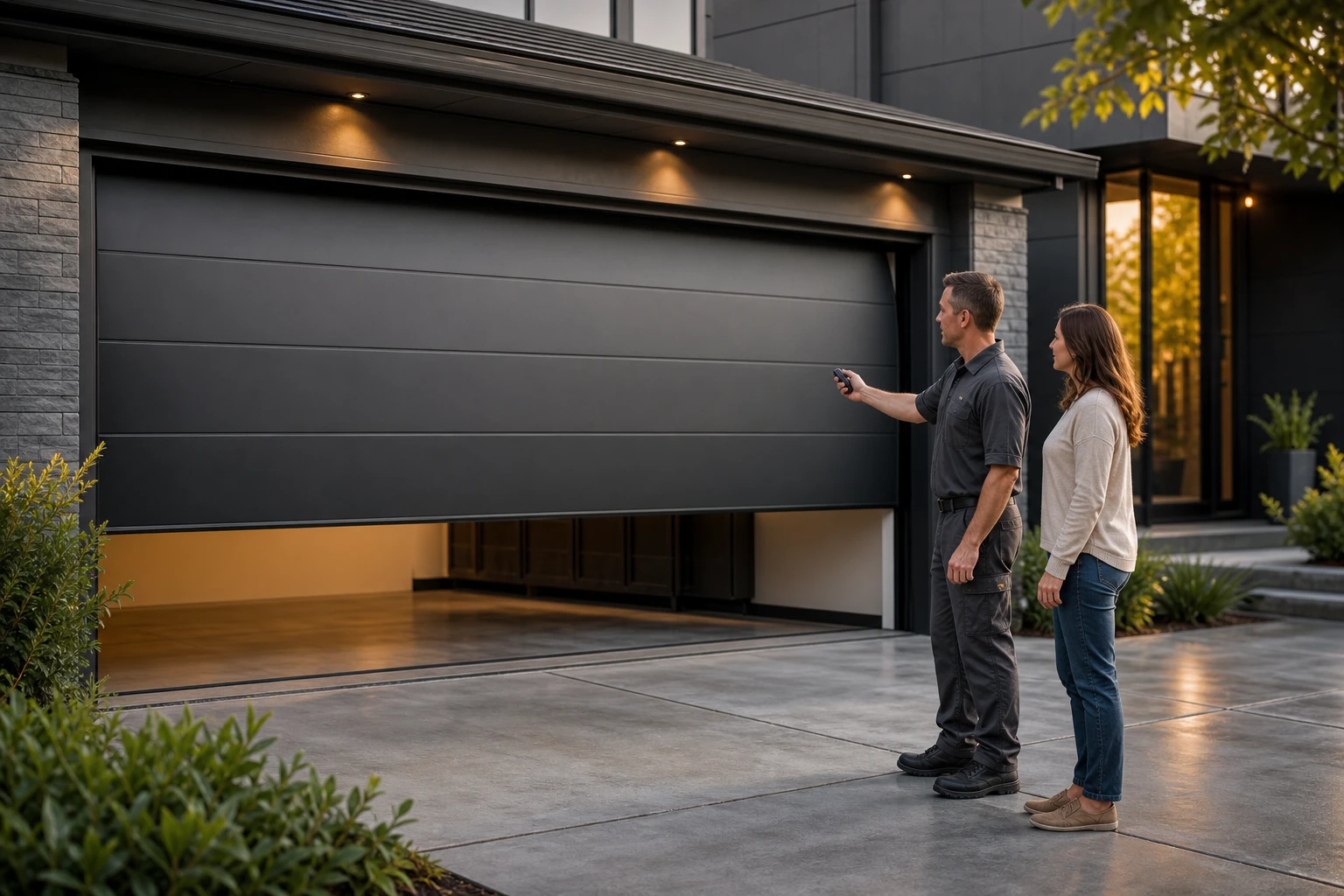
Technician and homeowner testing a garage door after maintenance
How often
Professional tune-up yearly; twice for heavy use. Homeowner safety check monthly.
How long
About 45–60 minutes per door, longer if balance needs correction
Balance test
Opener disconnected, door holds at one panel up, halfway, and fully open
Safety tests
Photo-eye beam break; auto-reverse on a 1½-inch board; emergency release
Tune-up at a glanceThe rhythm, duration, and the two tests that matter most.
01How much is a tune-up for my garage door in Garden Springs?

Most single-door tune-ups cost $75–$150. Included are the 25-point inspection, safety and balance testing, lubrication, a tightening of the hardware and a written summary. If two doors are serviced during the same visit, the usual price is $120–$225. A door that fails the balance test and needs its spring tension reset should be budgeted at $125–$250. Should the inspection turn up worn hinges, rollers, cables or seals, each is quoted before work begins so you can choose.

02What does a tune-up on a garage door cover?

A full inspection starts it, covering cables, drums, springs, bearings, hinges, rollers, brackets, tracks, sensors, opener, seals and panels. Moving hardware is treated with a lubricant specific to garage doors. Tightening covers every fastener and bracket. A three-position balance test is next, with any adjustment needed. The opener is tested for force and travel limits, and the photo-eyes and auto-reverse for safety. A plain-language report comes last.

03How often does a garage door need servicing?

The industry baseline is once a year, and manufacturers commonly link warranty coverage to that annual service. Twice a year is sensible if the garage is your household's main entrance or the door runs through more than six cycles a day. Kentucky's freeze-thaw and high-humidity seasons also make a second visit worthwhile. Between visits, a monthly homeowner check of balance, photo-eyes and auto-reverse takes five minutes.

04When should I schedule a garage door tune-up in Kentucky?

Aim for early spring and early fall. Coming out of winter, swings in temperature and moisture can work hardware loose and leave lubrication dried out. Going into winter, the springs, seals and balance need checking so a tired part does not fail in a cold snap. With only one visit a year, book it before the first freeze.

05Which checks can I safely do on my own between service visits?

Keep the tracks clean, and use a garage-door lubricant on the hinge pivots and steel roller bearings. From the floor, watch the door and listen as it runs. With the opener disconnected, test the balance. Test the auto-reverse with a 1½-inch board, and break the photo-eye beam as the door comes down. Leave the opener force settings, springs, cables and bottom brackets to a technician.

06Which garage door lubricant should I buy, and which should I stay away from?

Buy a garage-door lubricant with a silicone or white lithium base. It belongs on the bearing plates, springs, hinges and steel roller bearings. Keep it off nylon rollers and the track surface. A WD-40-style penetrating spray is the wrong lubricant, since it displaces water and attracts grit. Ordinary grease hardens in the cold, so avoid it too.

07Will a tune-up cut down on garage door noise?

Usually. Most noise comes down to an unbalanced door straining the opener, loose hardware, or hinges and rollers that are dry. A tune-up takes care of all three. When the rollers are worn or the opener chain slaps, we will flag it for you and quote that work separately from the tune-up.

08Can regular service prevent breakdowns?

It prevents the breakdowns that are preventable. No tune-up prevents a spring from using up its cycle life. Loose bottom brackets, frayed cables, balance drift, dried bearings and misaligned photo-eyes are different: a tune-up catches them before they strand the door. It also saves the opener from early wear caused by carrying a heavy door.

09Why is a garage door balance test important, and what does it involve?

Disconnecting the opener comes first. Next, the door is lifted in three steps, stopping one panel up, at the halfway point and fully open. A balanced door holds still at each stop. Measured on a scale at the floor, it also weighs only a few pounds. Drift or extra weight means the springs are not carrying the load, so the opener carries it. The result is a shorter life for the opener and a door that can drop.

10Does a tune-up make sense for an older garage door?

Often it is the best value for an older door. It gives you an honest picture of what is wearing and what is still fine. If the inspection finds the door near the end of its life, we tell you so and help you weigh repair against replacement. Either way, the money spent on the tune-up is not wasted.

11What signs tell me my garage door needs a tune-up?

Grinding or squealing is one sign, and so is a start that jerks. A door that drifts once stopped halfway is another. Worn or flattened seals count too, as does an opener that struggles or reverses for no obvious reason. A tune-up finds these early, before a failed spring, cable or roller leaves the door stuck.

Local maintenance for the door you use every day

Tell us about your door. We’ll schedule the visit.

Let us know how many doors and openers you have, roughly how old they are, and anything you have noticed, such as noise, hesitation, or a door that feels heavy. We will confirm the tune-up price when we book.

  • Number of doors and openers
  • Noise, hesitation, or heavy feel
  • Main entrance or occasional use
Call (859) 436-2954

Book a Garage Door Tune-Up

Serving Garden Springs and nearby Lexington communities. Share the essentials and we’ll call to confirm the right service timing.

Step 1 of 2
Required field
Required field
Required field

Derby Strong Garage Doors

Garage door trouble?

Talk to our local team now about a broken spring, a stuck door, an opener or a new door.

Call (859) 436-2954 Schedule online

5.0 from 304 reviews