Out of balance
The door drifts, feels heavy, or slams even though it sits level.
- Likely cause
- Springs have lost tension or do not match the door’s weight.
- Repair
- Set spring tension, or replace springs that can no longer hold.
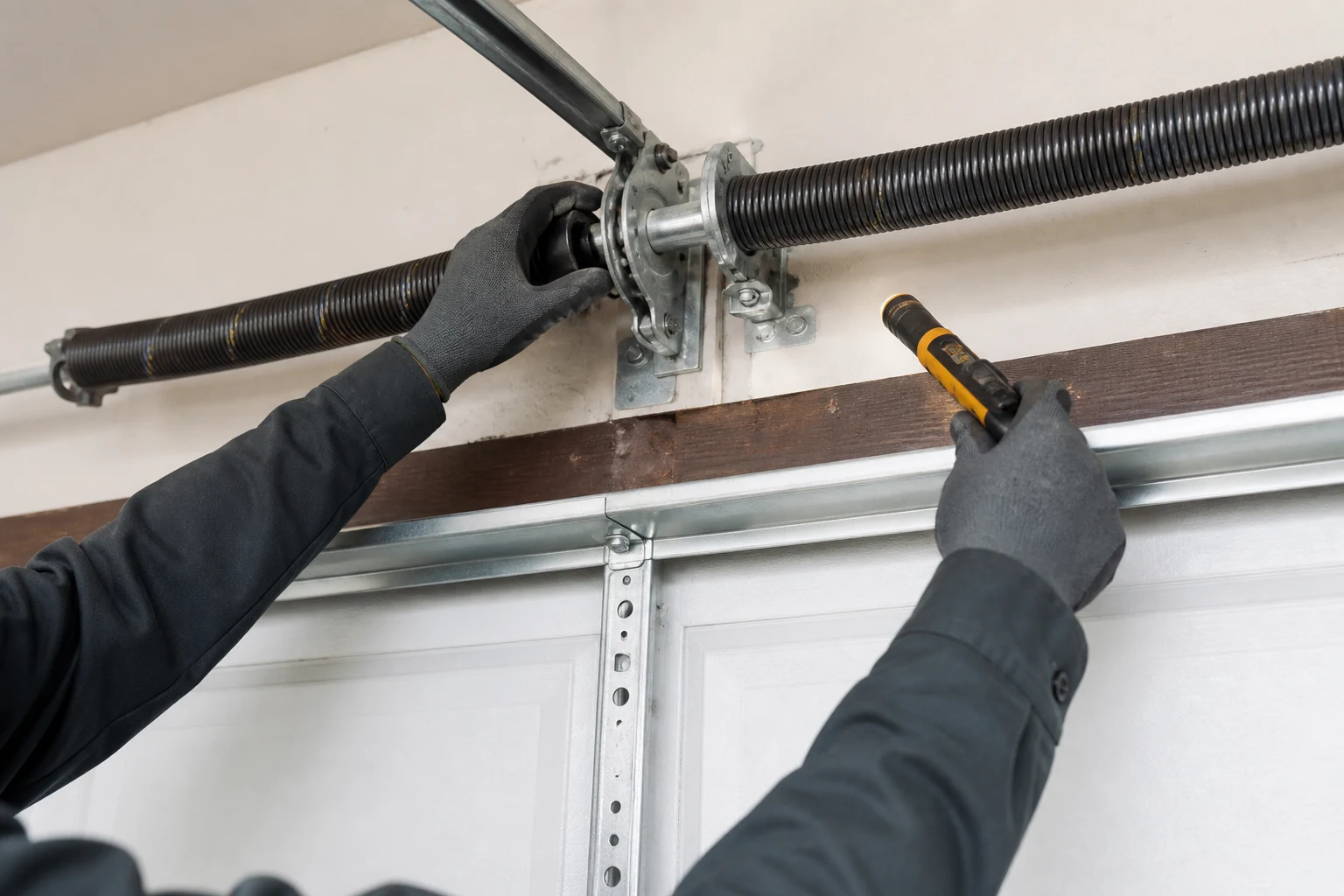
A heavier insulated door on an Independence home in the Lakefield subdivision usually needs a garage door balance adjustment. The original springs were sized for the builder's door, so we reset them to the new weight.
We adjust garage door balance in Independence after an upgrade to a heavier door.




Safety check
What to do now
Run the halfway balance test with the opener disconnected. If the door drifts, sinks, or feels heavy, reconnect the opener and keep cycles to a minimum until it is adjusted. Do not raise the opener’s force setting to compensate, do not touch the springs or cables, and do not use a door that is crooked or will not hold.
Customer reviews
Know the difference
The door drifts, feels heavy, or slams even though it sits level.
The door looks crooked or shifts sideways while moving.
Force and travel settings are meant to be calibrated to a balanced door. Turning the force up so a heavy door will close hides the problem, wears the opener out early, and can stop the door from reversing on a person, a pet, or a car. We set force last, after the balance is right.Force is calibrated only after the door is balanced. Turning it up can damage the opener and weaken safety reversal.
Not sure which you have? Send a wide photo of the door from the floor, open and closed if it is safe to operate. Crooked usually means alignment; square-but-heavy usually means balance. We confirm on site.
Before any tension is set
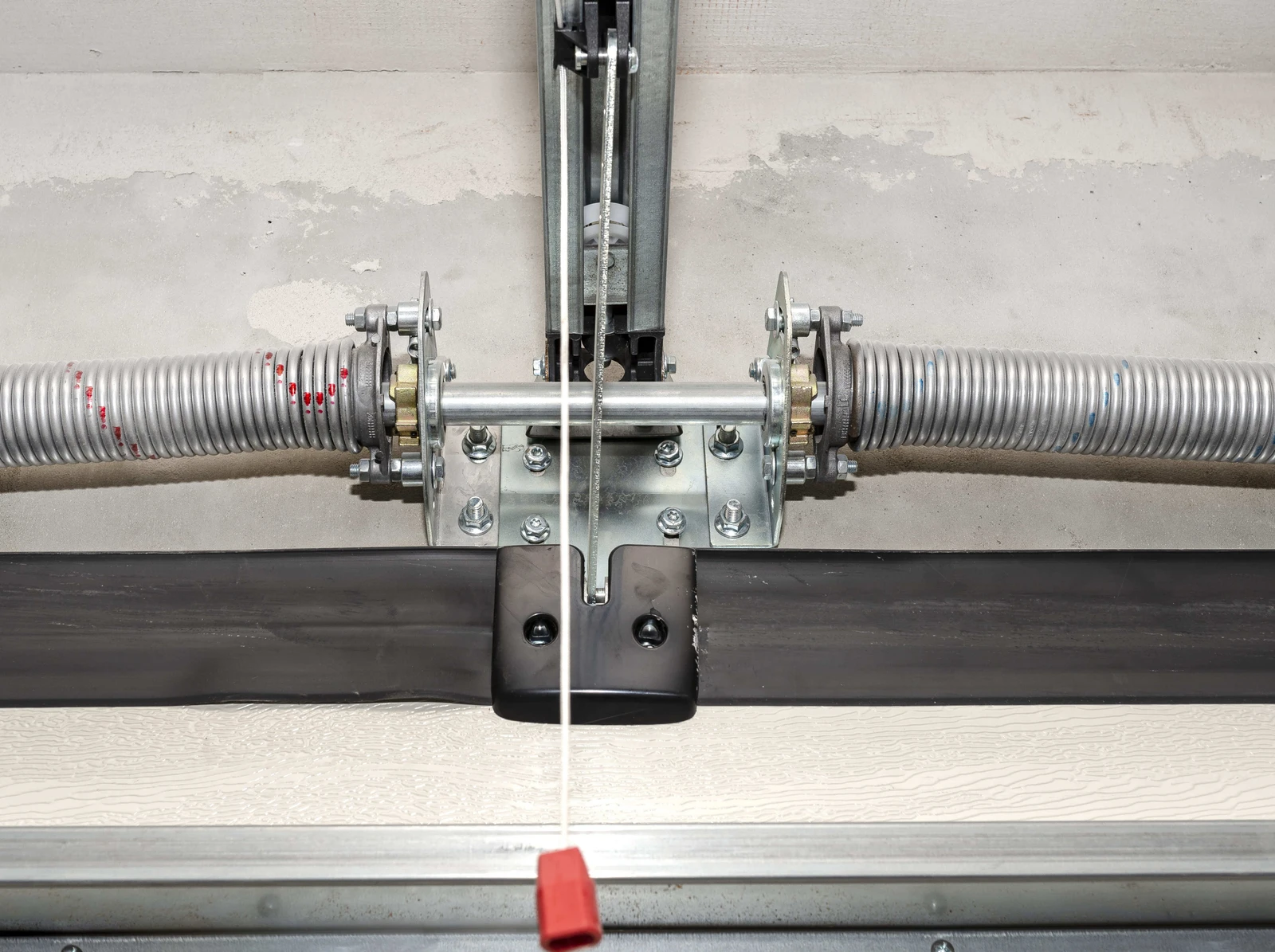
We weigh the door at the floor and test it at three positions. Worn, undersized, mismatched, or over-wound springs are the usual cause of drift and heaviness. Sometimes the honest answer is replacement, not adjustment.Can the springs still hold the door?
Uneven cable tension, a cable off its drum groove, a slipped set screw, or a worn end bearing makes a door crooked or heavy on one side. These are corrected before tension is set so the door rises level.Fixed before any tension is set.
A seized roller, stiff hinge, or rubbing track can make a correctly balanced door behave as if it is heavy. We remove the drag first so the springs are tuned to the actual door, not to friction.Drag removed so springs fit the door.
Once the door is balanced, the opener’s force and travel limits are set so it closes fully and reverses on contact, the photo-eyes are aligned, and the auto-reverse is tested with a 1½-inch board.Opener and photo-eyes set last.
When adjustment is not the honest answer: springs near the end of their cycle life can be re-tensioned and will drift again within months. If the weight test and spring condition say replacement, we quote it plainly and let you choose, rather than selling an adjustment that will not hold.
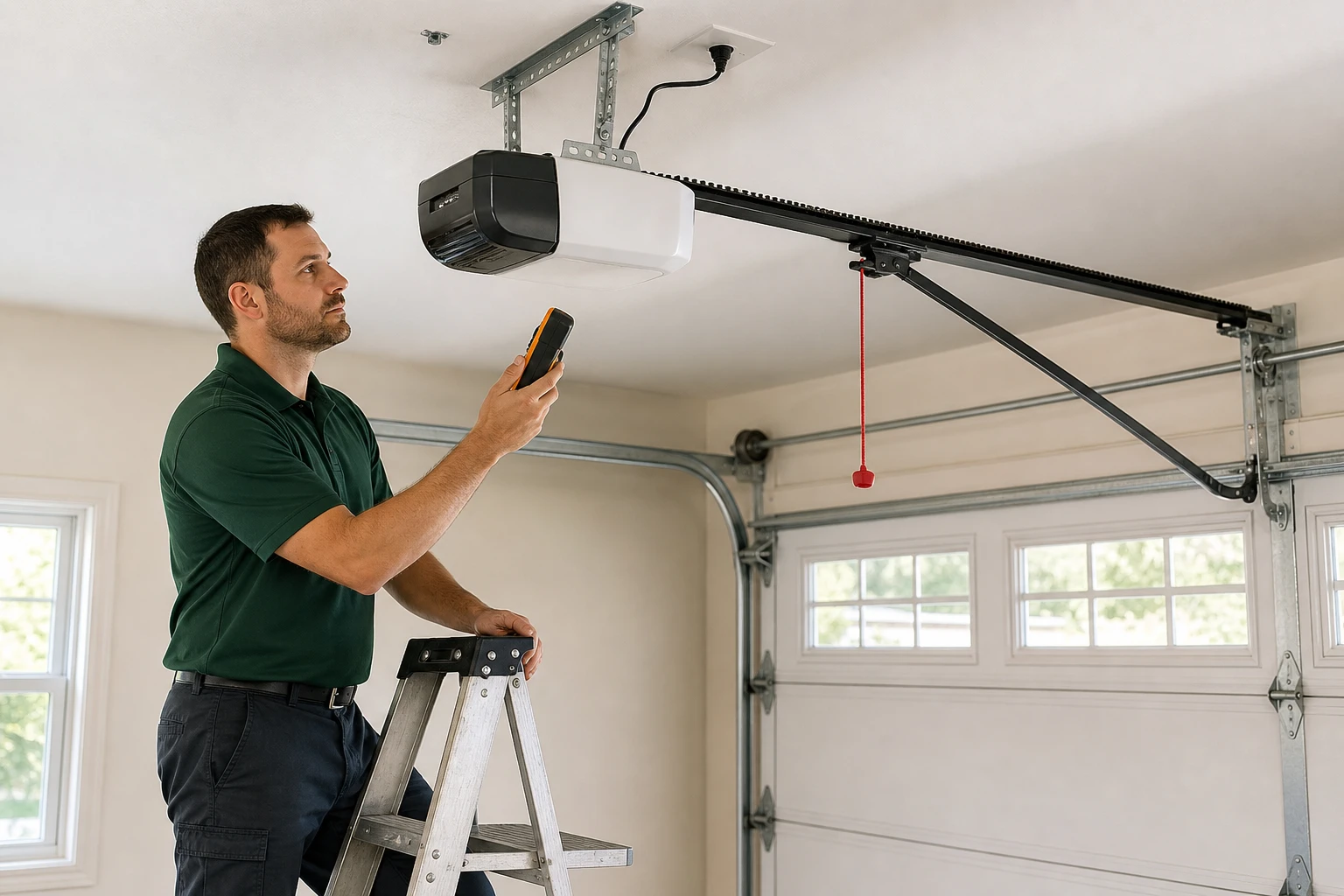 Calibrate · Opener force and travel
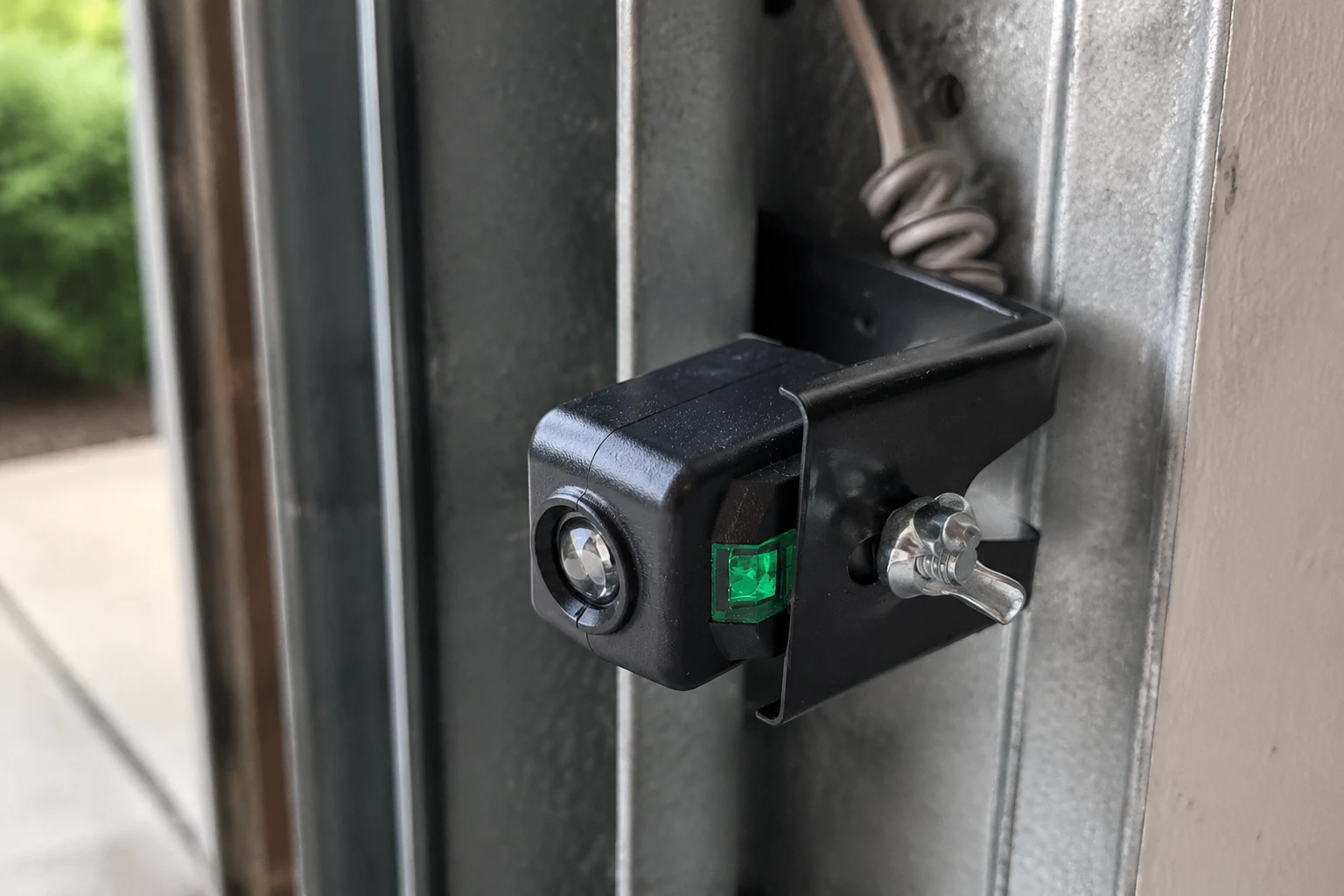 Verify · Photo-eyes and auto-reverse
Service and pricing
The technician disconnects the opener, secures the door, and runs the balance test at three positions and the weight test at the floor before touching a spring.Door secured, balance tested.
Cables, drums, bearings, rollers, hinges, and track are checked so tension is not set against a slipped cable or a dragging roller.Cables, drums and drag checked.
Torsion or extension springs are adjusted with the correct bars and the door secured. If the springs cannot hold a door their size, you get a clear replacement quote instead.Tension set, or a spring quote.
Opener force and travel are set to the balanced door, photo-eyes are aligned, the auto-reverse is tested against a 1½-inch board, and the door is cycled before handoff.Opener set, auto-reverse verified.
Much of Independence is recent construction, from the Lakefield subdivision to McCollum Pike. On a newer home, the springs were sized for the door the builder hung. Swap that door for a heavier insulated model and the same springs can no longer hold it in balance. The opener then lifts the difference on every trip.
A balanced door stays put when you lift it halfway by hand and let go. If it drifts down or creeps up, the spring tension no longer matches the door. We set that tension to the door as it hangs today. Cables and drums are checked under the same load, since they share it. On the town's older Queen Anne and American Foursquare houses, the door gets the same test. Their doors are balanced to the weight they carry now.
Service area coverage
Local ZIP: 41051
Before you schedule
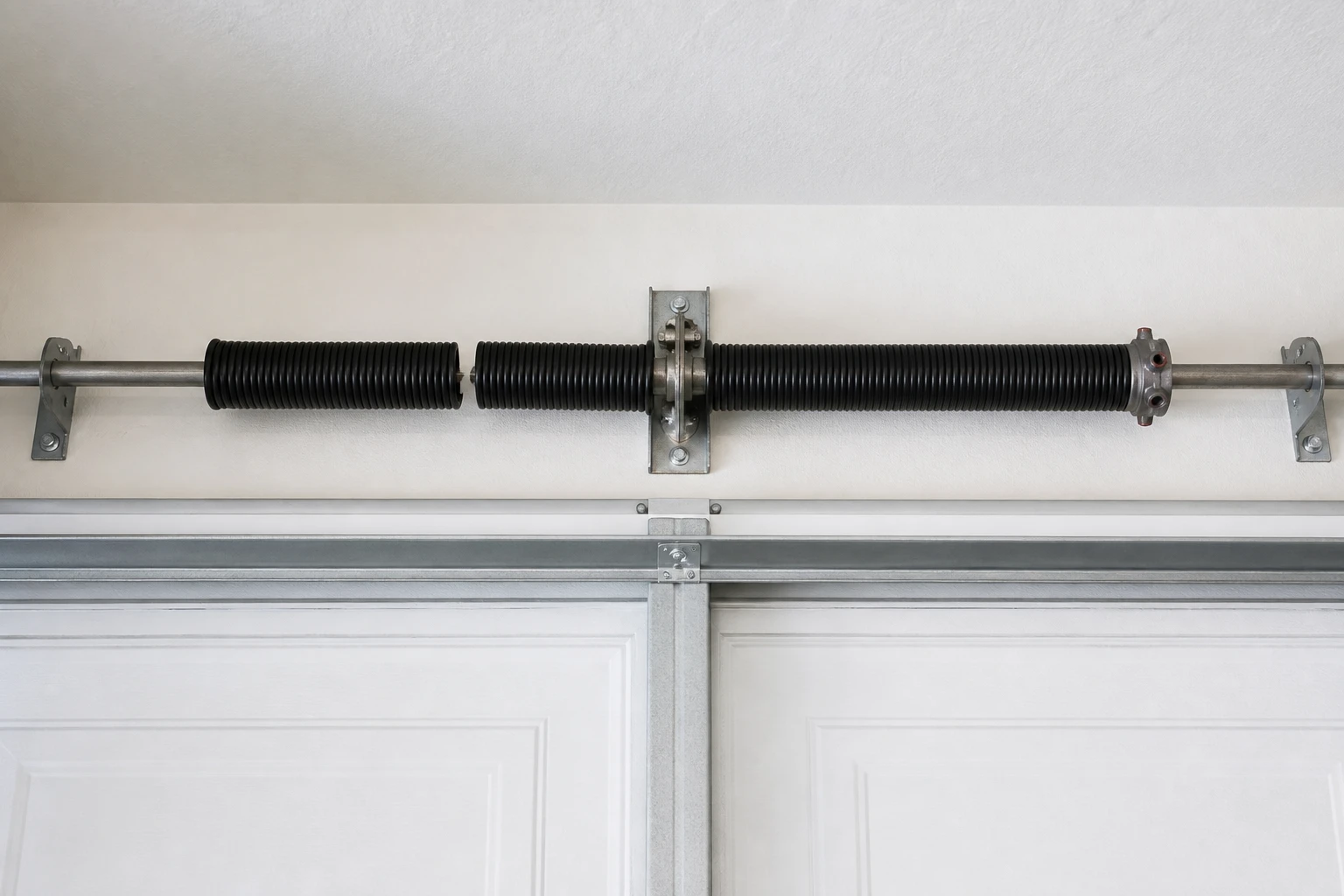
Typical pricing is $125–$225 for a balance test with spring re-tensioning and $85–$150 for opener calibration. That calibration sets force and travel limits and tests the photo-eye and auto-reverse, and it often happens in the same visit. If a crooked door needs its cable or drum reseated or replaced, put aside $125 to $250. When the springs no longer have the tension to hold the door at all, adjusting them won't honestly fix it. Replacing them typically runs $275 to $750, quoted on site.
Yes, and it's the one check every homeowner should do monthly. Close the door and pull the red emergency release cord to disconnect the opener. Then raise the door with your hands until it's about halfway up and gently let it go. A balanced door stays right where you left it. If it creeps upward, sinks or feels heavy, reconnect the opener, use the door as little as you can, and call us to adjust it. Don't ever try changing the spring tension yourself.
Because the opener isn't meant to lift the door. The springs are. An opener is built for a door that weighs a few pounds in your hand. Once the springs weaken, it carries real weight every time it runs. The gears and motor wear out sooner. The door may slam or drop, and the safety reversal gets less reliable. You won't hear about it ahead of time. You'll find out later, from an opener bill or a broken spring.
No. You can test the balance, but setting tension is a technician's work. Torsion springs hold enough stored force to raise a door of 150–300 pounds. Extension springs carry the same weight as they stretch. People adjusting either kind without training, a secured door and the right bars have ended up with serious hand, arm and head injuries.
Balance is about how evenly the springs carry your door's weight, so the door holds still at any height. Alignment is about the door running level in its tracks. If your door feels heavy but sits square, that's a balance problem. If it's higher on one side or crooked, it's an alignment problem. That usually comes down to a cable, drum or bearing, and forcing the door can pull it farther out.
First we set the travel limits, the opener's stopping points at fully open and fully closed. Done right, the door seals at the floor and doesn't strain against it. Then we set the force, meaning the push the opener allows before it treats something as a problem and reverses. Both are set to a balanced door. Turning the force up just so a heavy door will close is dangerous, since the door may then not back off a person, a pet or a bumper.
It's two checks, and you do both each month. As the door comes down, wave an object through the photo-eye beam close to the floor. The door should turn around immediately. Next, lay a 1½-inch board across the floor where the door lands and run the door closed. The moment it touches the board, it must reverse. A fail on either check means you park the opener until the balance and force get looked at.
Sometimes, but only for a short time. On a two-spring door, both springs have the same age and the same number of cycles, so the second one usually follows the first before long. We'll adjust whatever we can. We'll also be straight with you when new matched springs are better value than re-tensioning old ones near the end of their life.
Springs slowly lose tension over ordinary cycles, so normal use plays a part. They may be undersized for the door or mismatched, or carrying weight from a new section, insulation or glass added without re-springing. Uneven cable tension, worn bearings and a previous job that set tension by feel and ignored the door's weight can do it too.
Test it yourself once a month. It takes a minute. Have a pro check it at each annual tune-up, with a weight test and opener calibration. Go sooner if the door feels heavy, slams or hesitates.
Let it go at halfway and watch: drifting down or creeping up means it's out of balance. The same is true of a door that takes real effort to lift by hand, slams shut or hangs crooked. Listen to the opener too; straining, slowing or stopping partway is another sign. Usually the springs are low on tension and need resetting or replacing.
Local help for a heavy, dropping, or slamming door
Let us know whether the door drifts, drops, feels heavy, slams, sits crooked, or fails to reverse, whether it still opens and closes, and whether a vehicle is trapped. Keep clear of the opening if the door will not hold.