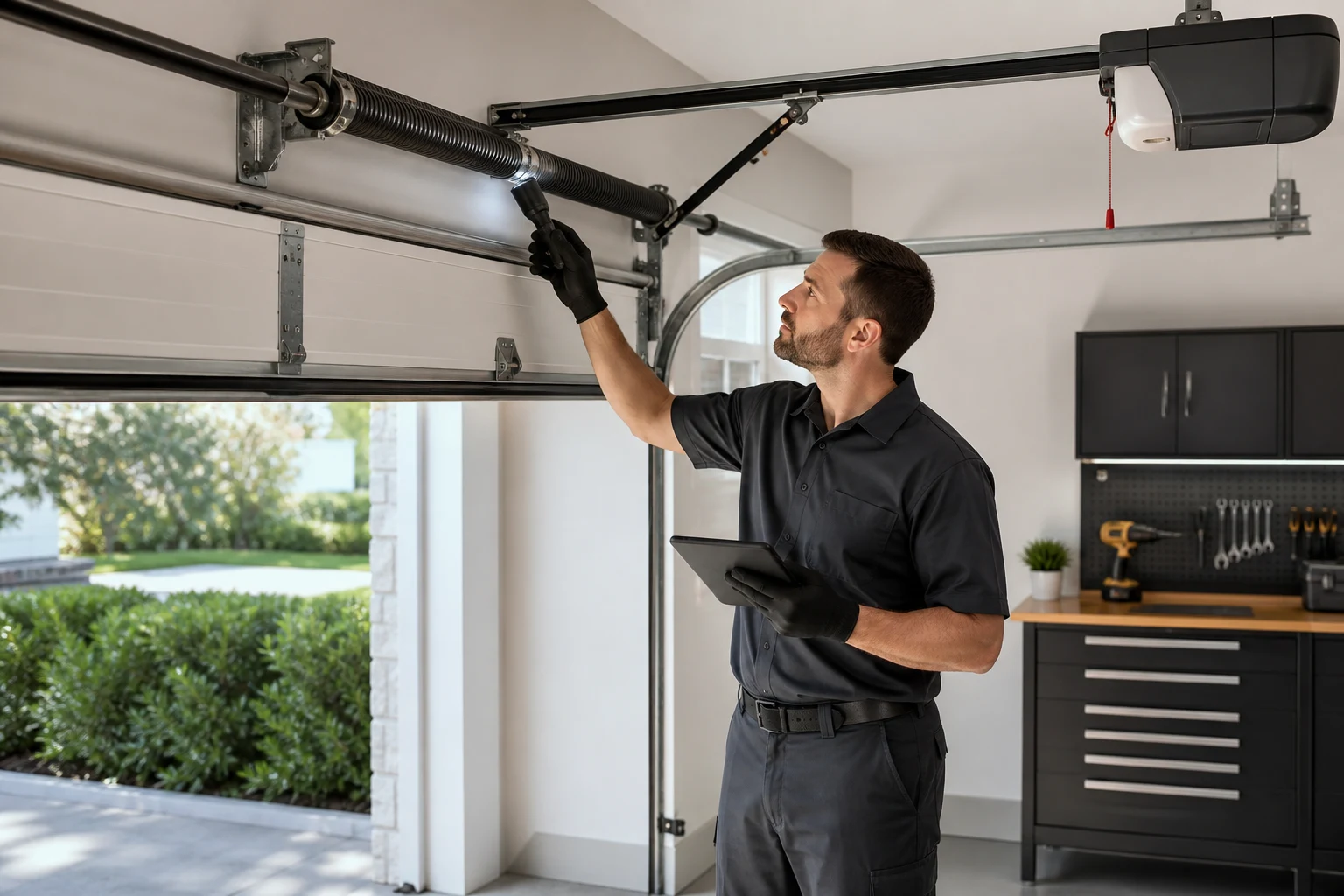
Technician recording torsion spring inspection findings on a tablet

Garage Door Tune-Up and Maintenance in Georgetown, KY

Garage door tune-ups in Georgetown range from the newer homes around Kingston and Prestwick Drives to older frame houses on East Main Street. A newer door still loosens as it settles, while an older one needs its cables and springs watched.

Georgetown garage door tune-ups cover Cherry Blossom Village homes and older East Main houses.

Book Your Garage Door Tune-Up

25-point inspection • Clear, written summary

Step 1 of 2
Required field
Required field
Required field

Maintenance check

6 Signs Your Garage Door Is Due for a Tune-Up

  • 01
    The door is louder than it used to beSqueaks, grinding, rattles, and popping usually trace back to dry rollers, loose hardware, or a door slipping out of balance. Those are the exact things a tune-up corrects before they cost parts.Noise usually means dry rollers, loose hardware or imbalance.
  • 02
    Slower, jerky, or hesitant travelA door that stutters through its cycle or pauses partway is binding somewhere. Lubrication, track cleaning, and balance work often restore smooth travel without a repair.Stuttering travel means the door is binding somewhere.
  • 03
    The door will not hold at halfwayWith the opener disconnected, a balanced door stays put when lifted halfway. If it drifts up or sinks, the springs have lost tension and the opener is carrying weight it was never meant to lift.A door that drifts up or sinks has lost spring tension.
  • 04
    The opener hums, strains, or reversesAn opener fighting a heavy door or a misaligned photo-eye works harder every cycle. A tune-up tests the force and travel settings, cleans and aligns the sensors, and checks the safety reversal.The opener may be fighting a heavy door or a misaligned eye.
  • 05
    Rust, fraying, or loose hardware you can seeFrayed cable strands, rusted springs, elongated hinge holes, and backed-out lag bolts are all visible from the floor, and all far cheaper to address at a scheduled visit than after they fail.Frayed cables, rust and loose bolts cost less to fix early.
  • 06
    It has been more than a yearA typical Kentucky door cycles 1,200–1,500 times a year through freeze-thaw winters and humid summers. Manufacturers and the International Door Association recommend professional service at least annually.Professional service is recommended at least once a year.

What to do now

Schedule a tune-up for a noisy or slow door.

A noisy or slow door can wait for a scheduled visit; just skip unnecessary cycles until then. If the door is crooked, hanging, will not stay up, or you can see a broken spring or frayed cable, stop using it and keep the opening clear. That is a repair call, not a tune-up.

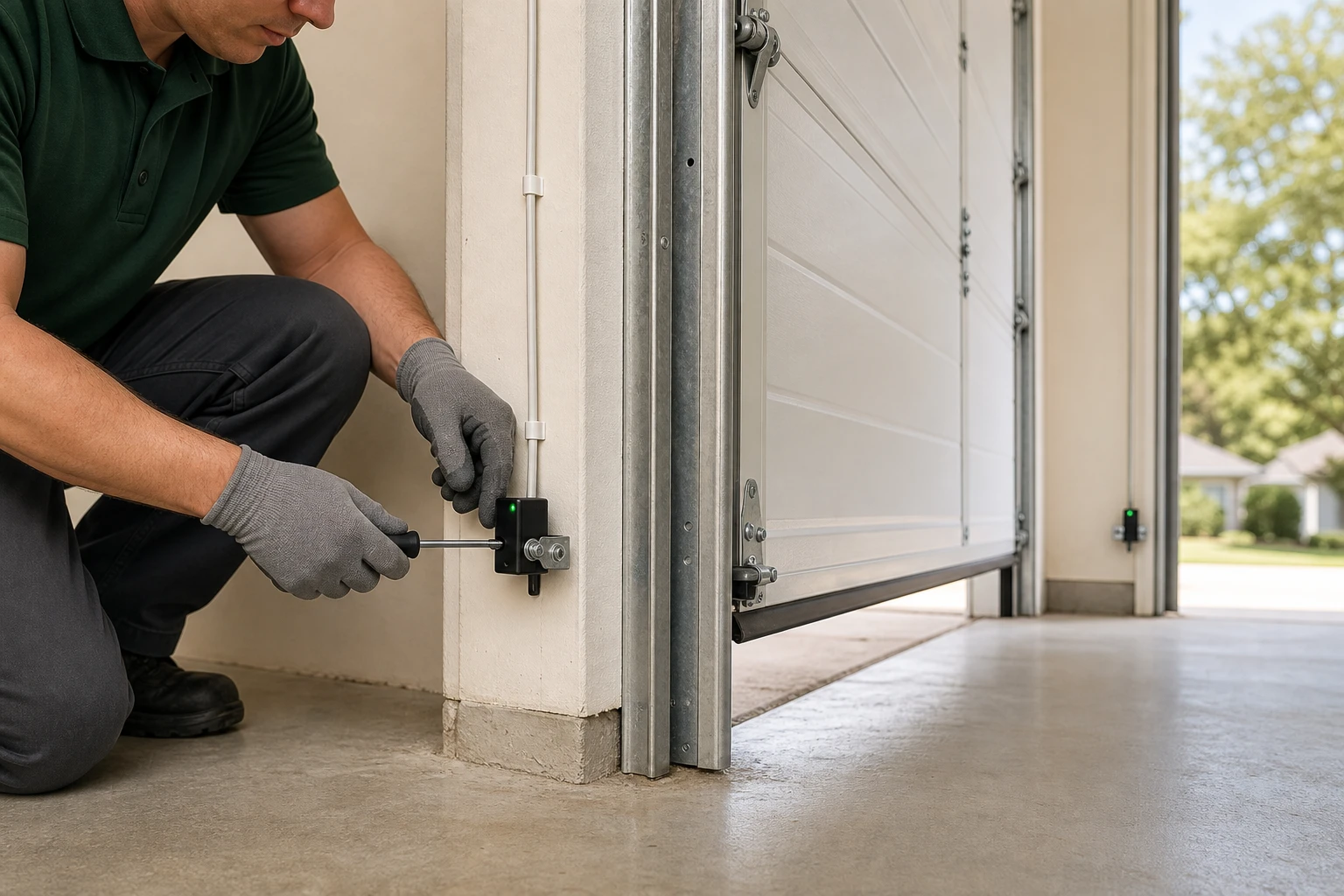
Technician checking a photo-eye safety sensor near the floor
Photo-eyes are cleaned, aligned, and beam-tested on every tune-up. It is the safety system most often found out of adjustment.

Customer reviews

Kentucky homeowners recommend Derby Strong.

Understand the service

What your garage door tune-up covers

Know the difference

Monthly Homeowner Check vs. Professional Annual Tune-Up

Five minutes, once a monthHomeowner check
About an hour, once or twice a yearProfessional tune-up
What gets looked at Watch and listen from the floor; look for rust, fraying, loose parts, daylight at the sealsListen for new noise and look for rust, frayed cables, loose hardware, or light around the seals. 25-point inspection of springs, cables, drums, bearings, hardware, tracks, opener, sensors, and sealsWe inspect 25 points across the springs, cables, tracks, opener, sensors, hardware, and seals.
Safety tests Balance test at halfway; break the photo-eye beam; 1½-inch board auto-reverse testConfirm the disconnected door holds halfway. Test the photo-eyes and auto-reverse. Three-position balance test and door weight; force, travel, photo-eye, auto-reverse, and emergency releaseWe test door weight and three-position balance, then verify force, travel, photo-eyes, auto-reverse, and emergency release.
What gets adjusted Nothing under tension: clean the tracks, lubricate hinges and steel roller bearings, change remote batteriesClean the tracks, lubricate safe moving parts, and replace remote batteries. Leave anything under tension alone. Spring tension, opener force and limits, photo-eye alignment, fastener torque, track alignment, set screwsWe adjust spring tension, opener limits, sensor and track alignment, and tighten fasteners and set screws.
What you walk away with An early warning that something changedAn early warning when something changes. A written summary of what was done, what is fine, and what to plan forA written summary of what was completed, what is working properly, and what to plan for.

Timing it to Kentucky seasons.

Early spring, after freeze-thaw winters have loosened hardware and dried out lubrication, and early fall, before the first hard freeze tests tired springs and seals. If the garage is your main entrance or the door cycles more than six times a day, plan on both.Schedule in early spring or fall. If the garage is your main entrance or the door runs more than six cycles daily, schedule twice a year.

Not sure when it was last serviced? That is reason enough. Most doors we see have never had a professional tune-up, and the first one tends to find the most.

The three things that matter most

Lubrication, Balance, and the Safety Tests, Done Right

01

Lubrication done correctly

Garage-door-specific silicone or white lithium on hinge pivots, roller bearings, springs, bearing plates, and the opener chain or screw. Never on the track, which should be cleaned, and never general-purpose penetrating spray, which displaces water and attracts grit rather than lubricating.Door-specific lubricant on moving parts, never on the track.

02

Balance and tension

The door should hold at one panel up, at halfway, and fully open, and should weigh under roughly 5 pounds on a scale at the floor. If it fails, spring tension is adjusted by the technician, never by the homeowner, so the opener is no longer carrying the door.A balanced door holds in place; a technician sets the tension.

03

Force, travel, and safety reversal

Opener force and travel limits are set so the door closes fully and reverses on contact. The photo-eyes are tested by breaking the beam, and the auto-reverse is tested with a 1½-inch board on the floor. These are the tests that keep people and vehicles safe.Force and travel set, photo-eyes and auto-reverse tested.

The 25-point inspection

The Four Systems Every Tune-Up Works Through

  1. 01

    Counterbalance system

    Springs are checked for rust, gaps, and cycle wear; the door is weighed and balance-tested at three positions; cables, drums, end and center bearings, and the torsion shaft are inspected and set screws verified.Springs, cables, drums and bearings, plus a balance test.

  2. 02

    Door, hardware, and tracks

    Hinges, rollers, bottom and top brackets, struts, and every fastener are inspected and torqued; tracks are checked plumb and parallel, cleaned, and their mounting brackets tightened; panels are checked for stress cracks.Hinges, rollers, brackets, fasteners and track alignment.

  3. 03

    Opener and controls

    Chain, belt, or screw tension and trolley wear; gear and sprocket condition; force and travel-limit settings; remotes, keypad, wall console, and battery backup; light bulbs that can interfere with the remote signal.Drive tension, gears, force and travel limits, and remotes.

  4. 04

    Safety systems and seals

    Photo-eyes are cleaned, aligned, and beam-tested; the auto-reverse is tested against a 1½-inch board; the emergency release is checked; bottom seal and perimeter weatherstrip are inspected for gaps and daylight.Photo-eyes, auto-reverse, emergency release and seals.

Nothing is replaced without a quote: the tune-up price covers inspection, lubrication, tightening, balance work, and the safety tests. If we find a worn roller, a frayed cable, a split seal, or a tired spring, we show you, price it, and let you decide, today or later.

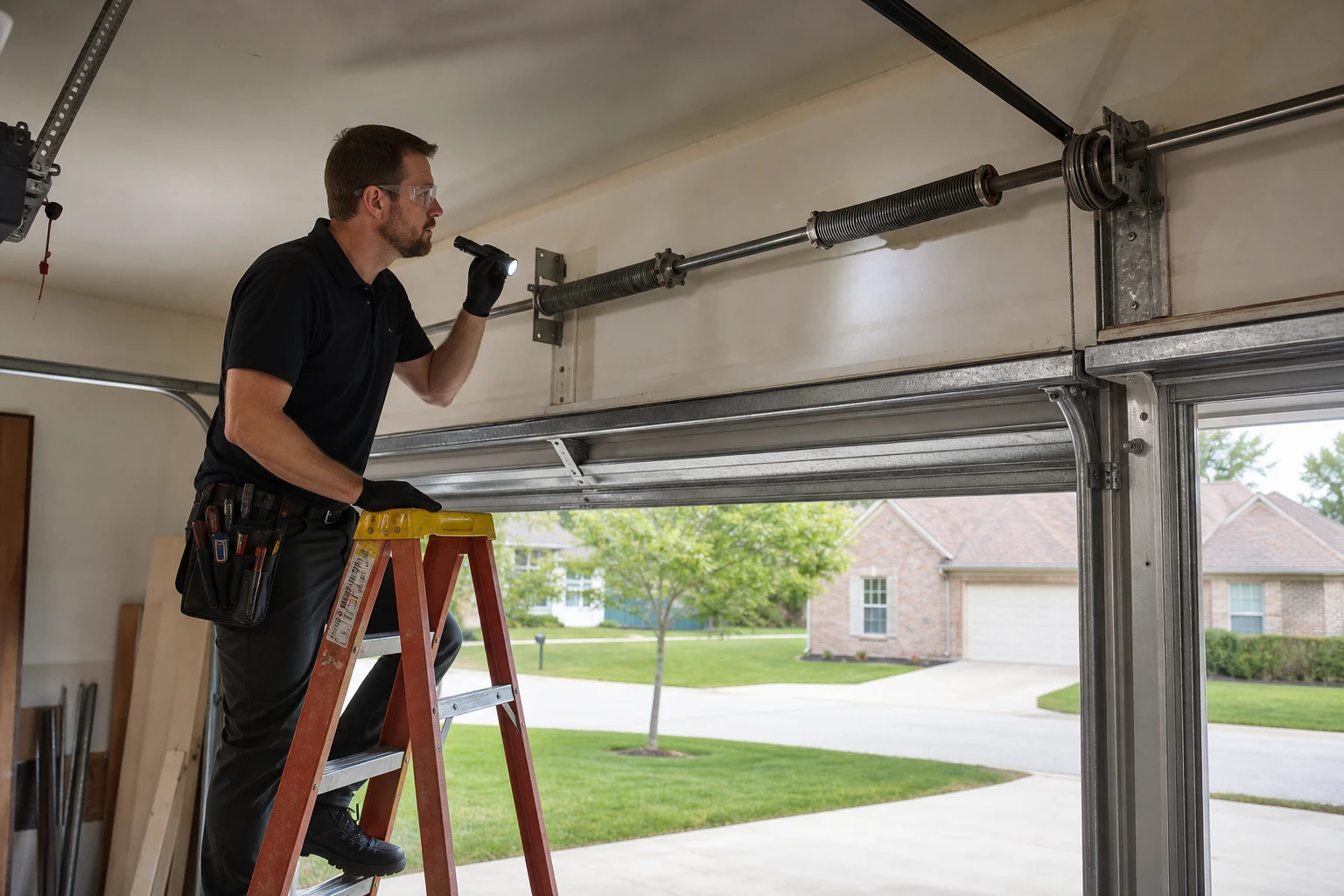
Technician on a ladder inspecting the torsion spring and track Inspect · Springs, shaft, and track
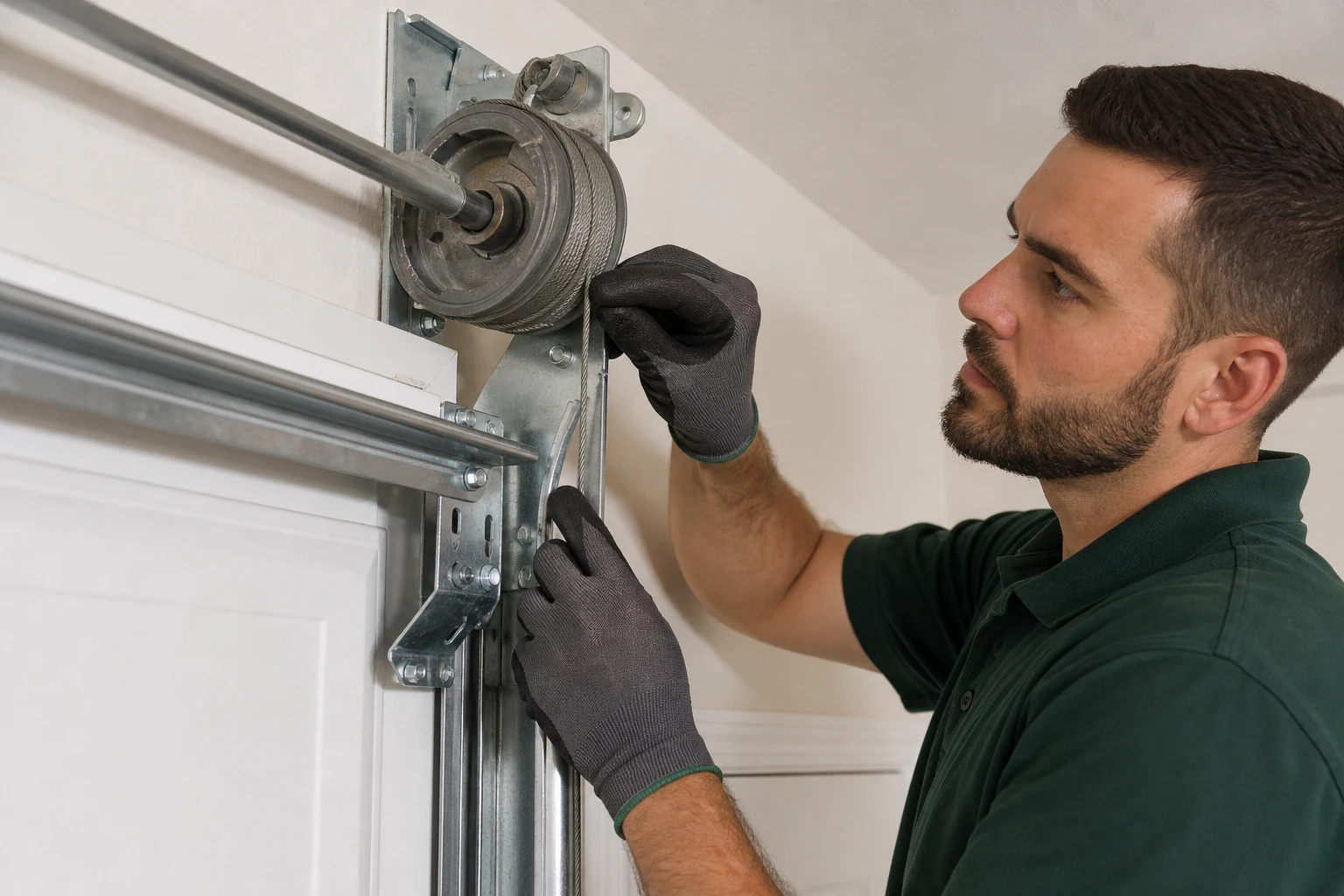
Technician checking the lift cable and drum at the top door corner Check · Cables, drums, and set screws
Every tune-up works from the counterbalance down: springs and shaft, then cables and drums, then hardware, opener, and safety systems.

Service and pricing

What a Tune-Up Includes—and What It Costs

Four clear steps

  1. 01

    Inspect and document

    The technician works through the 25-point checklist from the springs to the sensors and notes every condition before touching a tool.We work through the 25-point checklist first.

  2. 02

    Lubricate, clean, and tighten

    Moving hardware is lubricated with the right product, tracks are cleaned, and every fastener, bracket, and lag is checked and torqued.We lubricate moving parts, clean tracks and torque fasteners.

  3. 03

    Balance, calibrate, and test

    Balance is tested and corrected where needed; opener force, travel, photo-eyes, and auto-reverse are tested and set; the seals are checked.We correct the balance and test the opener and safety systems.

  4. 04

    Walk through the report

    You get a plain-language summary of what was done, what looks good, and anything worth planning for, with no pressure to fix it today.You get a plain-language summary, with no pressure.

Garage door tune-up across Georgetown

Homes around Kingston and Prestwick Drives in Cherry Blossom Village are recent construction, like much of Georgetown. Winter still brings regular freezing nights, and cold stiffens the grease on a door's moving parts. Among the older frame and brick houses of Georgetown's East Main Street, a door may also run on hardware of mixed ages. Autumn is a sensible time to have it checked.

A tune-up keeps either kind running well. We check the balance so the springs carry the weight instead of the opener. Moving hardware is lubricated so rollers and hinges turn freely. Loose fasteners on the track get tightened. The safety sensors must line up, with the door reversing on contact. We also look for worn cables or tired springs. Spotting them early means a planned repair rather than a surprise.

Service area coverage

Local ZIP: 40324

Open in Google Maps

Before you schedule

Answers to Common Garage Door Maintenance Questions

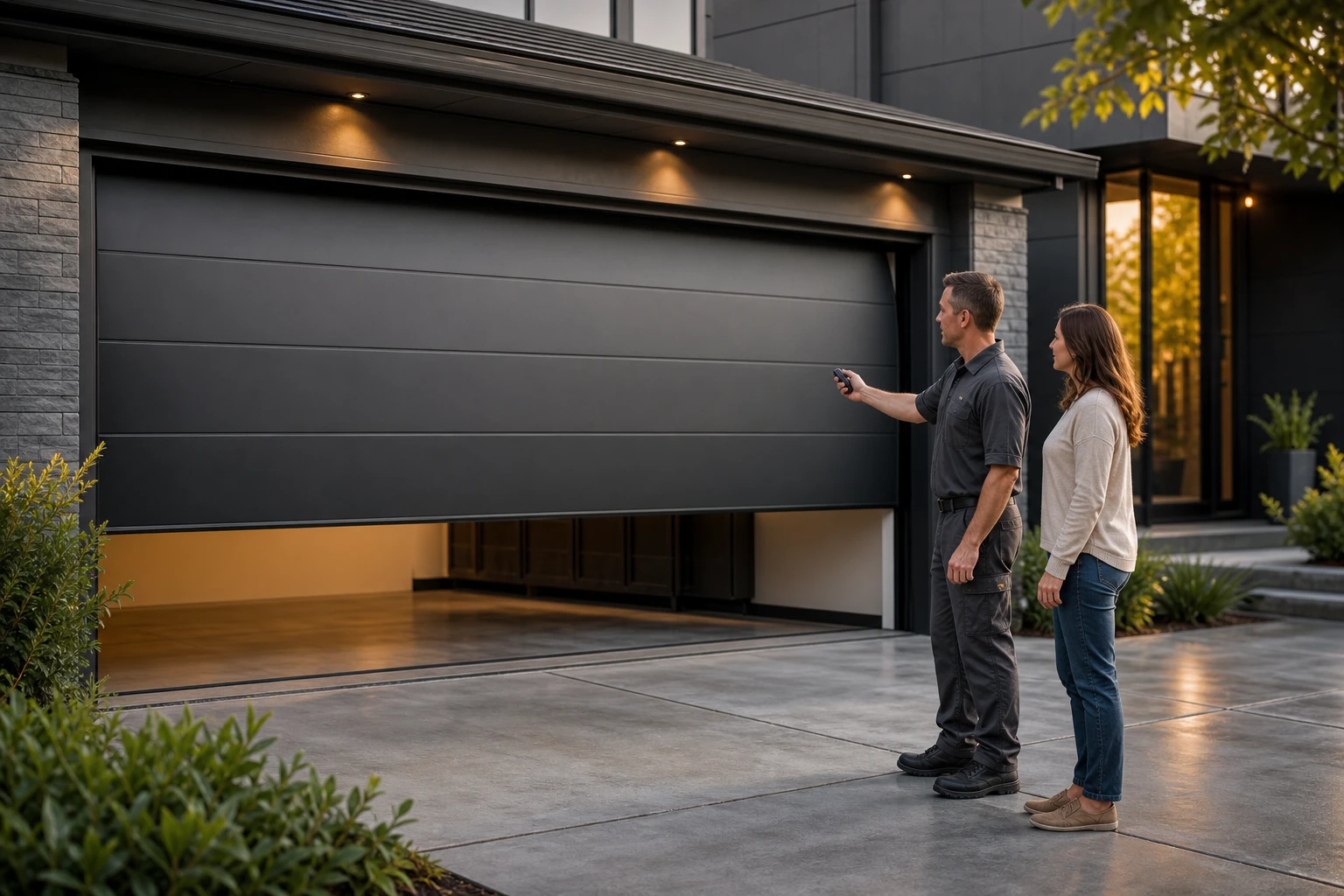
Technician and homeowner testing a garage door after maintenance
How often
Professional tune-up yearly; twice for heavy use. Homeowner safety check monthly.
How long
About 45–60 minutes per door, longer if balance needs correction
Balance test
Opener disconnected, door holds at one panel up, halfway, and fully open
Safety tests
Photo-eye beam break; auto-reverse on a 1½-inch board; emergency release
Tune-up at a glanceThe rhythm, duration, and the two tests that matter most.
01What does a garage door tune-up cost in Georgetown?

For one door, a tune-up usually costs $75–$150. That covers the 25-point inspection, lubrication, tightening of the hardware, balance and safety tests, and a written summary. Homes with two doors done on the same visit typically pay $120–$225. If the door fails its balance test and the springs need their tension reset, budget $125–$250. Worn rollers, seals, cables or hinges are priced first, and you make the call before any work starts.

02What's included in a garage door tune-up?

Every tune-up includes a full inspection of the springs, drums, cables, bearings, tracks, rollers, hinges, brackets, panels, seals, opener and sensors. Moving hardware is lubricated with garage-door-specific product. Each fastener and bracket is tightened. A three-position balance test follows, with adjustment if needed. Opener force and travel limits are tested, along with photo-eye and auto-reverse safety tests. You also get a plain-language report.

03How often does a garage door need servicing?

The industry baseline is once a year, and manufacturers commonly link warranty coverage to that annual service. Twice a year is sensible if the garage is your household's main entrance or the door runs through more than six cycles a day. Kentucky's freeze-thaw and high-humidity seasons also make a second visit worthwhile. Between visits, a monthly homeowner check of balance, photo-eyes and auto-reverse takes five minutes.

04What time of year is best for a garage door tune-up in Kentucky?

Early spring and early fall are the two windows. Over winter, moisture and temperature swings can loosen hardware and dry out lubrication, which a spring visit picks up. A fall visit checks the springs, seals and balance before winter, so a worn part is not pushed into failure by a cold snap. If you only schedule one, make it before the first freeze.

05What garage door care is safe to do myself between visits?

Watch the door run and listen to it, standing on the floor. With the opener disconnected, test the balance. Break the photo-eye beam as the door closes. Use a 1½-inch board to test the auto-reverse. Keep the tracks clean, and lubricate the hinge pivots and steel roller bearings with a garage-door lubricant. Springs, cables, opener force settings and bottom brackets are a technician's job.

06What lubricant is right for a garage door, and what should I avoid?

Choose a garage-door lubricant that is silicone-based or white lithium. Apply it to the hinges, springs, bearing plates and steel roller bearings, but not to nylon rollers or the track surface. Do not lubricate with WD-40-style penetrating sprays: they displace water and gather grit. Ordinary grease is out as well, because it hardens in the cold.

07Can a tune-up quiet down a noisy garage door?

In most cases, yes. The usual sources of noise are dry rollers and hinges, loose hardware, and an unbalanced door that makes the opener strain. A tune-up deals with each of those. Worn rollers or a slapping opener chain are a different matter: we will point them out and quote that fix separately.

08Can maintenance actually prevent breakdowns?

It prevents the ones that can be prevented. A spring will still reach the end of its cycle life, tune-up or not. What a tune-up does is catch balance drift, dried bearings, frayed cables, loose bottom brackets and misaligned photo-eyes before any of them strands the door. It also keeps the opener from wearing out early under the weight of a heavy door.

09How does the garage door balance test work, and why is it important?

The opener is disconnected first. The door is then raised by hand to three points: the height of one panel, halfway, and fully open. A balanced door stays still at each one. Set on a scale at the floor, it should also weigh only a few pounds. A door that drifts or feels heavy means the opener, not the springs, is carrying the load. That cuts the opener's life short and can make the door drop.

10Does a tune-up make sense for an older garage door?

Often it is the best value for an older door. It gives you an honest picture of what is wearing and what is still fine. If the inspection finds the door near the end of its life, we tell you so and help you weigh repair against replacement. Either way, the money spent on the tune-up is not wasted.

11How can I tell my garage door is due for a tune-up?

Listen for grinding or squealing, and watch for a jerky start. Other signs are a door that drifts after you stop it halfway and worn or flattened seals. An opener that strains or reverses with no clear cause is another. A tune-up picks these up early, before a roller, cable or spring fails and the door gets stuck.

Local maintenance for the door you use every day

Tell us about your door. We’ll schedule the visit.

Let us know how many doors and openers you have, roughly how old they are, and anything you have noticed, such as noise, hesitation, or a door that feels heavy. We will confirm the tune-up price when we book.

  • Number of doors and openers
  • Noise, hesitation, or heavy feel
  • Main entrance or occasional use
Call (859) 436-2954

Book a Garage Door Tune-Up

Serving Georgetown and nearby Lexington communities. Share the essentials and we’ll call to confirm the right service timing.

Step 1 of 2
Required field
Required field
Required field

Derby Strong Garage Doors

Garage door trouble?

Talk to our local team now about a broken spring, a stuck door, an opener or a new door.

Call (859) 436-2954 Schedule online

5.0 from 298 reviews