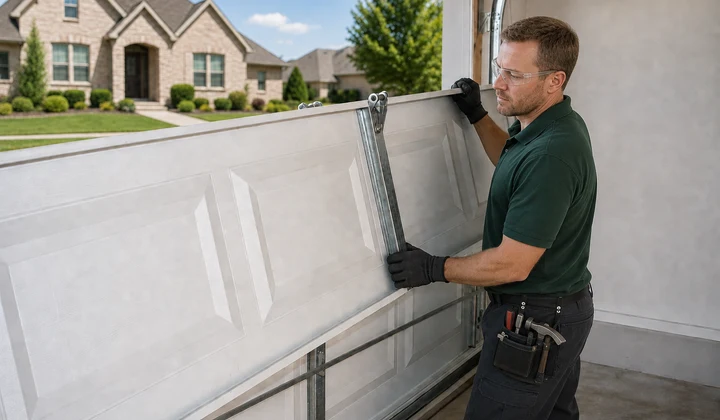
Section replacement
Best when the damage is isolated
- One section is damaged
- The door and hardware remain serviceable
- A compatible section is available
- The expected finish match is acceptable
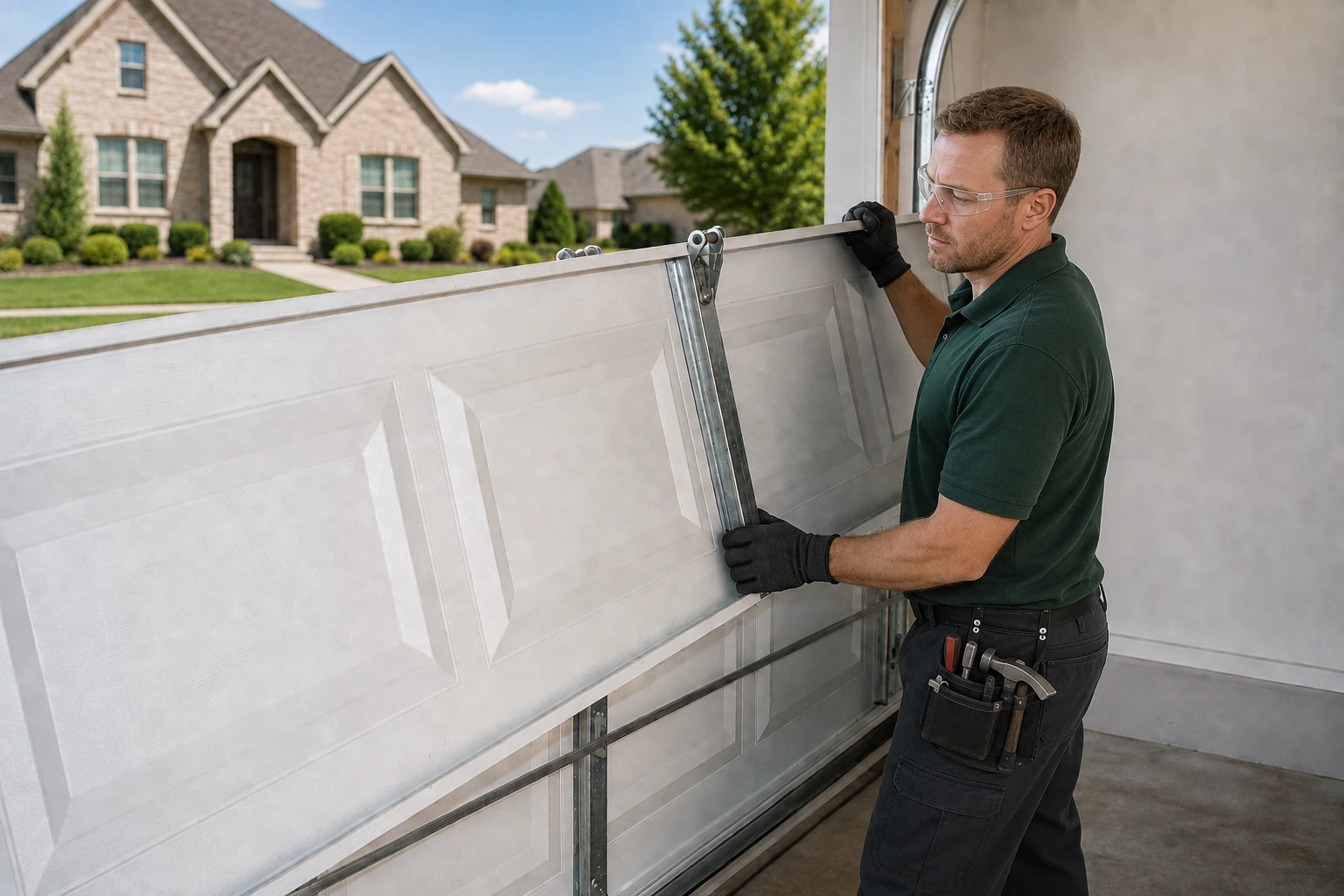
Panel matching · Structural inspection · Clear options
On a Colonial Revival or Tudor front in Fort Mitchell Heights, the garage door is part of the design, so garage door panel replacement has to match closely. Where an early three-car garage survives, the new section must suit the doors beside it too.
Garage door panel replacement in Fort Mitchell suits Colonial Revival and Tudor fronts.




Start with the damage
Cosmetic dents can sometimes wait. Structural damage, loose hardware, or uneven movement should be inspected before the door is used again.
A vehicle, mower, or heavy object left a deep dent, crease, or split in one section.
The damaged panel rubs, pulls away at the joint, or no longer closes evenly.
Gaps around the section allow air, water, debris, or pests into the garage.
The panel bends while the door moves or no longer stays square between the tracks.
Hinges, struts, or opener hardware are pulling away from damaged material.
The door travels crooked, binds, shakes, or makes new popping and scraping sounds.
Safety first
Our assessment
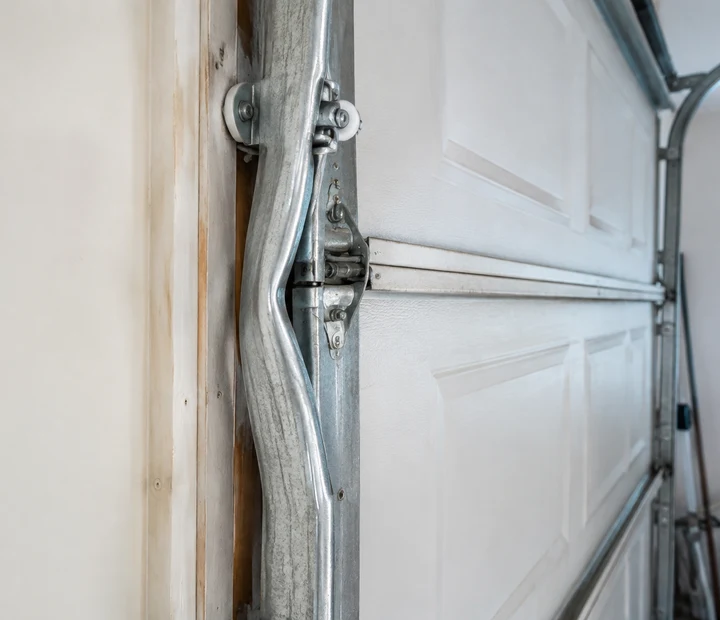
We check the damaged section, hinges, struts, rollers, tracks, cables, springs, seals, and opener attachment points.We check the section, hardware, tracks, cables and springs.
Labels, stamps, measurements, profile, insulation, finish, and panel height help us research a compatible replacement.Labels and measurements identify a compatible section.
You receive a clear explanation of section replacement versus a complete new door before special-order parts are approved.You see both options before special-order parts are approved.
We fit the replacement, transfer or update hardware, balance the door, and test full travel and safety reversal.We fit the section, balance the door and test its travel.
What has to match
Repair vs. replacement
We show you both options when both are realistic—without pushing a full door when a sound panel repair will do.
Section replacement
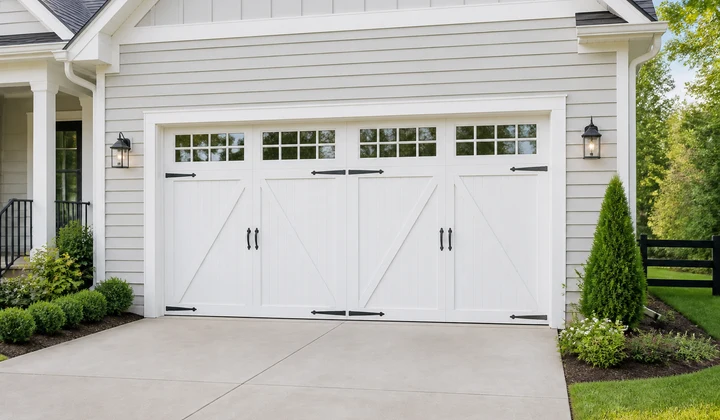
Complete replacement
Why Derby Strong
Panel work is only successful when the replacement fits the structure, balances correctly, and makes financial sense for the age of the door.
Customer experiences
On the Fort Mitchell Heights streets, Colonial Revival leads among the older houses, with Tudor Revival alongside it. The garage door on fronts like these is part of the design, so a damaged section has to match the rest. Where a house still has its early one-story frame three-car garage, a new panel has to match the doors beside it as well.
A replacement section has to match the door's model, section height and profile to line up. We look for the maker's label or stamps inside the door. When the model is still made, we order the right section. When it is discontinued, a close match may still look off beside the other panels. A dent can also bend hinges or push rollers out of the track, so we check that hardware first.
Service area coverage
Local ZIP: 41017
Useful answers
Still unsure whether the section can be matched? Send the photos you already have and we’ll help with the next step.
Request a callbackFrequently, yes. We look over the whole door before any recommendation. A section-only repair makes the most sense when one section carries all the damage and the others and the hardware are sound. A compatible section has to be obtainable too.
On an older door, possibly. The finish has weathered, so the new section may show some color difference. Otherwise, we match the manufacturer, construction, finish, embossing, height, model and section profile as closely as possible. Before ordering, we explain what you'll see.
If several sections show damage, a complete new door may be the better value. That's also true when compatible panels are discontinued, the door sags or rusts, or hardware and structure are failing across the system.
A buckled section means you stop using the door. So does one that pulls away from a hinge, rubs the track or makes the door travel crooked. Use it anyway and you can damage the tracks, rollers, springs, cables or opener.
First we gauge the depth of the dent, its position on the door and how the section flexes. A small, shallow dent in steel may come out. If we find a bent end stile, a crease or a split skin, that damage tends to come back or weaken the section. It can also make the door bind at the bend in the track. Last, we tell you what's better value: a repair, a matched section in place of the old one, or a new door.
Three photos usually do it: one wide shot showing the whole door, one close-up of the damaged section, and one of the manufacturer label if you can see it safely. Don't run the door or climb on it to get a shot if it's unstable.